Artwork
Courtesan
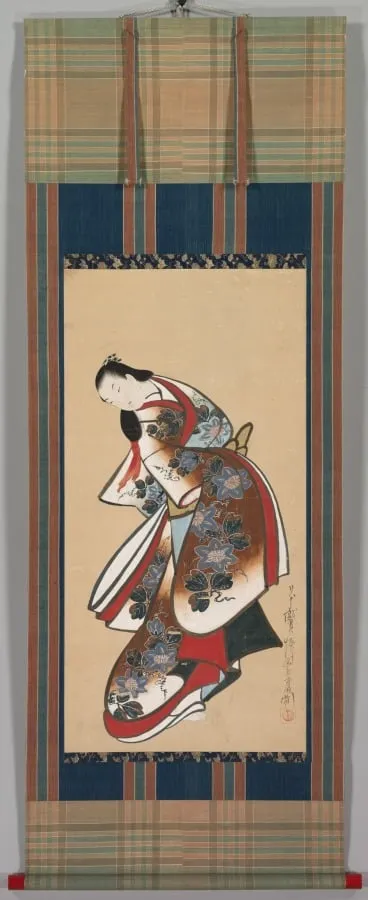
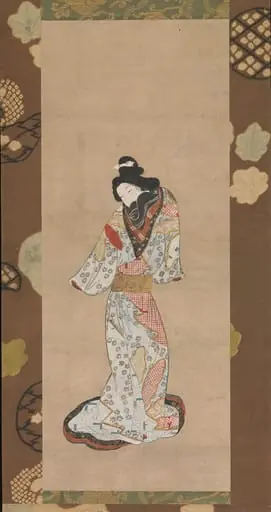
Courtesan is an unspecified painting by the Baroque artist Kaigetsudō Doshin. It dates from 1704 and is held in the collection of the Cleveland Museum of Art.
About this work
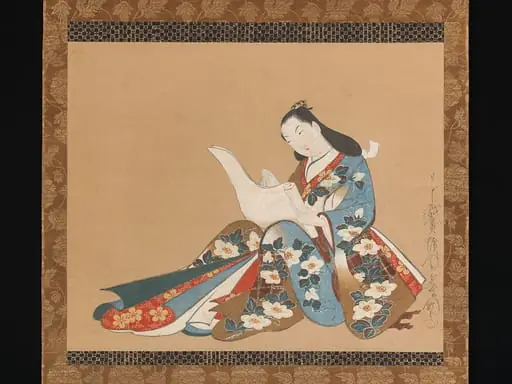
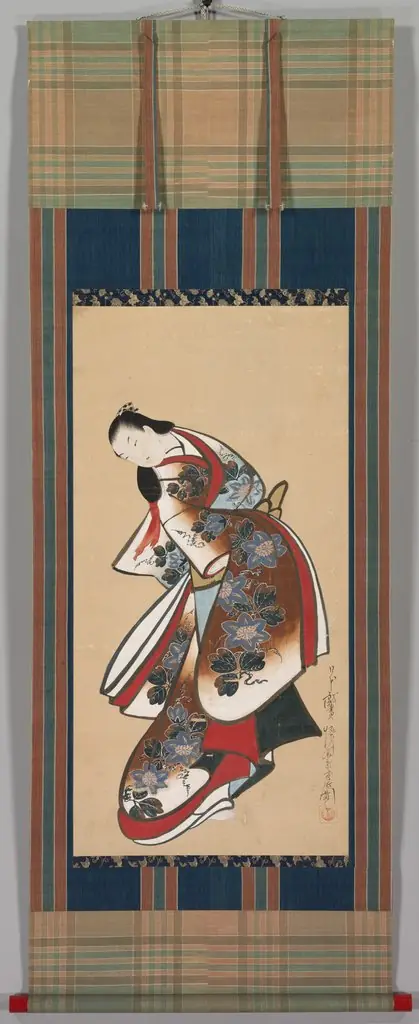
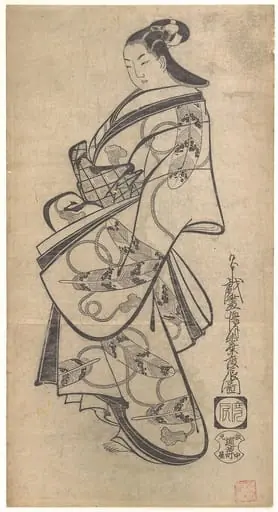
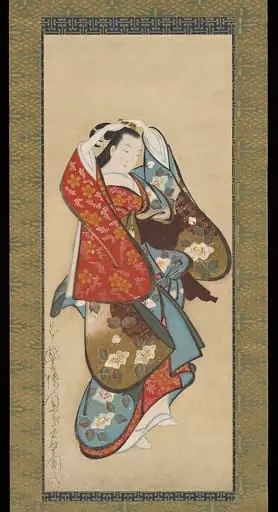
This one stands out for its spare, bold style—no extra details, just the woman’s flowing form and striking kimono.
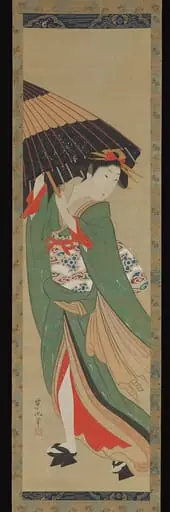
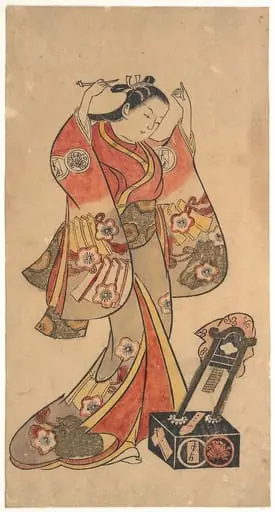
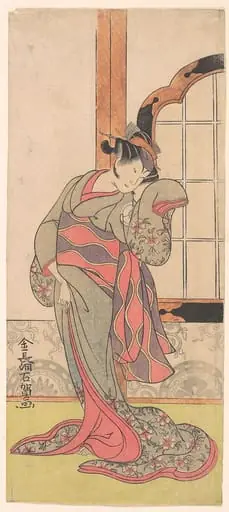
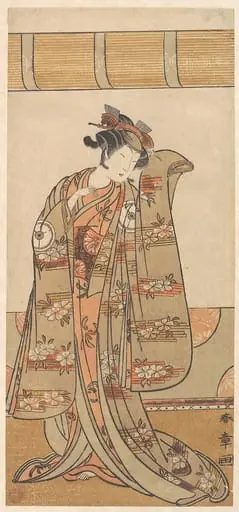
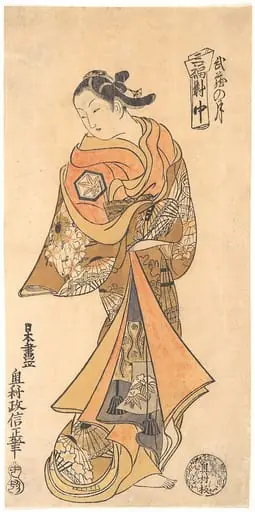
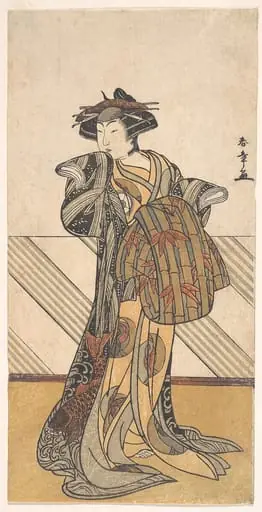
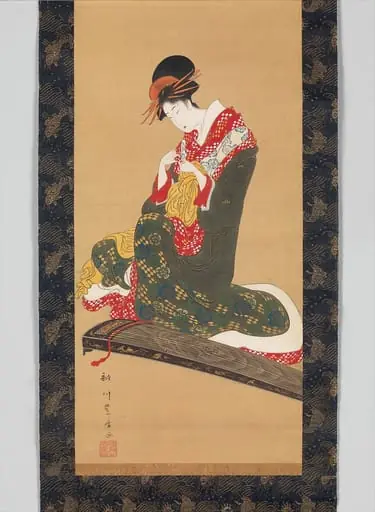
A woman sits with her back to us, her kimono a swirl of bold blue and white patterns. Her hair is piled high in a topknot, the ink lines sharp and confident. There’s no background—just her and the empty space around her.
The artist worked with Kaigetsudō Ando’s studio in Edo’s Asakusa district. They specialized in portraits of courtesans from the Yoshiwara pleasure quarter. This one stands out for its spare, bold style—no extra details, just the woman’s flowing form and striking kimono.
Look for another work by Kaigetsudō Doshin (Japanese, active 1711–1736).
Overview
This painting is attributed to Kaigetsudō Doshin, an artist active within the workshop led by Kaigetsudō Ando in Edo’s Asakusa district. The studio focused on depictions of courtesans from Yoshiwara, the licensed pleasure quarter. Doshin’s work here exemplifies the group’s signature approach: a solitary figure rendered with minimal context, emphasizing form and textile design over environmental detail.
Subject & Meaning
The subject is a high-ranking courtesan, positioned with her back turned, a pose that conveys both dignity and distance. Her elaborate topknot and ornate kimono signal her status within Yoshiwara’s hierarchy. The absence of setting isolates her as an object of visual contemplation, reflecting the commodified yet idealized image of courtesans in Edo-period urban culture.
Technique & Style
Doshin employs strong, fluid ink lines to define the courtesan’s posture and the dynamic folds of her kimono. The garment’s bold blue-and-white patterns are rendered with confident, unmodulated brushwork, creating rhythmic contrast against the empty background. No shading or perspective is used; the composition relies on silhouette and pattern to convey presence and elegance.
History & Provenance
The painting originates from the Kaigetsudō studio, active between the late 17th and early 18th centuries. Doshin was one of several artists working under Ando’s direction, contributing to a distinctive genre of courtesan portraiture. While specific ownership history is undocumented, the work aligns with known studio output from the period 1711–1736, when Doshin was active.
Context
During the Edo period, Yoshiwara courtesans were both cultural icons and commercial products. Their images, circulated in prints and paintings, served as fashionable souvenirs for wealthy patrons. The Kaigetsudō studio’s stylized, front-facing or back-view portraits departed from narrative traditions, instead focusing on the courtesan’s appearance as a symbol of refined taste and social status.
Legacy
Doshin’s work contributed to a broader visual language of courtesan portraiture that influenced later ukiyo-e artists. The studio’s emphasis on bold outlines and decorative patterning became a template for depicting urban beauty. Though his individual output was limited, his style remains a clear example of how Edo-period art transformed social figures into aesthetic subjects.
Artist & collection