Artwork
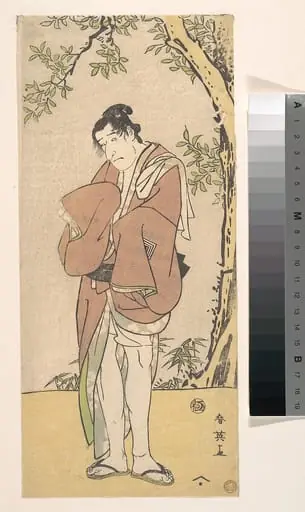
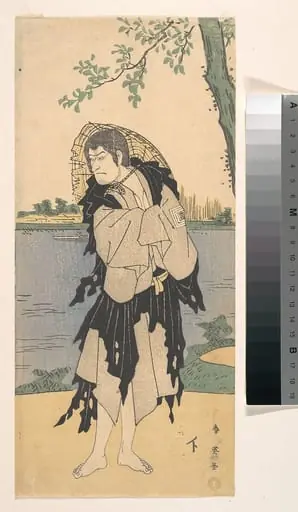
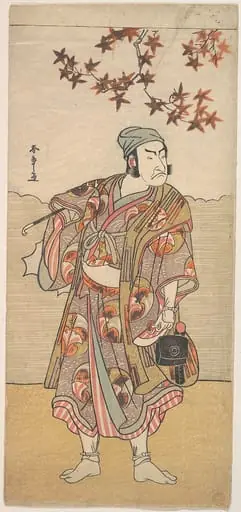
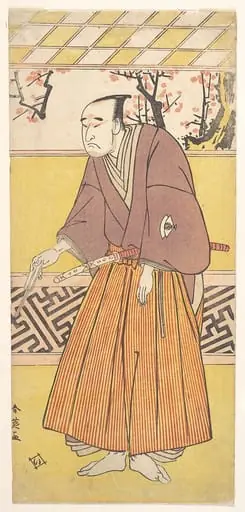
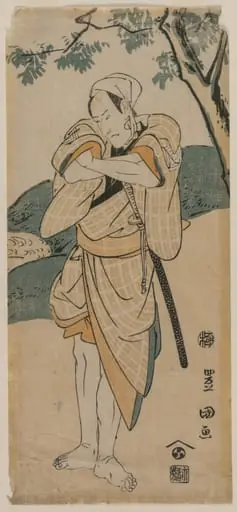
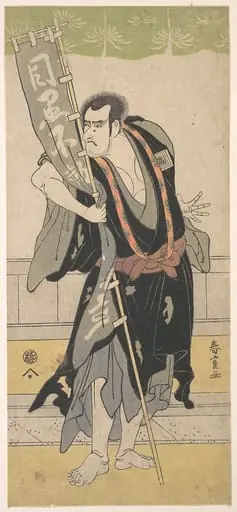
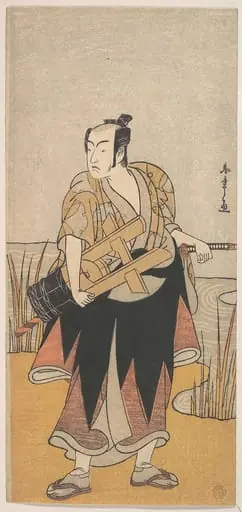
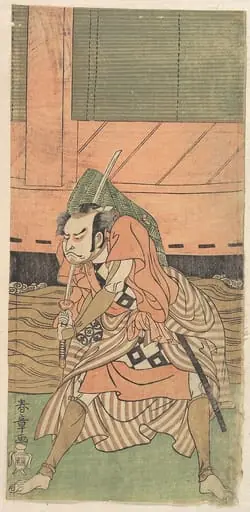
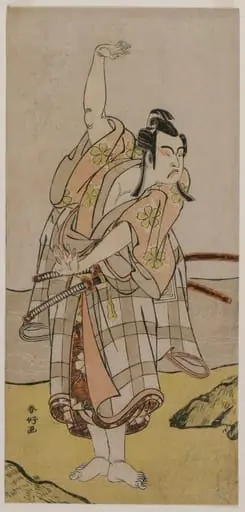
七代目片岡仁左衛門の安達が原のこつがいにん黒塚ばゝア|The Actor Kataoka Nizaemon VII as the Old Beggar Woman Kurozuka Babā at Adachigahara
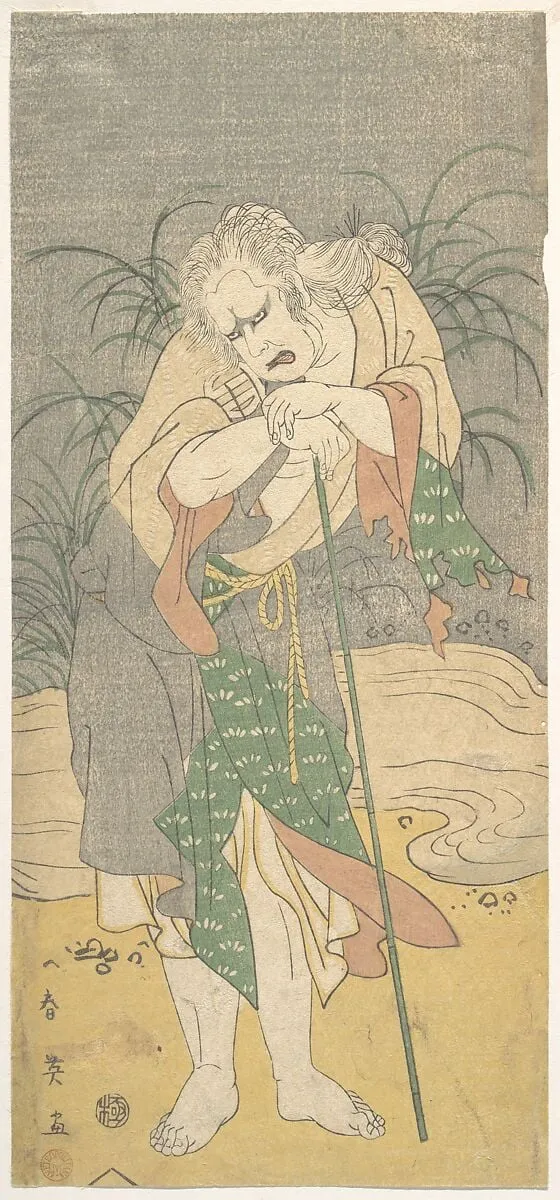
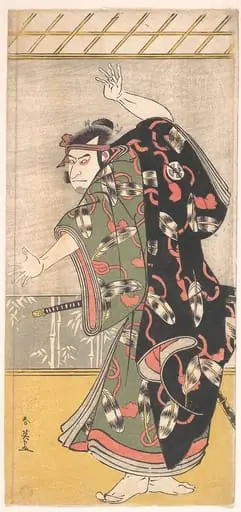
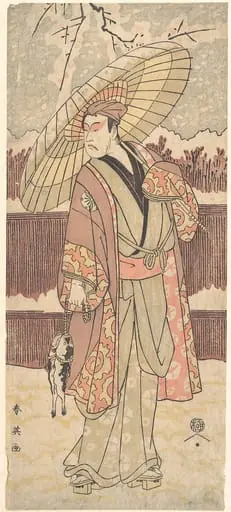
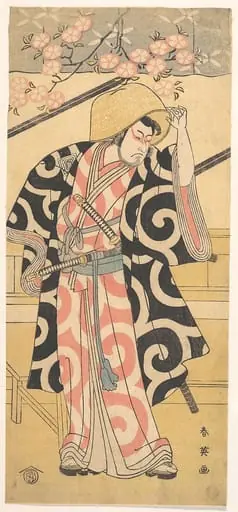
七代目片岡仁左衛門の安達が原のこつがいにん黒塚ばゝア|The Actor Kataoka Nizaemon VII as the Old Beggar Woman Kurozuka Babā at Adachigahara is an ink print by the Romanticist artist Katsukawa Shun'ei 勝川春英. It dates from 1795 and is held in the collection of the Metropolitan Museum of Art.
About this work
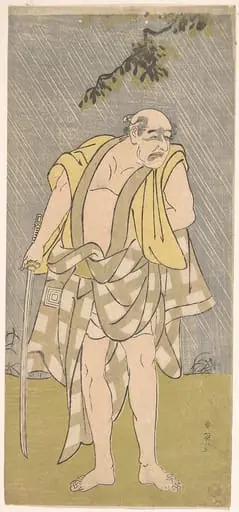
This painting shows a man with a cane, dressed in a traditional Japanese outfit.
This painting shows a man with a cane, dressed in a traditional Japanese outfit. He has a green and white patterned kimono and a yellow robe over it. The man is standing in front of a plant with long, thin leaves.
The man is holding his cane with both hands and looking down. His face is serious, and he has a bit of hair on his head. The background of the painting is a light brown color.
The painting is by Katsukawa Shun'ei, a Japanese artist from the 18th century.
Overview
This 1795 woodblock print, part of a triptych, depicts Kataoka Nizaemon VII in the role of Kurozuka Babā, an old beggar woman, set against the backdrop of Adachigahara. Created by Katsukawa Shun'ei, it is now in The Metropolitan Museum of Art's collection.
Subject & Meaning
The print showcases Kataoka Nizaemon VII, a renowned actor, cross-dressing as Kurozuka Babā, highlighting the theatrical tradition of male actors portraying female roles (onnagata) in Japanese kabuki. The character's somber demeanor and attire reflect the role's narrative context.
Technique & Style
Executed as a nishiki-e woodblock print, the work features ink and color on paper, characteristic of 18th-century Japanese ukiyo-e. The composition emphasizes the actor's posture, attire (notably a green and white kimono under a yellow robe), and interaction with a minimalist, light-brown background adorned with a plant.
History & Provenance
Created in 1795 by Katsukawa Shun'ei, a lesser-known artist of the time, the print is significant for its depiction of a prominent actor in a specific role. It is currently housed at The Metropolitan Museum of Art.
Context
The work reflects late 18th-century Japanese theatrical culture, particularly the kabuki tradition, and the artistic practices of ukiyo-e during this period. It also touches on the societal acceptance of onnagata roles.
Legacy
While specific legacy details of this exact print are not widely highlighted, it contributes to the broader understanding of kabuki's visual and performative history, as well as the evolution of ukiyo-e in capturing theatrical personalities of the time.
Artist & collection