Artwork
五代目市川団十郎|Scene from the Play Yoshitsune and the Thousand Cherry Trees (Yoshitsune senbon zakura)
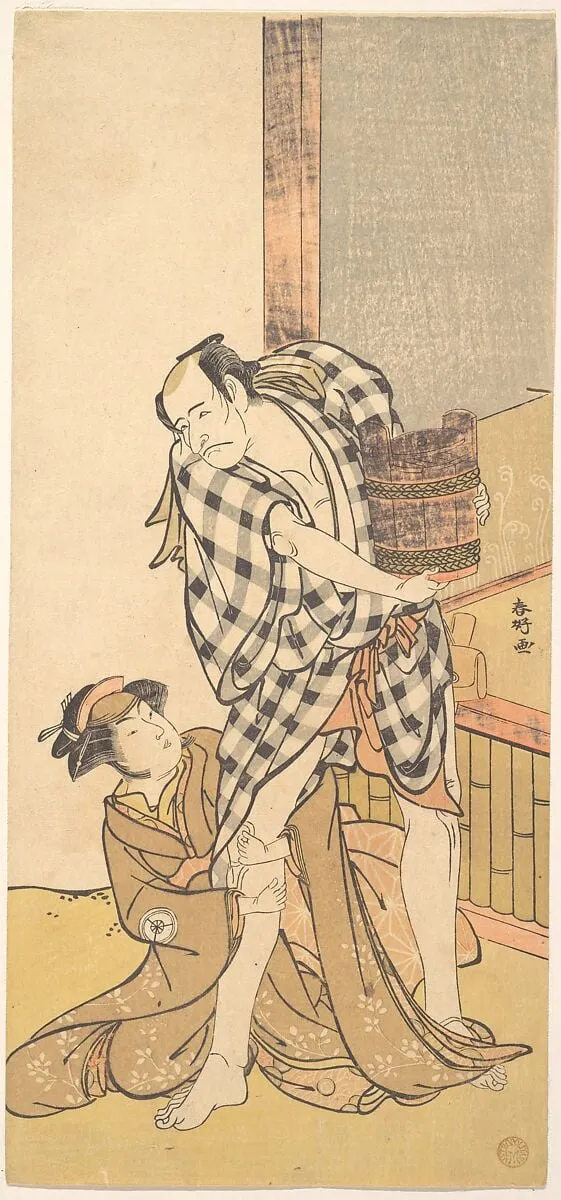
五代目市川団十郎|Scene from the Play Yoshitsune and the Thousand Cherry Trees (Yoshitsune senbon zakura) is an ink print by the Romanticist artist Katsukawa Shunkō. It dates from 8 and is held in the collection of the Metropolitan Museum of Art.
About this work
Overview
This woodblock print by Katsukawa Shunkō depicts a moment from the kabuki play Yoshitsune and the Thousand Cherry Trees. Created in the late 18th century, it captures a quiet interior scene with two figures, rendered in ink and color on paper. The work is part of the collection at The Metropolitan Museum of Art and exemplifies the ukiyo-e tradition of portraying theatrical performances.
Subject & Meaning
The composition reflects the dramatic tension and social hierarchy central to kabuki narratives, where everyday gestures carry symbolic weight.
The scene features two characters from the play: one kneeling, dressed plainly with a patterned obi, and the other standing, burdened by a woven basket and clad in a checkered robe. The standing figure likely portrays a servant or traveler, their bent posture suggesting movement paused mid-action. The composition reflects the dramatic tension and social hierarchy central to kabuki narratives, where everyday gestures carry symbolic weight.
Technique & Style
Shunkō employed traditional ukiyo-e woodblock printing methods, using fine lines and layered colors to define form and texture. The figures are rendered with subtle shading and precise outlines, while the sparse interior—marked by a wooden post and low table—creates depth without clutter. The restrained palette and focused composition emphasize emotional stillness within a dynamic theatrical context.
History & Provenance
The print was produced during the late Edo period, a time when actor portraits and scenes from popular plays were widely circulated as collectibles. It was likely commissioned to commemorate a performance by the fifth-generation Ichikawa Danjūrō, a leading kabuki actor of the era. The work entered The Metropolitan Museum of Art’s collection through documented acquisitions of Japanese prints in the 20th century.
Context
Kabuki theater in Edo-period Japan blended music, dance, and drama, with actors embodying archetypal roles through stylized movement. Prints like this served both as advertisements and souvenirs, allowing audiences to recall performances at home. Shunkō’s focus on a quiet, intimate moment contrasts with the play’s grander themes, offering a humanizing glimpse into the lives of supporting characters.
Legacy
Shunkō’s print contributes to a broader tradition of actor portraiture in ukiyo-e, preserving the visual language of kabuki for posterity. While less flamboyant than other prints of the period, its restraint reflects a nuanced approach to theatrical representation. It remains a valuable record of performance culture, illustrating how everyday gestures were codified into dramatic expression.
Artist & collection

Artist
Katsukawa Shunkō spent his life in Edo, where crowded theaters and teahouses buzzed around him.

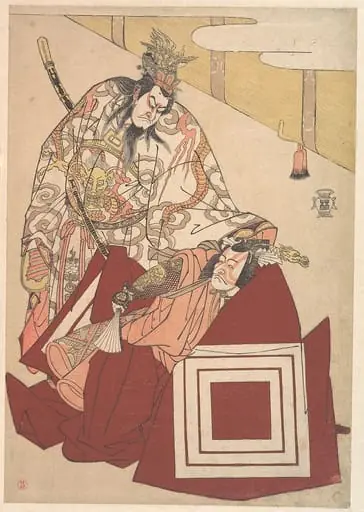 Untitled
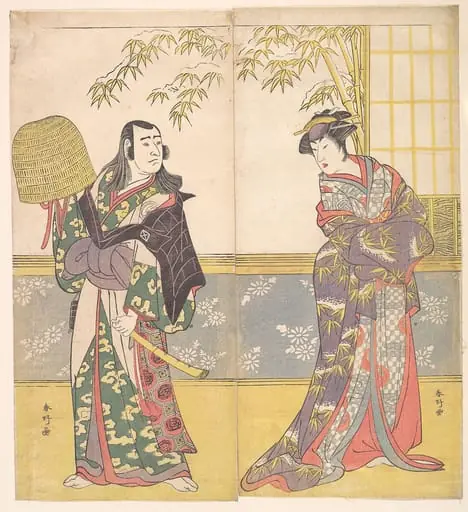 勝川春好画 三代目澤村宗十郎 三代目佐野川市松 |Kabuki Actors Sawamura Sōjūrō III and Sanogawa Ichimatsu III in "A Courtesan’s Mirror for the Eastern Provinces" (Keisei Azuma kagami)
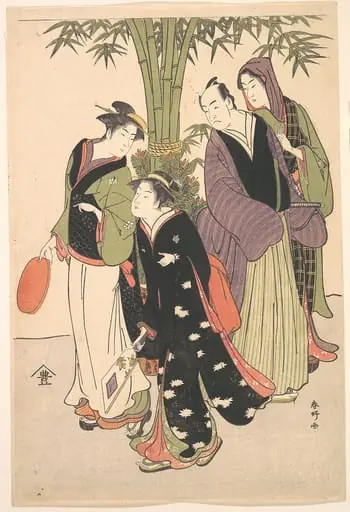 勝川春好画 三代目瀬川菊之丞・二代目市川門之助|Kabuki Actors Segawa Kikunojō III and Ichikawa Monnosuke II and Two Courtesans Celebrating the New Year
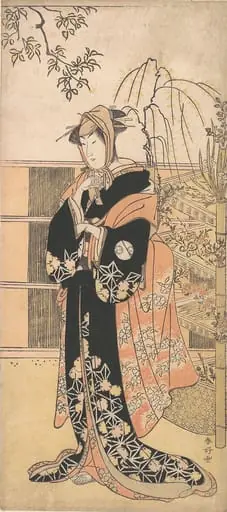 勝川春好画 三代目瀬川菊之丞|Kabuki Actor Segawa Kikunojō III in a Woman’s Role
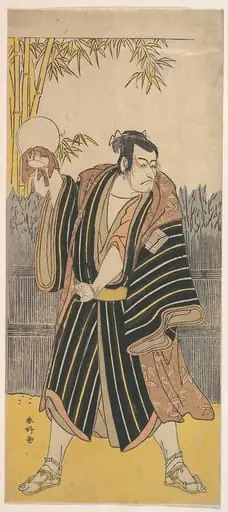 勝川春好画 七代目片岡仁左衛門 五代目市川團十郎|Kabuki Actor Ichikawa Danjūrō V
 Untitled
 Untitled
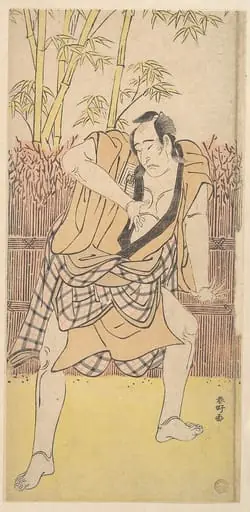 Untitled
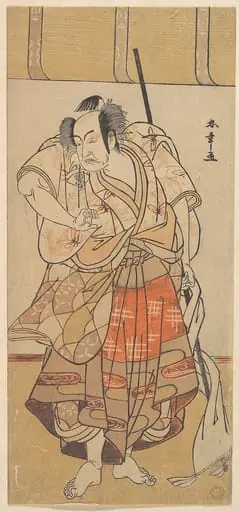 Untitled
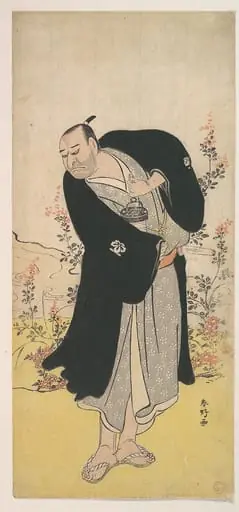 六代目中山小十郎|Kabuki Actor Nakayama Kojūrō VI
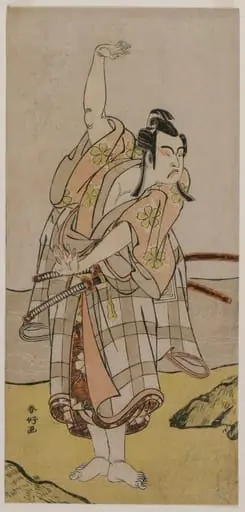 Actor Ichikawa Yaozō II as Sakuramaru
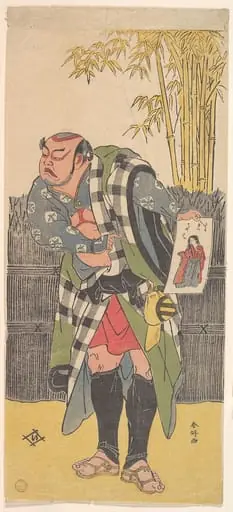 勝川春好画 七代目片岡仁左衛門 五代目市川團十郎|Kabuki Actor Kataoka Nizaemon VII
 Untitled
 Untitled
 Untitled
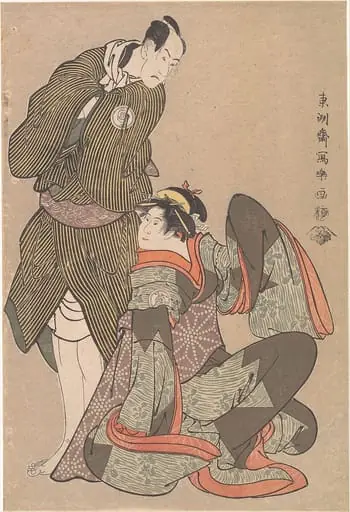 東洲斎写楽画 三代目坂東彦三郎の帯屋長右衛門と四代目岩井半四郎の信濃 屋お半 『二本松陸奥生長』|Bandō Hikosaburō III in the Role of Obiya Chōemon and Iwai Hanshiro IV in the Role of Shinanoya Ohan, from the Play “Nihonmatsu Michinoku sodachi”
 Untitled
 Untitled