Artwork
Untitled
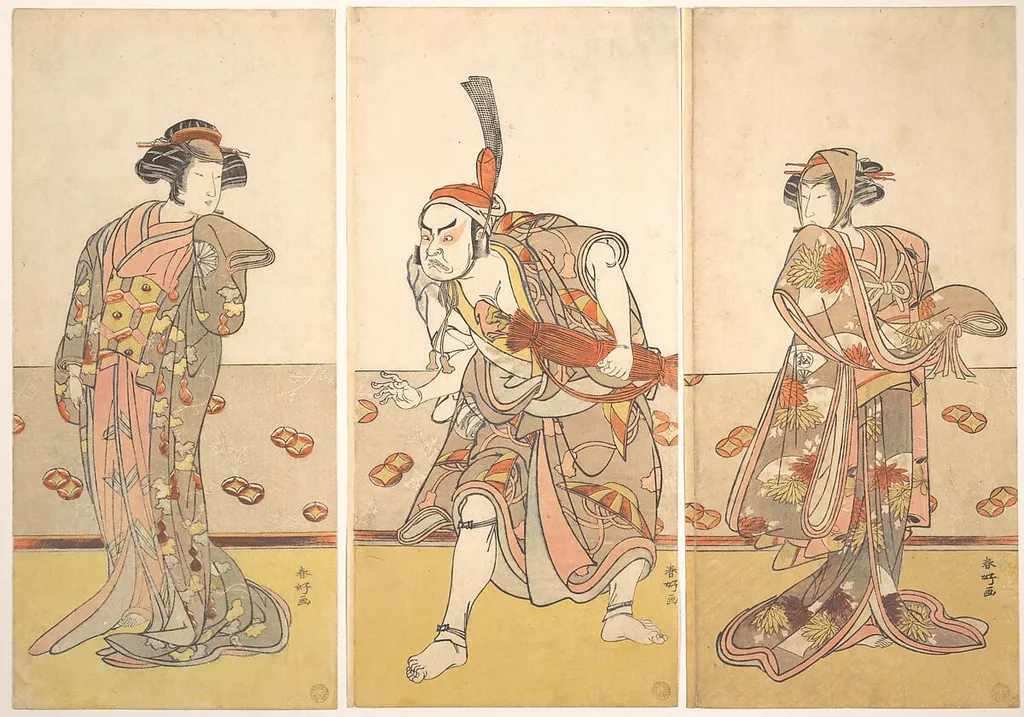
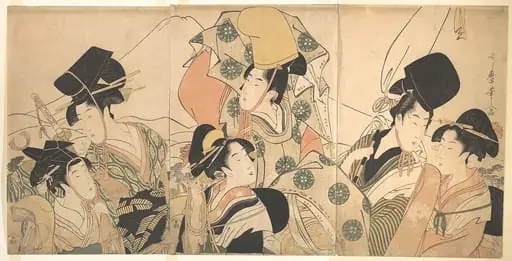
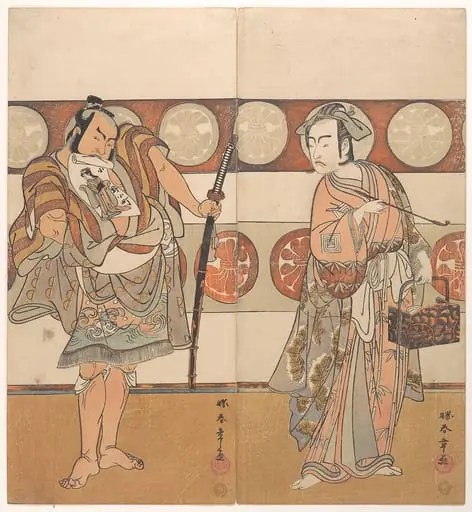
Untitled is an ink print by the Romanticist artist Katsukawa Shunkō. It dates from 1785 and is held in the collection of the Metropolitan Museum of Art.
About this work
Overview
The work is part of The Metropolitan Museum of Art’s collection and exemplifies the ukiyo-e tradition of capturing fleeting moments in everyday life.
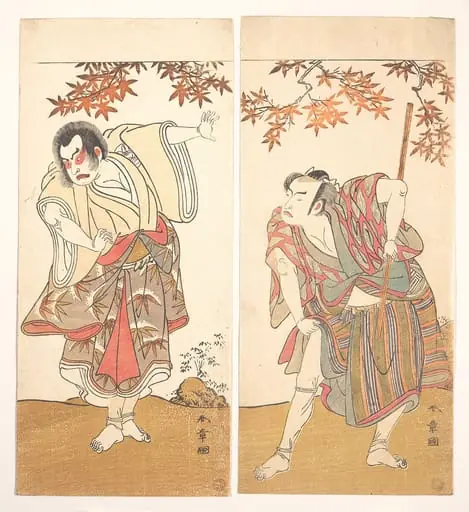
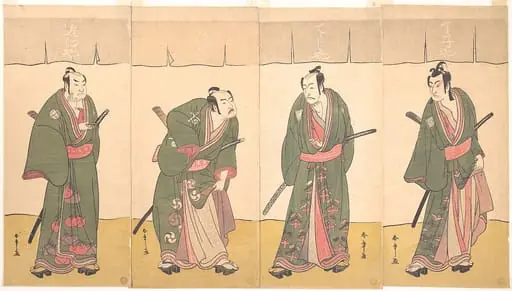
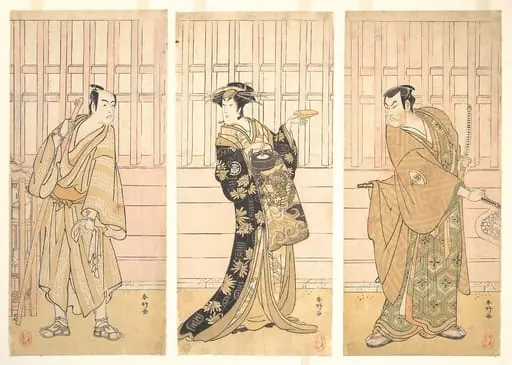
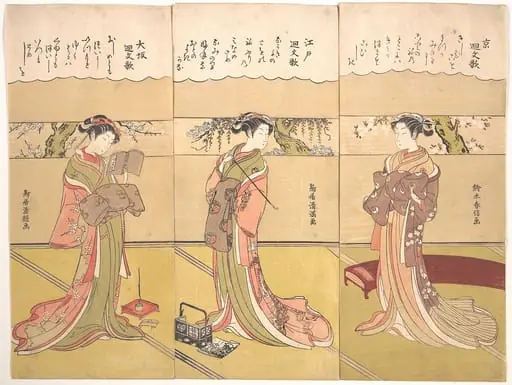
This triptych, created around 1785 by Katsukawa Shunkō, consists of three woodblock prints on paper, each depicting a single figure in motion. The work is part of The Metropolitan Museum of Art’s collection and exemplifies the ukiyo-e tradition of capturing fleeting moments in everyday life. The composition is structured to guide the viewer’s eye across the three panels, each figure contributing to a unified sense of transient action.
Subject & Meaning
The three figures—two women and one man—are rendered with distinct postures and gazes, suggesting individual emotional states rather than a narrative. Their downward looks and twisted stances imply introspection or sudden interruption, though no clear story is presented. The scattered objects above them hint at an unseen event, perhaps a fall or dispersal, deepening the ambiguity. The work invites contemplation of impermanence and unspoken tension.
Technique & Style
Shunkō employed bold, clean outlines and flat areas of vibrant color typical of late Edo-period woodblock printing. The figures are rendered with precise linework that emphasizes movement, while the minimal background focuses attention on their gestures. Subtle gradations in ink and selective use of color enhance depth without realism, reflecting the stylized aesthetic of ukiyo-e. The triptych format allows for rhythmic visual pacing across the panels.
History & Provenance
Created during the height of ukiyo-e production, this triptych likely circulated as a print for private collectors or theater patrons. It entered The Metropolitan Museum of Art’s collection through documented acquisitions in the 20th century, though its earlier ownership remains undocumented. Its survival in good condition reflects careful preservation, common among works collected by Western institutions in the post-Meiji era.
Context
Shunkō worked within the Katsukawa school, known for portraits of actors and beauties. This triptych diverges from typical actor or courtesan subjects, suggesting a more experimental or personal direction. The absence of identifying labels or titles aligns with a growing trend in the 1780s toward abstract or emotionally evocative imagery, moving beyond literal representation toward psychological suggestion.
Legacy
Though not widely reproduced or cited in major scholarly texts, this work exemplifies the quiet innovation within late 18th-century ukiyo-e. Its focus on individual expression over narrative, and its restrained use of space, anticipate later developments in Japanese printmaking. It remains a quiet testament to the genre’s capacity for subtlety beyond its more flamboyant conventions.
Artist & collection

Artist
Katsukawa Shunkō spent his life in Edo, where crowded theaters and teahouses buzzed around him.

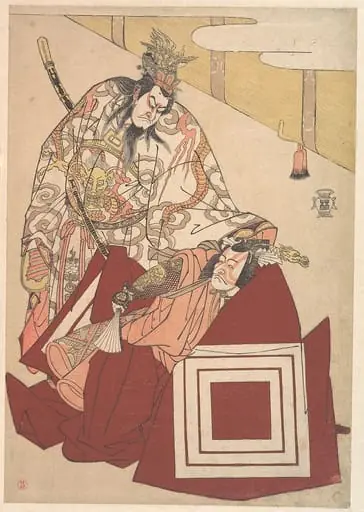 Untitled
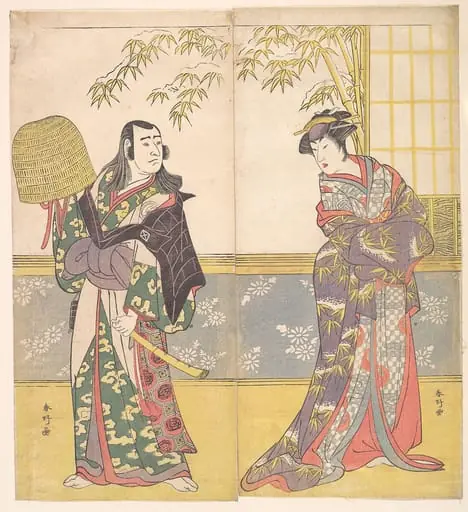 勝川春好画 三代目澤村宗十郎 三代目佐野川市松 |Kabuki Actors Sawamura Sōjūrō III and Sanogawa Ichimatsu III in "A Courtesan’s Mirror for the Eastern Provinces" (Keisei Azuma kagami)
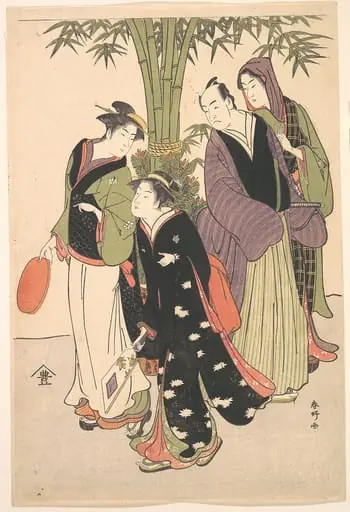 勝川春好画 三代目瀬川菊之丞・二代目市川門之助|Kabuki Actors Segawa Kikunojō III and Ichikawa Monnosuke II and Two Courtesans Celebrating the New Year
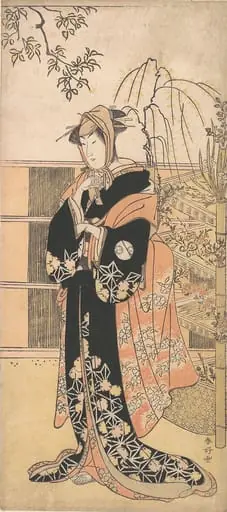 勝川春好画 三代目瀬川菊之丞|Kabuki Actor Segawa Kikunojō III in a Woman’s Role
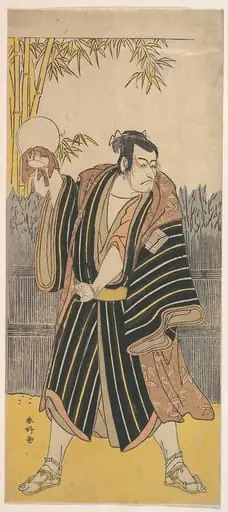 勝川春好画 七代目片岡仁左衛門 五代目市川團十郎|Kabuki Actor Ichikawa Danjūrō V
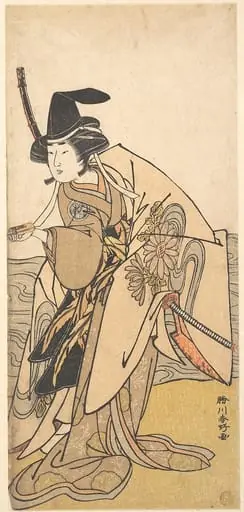 Untitled
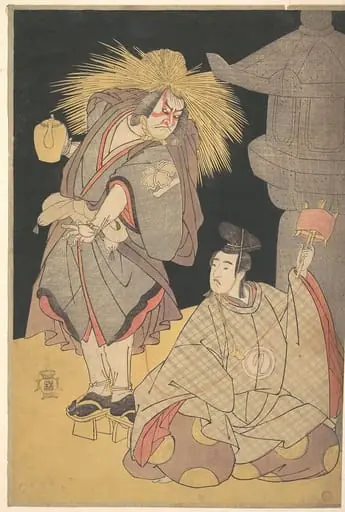 Untitled
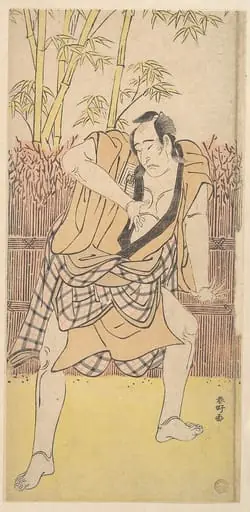 Untitled
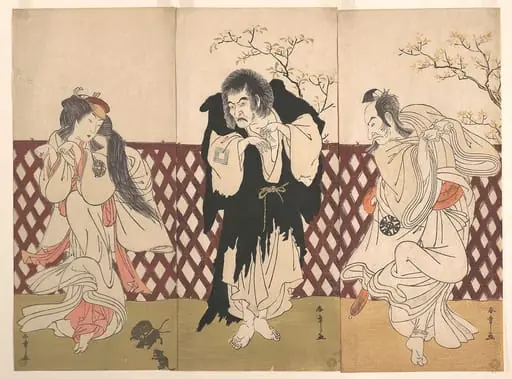 Untitled
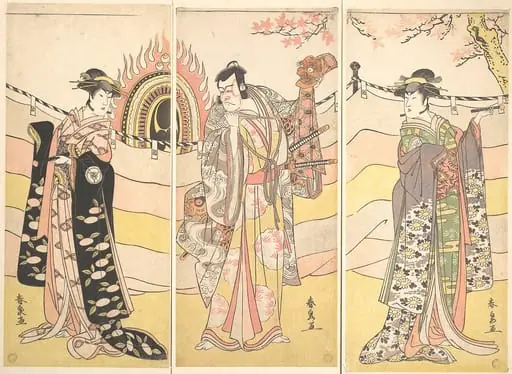 Untitled
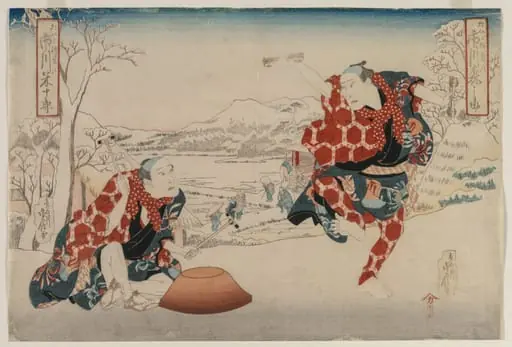 Ichikawa Norinosuke and Ichikawa Yonejuro as Morihachi and Yonehachi, Two Comedians
 Untitled
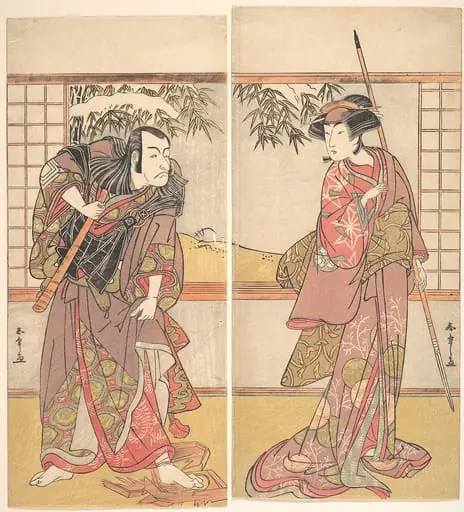 勝川春章画 二代目小佐川常世・五代目市川団十郎|Kabuki Actors Osagawa Tsuneyo II and Ichikawa Danjūrō V
 Untitled
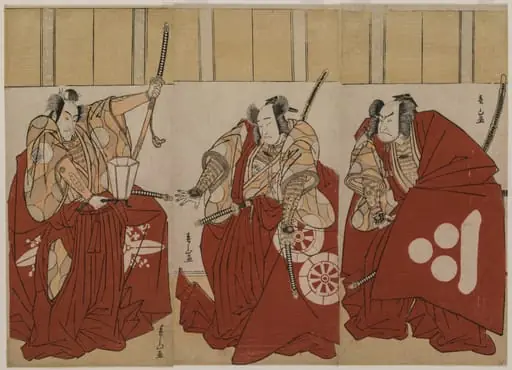 Ichikawa Monnosuke II as Urabe Suetake, Onoe Matsusuke I as Usui Sadamitsu, and Nakamura Nakazo I as Watanabe no Tsuna in “The Four Heavenly Kings Costumed as the Night Watch”
 Untitled
 Untitled
 Untitled
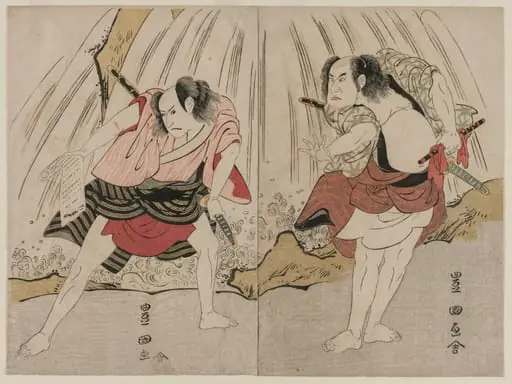 Kataoka Nizaemon VII and Ichikawa Yaozo III in a Confrontation Beside a Waterfall
 Untitled