Artwork
Tatohe uta|Analogy
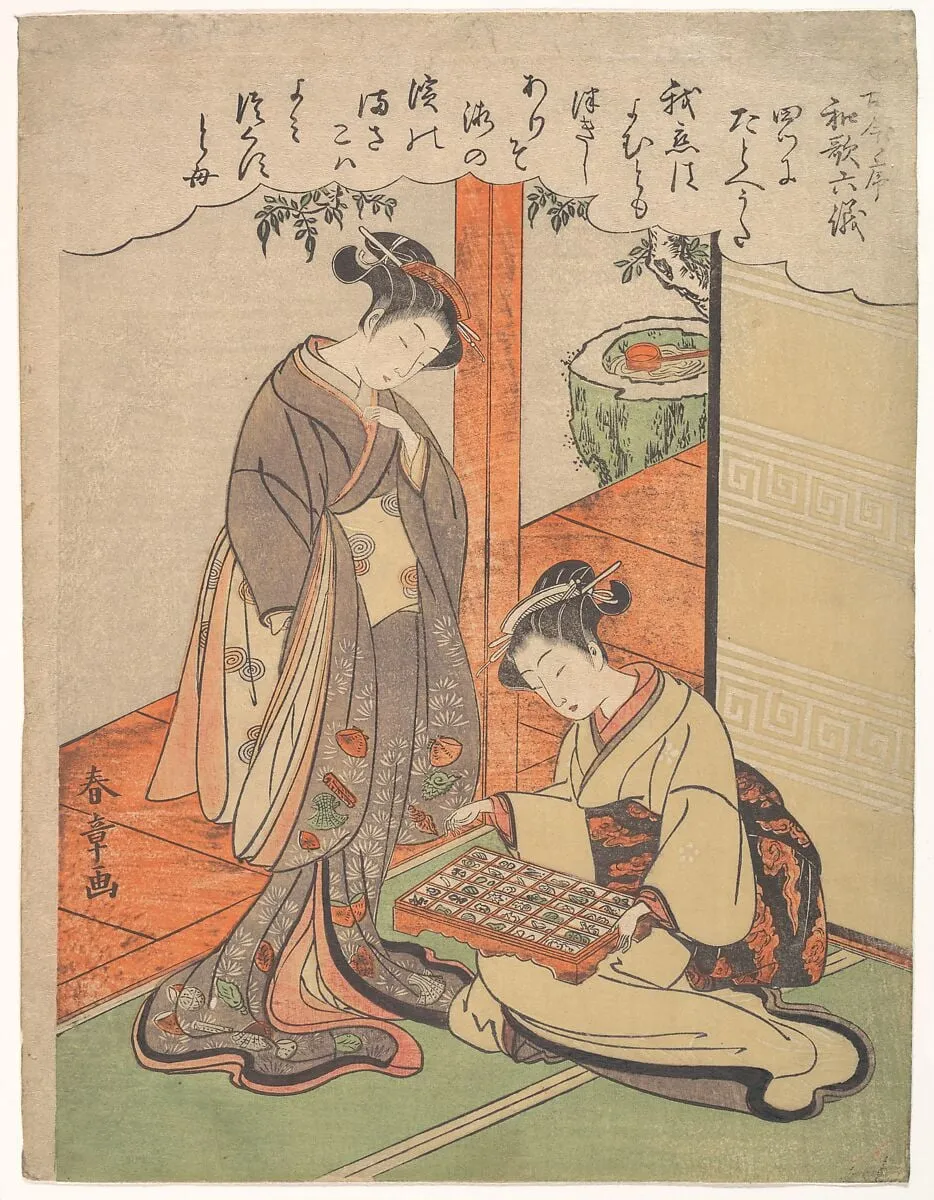
Tatohe uta|Analogy is an ink print by the Romanticist artist Katsukawa Shunshō. It dates from 1783 and is held in the collection of the Metropolitan Museum of Art.
About this work
Overview
Tatohe uta|Analogy is a nishiki-e woodblock print created by Katsukawa Shunshō in 1783, currently part of The Metropolitan Museum of Art's collection.
Subject & Meaning
The print depicts a serene domestic scene with two women engaged in distinct activities: one standing by a door in a vibrantly accented robe, the other kneeling on a tatami mat, intently focused on a wooden tray that may be a game board. Their contrasting attire and poses suggest differing roles or moments in their daily lives.
Technique & Style
The print showcases the artist's use of cross-hatching to achieve depth, complemented by a thoughtful palette: soft grays and bright red accents on the standing woman's robe contrast with the kneeling woman's earthy-toned outfit, set against the calm backdrop of a room illuminated by natural light through a window.
History & Provenance
Created in 1783, the work is now held in the collection of The Metropolitan Museum of Art, though specific details of its journey to the museum are not provided here.
Context
As a nishiki-e print from the late 18th century, Tatohe uta|Analogy reflects the era's interest in capturing everyday life with nuanced attention to detail and composition, characteristic of Japanese ukiyo-e art of the time.
Legacy
While specific influences or notable exhibitions of Tatohe uta|Analogy are not detailed here, as part of a prominent museum's collection, it contributes to the broader understanding and appreciation of Katsukawa Shunshō's work and 18th-century Japanese woodblock printing techniques.
Artist & collection
Artist
Katsukawa Shunshō spent his life in Edo (now Tokyo), where the city’s teahouses and theaters buzzed with energy.

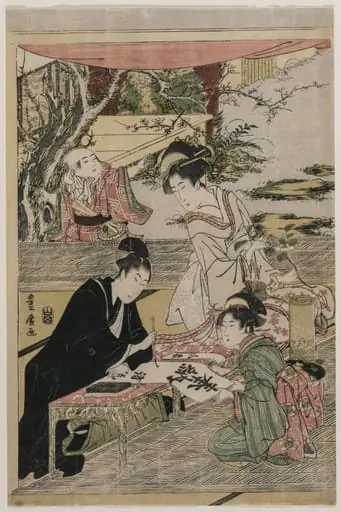 Young Man Writing at a Table
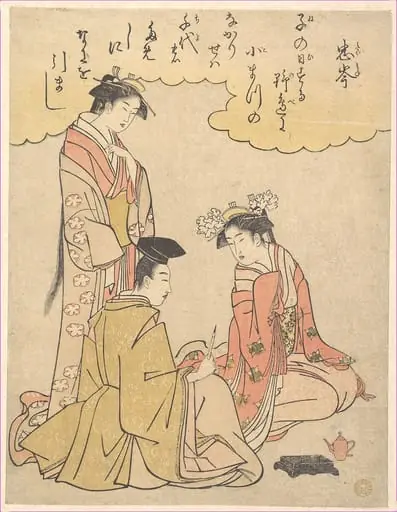 礫川亭永理 (鳥橋斎栄里)画 壬生忠岑の見立絵|Courtier and Two Ladies of the Court, with a Poem by Mibu no Tadamine
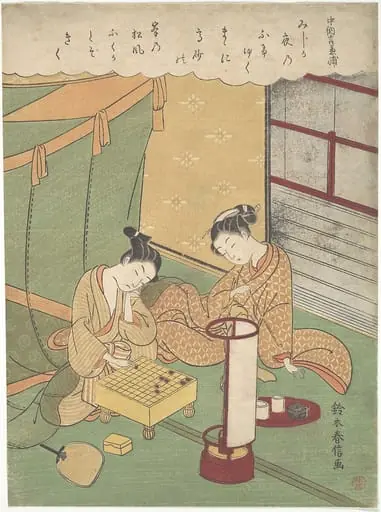 鈴木春信画 将棋・三十六歌仙 「中納言兼輔」|A Young Woman and Man Playing Shōgi (Japanese Chess); Chūnagon Kanesuke, from a series alluding to the Thirty-Six Poetic Immortals (Sanjūrokkasen)
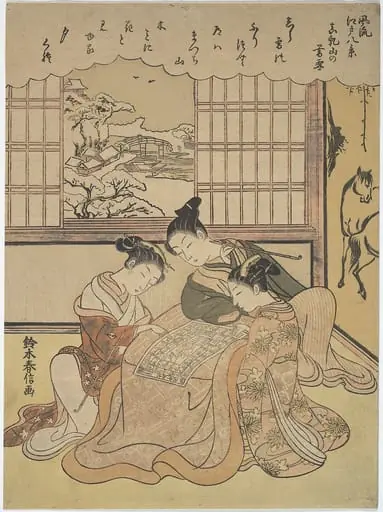 風流江戸八景 真乳山の暮雪|Evening Snow on Matsuchi Hilll, from the series Eight Fashionable Views of Edo (Furyu Edo hakkei)
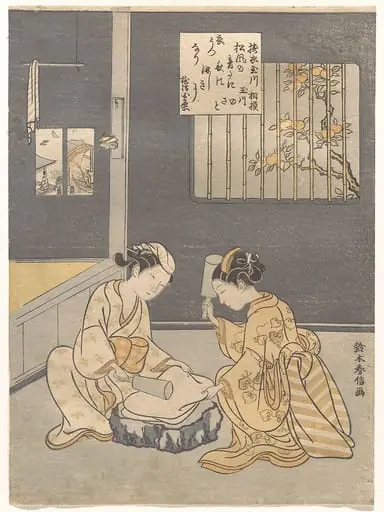 鈴木春信画 六玉川 「壔衣の玉川 摂津の名所」|Kōromō Uchi Tamagawa|The Cloth-Fulling Jewel River, a Famous Place in Settsu Province (Tōi no Tamagawa, Settsu no meisho), from an untitled series of Six Jewel Rivers (Mu Tamagawa)
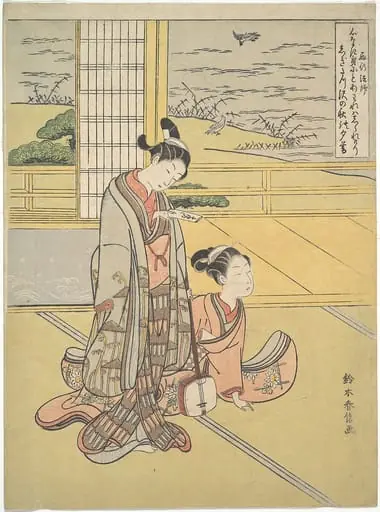 鈴木春信画 見立三夕 「西行法師」|A Young Man and Woman with a Shamisen; Monk Saigyō, from a series alluding to the Three Evening Poems (Sanseki waka)
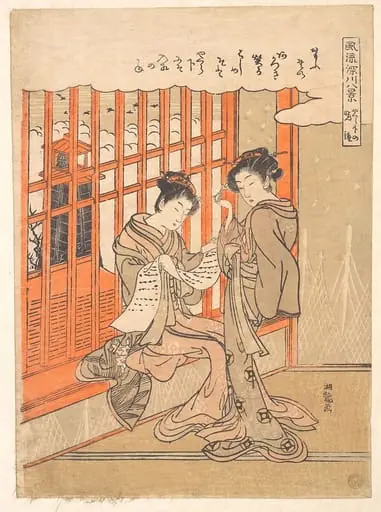 Untitled
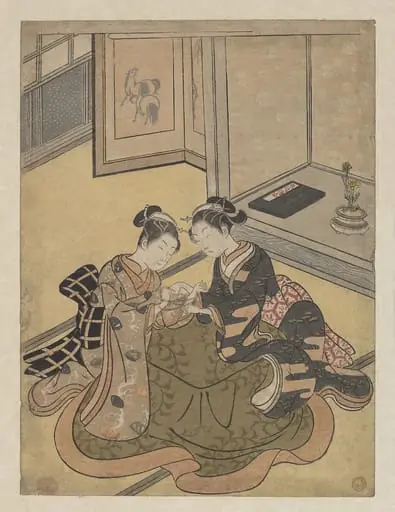 鈴木春信画 あやとり|Young Women Playing Cat’s Cradle (Ayatori)
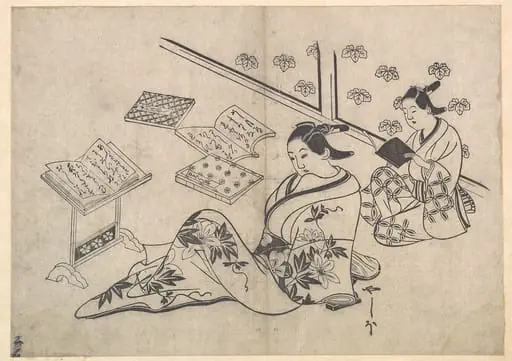 Untitled
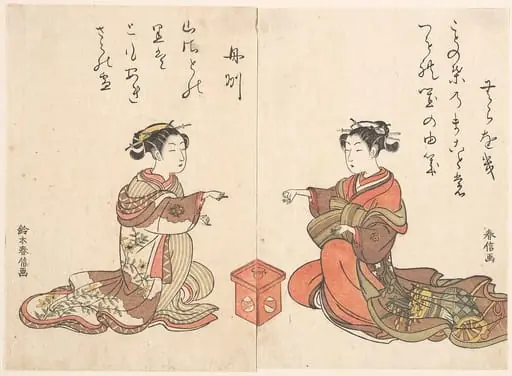 青楼美人合|Two Girls Play the Finger Game of Kitsume Ken