Artwork
風流江戸八景 真乳山の暮雪|Evening Snow on Matsuchi Hilll, from the series Eight Fashionable Views of Edo (Furyu Edo hakkei)
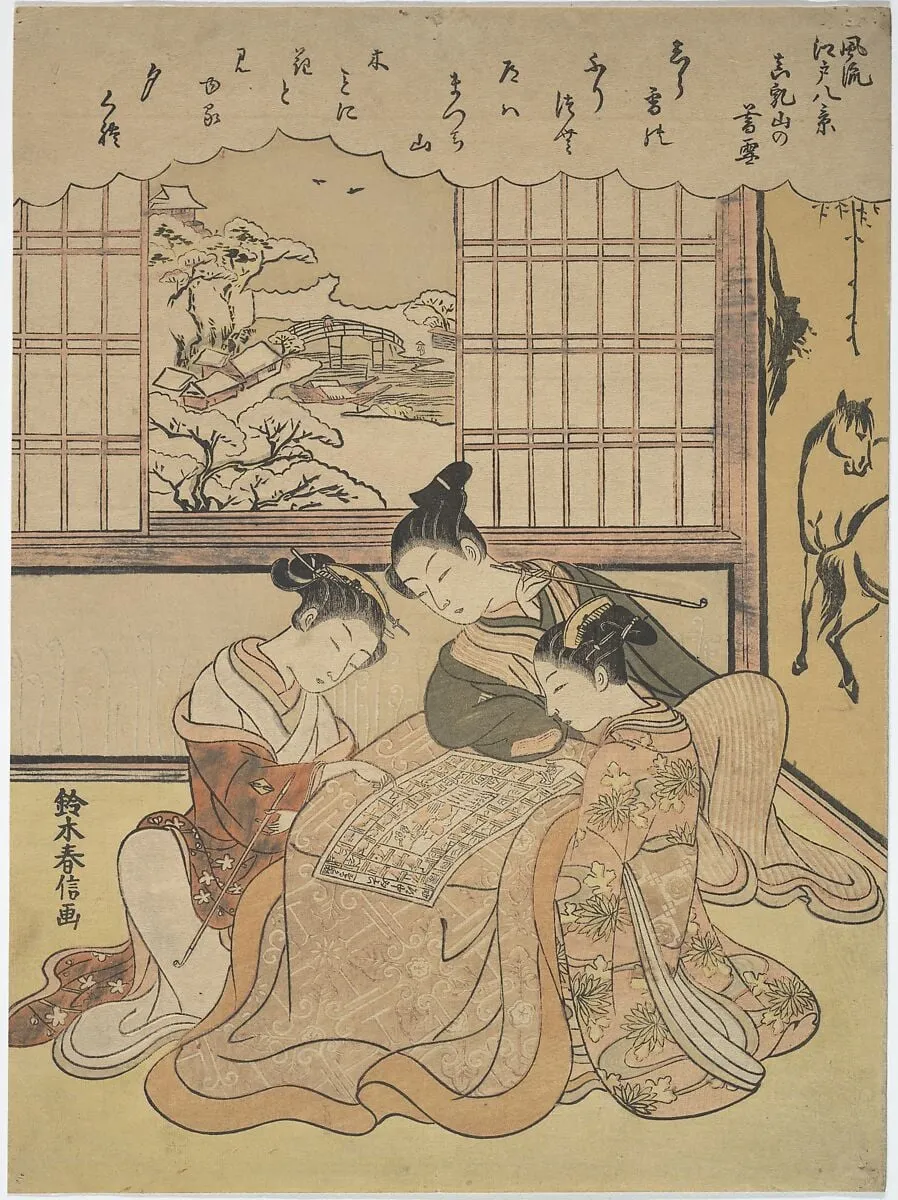
風流江戸八景 真乳山の暮雪|Evening Snow on Matsuchi Hilll, from the series Eight Fashionable Views of Edo (Furyu Edo hakkei) is an ink print by the Romanticist artist Suzuki Harunobu. It dates from 1768 and is held in the collection of the Metropolitan Museum of Art.
About this work
Overview
Suzuki Harunobu’s woodblock print, dated around 1768, belongs to his series Eight Fashionable Views of Edo. Executed in ink and color on paper, the image captures a winter scene on Matsuchi Hill, where a woman in a vivid kimono leans against a snow‑laden railing while companions shelter beneath an umbrella. A distant lantern adds a faint glow to the chilly atmosphere.
Subject & Meaning
The composition centers on a solitary figure observing falling snow, accompanied by two friends whose breath is barely visible in the cold air. A small board game, Sugoroku, is depicted in the corner, linking the scene to a popular pastime and suggesting a leisurely, everyday moment rather than a grand landscape.
Technique & Style
Harunobu employs the ukiyo‑e woodblock method, layering ink and pigments to render delicate snowflakes and the sheen of wet surfaces. The bright kimono contrasts with the muted whites, while subtle gradations of tone convey depth. The print’s light, playful atmosphere reflects Harunobu’s characteristic approach to rendering urban scenes with refined elegance.
History & Provenance
Created in the late 1760s, the work formed part of the Eight Fashionable Views of Edo, a series that reinterpreted celebrated Chinese landscape motifs by inserting ordinary Edo life. The prints were circulated among the city’s literate classes, who appreciated the blend of familiar settings with the prestige of classical references.
Context
During the mid‑Edo period, artists often borrowed compositional ideas from Chinese scenery, yet Harunobu’s series replaces temples and mountains with recognizable streets, games, and seasonal activities. This shift mirrors a broader cultural trend that celebrated the pleasures of daily urban existence, aligning with the rise of a consumer‑oriented, pleasure‑seeking society.
Artist & collection

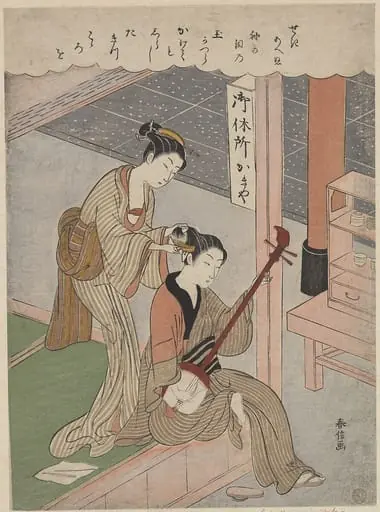
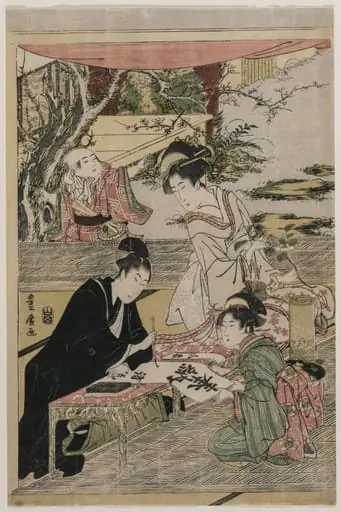 Young Man Writing at a Table
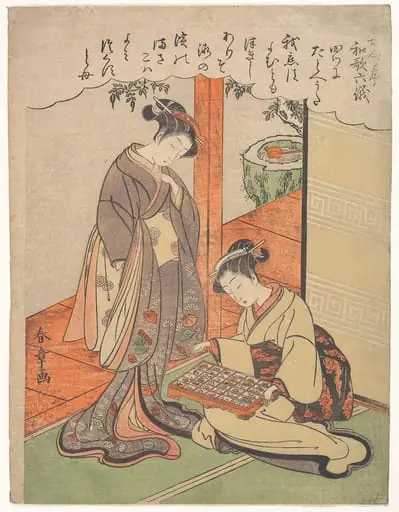 Tatohe uta|Analogy
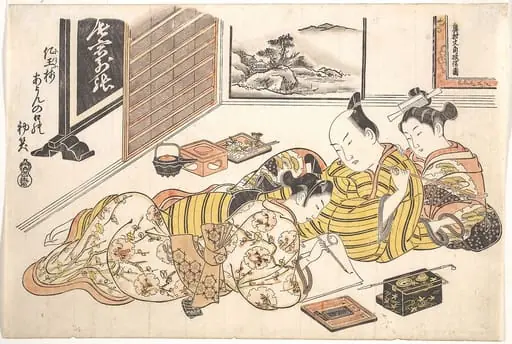 『閨の雛形』 正月|Plate from the Erotic Book Mounds of Dyed Colors: A Pattern Book for the Boudoir (Someiro no yama neya no hinagata), First Month
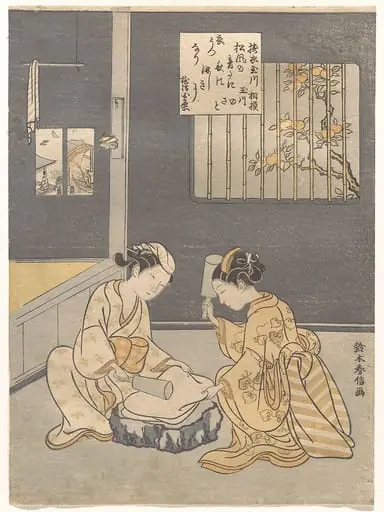 鈴木春信画 六玉川 「壔衣の玉川 摂津の名所」|Kōromō Uchi Tamagawa|The Cloth-Fulling Jewel River, a Famous Place in Settsu Province (Tōi no Tamagawa, Settsu no meisho), from an untitled series of Six Jewel Rivers (Mu Tamagawa)
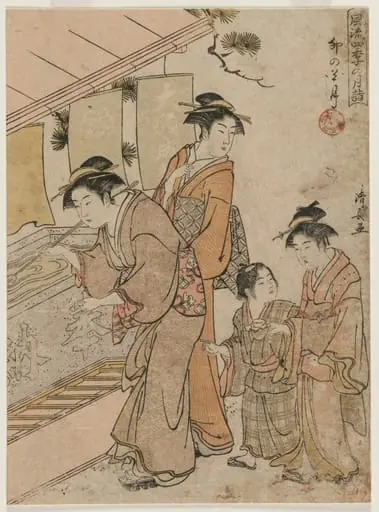 The Fourth Month (from the series Fashionable Monthly Visits to Temples in the Four Seasons)
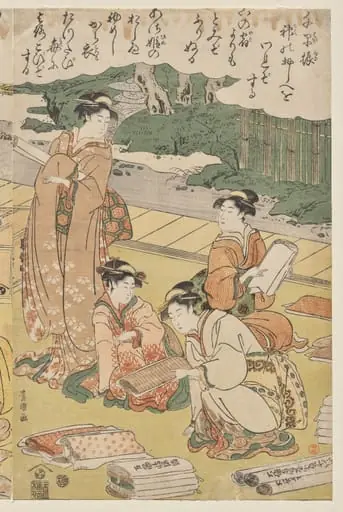 Women Making Clothing
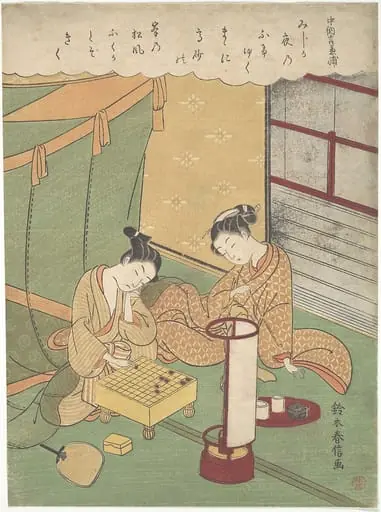 鈴木春信画 将棋・三十六歌仙 「中納言兼輔」|A Young Woman and Man Playing Shōgi (Japanese Chess); Chūnagon Kanesuke, from a series alluding to the Thirty-Six Poetic Immortals (Sanjūrokkasen)
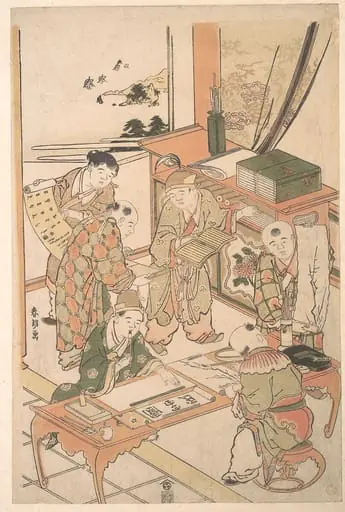 唐子書画図|Chinese Boys Learning to Write and Paint
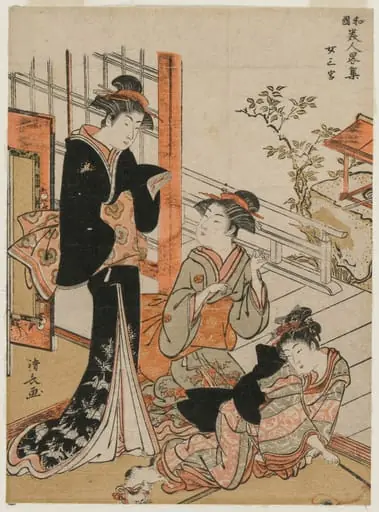 Three Women (from the series A Brief Collection of Japanese Beauties)
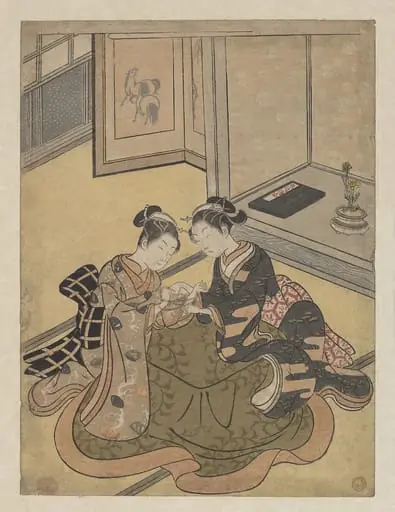 鈴木春信画 あやとり|Young Women Playing Cat’s Cradle (Ayatori)
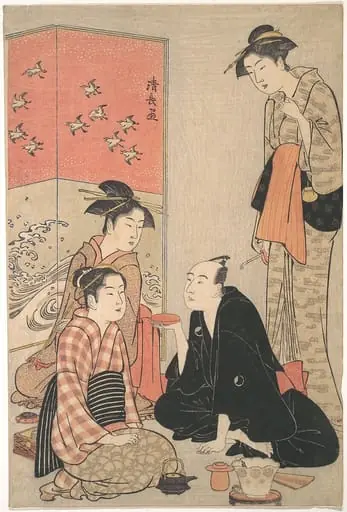 三代目沢村宗十郎と遊女|The Kabuki Actor Sawamura Sōjūrō III and Courtesans
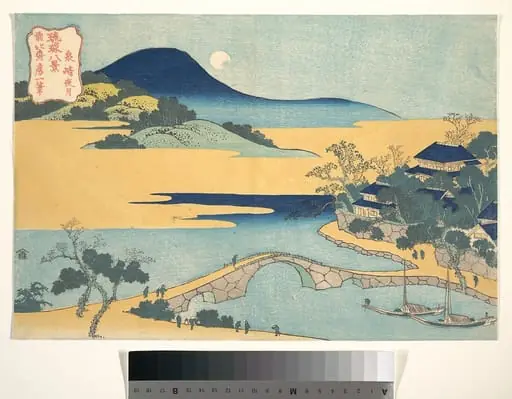 琉球八景 泉崎夜月|Evening Moon at Izumizaki (Izaumizaki yagetsu), from the series Eight Views of the Ryūkyū Islands (Ryūkyū hakkei)