Artwork
鈴木春信画 将棋・三十六歌仙 「中納言兼輔」|A Young Woman and Man Playing Shōgi (Japanese Chess); Chūnagon Kanesuke, from a series alluding to the Thirty-Six Poetic Immortals (Sanjūrokkasen)
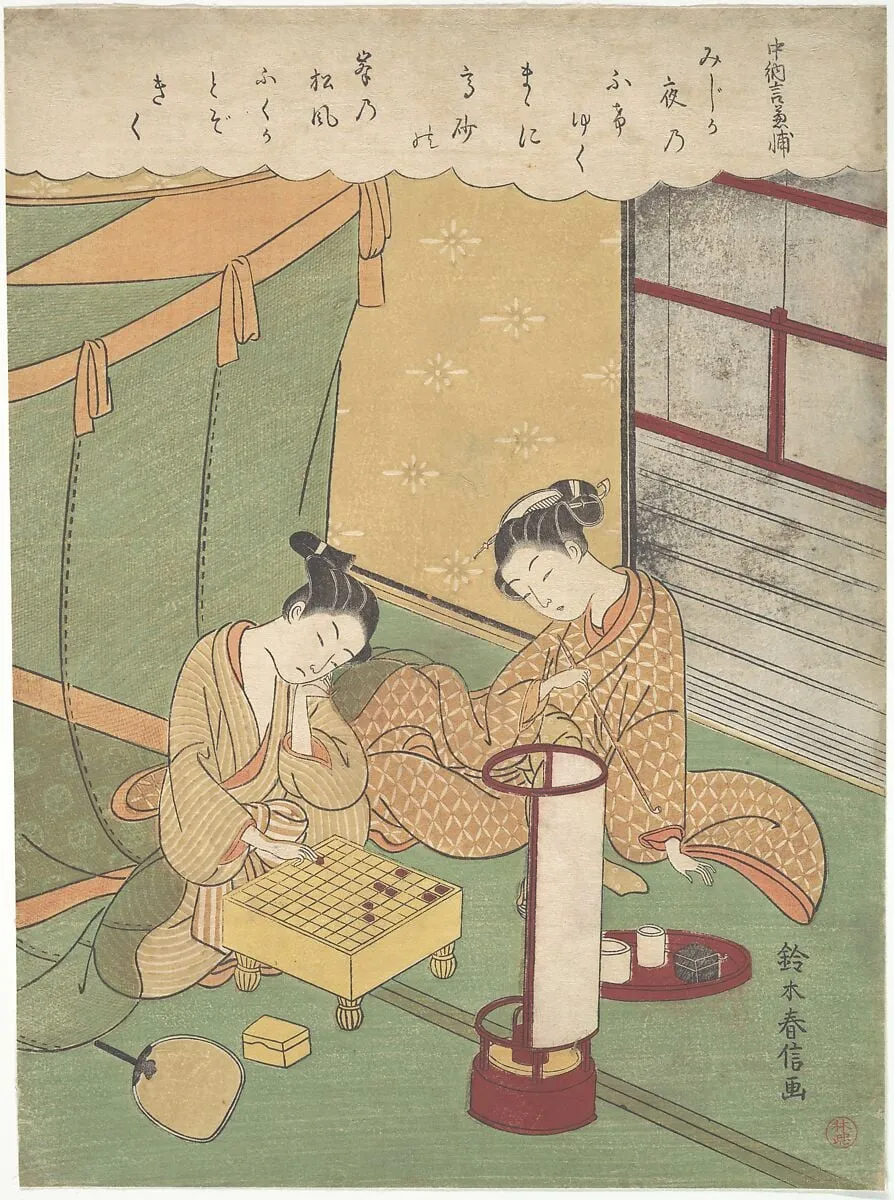
鈴木春信画 将棋・三十六歌仙 「中納言兼輔」|A Young Woman and Man Playing Shōgi (Japanese Chess); Chūnagon Kanesuke, from a series alluding to the Thirty-Six Poetic Immortals (Sanjūrokkasen) is an ink print by the Romanticist artist Suzuki Harunobu. It dates from 1768 and is held in the collection of the Metropolitan Museum of Art.
About this work
Overview
Rendered in ink and color on paper, it exemplifies the ukiyo-e style’s early refinement, blending everyday intimacy with literary allusion.
This woodblock print, created around 1768 by Suzuki Harunobu, is part of a series referencing the Thirty-Six Poetic Immortals, a revered group of classical Japanese poets. The image depicts a quiet interior scene of two figures engaged in shōgi, a traditional Japanese board game. Rendered in ink and color on paper, it exemplifies the ukiyo-e style’s early refinement, blending everyday intimacy with literary allusion.
Subject & Meaning
The figures represent Chūnagon Kanesuke, one of the Thirty-Six Poetic Immortals, and a companion, likely a woman of the court. Their focused game of shōgi symbolizes intellectual harmony and refined leisure, common themes in Heian-period poetry. The inclusion of a fan and tea service suggests a moment of contemplative pause, linking the scene to the poetic ideals of subtlety and emotional restraint.
Technique & Style
Harunobu employs delicate linework and muted, layered pigments typical of his nishiki-e innovations. The soft gradations of color, especially in the sky and garments, create a tranquil atmosphere. The composition frames the players within a confined space, with a glimpse of moonlit fencing beyond, using spatial depth and atmospheric perspective to enhance the scene’s quiet lyricism.
History & Provenance
Produced during the late 1760s, this print emerged from a period when Harunobu pioneered full-color woodblock printing in Edo. It was likely distributed as part of a limited series, appealing to literate urban patrons. The print entered The Metropolitan Museum of Art’s collection through established acquisitions of Japanese prints in the early 20th century.
Context
In mid-18th century Edo, ukiyo-e prints increasingly drew from classical literature to elevate popular imagery. Harunobu’s series reimagined ancient poets through contemporary domestic scenes, bridging aristocratic tradition with urban culture. The choice of shōgi—a game associated with courtly refinement—reinforced the connection between poetic legacy and cultivated leisure.
Legacy
Harunobu’s integration of literary themes into everyday imagery influenced later ukiyo-e artists to explore narrative depth beyond mere portraiture or entertainment. This print remains a key example of how woodblock printing became a vehicle for cultural memory, transforming poetic heritage into accessible visual poetry for a broad audience.
Artist & collection

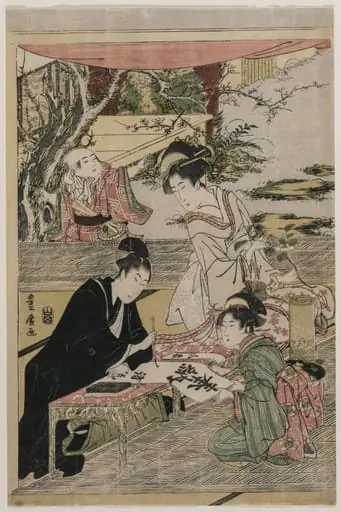 Young Man Writing at a Table
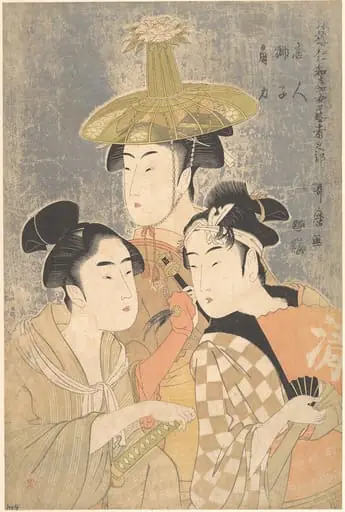 青楼仁和嘉女芸者之部 唐人 獅子 角力|Seiro Niwaka Onna Geisha no Bu Tojin Shishi Sumo
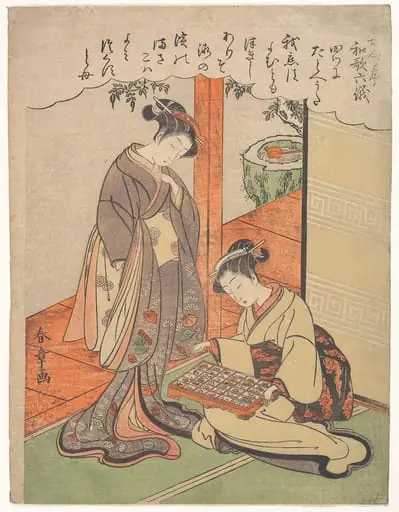 Tatohe uta|Analogy
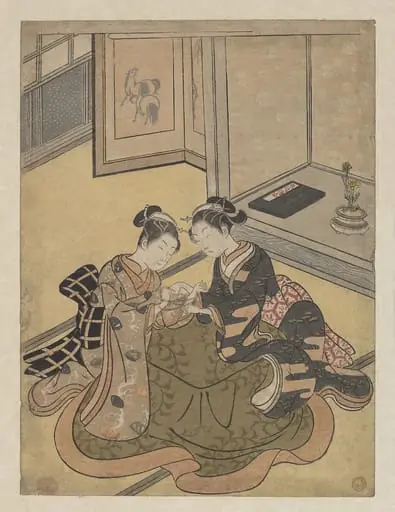 鈴木春信画 あやとり|Young Women Playing Cat’s Cradle (Ayatori)
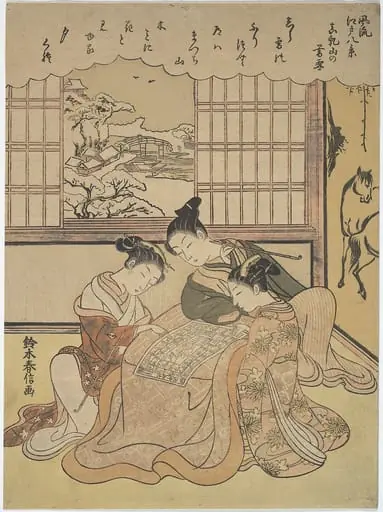 風流江戸八景 真乳山の暮雪|Evening Snow on Matsuchi Hilll, from the series Eight Fashionable Views of Edo (Furyu Edo hakkei)
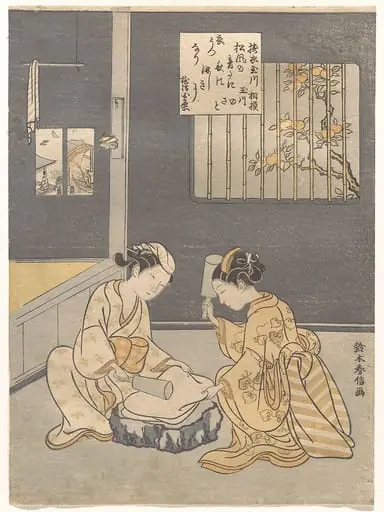 鈴木春信画 六玉川 「壔衣の玉川 摂津の名所」|Kōromō Uchi Tamagawa|The Cloth-Fulling Jewel River, a Famous Place in Settsu Province (Tōi no Tamagawa, Settsu no meisho), from an untitled series of Six Jewel Rivers (Mu Tamagawa)
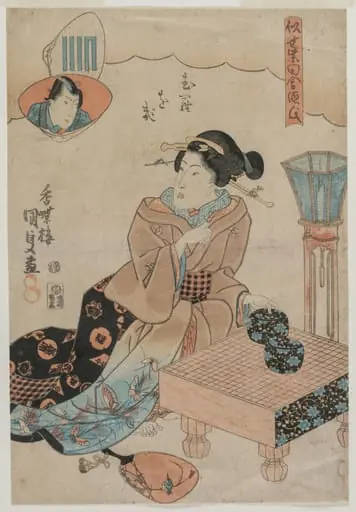 Muraogi, from the series The False Murasaki's Rustic Genji (Nise Murasaki Inaka Genji)
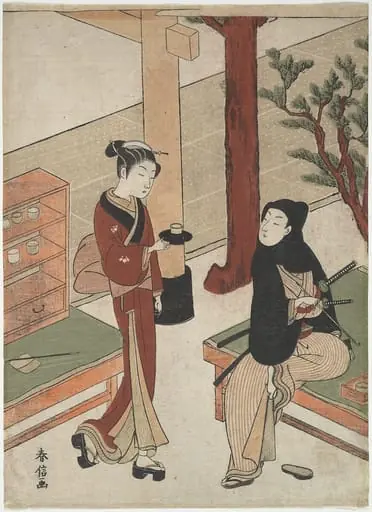 Untitled
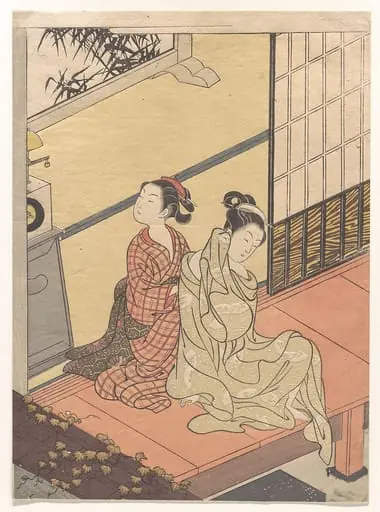 鈴木春信画 坐鋪八景 とけひの晩鐘|Evening Chime of the Clock (Tokei no banshō), from the series “Eight Parlor Views” (Zashiki hakkei)
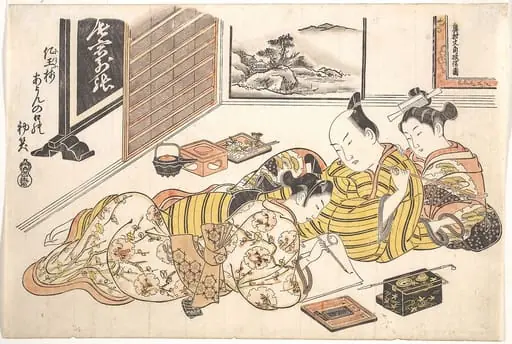 『閨の雛形』 正月|Plate from the Erotic Book Mounds of Dyed Colors: A Pattern Book for the Boudoir (Someiro no yama neya no hinagata), First Month
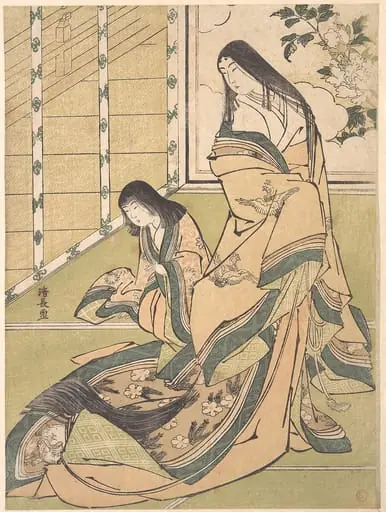 Untitled
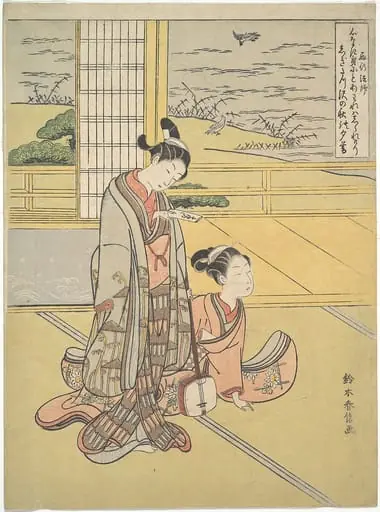 鈴木春信画 見立三夕 「西行法師」|A Young Man and Woman with a Shamisen; Monk Saigyō, from a series alluding to the Three Evening Poems (Sanseki waka)