Artwork
Untitled
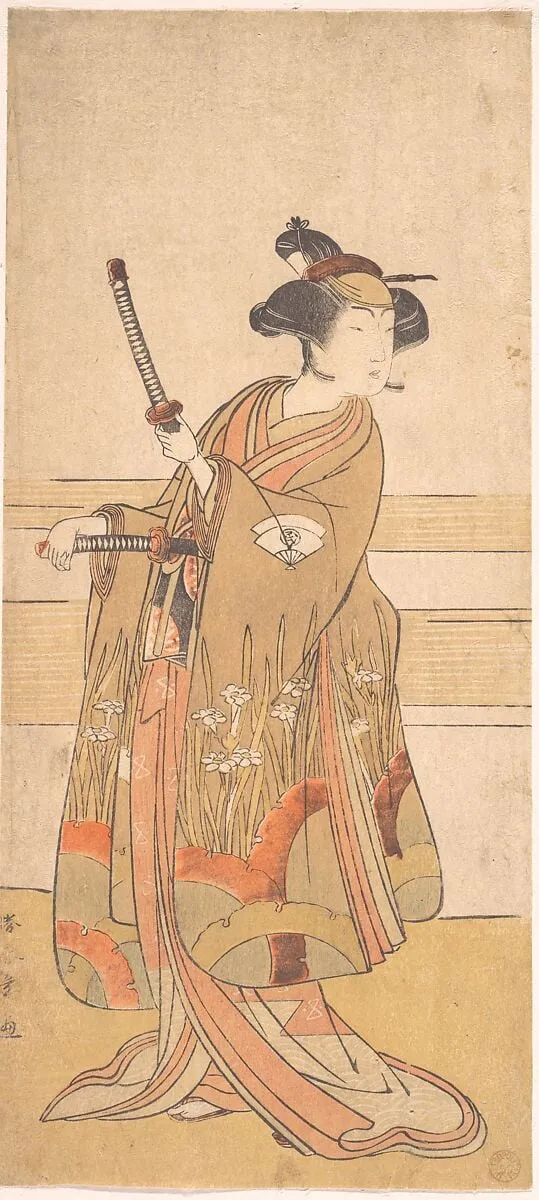
Untitled is an ink print by Katsukawa Shunshō. It dates from 1775 and is held in the collection of the Metropolitan Museum of Art.
About this work
Overview
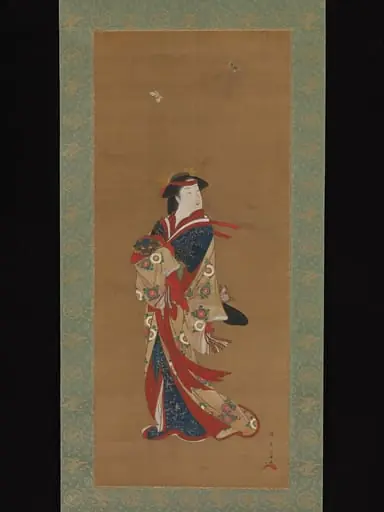
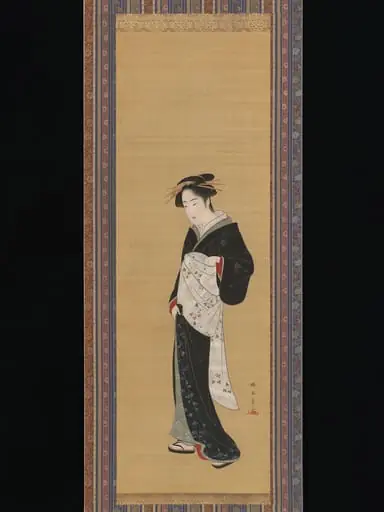
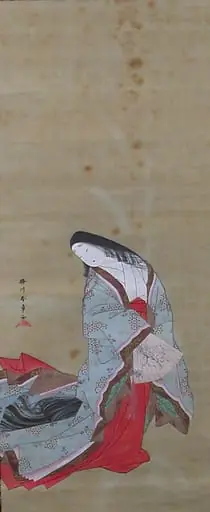
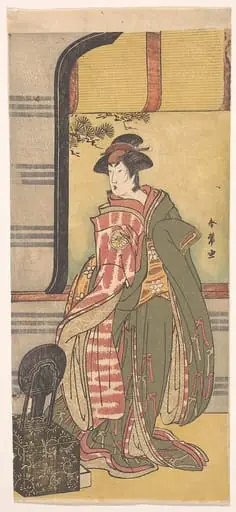
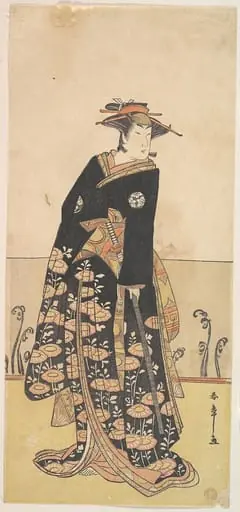
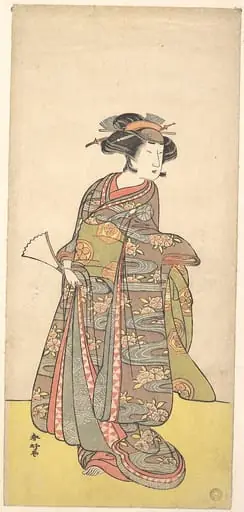
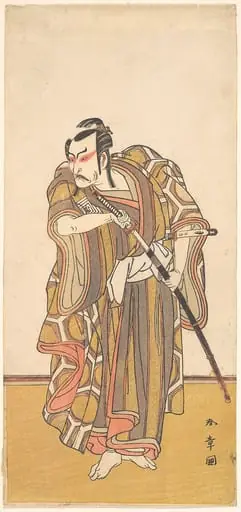
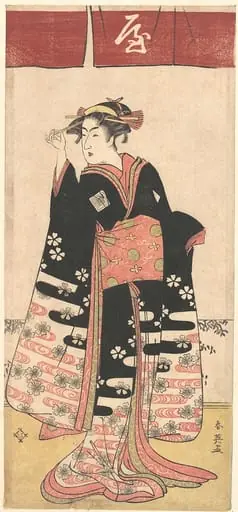
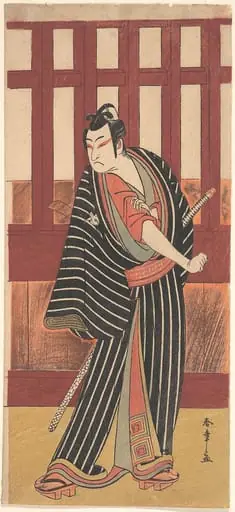
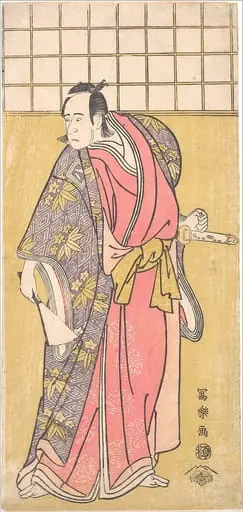
This woodblock print, dated around 1775, is attributed to Katsukawa Shunshō and is part of The Metropolitan Museum of Art’s print collection. Executed in nishiki-e technique, it employs ink and color on paper to depict a solitary female figure. The composition is restrained, with minimal background detail, focusing attention on the figure’s poised stance and elaborate attire.
Subject & Meaning
Her tall black hat, adorned with a feather, suggests theatrical or ceremonial status rather than literal warrior identity.
The figure is portrayed as a woman dressed in a vibrant, patterned robe, wielding a sword and holding a fan—symbols that merge civilian elegance with martial readiness. Her tall black hat, adorned with a feather, suggests theatrical or ceremonial status rather than literal warrior identity. The image reflects the ukiyo-e tradition of blending real-life fashion with dramatic, stage-inspired archetypes.
Technique & Style
The print uses the nishiki-e method, characterized by multiple woodblocks for precise color application. Bold red and green patterns contrast against the muted wooden background, enhancing the figure’s presence. Lines are clean and deliberate, typical of Shunshō’s approach, which emphasized expressive posture and textile detail over elaborate scenery.
History & Provenance
The work entered The Metropolitan Museum of Art’s collection as part of its broader holdings in Edo-period prints. While its exact provenance before acquisition is undocumented, its style aligns with Shunshō’s output during the 1770s, a period when he was active in depicting actors and fashionable figures for the urban print market.
Context
In late 18th-century Edo, woodblock prints often portrayed figures from theater and urban life, blending reality with stylized performance. Shunshō, known for actor portraits, frequently infused his subjects with theatrical gestures. This print reflects that trend, using costume and prop to suggest narrative without literal storytelling.
Legacy
Shunshō’s work contributed to the evolution of ukiyo-e by refining portraiture and integrating expressive detail into mass-produced prints. Though this particular image lacks a title or known narrative, it exemplifies the genre’s capacity to convey character and cultural nuance through costume and composition alone.
Artist & collection
Artist
Katsukawa Shunshō spent his life in Edo (now Tokyo), where the city’s teahouses and theaters buzzed with energy.