Artwork
Untitled
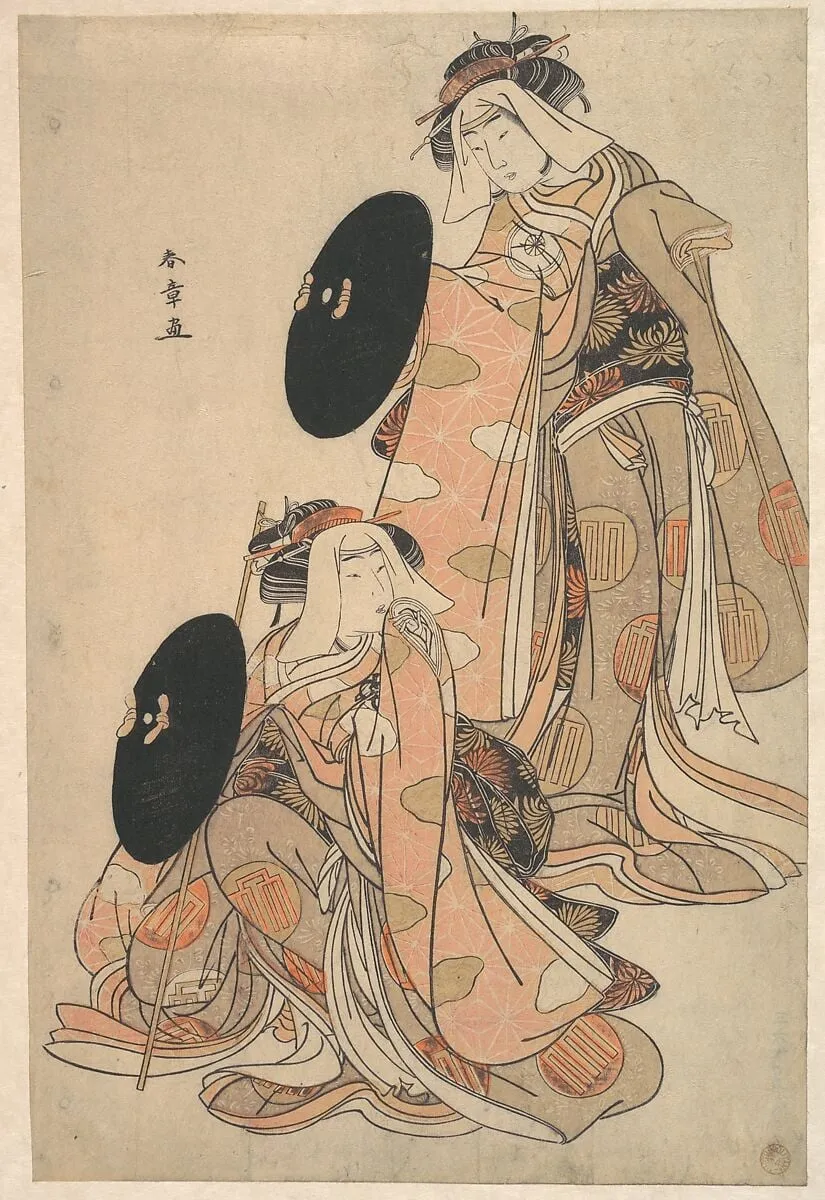
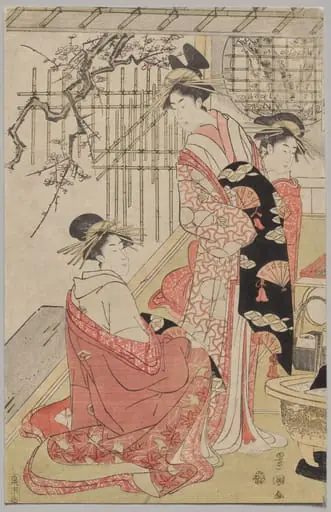
Untitled is an ink print by the Romanticist artist Katsukawa Shunshō. It dates from 1776 and is held in the collection of the Metropolitan Museum of Art.
About this work
Overview
This woodblock print, dated around 1776, is attributed to Katsukawa Shunshō, a prominent artist of the Edo-period ukiyo-e tradition.
This woodblock print, dated around 1776, is attributed to Katsukawa Shunshō, a prominent artist of the Edo-period ukiyo-e tradition. Executed in nishiki-e style, it employs ink and color on paper, reflecting the refined commercial printing techniques of the time. The work is part of the collection at The Metropolitan Museum of Art, where it is cataloged as an untitled piece, typical of prints from this era that often lacked formal titles.
Subject & Meaning
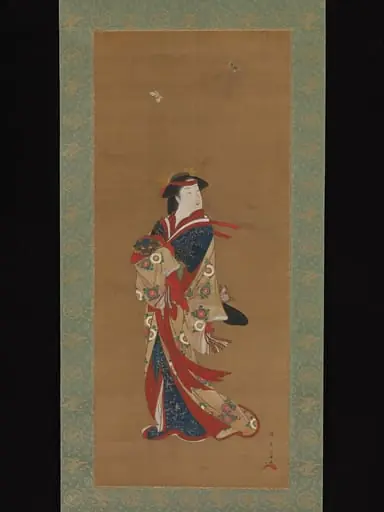
The image depicts two women in formal attire, one standing and the other kneeling, engaged in a quiet, intimate moment. Both hold black fans, a common accessory in Edo-period depictions of women, suggesting refinement and social decorum. The kneeling figure holds a small object, possibly a letter or personal item, hinting at narrative tension or emotional exchange. The scene evokes the private lives of courtesans or aristocratic women, a frequent theme in Shunshō’s portraiture.
Technique & Style
Shunshō employed the nishiki-e technique, using multiple carved woodblocks to layer colors with precision. The robes feature detailed floral patterns rendered in rich hues, contrasting with the muted beige background that enhances the figures’ presence. Lines are crisp, and facial expressions are subtly modeled, characteristic of Shunshō’s focus on individualized portraiture within the ukiyo-e genre. The composition avoids Western-style perspective, relying instead on flat planes and decorative patterning.
History & Provenance
Created in the late 18th century, the print emerged during a period of flourishing print culture in Edo (modern Tokyo). It was likely produced for the urban merchant class, who collected ukiyo-e as affordable art. The work entered The Metropolitan Museum of Art’s collection through documented acquisitions in the 20th century, though its earlier ownership history remains largely unrecorded, as is common with mass-produced prints of the period.
Context
Shunshō was a leading figure in the Katsukawa school, known for his portraits of kabuki actors and elegant women. This print aligns with his broader practice of capturing personal moments within the pleasure quarters and elite circles of Edo. Unlike later romanticized Western movements, the aesthetic here is grounded in contemporary Japanese social norms, emphasizing subtlety, attire, and gesture over dramatic emotion or idealized form.
Legacy
Shunshō’s work influenced generations of ukiyo-e artists, particularly in the development of actor and beauty prints. While this specific print is not widely reproduced, it exemplifies the technical and compositional standards of late 18th-century woodblock printing. Its preservation in a major museum underscores its value as a historical artifact of Edo-period visual culture, offering insight into gender, fashion, and social ritual of the time.
Artist & collection
Artist
Katsukawa Shunshō spent his life in Edo (now Tokyo), where the city’s teahouses and theaters buzzed with energy.

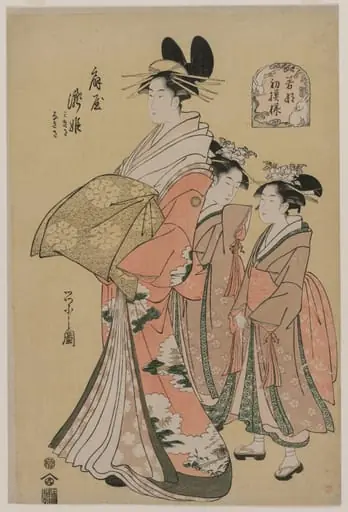 The Courtesan Takihime and Attendants (from the series New Patterns of Young Greens)
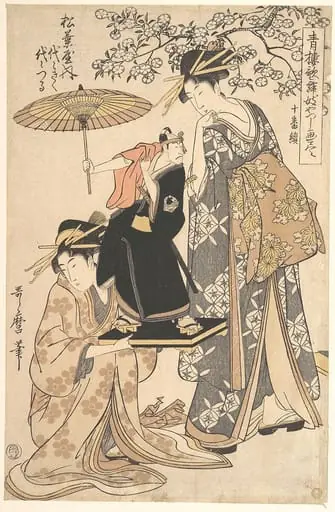 青楼歌舞妓やつし画尽 十番続|The Oiran Yoyogiku of Matsubaya Standing under a Cherry Tree
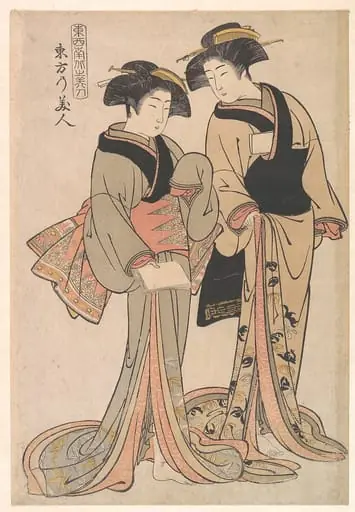 Untitled
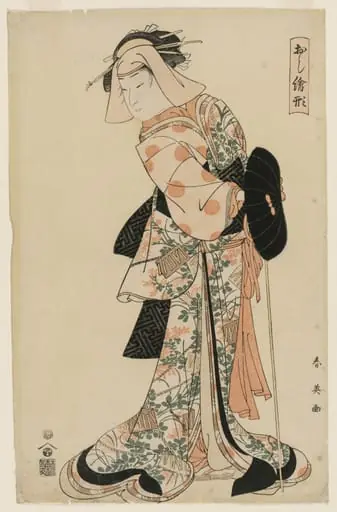 Dancer as Kuzunoha, Fox Spirit Disguised as a Woman
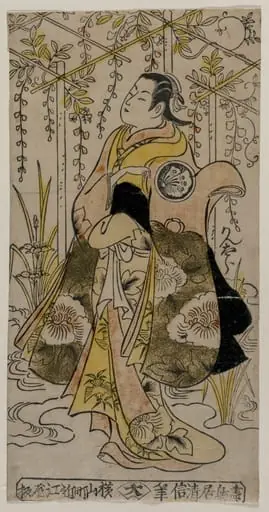 Sanjo Kantaro as a Young Woman Standing in a Wisteria Arbor
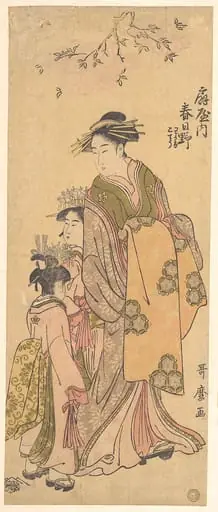 扇屋内春日野わかな こてう|The Oiran Kasugano of Ōgiya on Parade
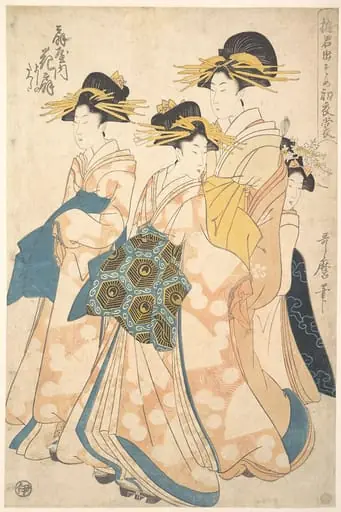 遊君出そめ初衣裳 扇屋内花扇|The Oiran Hanaogi of Ogiya attended by Two Shinzo and Her Kamuro Yoshino
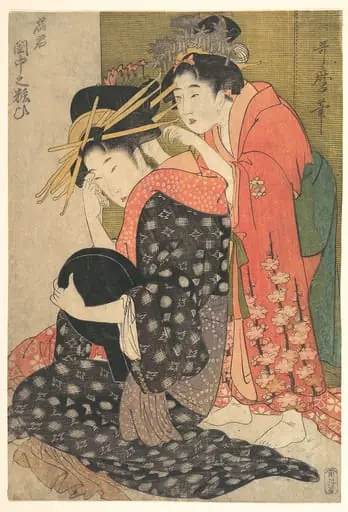 名君 閨中の粧ひ|The Oiran Yoso-oi Seated at Her Toilet
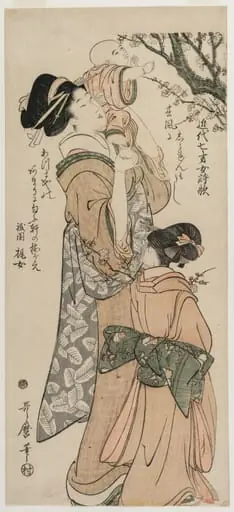 Mother Lifting a Child to a Plum Tree (from the series Chinese and Japanese Poems by Seven Year Old Girls of Recent Times)
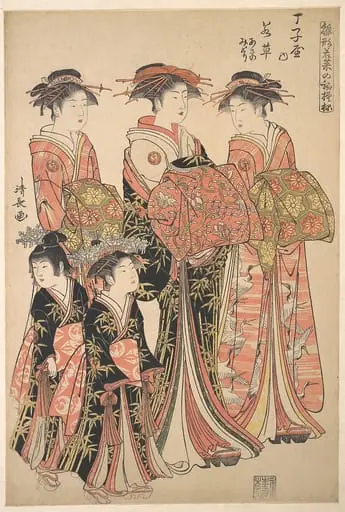 鳥居清長画 「雛形若菜の初模様 丁子屋の若草・ あさの・みどり」|The Courtesan Wakakusa of the Chōjiya Brothel, and Attendants Asano and Midori, from the series “A Pattern Book of the Year’s First Designs, Fresh as Spring Herbs” (Hinagata wakana no hatsumoyō)
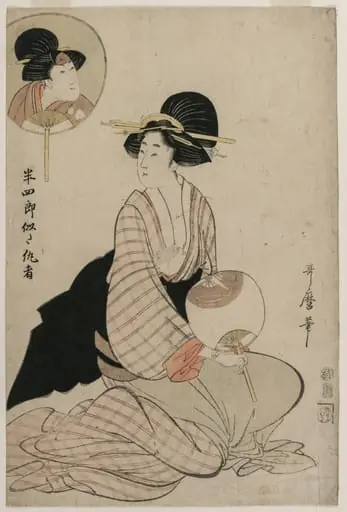 An Attractive Woman Who Looks Like the Actor Iwai Hanshiro V
 Courtesans of the Ōgiya on a Spring Outing