Artwork
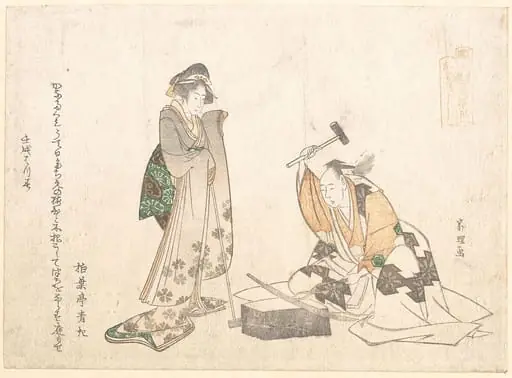
Horimono-shi|職人三十六番|The Metal Carver
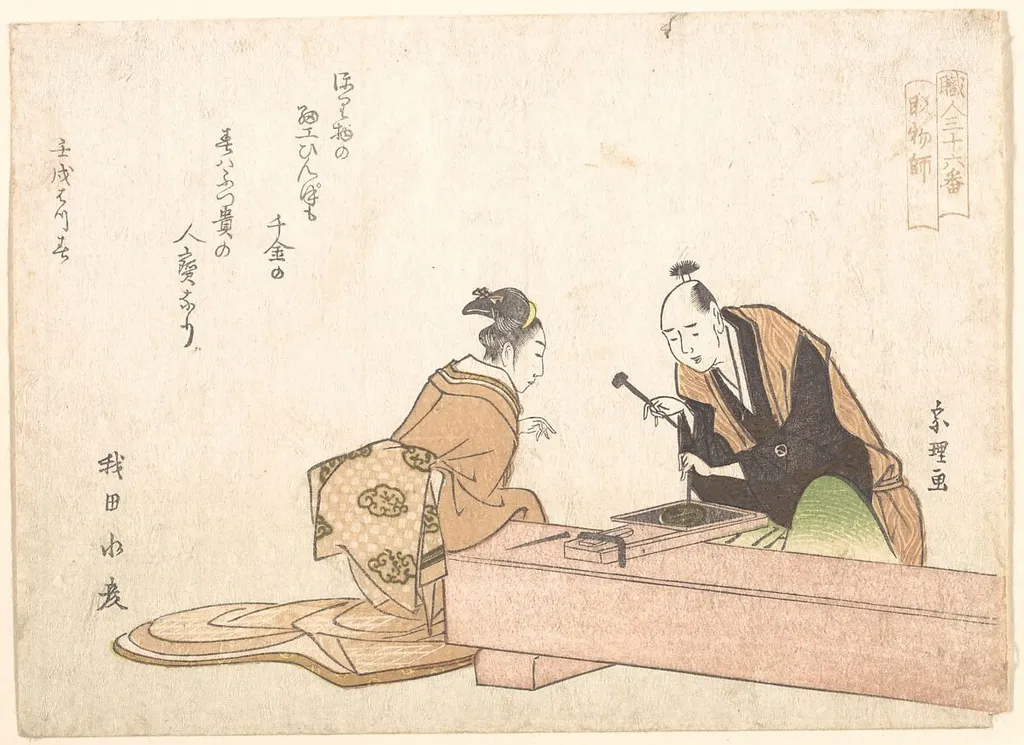
Horimono-shi|職人三十六番|The Metal Carver is an ink print by the Japonisme artist Katsushika Hokusai. It dates from 1802 and is held in the collection of the Metropolitan Museum of Art.
About this work
Overview
Executed in ink and color on paper, it belongs to the surimono genre—delicate, privately commissioned prints often produced for special occasions.
This woodblock print, dated 1802, is part of a series titled 'The Metal Carver' from Katsushika Hokusai's 'Thirty-Six Crafts' collection. Executed in ink and color on paper, it belongs to the surimono genre—delicate, privately commissioned prints often produced for special occasions. The composition centers on two figures engaged in a quiet moment of artisanal labor, rendered with restrained detail and clear outlines typical of early 19th-century Japanese printmaking.
Subject & Meaning
The scene depicts a metalworker, kneeling at a low table, meticulously shaping a flat tray with a small tool. Beside them, another figure observes silently, draped in a patterned cloth, suggesting a mentor or patron. The absence of elaborate setting directs focus to the act of craftsmanship itself. The image honors the dignity of skilled labor, reflecting a cultural appreciation for precision and quiet dedication in artisanal trades.
Technique & Style
Hokusai employed bold, clean lines and flat areas of color to define forms, characteristic of ukiyo-e and surimono aesthetics. The minimal background and sparse props—such as a wooden stand and small box—enhance the focus on the figures and their actions. Subtle tonal variations in ink and restrained palette emphasize texture and posture over decorative flourish, reinforcing the print’s contemplative tone.
History & Provenance
Created in 1802, this print was likely produced for a private patron, as surimono were often commissioned for literary or celebratory purposes. It entered the collection of The Metropolitan Museum of Art through documented acquisitions in the 20th century. The work is one of a series documenting traditional Japanese crafts, offering insight into the social value placed on artisanal expertise during the Edo period.
Context
During the early 1800s, Edo-period Japan saw growing interest in documenting everyday trades through visual art. Hokusai’s 'Thirty-Six Crafts' series responded to this trend, portraying artisans not as idealized figures but as individuals engaged in focused, manual work. These prints circulated among educated urbanites who valued cultural heritage and the quiet mastery of skilled labor.
Legacy
Hokusai’s 'The Metal Carver' contributes to a broader tradition of Japanese printmaking that elevated craft and labor into subjects worthy of artistic attention. While not widely exhibited, the print remains a quiet testament to the dignity of skilled work. Its preservation in major collections underscores its role in documenting the material culture and social values of early modern Japan.
Artist & collection

Artist
Katsushika Hokusai spent his life in Edo, now Tokyo, where he drew and carved prints for a living.

 Untitled
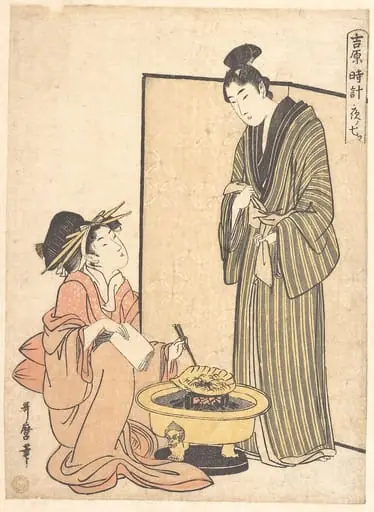 吉原時計 夜の七つ|The Seventh Hour of the Night
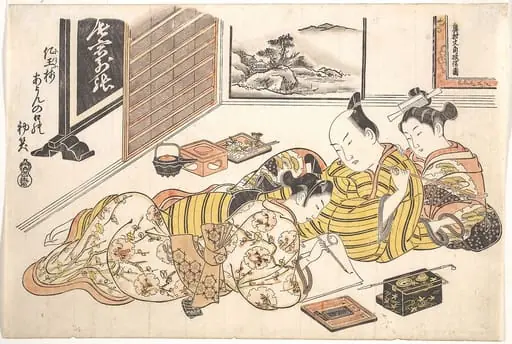 『閨の雛形』 正月|Plate from the Erotic Book Mounds of Dyed Colors: A Pattern Book for the Boudoir (Someiro no yama neya no hinagata), First Month
 当世恋歌八契 お七と吉三郎|The Lovers Oshichi and Kichisaburo
 Untitled
 書初め図|Young Woman Writing Calligraphy
 遊女と詩人|Courtesan with Client before a Tokonoma Alcove
 青楼美人合|Two Girls Play the Finger Game of Kitsume Ken
 Untitled
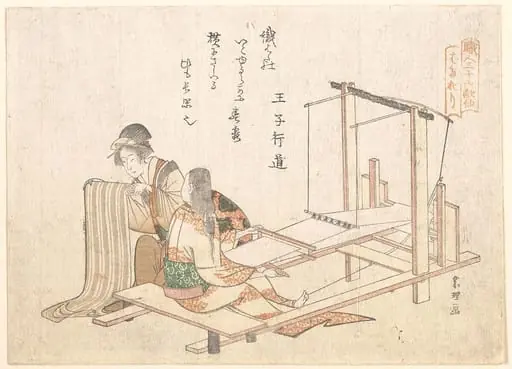 Hata-ori|職人三十六歌仙|The Weaving Factory
 Twilight at Nakanocho
 Tachi-shi|職人三十六番|The Swordsmith