Artwork
遊女と詩人|Courtesan with Client before a Tokonoma Alcove
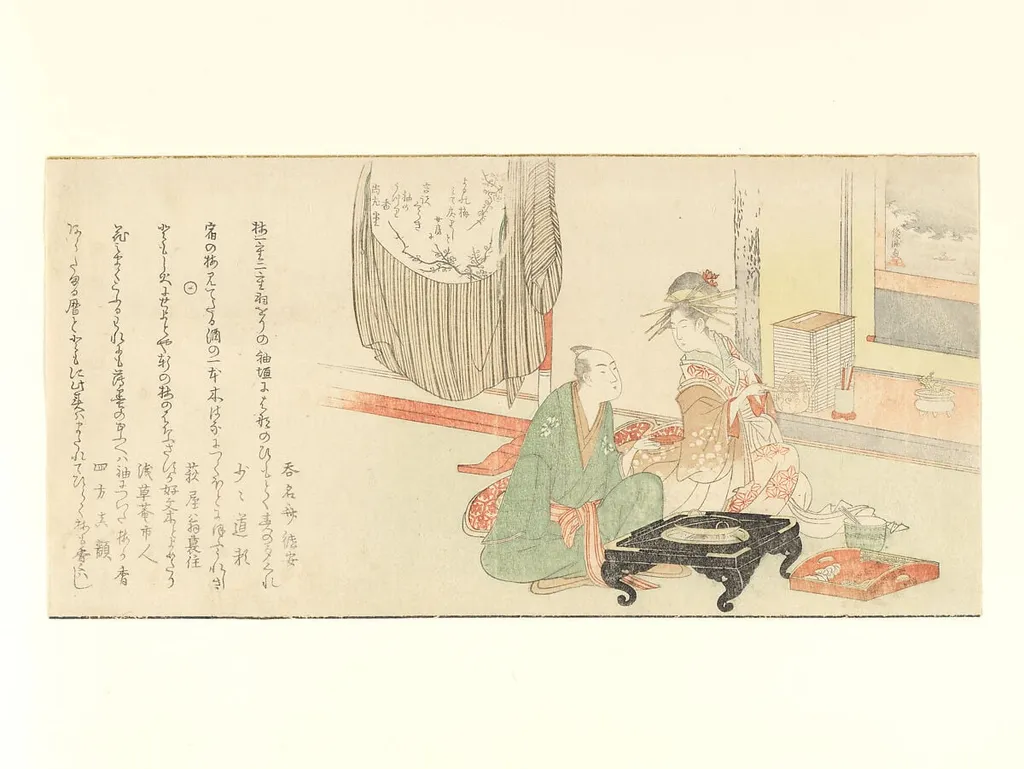
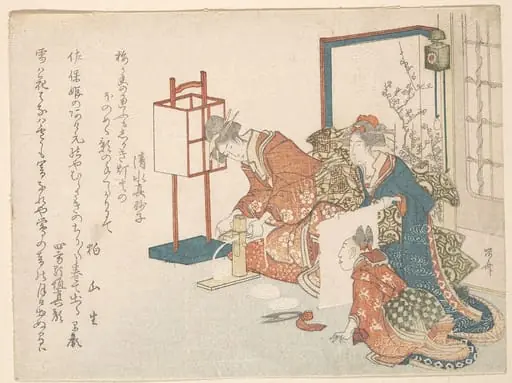
遊女と詩人|Courtesan with Client before a Tokonoma Alcove is an ink print by the Romanticist artist Kubo Shunman. It dates from 1798 and is held in the collection of the Metropolitan Museum of Art.
About this work
The painting is a great example of Japanese art from the late 18th century.
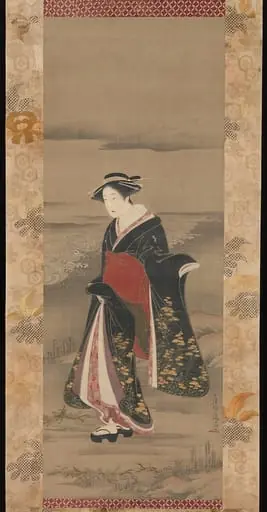
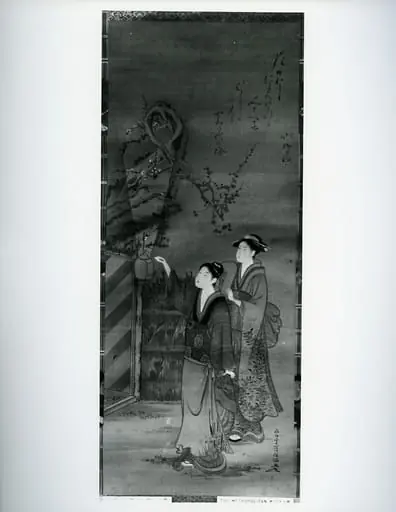
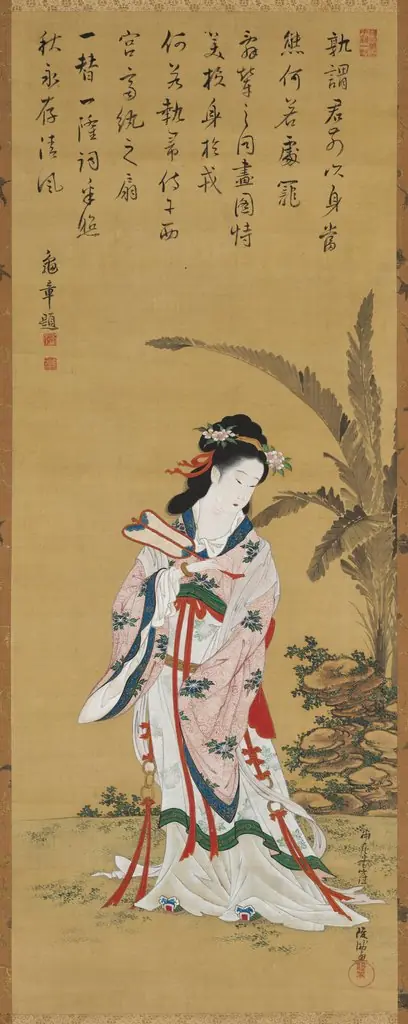
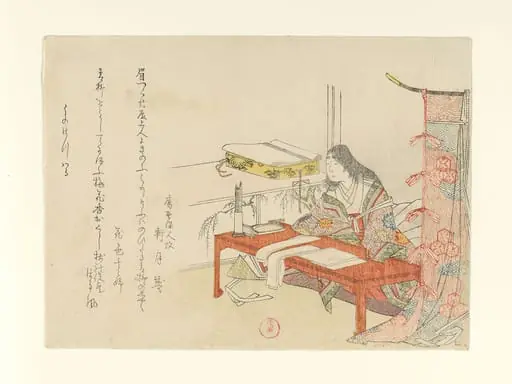
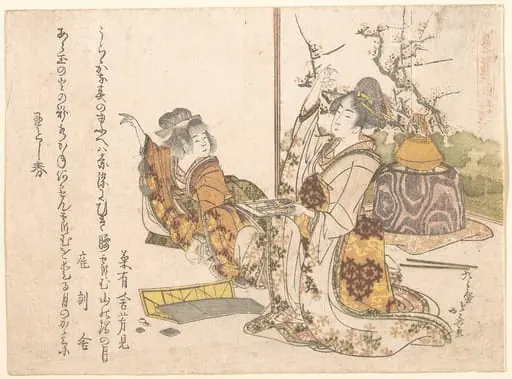
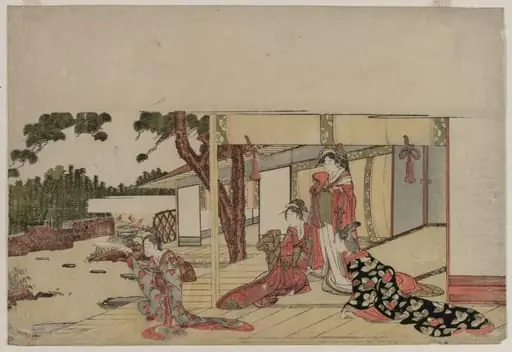
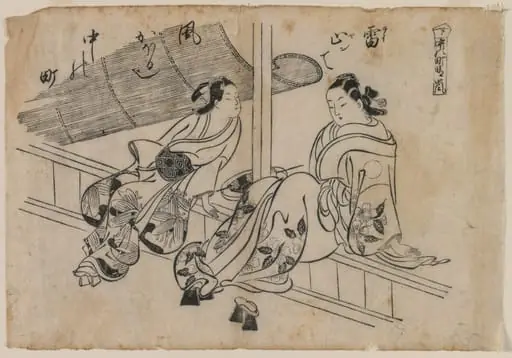
This painting shows a courtesan and a client in a room. The courtesan is wearing a kimono and has a fan in her hand. The client is sitting on the floor, looking at her. There is a tokonoma alcove in the background with a scroll hanging in it.
The room is decorated with traditional Japanese furniture and accessories. The colors used in the painting are muted, with a focus on pastel shades. The overall atmosphere of the painting is one of elegance and refinement.
The painting is a great example of Japanese art from the late 18th century. To learn more about this style, check out the Romanticism movement.
Overview
Created in 1798 by Kubo Shunman, this surimono woodblock print depicts a courtesan and her client in an intimate interior setting. Executed in ink and subtle color on paper, it belongs to a small-format genre prized for its refined aesthetics and literary allusions. The work is part of the collection at The Metropolitan Museum of Art, where it represents the sophisticated visual culture of Edo-period urban elites.
Subject & Meaning
The scene captures a quiet moment between a courtesan and a male patron, their interaction marked by restraint rather than overt intimacy. The presence of a scroll in the tokonoma alcove suggests literary or poetic themes, possibly alluding to the client’s cultural refinement. The courtesan, holding a fan, embodies the idealized grace of her profession, while the setting underscores the importance of aesthetic sensitivity in Edo-era social rituals.
Technique & Style
As a surimono, the print was produced in limited quantities for private distribution, using fine carving and hand-coloring to achieve delicate tonal gradations. The palette favors muted pastels—soft pinks, grays, and ochres—enhancing the subdued elegance of the scene. Lines are precise yet fluid, and spatial depth is suggested through minimalistic furnishings and the alcove’s framing, reflecting the printmaker’s mastery of understated composition.
History & Provenance
The print was made during the late 18th century, a period when surimono flourished among wealthy patrons and literary circles in Edo. Though little is documented about its early ownership, it entered the Metropolitan Museum of Art’s collection as part of a broader acquisition of Japanese prints, where it now serves as a representative example of the genre’s artistic and social dimensions.
Context
Surimono prints like this one were often commissioned to celebrate seasonal events, literary achievements, or personal milestones. They combined poetry, visual art, and craftsmanship, appealing to an educated elite. The tokonoma alcove, scroll, and formal attire reflect the era’s emphasis on cultivated taste, where even private encounters were framed by ritual and aesthetic discipline.
Legacy
This print contributes to the understanding of Edo-period visual culture beyond mass-produced ukiyo-e, highlighting the niche but influential world of surimono. Its preservation allows scholars to study the interplay of gender, class, and artistry in late 18th-century Japan. While not widely known outside specialist circles, it remains a quiet testament to the era’s refined sensibilities.
Artist & collection