Artwork
吉原時計 夜の七つ|The Seventh Hour of the Night
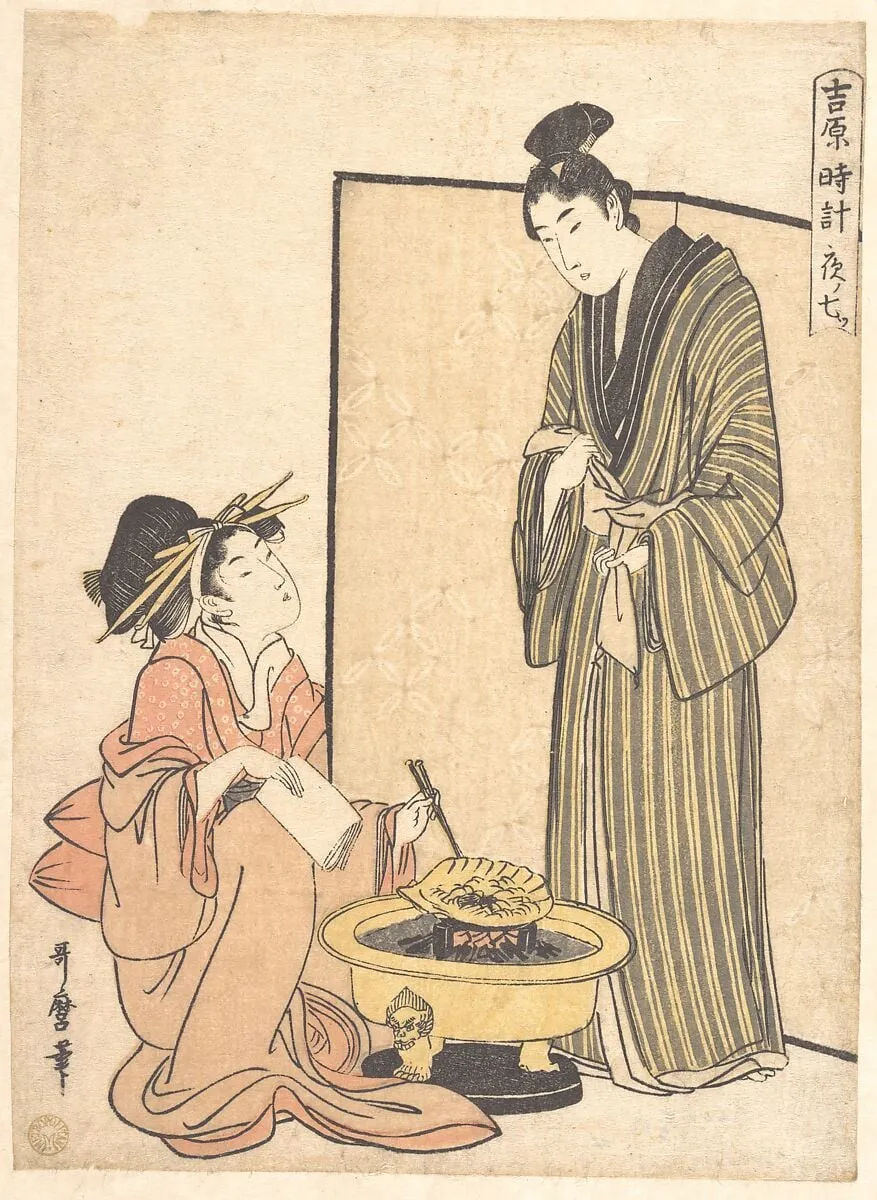
吉原時計 夜の七つ|The Seventh Hour of the Night is an ink print by the Romanticist artist Kitagawa Utamaro. It dates from 1800 and is held in the collection of the Metropolitan Museum of Art.
About this work
Overview
Created around 1800 by Kitagawa Utamaro, this woodblock print captures a quiet moment in Yoshiwara, Tokyo’s licensed pleasure district. Rendered in ink and color on paper, it belongs to a series depicting the passage of time through nocturnal scenes. The Metropolitan Museum of Art holds this example, one of many genre prints that documented intimate, everyday life in Edo-period urban culture.
Subject & Meaning
The absence of ornamentation and the focus on domestic action imply a private, unidealized moment, contrasting with the district’s public reputation.
The scene portrays two figures in a modest interior at nightfall: a woman crouches near a small fire pot, arranging food wrapped in leaves, while a man stands beside her, holding a scroll. Their postures suggest a pause in routine—perhaps a break between duties. The absence of ornamentation and the focus on domestic action imply a private, unidealized moment, contrasting with the district’s public reputation.
Technique & Style
Utamaro employs fine, controlled lines to define form and texture, using subtle color gradients in the robes and delicate cross-hatching to suggest shadow and depth. The woman’s loose sleeves and hat reflect contemporary attire, while the man’s striped garment adds visual rhythm. The plain background and tall screen isolate the figures, directing attention to their quiet interaction and the warmth of the fire.
History & Provenance
This print was produced during the late Edo period, when ukiyo-e prints flourished as affordable art for the merchant class. It was likely part of a multi-print series illustrating hours of the night in Yoshiwara. The Metropolitan Museum of Art acquired it in the 20th century, preserving its original condition and paper integrity, with no evidence of later restoration.
Context
Yoshiwara was a regulated district where entertainment, commerce, and intimacy intersected. Prints like this one avoided overt sensuality, instead focusing on the rhythms of daily life—preparing food, reading, waiting. Such images appealed to urban audiences seeking realism amid idealized portrayals of beauty and drama, offering a grounded view of a world often mythologized.
Legacy
Utamaro’s attention to quiet, unposed moments influenced later generations of printmakers and Western artists drawn to Japanese aesthetics. This work exemplifies the shift in ukiyo-e from grand narratives to intimate observation, helping define the genre’s emotional depth. Its preservation allows continued study of Edo-period social customs through the lens of everyday ritual.
Artist & collection


 Untitled
 Untitled
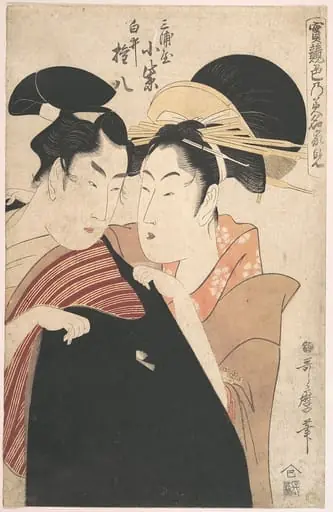 実競色乃美名家見 三浦屋小紫 白井権八|The Lovers Miura-ya Komurasaki and Shirai Gonpachi.
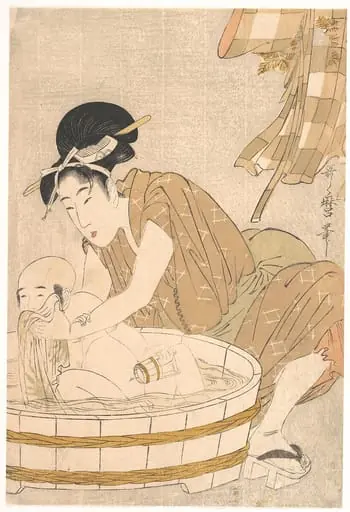 行水|Bathtime (Gyōzui)
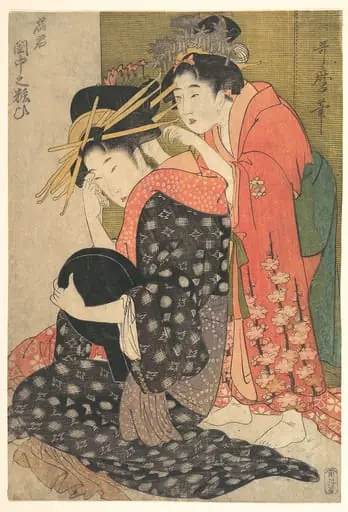 名君 閨中の粧ひ|The Oiran Yoso-oi Seated at Her Toilet
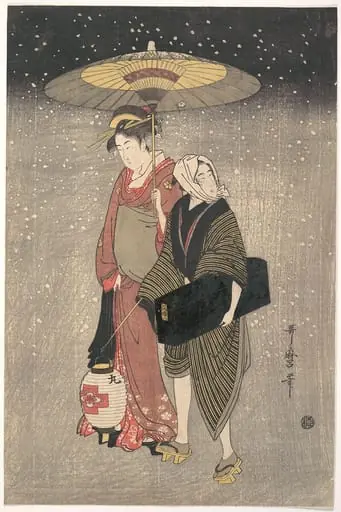 Untitled
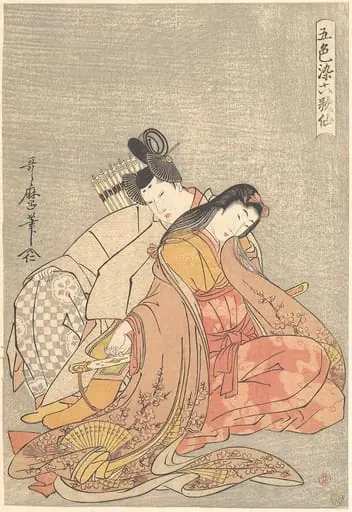 『五色染六歌仙』 在原業平と小野小町|“The Poet Ariwara no Narihira (825–880) and Ono no Komachi,” from the series Five Colors of Love for the Six Poetic Immortals (Goshiki-zome rokkasen)
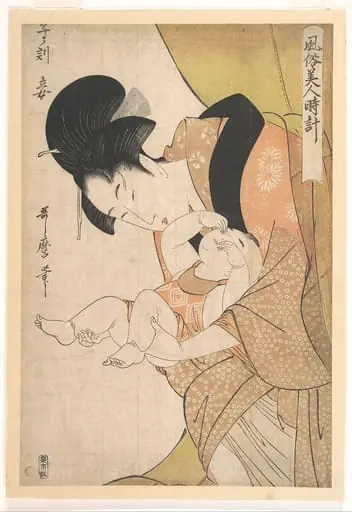 風俗美人時計 子ノ刻 妾|Midnight: Mother and Sleepy Child
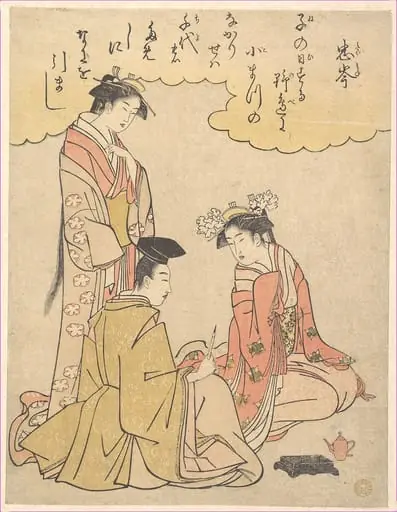 礫川亭永理 (鳥橋斎栄里)画 壬生忠岑の見立絵|Courtier and Two Ladies of the Court, with a Poem by Mibu no Tadamine
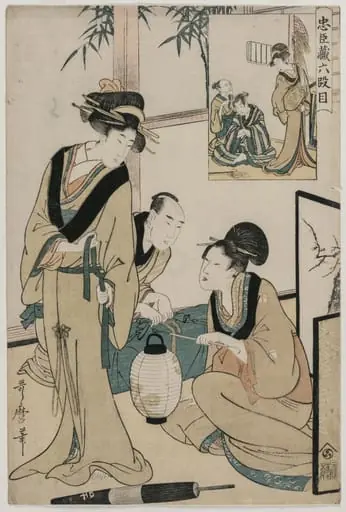 Chushingura: Act VI of The Storehouse of Loyalty
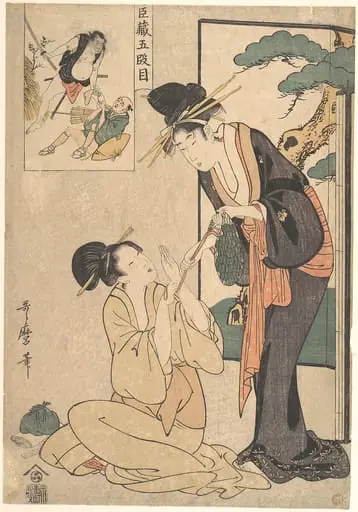 忠臣蔵五段目|A Woman Snatching a Bag of Sweetmeats from Her MotHer
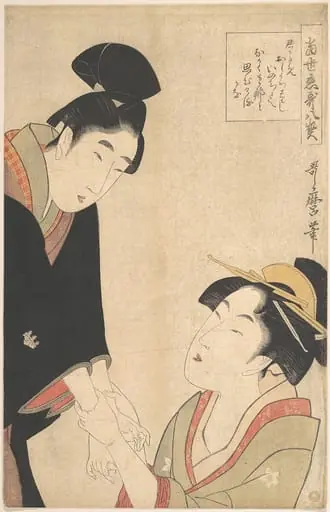 当世恋歌八契 お七と吉三郎|The Lovers Oshichi and Kichisaburo
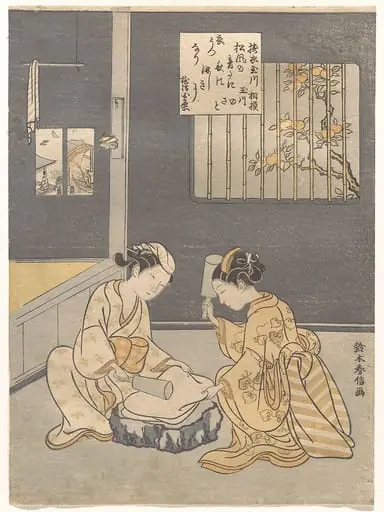 鈴木春信画 六玉川 「壔衣の玉川 摂津の名所」|Kōromō Uchi Tamagawa|The Cloth-Fulling Jewel River, a Famous Place in Settsu Province (Tōi no Tamagawa, Settsu no meisho), from an untitled series of Six Jewel Rivers (Mu Tamagawa)
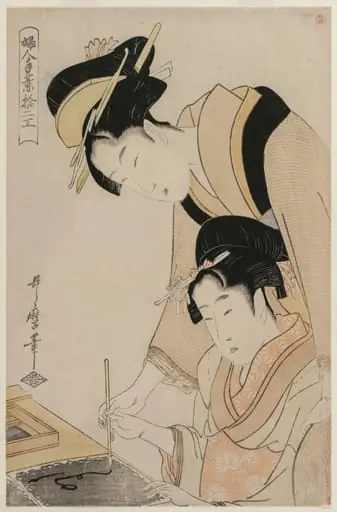 Mother Teaching her Daughter Calligraphy, from the series, Twelve Occupations of Women
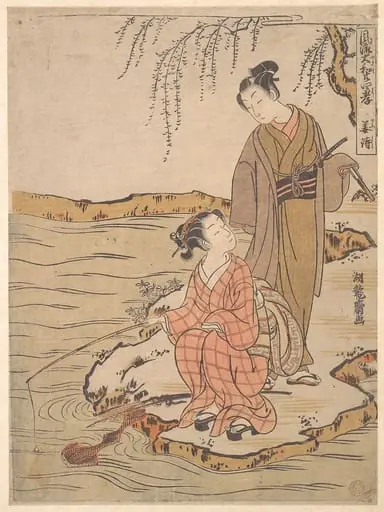 Untitled
 Untitled
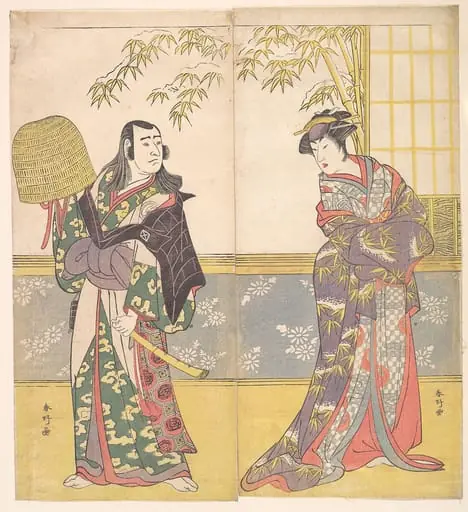 勝川春好画 三代目澤村宗十郎 三代目佐野川市松 |Kabuki Actors Sawamura Sōjūrō III and Sanogawa Ichimatsu III in "A Courtesan’s Mirror for the Eastern Provinces" (Keisei Azuma kagami)
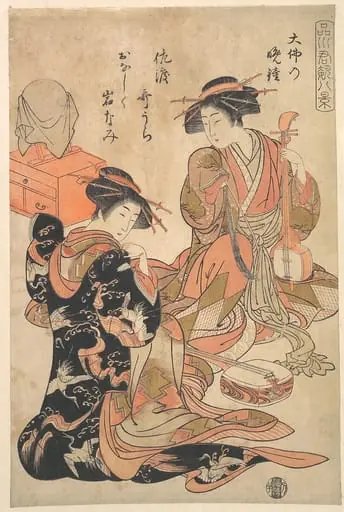 Daibutsu no bansho|Vesper Bell of the Temple of Great Buddha
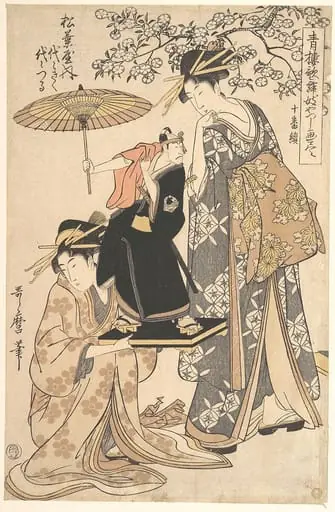 青楼歌舞妓やつし画尽 十番続|The Oiran Yoyogiku of Matsubaya Standing under a Cherry Tree
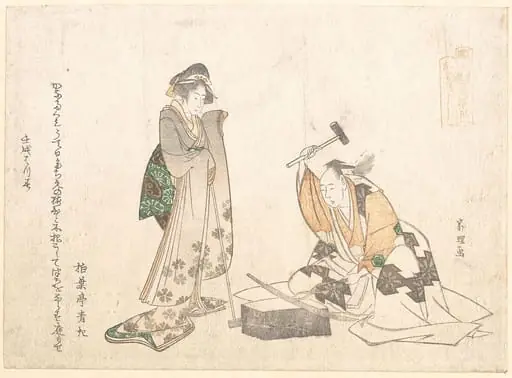 Tachi-shi|職人三十六番|The Swordsmith