Artwork
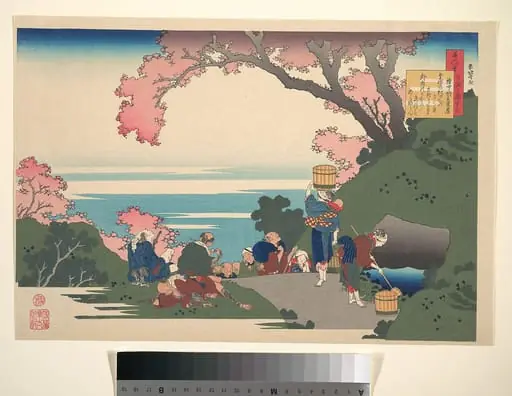
百人一首 宇波か縁説 藤原道信朝臣|Poem by Fujiwara no Michinobu Ason, from the series One Hundred Poems Explained by the Nurse (Hyakunin isshu uba ga etoki)
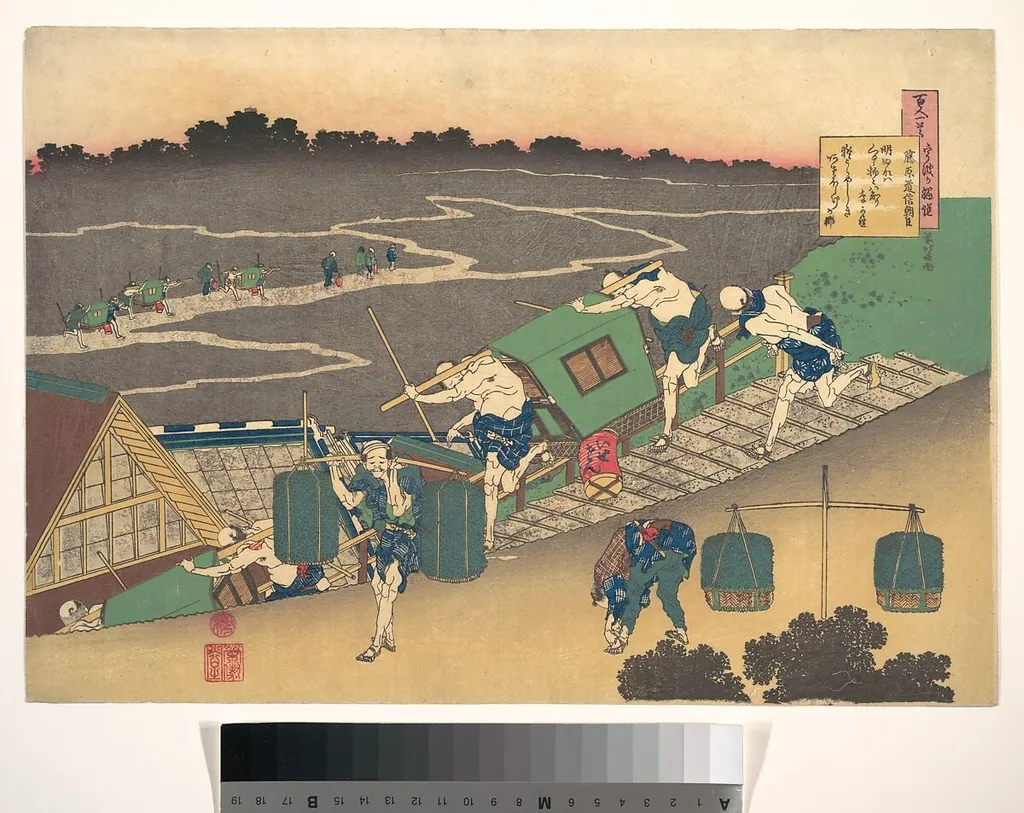
百人一首 宇波か縁説 藤原道信朝臣|Poem by Fujiwara no Michinobu Ason, from the series One Hundred Poems Explained by the Nurse (Hyakunin isshu uba ga etoki) is an ink print by the Japonisme artist Katsushika Hokusai. It dates from 1802 and is held in the collection of the Metropolitan Museum of Art.
About this work
Overview
Created in 1802 by the Japanese printmaker Katsushika Hokusai, this woodblock work illustrates a scene from the Hyakunin isshu uba ga etoki series, which interprets classical poetry. The piece is part of the Metropolitan Museum of Art’s collection and exemplifies early‑19th‑century Japanese printmaking.
Subject & Meaning
The image shows several laborers in a field; one figure bears a large bundle on his back while another walks forward in the foreground. The setting includes distant trees, water, and a few structures, suggesting a rural landscape tied to the poem’s narrative about toil and perseverance.
Technique & Style
Executed with ink and color on paper, the print employs muted greens, browns, and grays, creating a restrained palette. Hokusai’s line work defines the figures and terrain, while the woodblock process allows subtle gradations of tone typical of Edo‑period prints.
History & Provenance
The work was produced as part of a series that paired visual commentary with the classic anthology of one‑hundred poems. It entered the Metropolitan Museum of Art’s holdings through acquisition in the early 20th century, where it remains on display as part of the museum’s Asian art collection.
Artist & collection

Artist
Katsushika Hokusai spent his life in Edo, now Tokyo, where he drew and carved prints for a living.

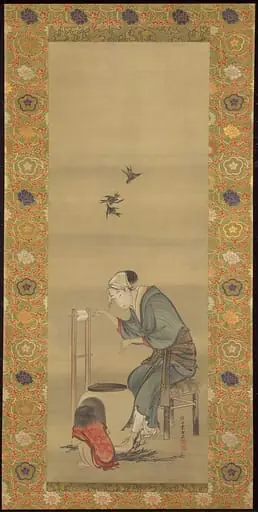
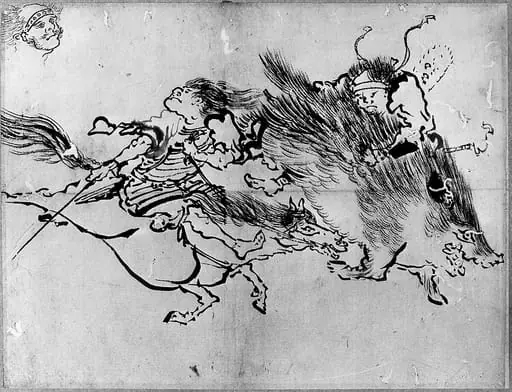
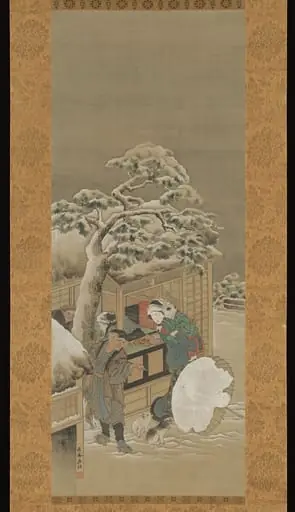
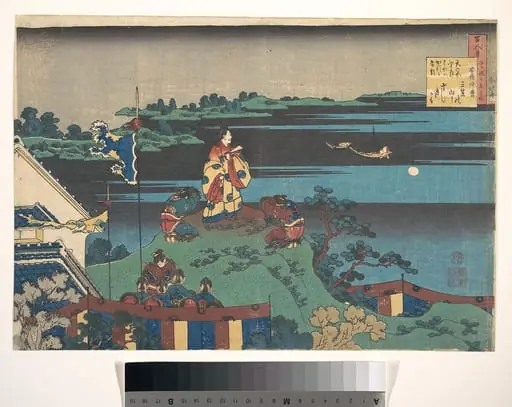 百人一首 宇波かゑとき 安部仲麿|Poem by Abe no Nakamaro, from the series One Hundred Poems Explained by the Nurse (Hyakunin isshu uba ga etoki)
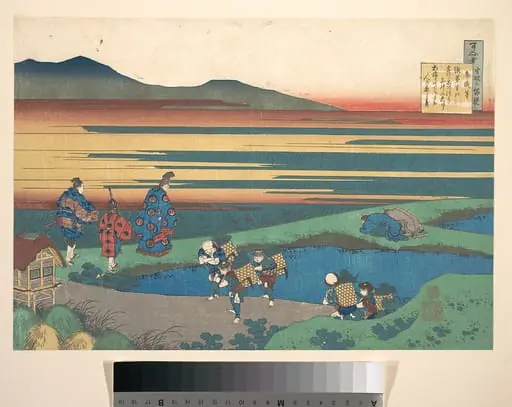 百人一首 宇波か縁説 参儀等|Poem by Sangi Hitoshi (Minamoto no Hitoshi), from the series One Hundred Poems Explained by the Nurse (Hyakunin isshu uba ga etoki)
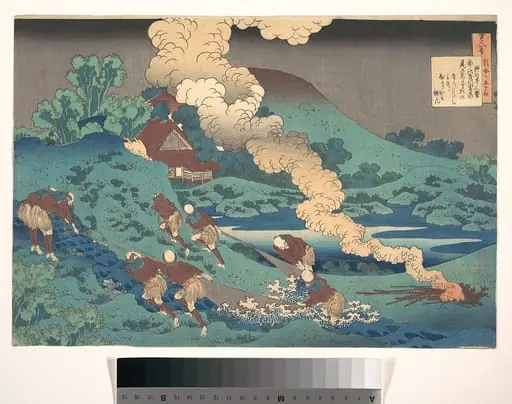 百人一首 乳母かゑとき 柿の本人麿|Poem by Kakinomoto Hitomaro, from the series One Hundred Poems Explained by the Nurse (Hyakunin isshu uba ga etoki)
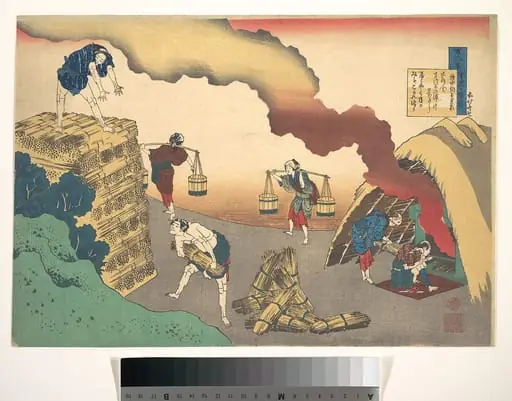 百人一首 宇波か縁説 権中納言定家|Poem by Gon-Chūnagon Sadaie, from the series One Hundred Poems Explained by the Nurse (Hyakunin isshu uba ga etoki)
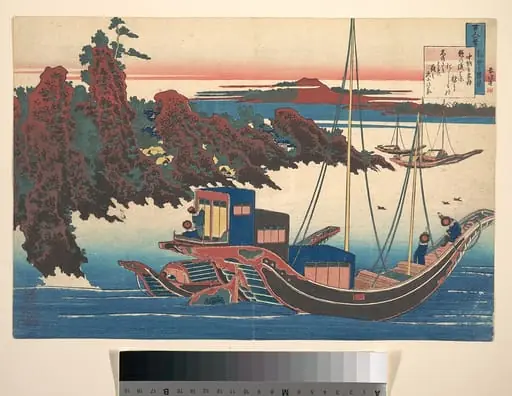 百人一首 乳母か縁説 中納言家持|Poem by Chūnagon Yakamochi (Ōtomo no Yakamochi), from the series One Hundred Poems Explained by the Nurse (Hyakunin isshu uba ga etoki)
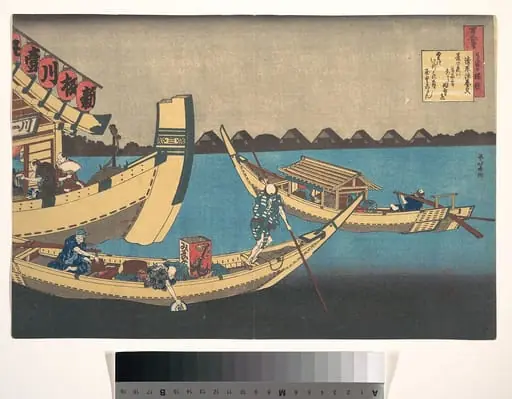 百人一首 うはか縁説 清原深養父|Poem by Kiyohara no Fukayabu, from the series One Hundred Poems Explained by the Nurse (Hyakunin isshu uba ga etoki)
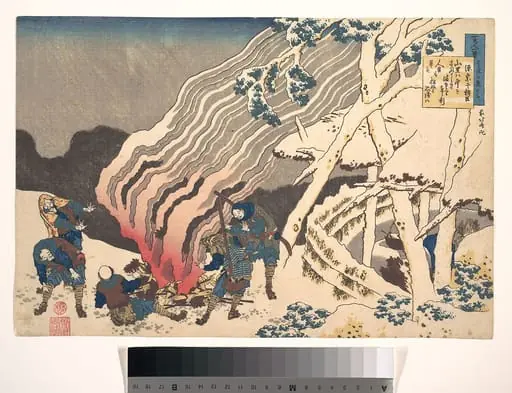 百人一首 うはかゑとき 源宗于朝臣|Poem by Minamoto no Muneyuki Ason, from the series One Hundred poems Explained by the Nurse (Hyakunin isshu uba ga etoki)
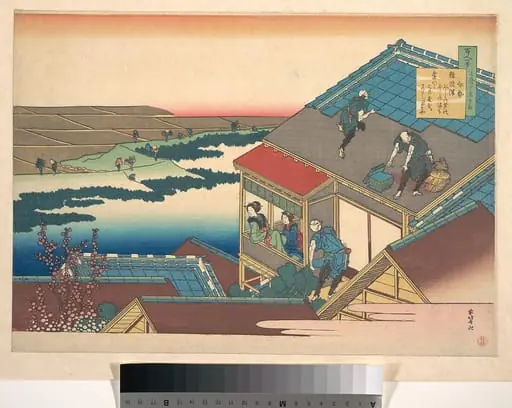 百人一首 うばがゑとき 伊勢|Poem by Ise, from the series One Hundred Poems Explained by the Nurse (Hyakunin isshu uba ga etoki)
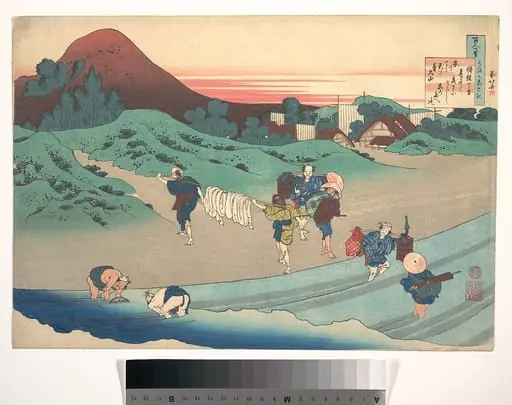 百人一首 うはかゑとき 持統天皇|Poem by Jitō Tenno (Empress Jitō), from the series One Hundred Poems Explained by the Nurse (Hyakunin isshu uba ga etoki)
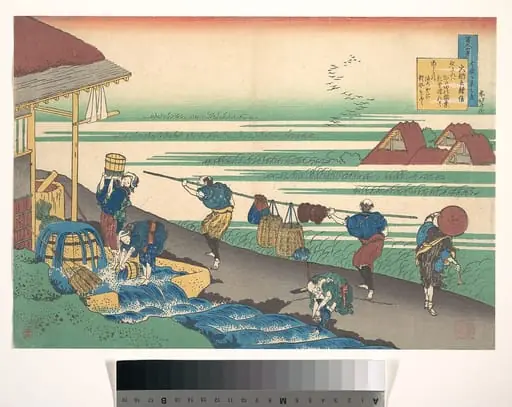 百人一首 うばがゑとき 大納言経信|Poem by Dainagon Tsunenobu (Minamoto no Tsunenobu, Katsura no Dainagon), from the series One Hundred Poems Explained by the Nurse (Hyakunin isshu uba ga etoki)
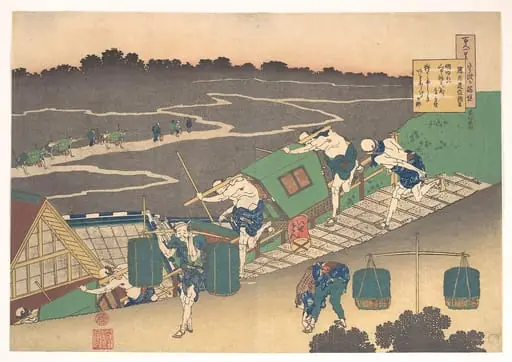 百人一首 宇波か縁説 藤原道信朝臣|Poem by Fujiwara no Michinobu Ason, from the series One Hundred Poems Explained by the Nurse (Hyakunin isshu uba ga etoki)
 百人一首 うはかゑとき 権中納言匡房|Poem by Gon-chūnagon Masafusa (Ōe no Masafusa), from the series One Hundred Poems Explained by the Nurse (Hyakunin isshu uba ga etoki)