Artwork
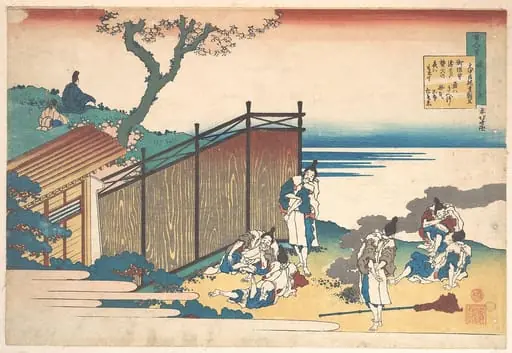
百人一首 うばがゑとき 伊勢|Poem by Ise, from the series One Hundred Poems Explained by the Nurse (Hyakunin isshu uba ga etoki)
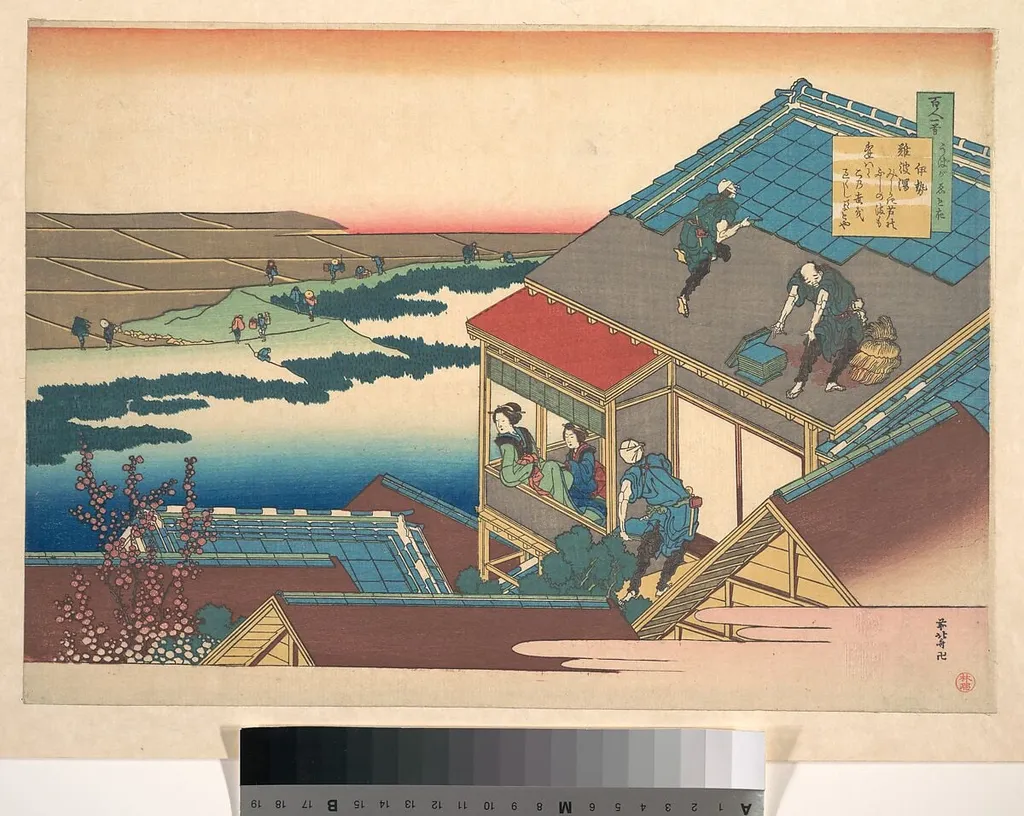
百人一首 うばがゑとき 伊勢|Poem by Ise, from the series One Hundred Poems Explained by the Nurse (Hyakunin isshu uba ga etoki) is an ink print by the Japonisme artist Katsushika Hokusai. It dates from 1835 and is held in the collection of the Metropolitan Museum of Art.
About this work
Overview
Created around 1835 by Katsushika Hokusai, this woodblock print belongs to the series that illustrates the poems of the classic anthology known as Hyakunin Isshu. Executed in ink and color on paper, the work is part of the Metropolitan Museum of Art’s collection and presents a compact narrative scene drawn from a poem attributed to the poet Ise.
Subject & Meaning
The image captures a bustling rooftop environment where daily activities unfold: a man balances a box on the sloping tiles, another ascends the steep roof, and three women rest beneath a wooden eave. A distant hillside populated by tiny figures suggests a broader community, while a cluster of pink blossoms adds a seasonal reference that echoes the poem’s lyrical tone.
Technique & Style
Hokusai employs the ukiyo-e woodblock method, layering bold pigments—bright reds for the roofs, vivid blues for clothing, and delicate pinks for the flowers—to achieve visual contrast. Simplified forms and clear outlines convey movement, while subtle line work suggests depth, particularly in the tiled roof’s perspective.
History & Provenance
The print was produced as part of the “One Hundred Poems Explained by the Nurse” series, a popular educational project that paired visual art with classical poetry for a broad audience. After circulating in the Edo period, the sheet entered the collection of the Metropolitan Museum of Art, where it is displayed as an example of Hokusai’s narrative prints.
Context
In early nineteenth‑century Japan, the Hyakunin Isshu poems were widely taught and celebrated, prompting artists to create illustrative series that made the verses accessible to the literate and illiterate alike. Hokusai’s contribution reflects this cultural practice, merging literary appreciation with the commercial appeal of affordable prints.
Artist & collection

Artist
Katsushika Hokusai spent his life in Edo, now Tokyo, where he drew and carved prints for a living.

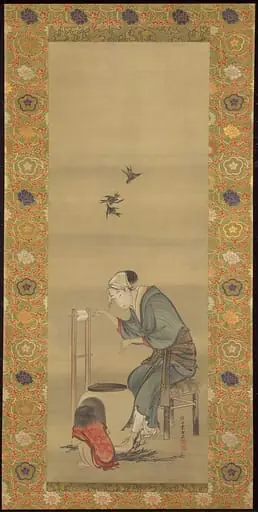
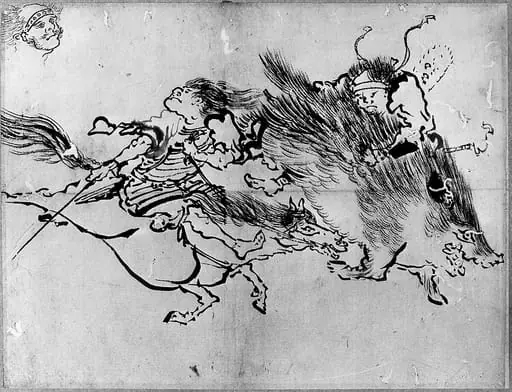
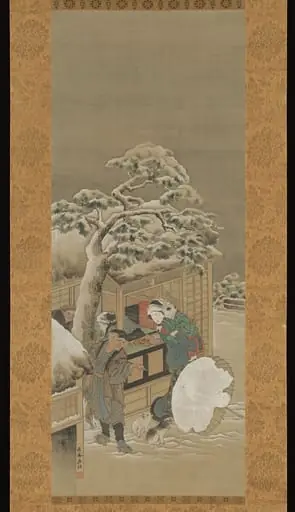
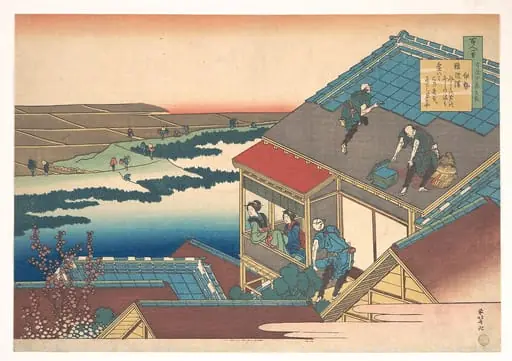 百人一首 うばがゑとき 伊勢|Poem by Ise, from the series One Hundred Poems Explained by the Nurse (Hyakunin isshu uba ga etoki)
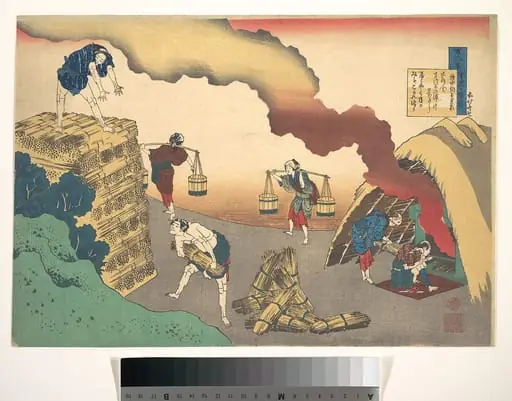 百人一首 宇波か縁説 権中納言定家|Poem by Gon-Chūnagon Sadaie, from the series One Hundred Poems Explained by the Nurse (Hyakunin isshu uba ga etoki)
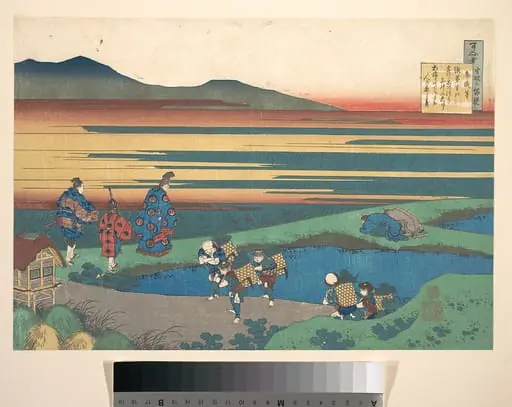 百人一首 宇波か縁説 参儀等|Poem by Sangi Hitoshi (Minamoto no Hitoshi), from the series One Hundred Poems Explained by the Nurse (Hyakunin isshu uba ga etoki)
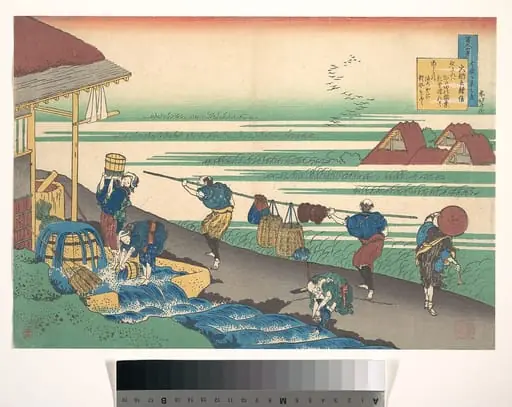 百人一首 うばがゑとき 大納言経信|Poem by Dainagon Tsunenobu (Minamoto no Tsunenobu, Katsura no Dainagon), from the series One Hundred Poems Explained by the Nurse (Hyakunin isshu uba ga etoki)
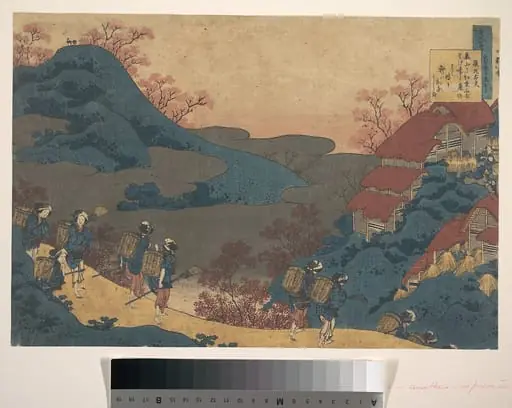 百人一首 乳母かゑとき 猿丸太夫|Poem by Sarumaru Dayū, from the series One Hundred Poems Explained by the Nurse (Hyakunin isshu uba ga etoki)
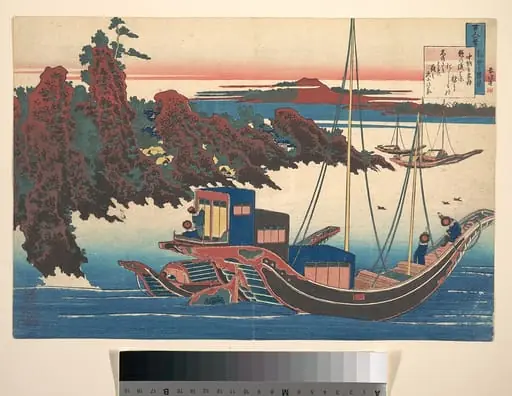 百人一首 乳母か縁説 中納言家持|Poem by Chūnagon Yakamochi (Ōtomo no Yakamochi), from the series One Hundred Poems Explained by the Nurse (Hyakunin isshu uba ga etoki)
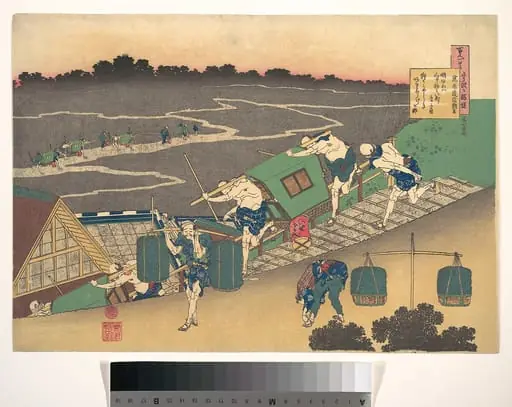 百人一首 宇波か縁説 藤原道信朝臣|Poem by Fujiwara no Michinobu Ason, from the series One Hundred Poems Explained by the Nurse (Hyakunin isshu uba ga etoki)
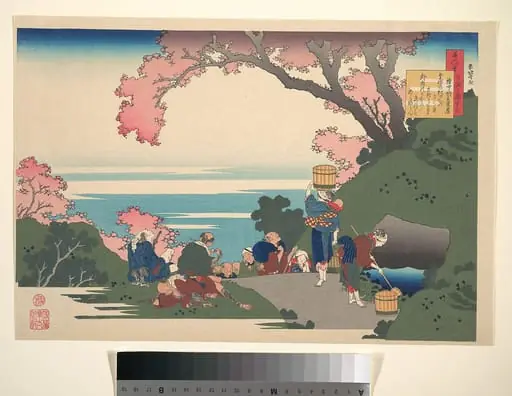 百人一首 うはかゑとき 権中納言匡房|Poem by Gon-chūnagon Masafusa (Ōe no Masafusa), from the series One Hundred Poems Explained by the Nurse (Hyakunin isshu uba ga etoki)
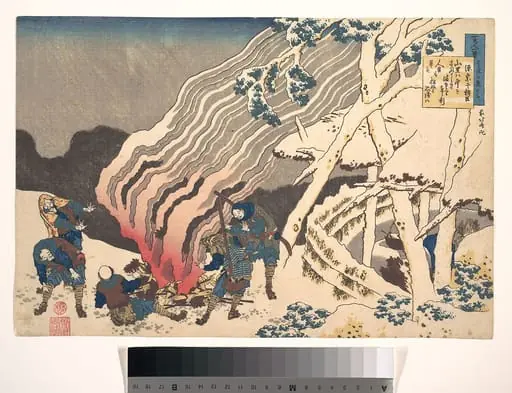 百人一首 うはかゑとき 源宗于朝臣|Poem by Minamoto no Muneyuki Ason, from the series One Hundred poems Explained by the Nurse (Hyakunin isshu uba ga etoki)
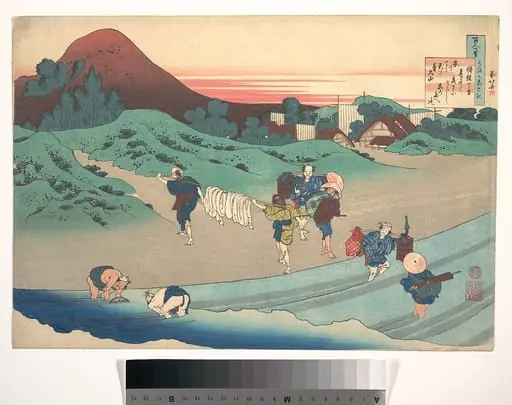 百人一首 うはかゑとき 持統天皇|Poem by Jitō Tenno (Empress Jitō), from the series One Hundred Poems Explained by the Nurse (Hyakunin isshu uba ga etoki)
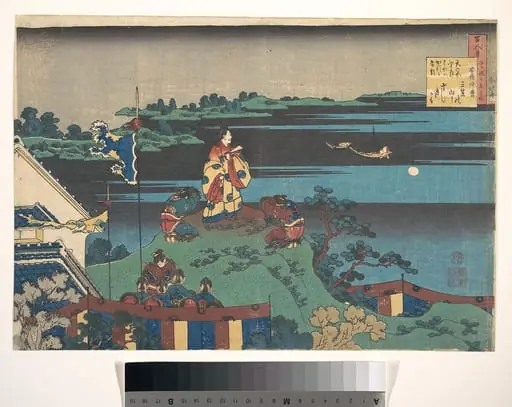 百人一首 宇波かゑとき 安部仲麿|Poem by Abe no Nakamaro, from the series One Hundred Poems Explained by the Nurse (Hyakunin isshu uba ga etoki)
 百人一首 姥か恵と起 大中臣能宣朝臣|Poem by Ōnakatomi no Yoshinobu Ason, from the series One Hundred Poems Explained by the Nurse (Hyakunin isshu uba ga etoki)