Artwork
「傾城道中双六 見立よしはら五十三つい」|Album of prints from the series A Tōkaidō Board Game of Courtesans, Fifty-three Pairings in the Yoshiwara (Keisei dōchū sugoroku, Mitate Yoshiwara gojūsan tsui)
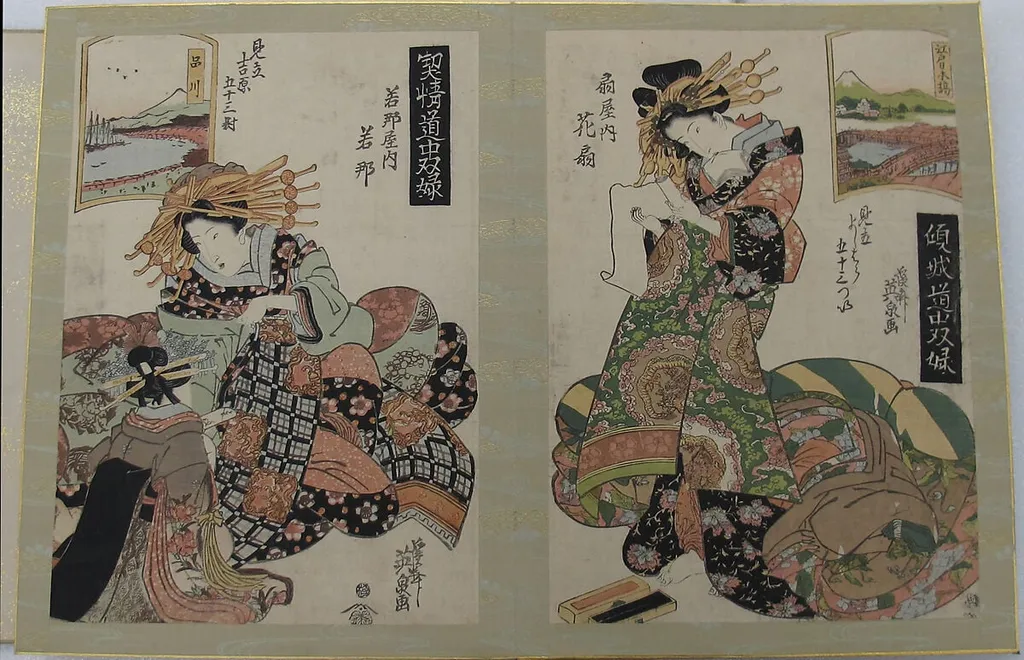
「傾城道中双六 見立よしはら五十三つい」|Album of prints from the series A Tōkaidō Board Game of Courtesans, Fifty-three Pairings in the Yoshiwara (Keisei dōchū sugoroku, Mitate Yoshiwara gojūsan tsui) is an ink print by the Romanticist artist Keisai Eisen. It dates from 1819 and is held in the collection of the Metropolitan Museum of Art.
About this work
Overview
Created in 1819 by the ukiyo-e artist Keisai Eisen, this album consists of fifty-six woodblock prints bound together. The work belongs to the series titled “A Tōkaidō Board Game of Courtesans, Fifty‑three Pairings in the Yoshiwara,” and is currently part of the collection of the Metropolitan Museum of Art.
Subject & Meaning
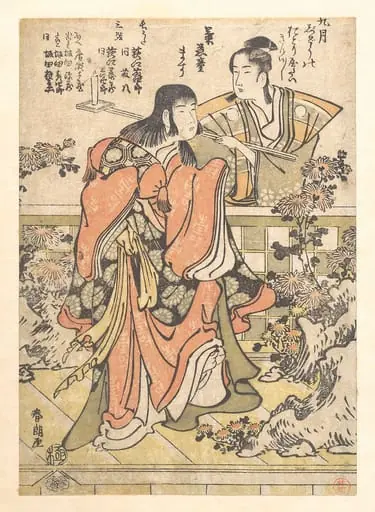
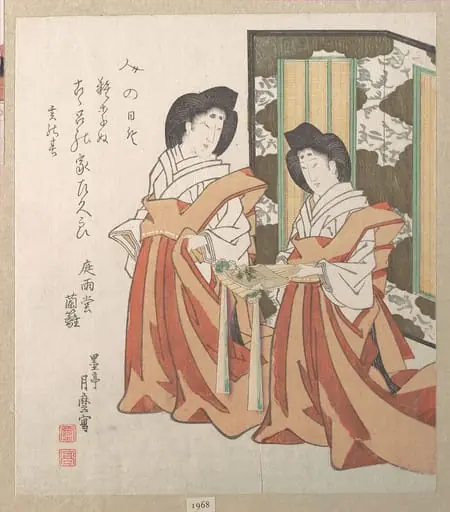
The prints depict two elegantly dressed women, their elaborate kimonos adorned with gold, green and red motifs. One figure is seated on a cushion while the other leans against a low box, suggesting a casual encounter among courtesans of the Yoshiwara pleasure district.
Technique & Style
Executed with ink and multiple pigments on paper, the images employ the characteristic bold coloration and intricate patterning of early nineteenth‑century ukiyo‑e. Small vignette scenes of mountains and boats appear in the corners, adding narrative depth within the limited frame of each print.
History & Provenance
The album was produced as part of a popular series that combined travel game motifs with depictions of Yoshiwara’s famed courtesans. After changing hands through private collections, it entered the Metropolitan Museum of Art’s holdings, where it is displayed as an example of Eisen’s prolific output.
Context
Eisen’s work reflects the Edo period’s fascination with the licensed quarters and the burgeoning culture of leisure travel along the Tōkaidō route. By pairing courtesan portraiture with board‑game imagery, the series catered to a market eager for both entertainment and visual documentation of contemporary urban life.
Artist & collection
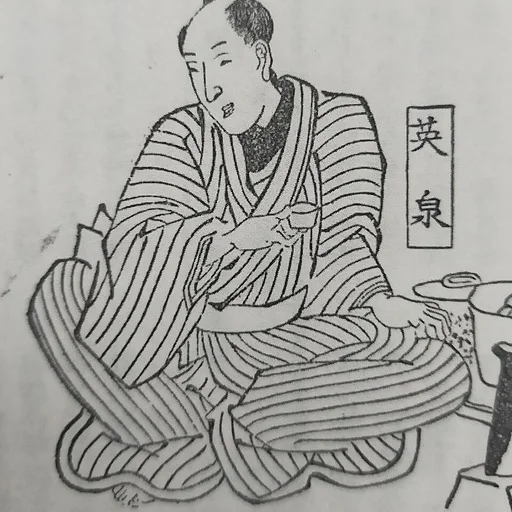
Artist
Eisen lived in Edo (now Tokyo) when the city pulsed with theaters, teahouses, and woodblock prints.

 Untitled
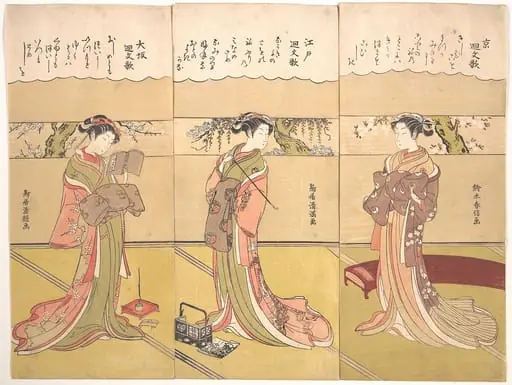
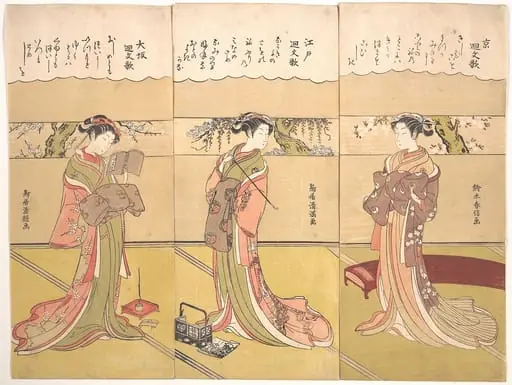 回文歌 京 大阪 江戸|Palindromic Poems (Kaibunka): Kyo
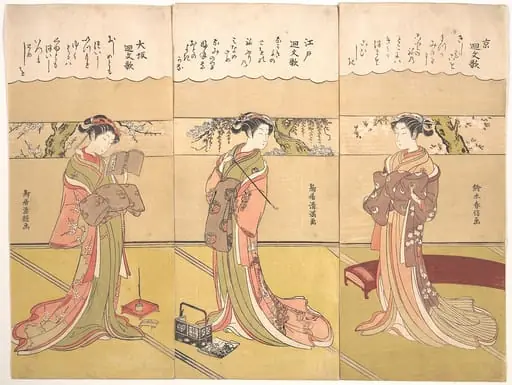 Untitled
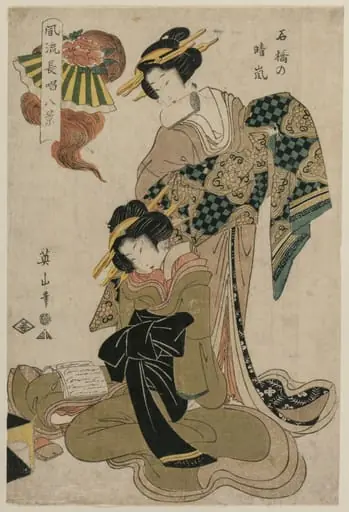 Haze on a Clear Day at Stone Bridge (From the series Eight Elegant Views of Chanted Accompanimnets for Kabuki Plays)
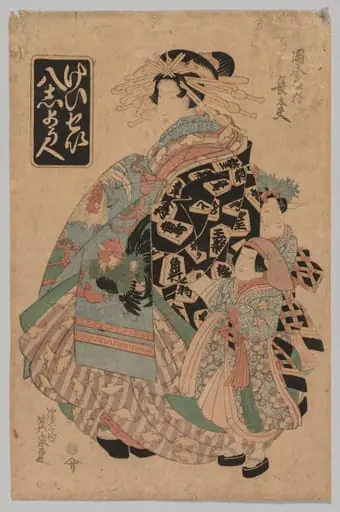 Chōdayu of the Okamotoya from the series ?
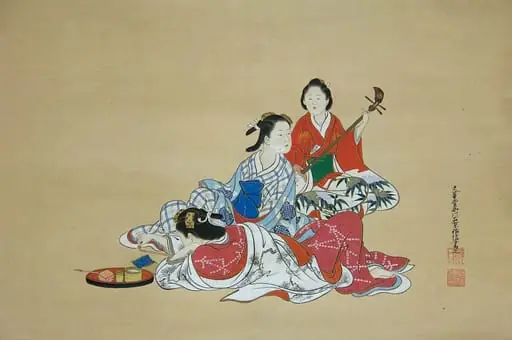 Untitled
 Untitled
 Untitled
 Untitled
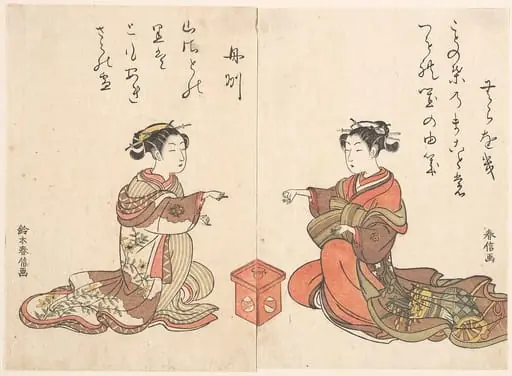 青楼美人合|Two Girls Play the Finger Game of Kitsume Ken
 Untitled
 Untitled