Artwork
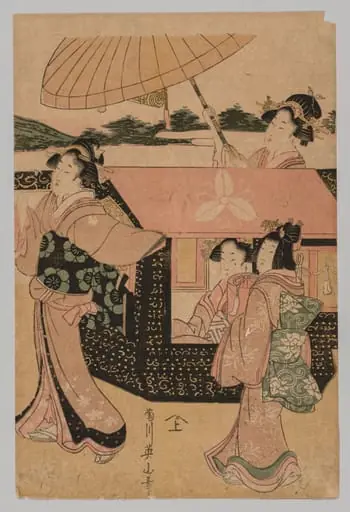
Two Women and a Girl
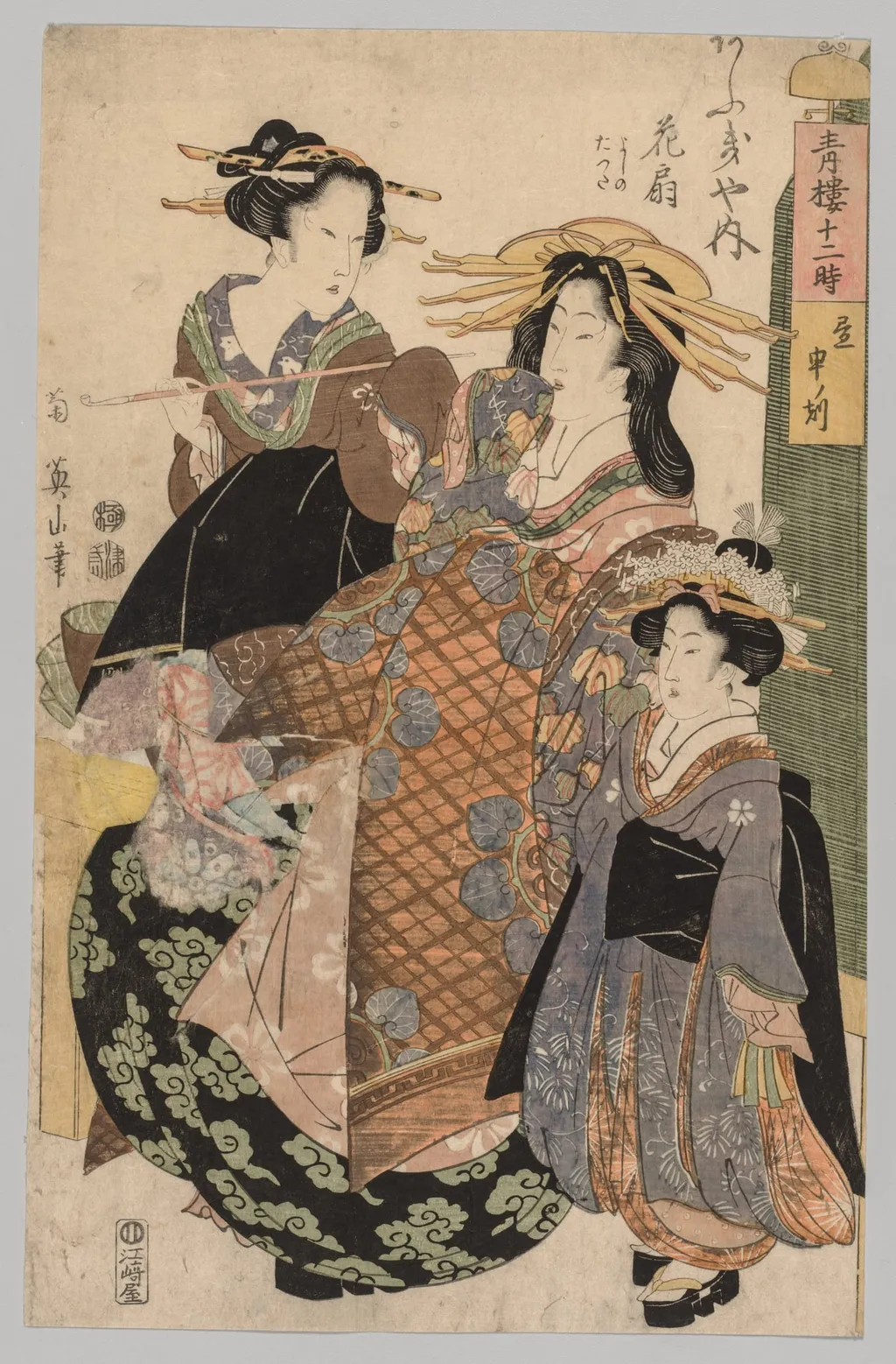
Two Women and a Girl is a print by the Romanticist artist Kikukawa Eizan. It dates from 1814 and is held in the collection of the Cleveland Museum of Art.
About this work
Overview
Kikukawa Eizan’s woodblock print titled Two Women and a Girl dates from 1814 and is part of the collection at the Cleveland Museum of Art. The composition presents three figures in traditional attire, arranged against a subdued backdrop that emphasizes the delicate patterns of their garments.
Subject & Meaning
The scene depicts two adult women and a young girl, each engaged in quiet gestures: the leftmost woman holds a fan and lowers her gaze, the central figure wears a broad hat and looks toward the right, while the girl on the far right, with a smaller hat, also looks downward. The arrangement suggests a moment of private contemplation within a domestic setting.
Technique & Style
Executed as a multicolored woodblock print, the work showcases Eizan’s skill in rendering intricate kimono designs with fine line work and subtle color modulation. The muted background serves to foreground the vivid fabrics, creating a balance between decorative detail and overall compositional restraint typical of early‑nineteenth‑century ukiyo‑e portraiture.
History & Provenance
Created during the late Edo period, the print entered the Cleveland Museum of Art’s holdings as part of its Japanese prints collection. Its acquisition reflects the museum’s broader effort to represent the breadth of ukiyo‑e production and the work of prolific artists such as Kikukawa Eizan, who was active in the early 1800s.
Artist & collection

Artist
Kikukawa Eizan was a designer of ukiyo-e style Japanese woodblock prints. He first studied with his father, Eiji, a minor painter of the Kanō school, and subsequently with Suzuki Nanrei (1775–1844), of the Shijō…

 Evening Glow at Seta (Seta sekisho), from the series "Fashionable Eight Views of Omi (Furyu Omi hakkei)"
 Untitled
 Untitled
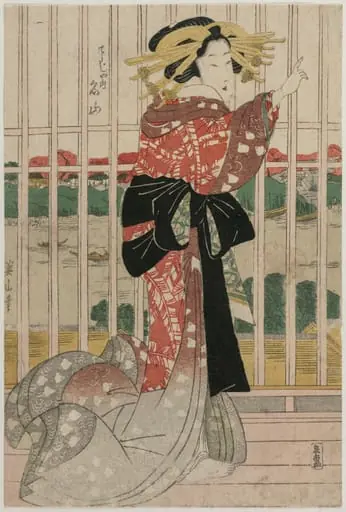 The Courtesan Meizan of the Chojiya on a Balcony Overlooking the Sumida River
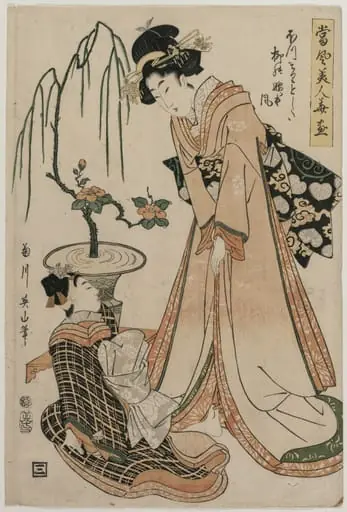 A Lady-in-Waiting with Waist as Slender as a Willow from the series Flowers and Modern Beauties
 No Title
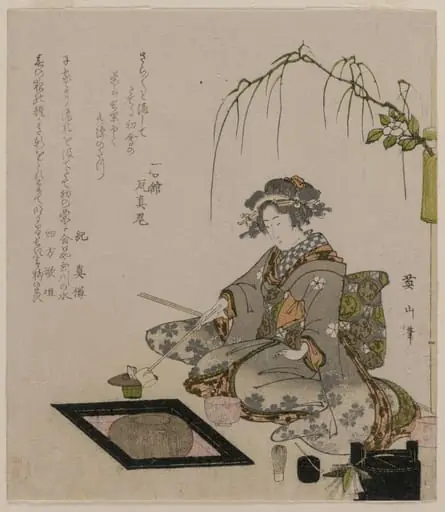 Woman Performing the Tea Ceremony
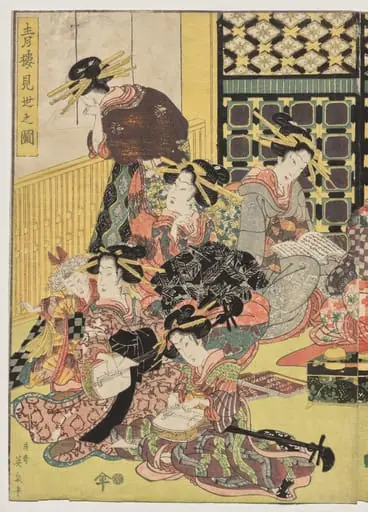 A Picture of the Viewing in the Pleasure Quarters
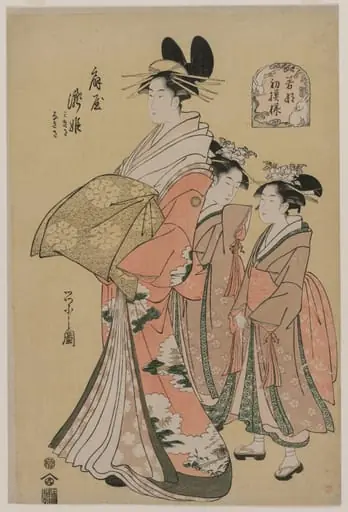 The Courtesan Takihime and Attendants (from the series New Patterns of Young Greens)
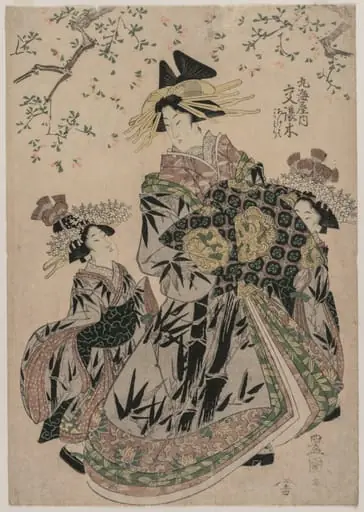 The Courtesan Katakoshigi (?) of Maruebiya with her Kamuro Ageha and Midori
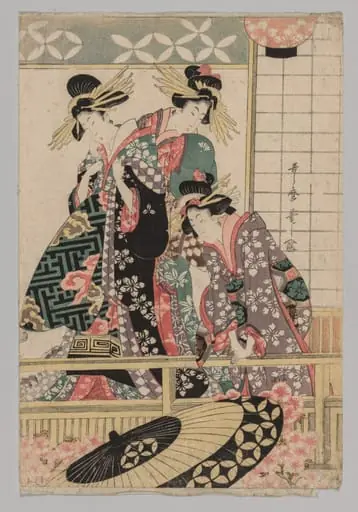 Yoshiwara Women Looking into the Street at Springtime
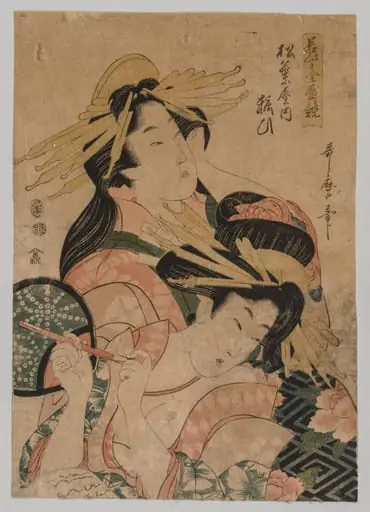 Half-length Portrait of Two Courtesans
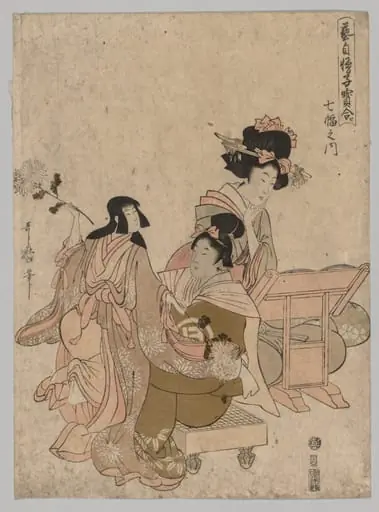 Bunraku Puppetry from the series Competition of Precious Children Proud of their Arts, Among Seven Scrolls
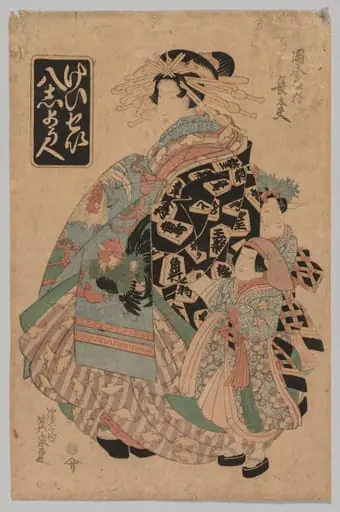 Chōdayu of the Okamotoya from the series ?
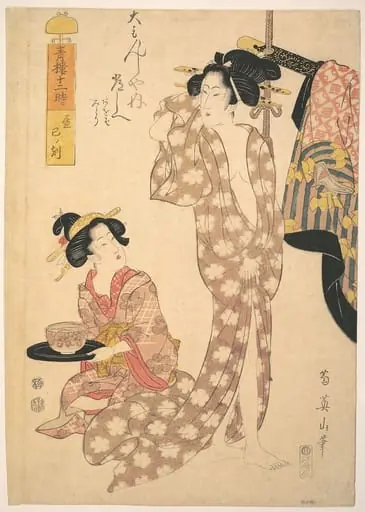 Untitled
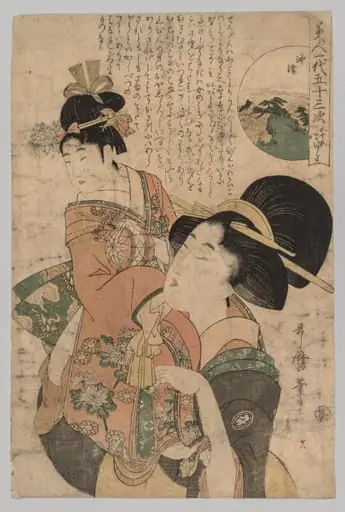 Nakatsu, from the series Fifty-three Stations in the Life of a Beauty
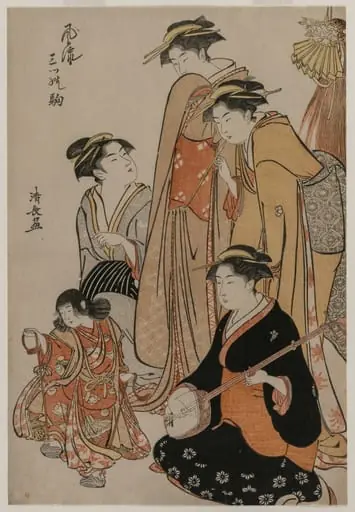 Women Watching a Girl Dance on Shells (From the series Fashionable Presentations of Three Horses)
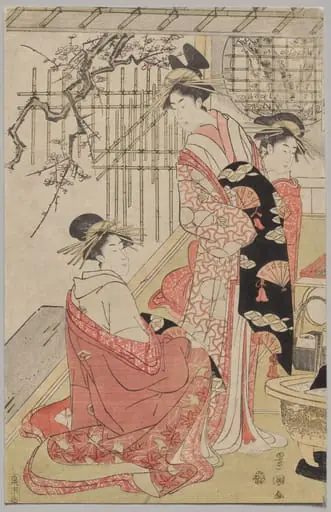 Courtesans of the Ōgiya on a Spring Outing
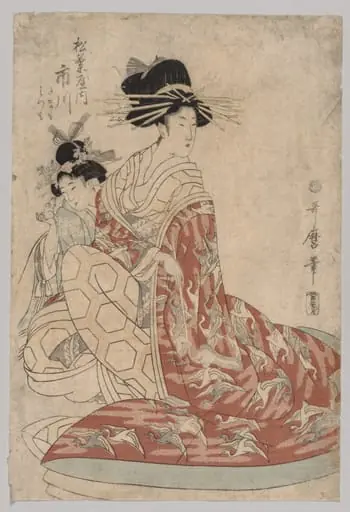 Ichikawa of Matsubaya with Minomo and Tamamo