Artwork
Yoshiwara Women Looking into the Street at Springtime
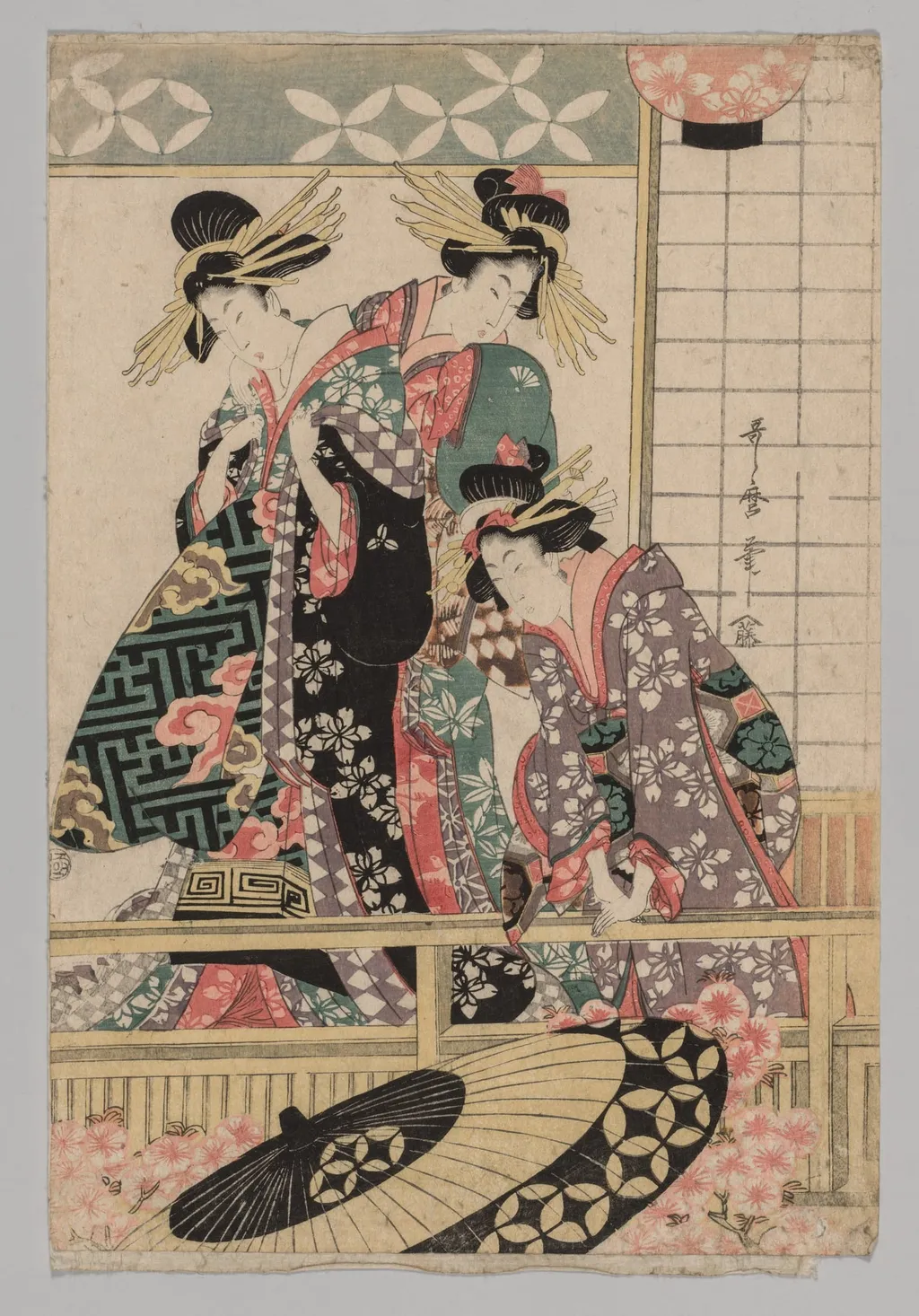
Yoshiwara Women Looking into the Street at Springtime is a print by the Romanticist artist Kitagawa Utamaro. It dates from 1780 and is held in the collection of the Cleveland Museum of Art.
About this work
Overview
This woodblock print by Kitagawa Utamaro, dated to around 1780, depicts two women from the Yoshiwara pleasure district observing the street during spring.
This woodblock print by Kitagawa Utamaro, dated to around 1780, depicts two women from the Yoshiwara pleasure district observing the street during spring. Executed in the ukiyo-e tradition, the work captures a fleeting, intimate moment amid the structured world of Edo’s licensed quarters. It is part of the collection at The Cleveland Museum of Art, where it is preserved as an example of late 18th-century Japanese printmaking.
Subject & Meaning
The two women, dressed in elaborate kimonos, pause in quiet observation, their gaze directed outward beyond the lattice barrier. Their stillness contrasts with the implied activity of the street, suggesting a tension between confinement and curiosity. The spring setting, hinted at by floral motifs, may symbolize transience or renewal, themes common in Edo-period aesthetics, while their presence reinforces the cultural role of courtesans as both objects and observers of urban life.
Technique & Style
Utamaro employs fine linework and layered pigments to render the women’s garments with intricate floral and geometric patterns, using bold contrasts of black, pink, and green. The delicate rendering of their hairstyles, adorned with hairpins, and the subtle modeling of their postures reflect his mastery of female portraiture. The background is simplified—a lattice fence and distant buildings—directing focus to the figures and their restrained interaction with the world beyond.
History & Provenance
Created during the height of Utamaro’s career, this print was likely produced as part of a series depicting courtesans in seasonal settings. It entered the Cleveland Museum of Art’s collection in the 20th century, following the broader Western interest in Japanese prints after the Meiji Restoration. Its preservation reflects its significance as a representative work of Edo-period civilian culture and artistic refinement.
Context
Yoshiwara, Edo’s designated pleasure district, was a space of regulated social interaction where courtesans occupied a complex position between entertainment and artistry. Prints like this one catered to urban audiences fascinated by the private lives of these women. The scene’s quietude contrasts with the district’s reputation for spectacle, offering a more introspective view of a world often sensationalized in popular culture.
Legacy
Utamaro’s focus on individual expression within the courtesan class influenced later ukiyo-e artists and contributed to the global appreciation of Japanese printmaking. This work exemplifies his ability to elevate everyday moments into nuanced studies of emotion and social structure, shaping how later generations understood the quiet dignity of Edo’s urban women.
Artist & collection


 Untitled
 Untitled
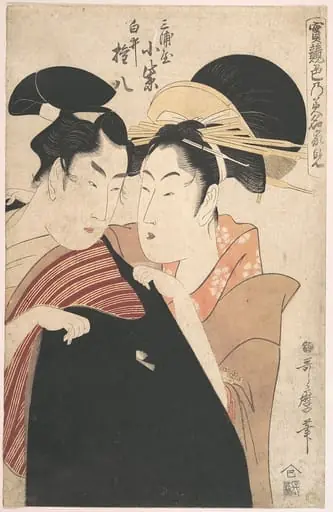 実競色乃美名家見 三浦屋小紫 白井権八|The Lovers Miura-ya Komurasaki and Shirai Gonpachi.
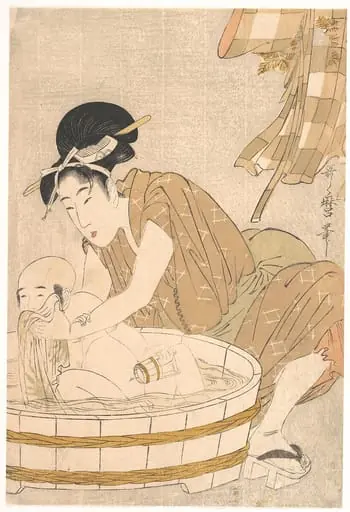 行水|Bathtime (Gyōzui)
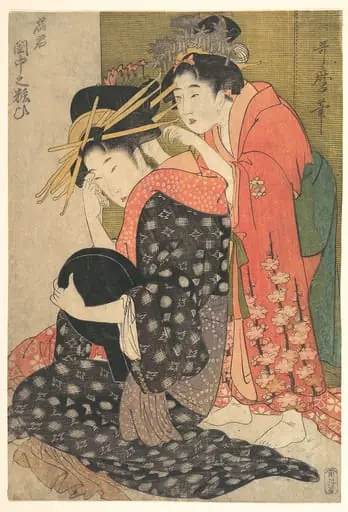 名君 閨中の粧ひ|The Oiran Yoso-oi Seated at Her Toilet
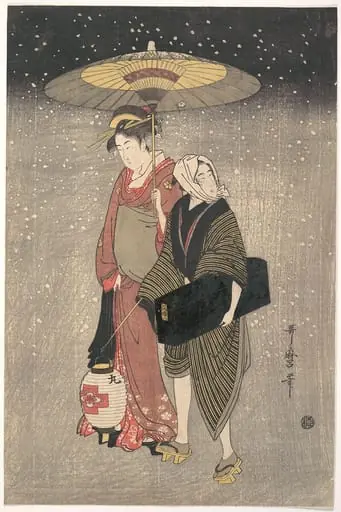 Untitled
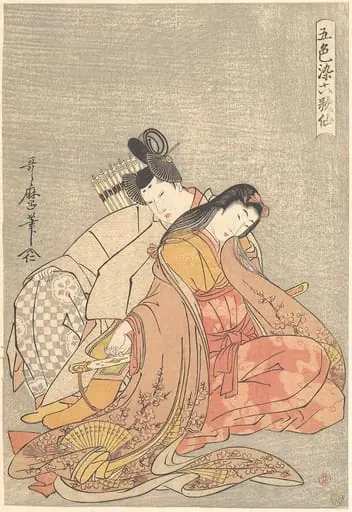 『五色染六歌仙』 在原業平と小野小町|“The Poet Ariwara no Narihira (825–880) and Ono no Komachi,” from the series Five Colors of Love for the Six Poetic Immortals (Goshiki-zome rokkasen)
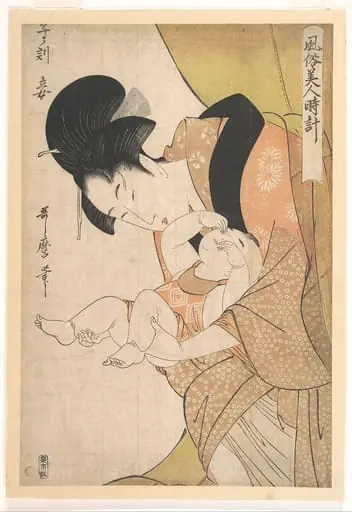 風俗美人時計 子ノ刻 妾|Midnight: Mother and Sleepy Child
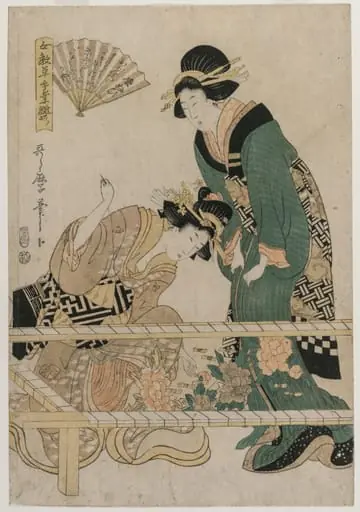 Chinese Embroidery (from the series Instructive Patterns for Women's Handicraft)
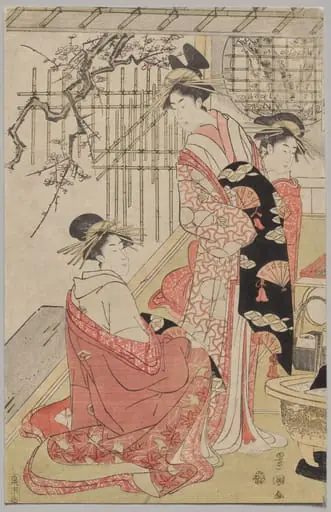 Courtesans of the Ōgiya on a Spring Outing
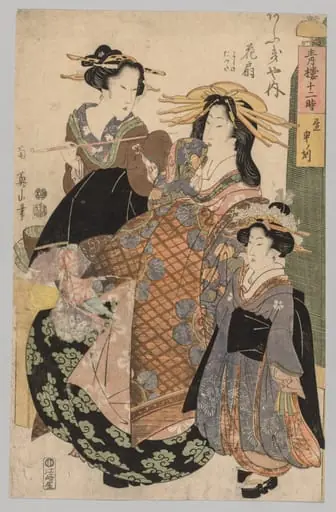 Two Women and a Girl
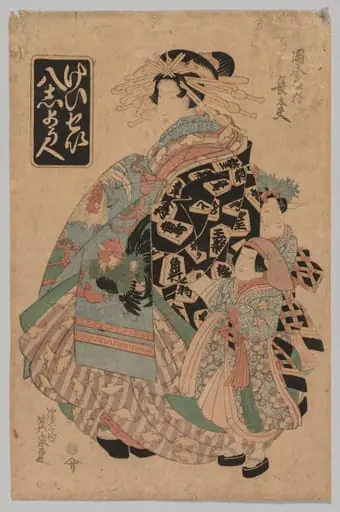 Chōdayu of the Okamotoya from the series ?
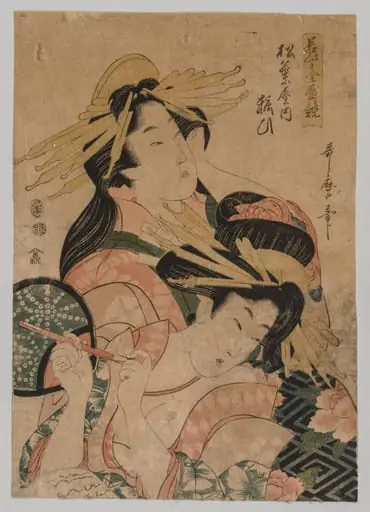 Half-length Portrait of Two Courtesans
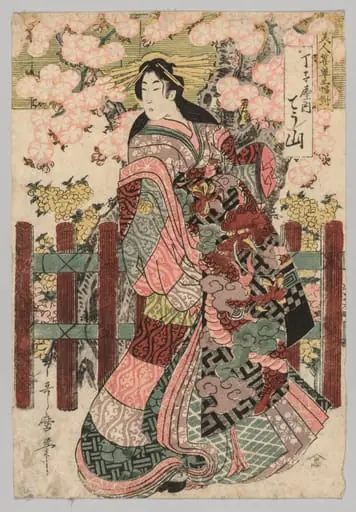 Chōzan of Chōjiya from the series Triptych of Beauties Before Blinds
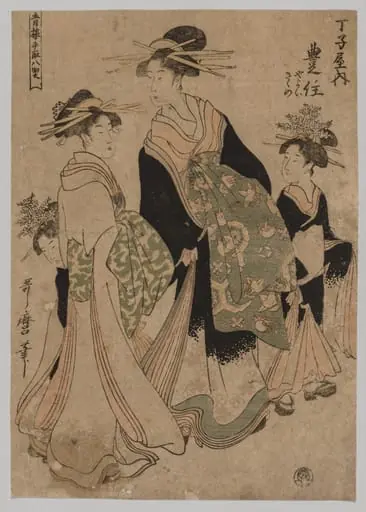 Courtesans and Attendants
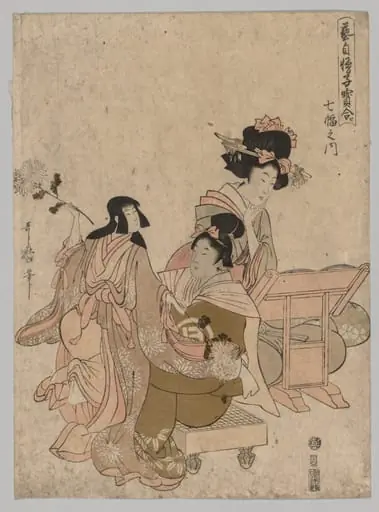 Bunraku Puppetry from the series Competition of Precious Children Proud of their Arts, Among Seven Scrolls
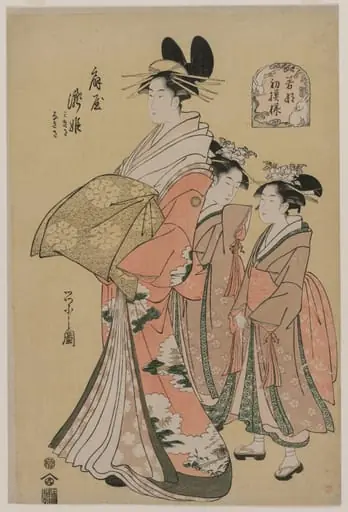 The Courtesan Takihime and Attendants (from the series New Patterns of Young Greens)
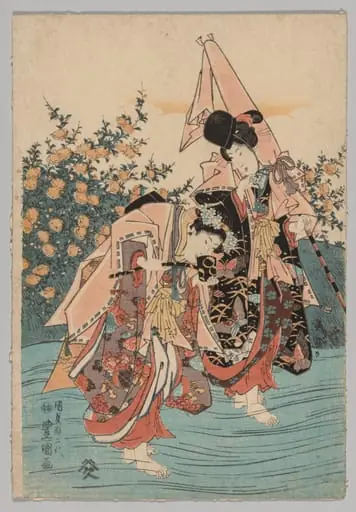 Actors
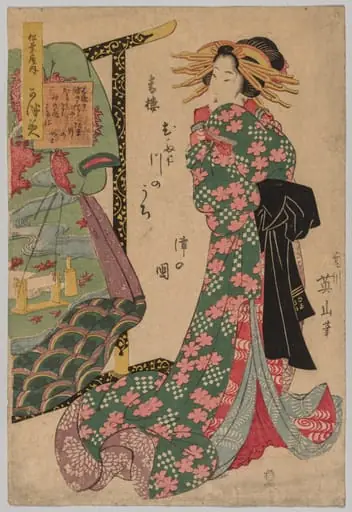 Courtesan Beside Kimono Rack
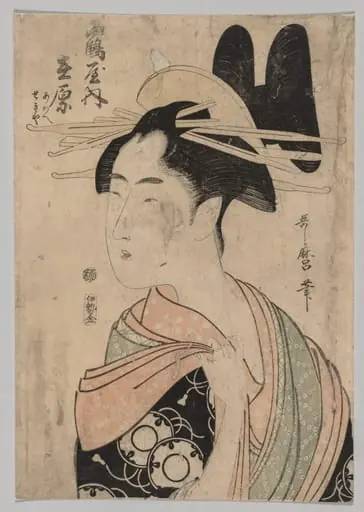 Woman of the Yoshiwara