Artwork
喜多川歌麿画 鮑取り|Abalone Divers
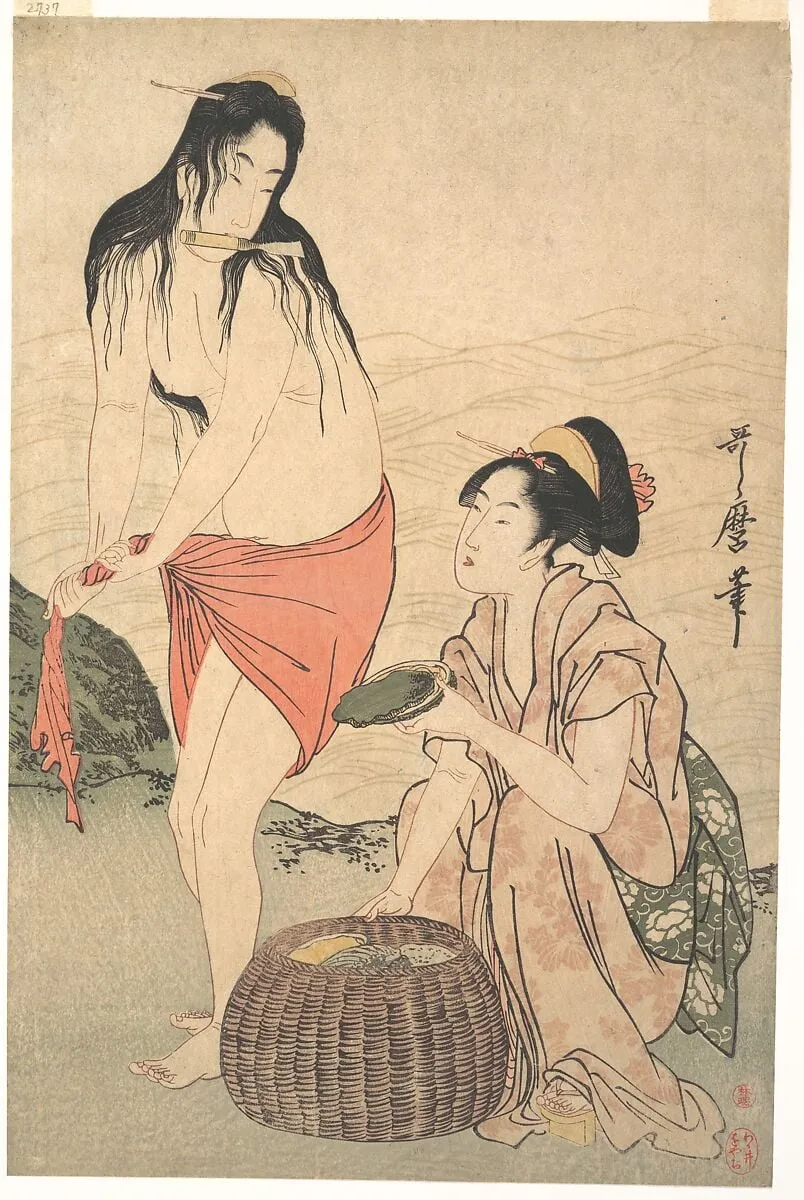
喜多川歌麿画 鮑取り|Abalone Divers is an ink print by the Romanticist artist Kitagawa Utamaro. It dates from 1788 and is held in the collection of the Metropolitan Museum of Art.
About this work
Overview
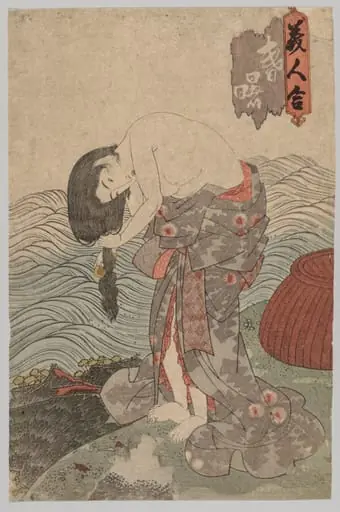
This print is the right panel of a triptych by Kitagawa Utamaro, produced in 1788. Executed in ink and color on paper, it belongs to the ukiyo-e tradition of Japanese woodblock printing. The scene captures two women diving for abalone, rendered with careful attention to natural movement and atmospheric detail. It is currently held in the collection of The Metropolitan Museum of Art.
Subject & Meaning
The image portrays female divers engaged in the laborious task of gathering abalone from the sea. Rather than idealizing the figures, Utamaro presents them with quiet dignity, emphasizing physical exertion and immersion in their environment. The work reflects a broader interest in everyday female labor during the Edo period, avoiding romanticization in favor of observational realism.
Technique & Style
The waves are rendered with layered, curved lines that suggest motion and depth, a technique derived from cross-hatching.
Utamaro employed the multi-block woodblock method, printing each color separately to achieve subtle gradations. The waves are rendered with layered, curved lines that suggest motion and depth, a technique derived from cross-hatching. The figures’ postures are unposed, capturing fleeting moments with a sense of spontaneity, while the use of soft pigments enhances the tactile quality of skin and water.
History & Provenance
Created during Utamaro’s early period of genre scenes, the triptych was likely produced for the popular print market in Edo. It entered The Metropolitan Museum of Art’s collection through documented acquisitions in the 20th century. Its survival as one panel of a three-part series is uncommon, as complete triptychs are often dispersed over time.
Context
In late 18th-century Japan, depictions of women in daily work were gaining prominence in ukiyo-e. Diving for shellfish was a recognized female occupation along coastal regions, and artists like Utamaro documented these activities with increasing nuance. This print aligns with a shift toward intimate, psychologically resonant portrayals of ordinary life over mythological or theatrical subjects.
Legacy
Utamaro’s treatment of the female form in labor influenced later generations of printmakers and Western artists drawn to Japanese aesthetics. The work’s emphasis on naturalism and emotional subtlety helped redefine the boundaries of genre painting in ukiyo-e. While not widely exhibited as a standalone piece, it remains a key example of his early experimentation with realism.
Artist & collection


 Untitled
 Untitled
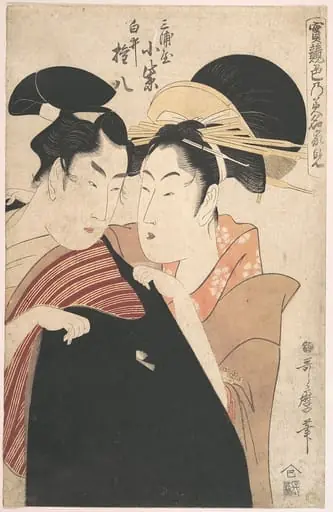 実競色乃美名家見 三浦屋小紫 白井権八|The Lovers Miura-ya Komurasaki and Shirai Gonpachi.
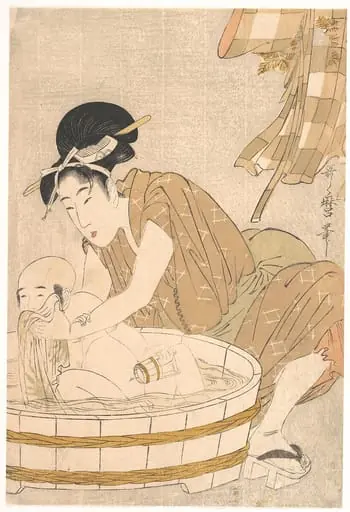 行水|Bathtime (Gyōzui)
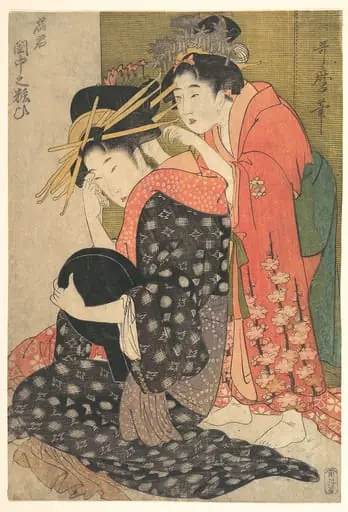 名君 閨中の粧ひ|The Oiran Yoso-oi Seated at Her Toilet
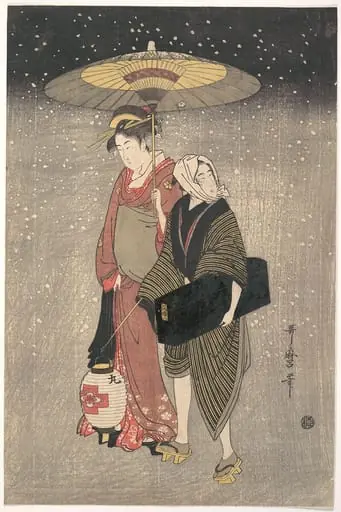 Untitled
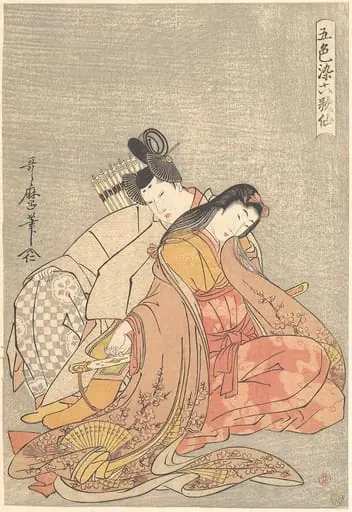 『五色染六歌仙』 在原業平と小野小町|“The Poet Ariwara no Narihira (825–880) and Ono no Komachi,” from the series Five Colors of Love for the Six Poetic Immortals (Goshiki-zome rokkasen)
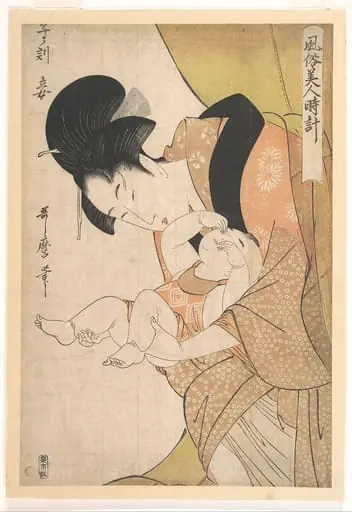 風俗美人時計 子ノ刻 妾|Midnight: Mother and Sleepy Child
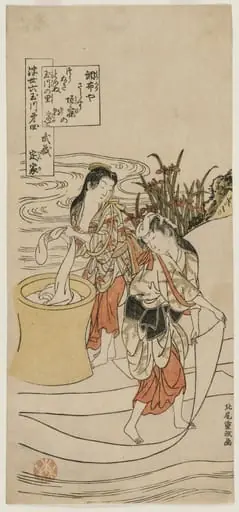 The Chofu Tama River in Musashi Province (from the series The Six Tama Rivers of the Floating World)
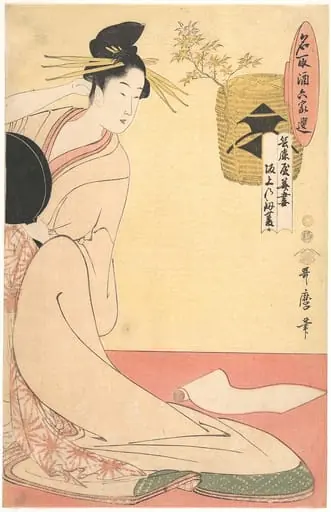 喜多川歌麿画 「名取酒六家選 兵庫屋華妻 坂上の剣菱」|"Hanazuma of Hyōgoya, Kenbishi of Sakagami” from the series The Peers of Saké Likened to Select Denizens of Six Houses (Natori zake rokkasen: Hyōgoya Hanazuma, Sakagami no Kenbishi)
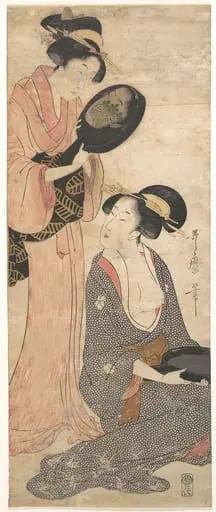 Untitled
 Untitled
 Woman Diver Combing her Hair
 逢身八契 権八小紫の床の通気|Gonpachi ni Komurasaki no Toko no Tsuki
 Untitled
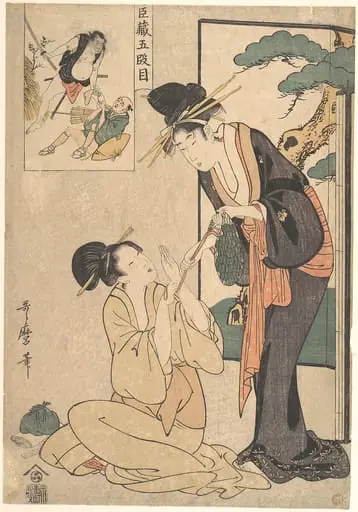 忠臣蔵五段目|A Woman Snatching a Bag of Sweetmeats from Her MotHer
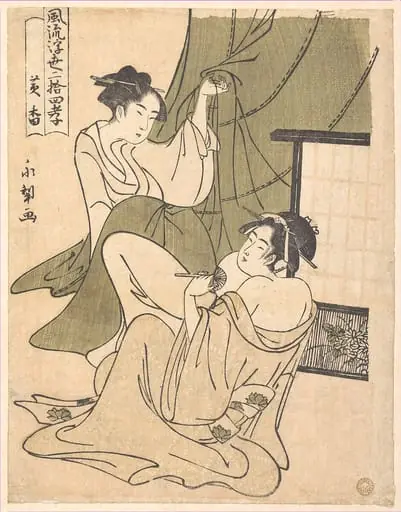 Untitled
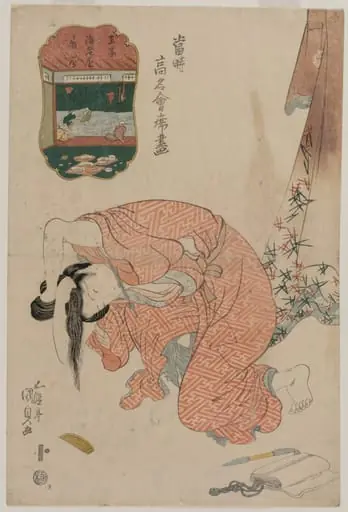 Woman Tying Her Hair (from the series Famous Restaurants of the Present Day)