Artwork
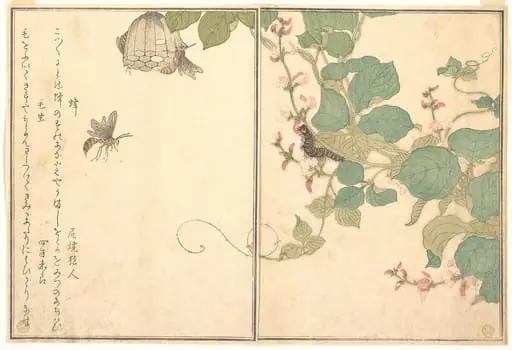
『画本虫撰』 「虻」「芋虫」|Horsefly (abu); Green Caterpillar, imomushi, from the Picture Book of Crawling Creatures (Ehon mushi erami)
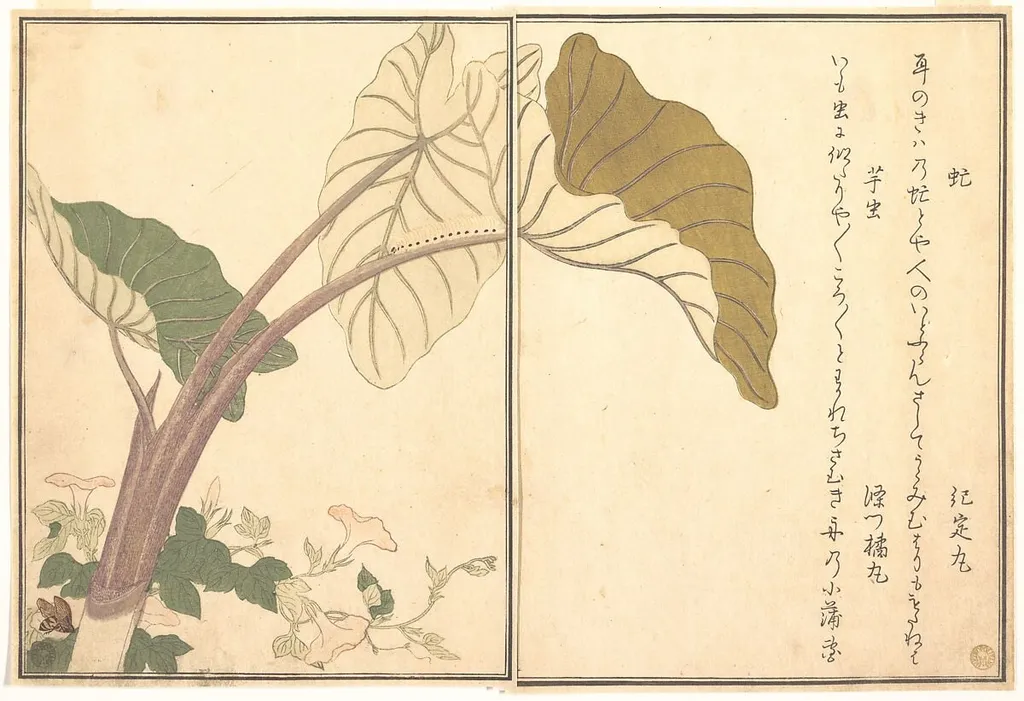
『画本虫撰』 「虻」「芋虫」|Horsefly (abu); Green Caterpillar, imomushi, from the Picture Book of Crawling Creatures (Ehon mushi erami) is an ink print by the Romanticist artist Kitagawa Utamaro. It dates from 1788 and is held in the collection of the Metropolitan Museum of Art. This page comes from the 1788 illustrated book 'Ehon mushi erami,' a collection of woodblock prints depicting insects and small creatures.
About this work
Overview
This page comes from the 1788 illustrated book 'Ehon mushi erami,' a collection of woodblock prints depicting insects and small creatures.
This page comes from the 1788 illustrated book 'Ehon mushi erami,' a collection of woodblock prints depicting insects and small creatures. Created by Kitagawa Utamaro, it is one of many such publications that elevated natural observation into art. The print combines ink and soft color on paper, arranged with quiet precision. Each element is rendered with care, emphasizing the quiet presence of ordinary life rather than grandeur.
Subject & Meaning
The page features two common yet overlooked creatures: a horsefly resting near a flowering stem and a green caterpillar clinging to a broad leaf. These are not symbolic or mythological figures but direct studies of the natural world as encountered in daily life. Their inclusion suggests an appreciation for the subtle beauty and complexity of small organisms, reflecting a cultural interest in the minutiae of nature during the Edo period.
Technique & Style
Utamaro employed fine linework and delicate washes of color to capture texture and form with remarkable clarity. The palette is restrained—greens, browns, and pale tones—enhancing the sense of naturalism. The background remains uncluttered, drawing focus to the subjects. Japanese script beside each image identifies the creatures, blending scientific labeling with aesthetic presentation, a hallmark of illustrated natural history books of the time.
History & Provenance
The print originated as part of a commercially published picture book, widely circulated among urban audiences in late 18th-century Edo. Such books catered to growing public interest in natural science and decorative arts. The Metropolitan Museum of Art acquired the page as part of its broader collection of Japanese prints, preserving it as an example of Edo-period print culture and its engagement with the natural world.
Context
During the late 1700s, Edo saw a surge in illustrated books on flora and fauna, driven by both scholarly curiosity and popular fascination. Utamaro’s work in this genre aligned with broader trends in ukiyo-e that expanded beyond portraits and theater scenes to include everyday subjects. These publications reflected a shift toward empirical observation and a quiet reverence for the small, often ignored details of the environment.
Legacy
Utamaro’s 'Ehon mushi erami' contributed to a lasting tradition of naturalistic printmaking in Japan. While not as widely recognized as his portraits, these insect studies influenced later artists and collectors interested in the intersection of art and natural history. The book remains a quiet testament to the Edo period’s capacity to find depth and dignity in the smallest elements of the natural world.
Artist & collection


 Untitled
 Untitled
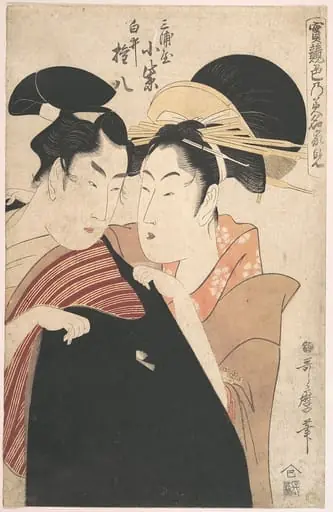 実競色乃美名家見 三浦屋小紫 白井権八|The Lovers Miura-ya Komurasaki and Shirai Gonpachi.
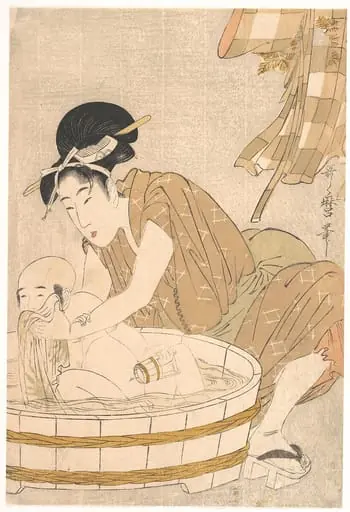 行水|Bathtime (Gyōzui)
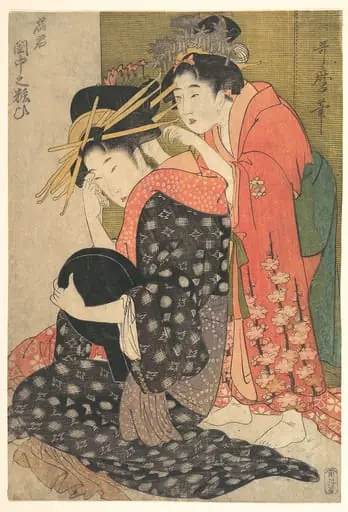 名君 閨中の粧ひ|The Oiran Yoso-oi Seated at Her Toilet
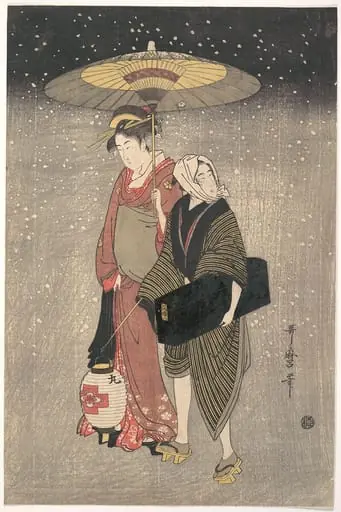 Untitled
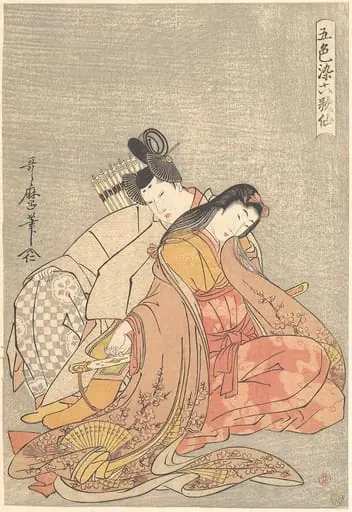 『五色染六歌仙』 在原業平と小野小町|“The Poet Ariwara no Narihira (825–880) and Ono no Komachi,” from the series Five Colors of Love for the Six Poetic Immortals (Goshiki-zome rokkasen)
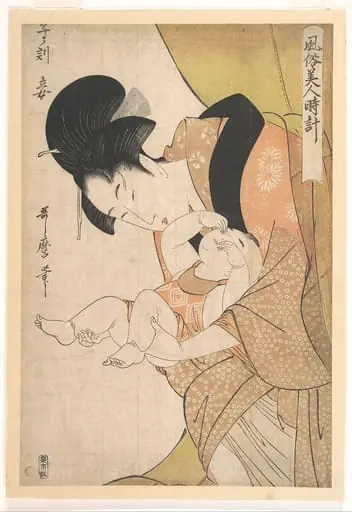 風俗美人時計 子ノ刻 妾|Midnight: Mother and Sleepy Child
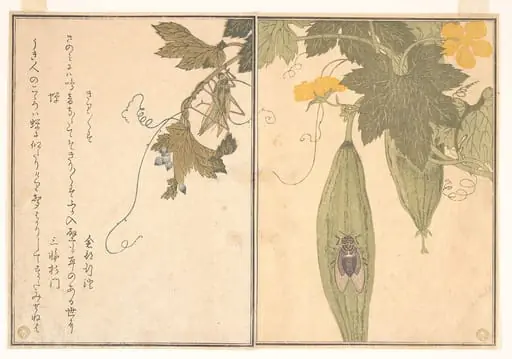 『画本虫撰』「きりきりす」「蝉」|Grasshopper (Kirigirisu); Cicada (Semi), from the Picture Book of Crawling Creatures (Ehon mushi erami)
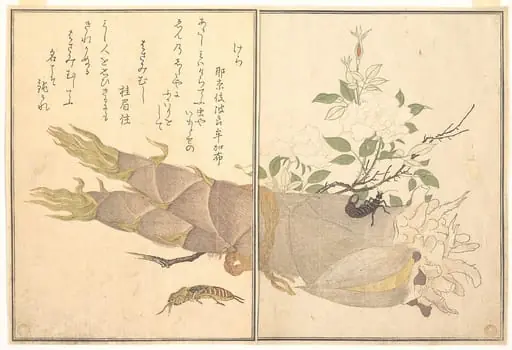 『画本虫撰』 「けら」「はさみむし」|Mole Cricket (Kera); Earwig, (Hasami-mushi), from the Picture Book of Crawling Creatures (Ehon mushi erami)
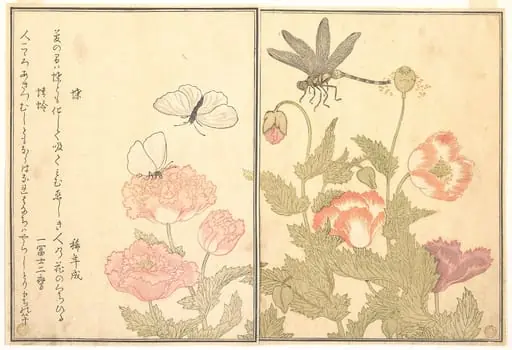 『画本虫撰』 「蝶」「蜻蛉」|Butterfly (Chō); Dragonfly (Kagerō or Tonbo), from the Picture Book of Crawling Creatures (Ehon mushi erami)
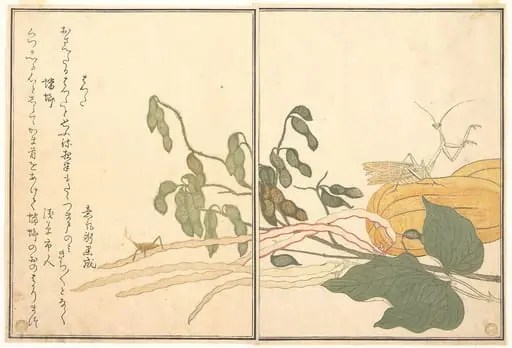 画本虫撰 バッタと蟷螂|Cone-headed Grasshopper or Locust, (batta); Praying Mantis (Tōrō or Kamakiri), from the Picture Book of Crawling Creatures (Ehon mushi erami)
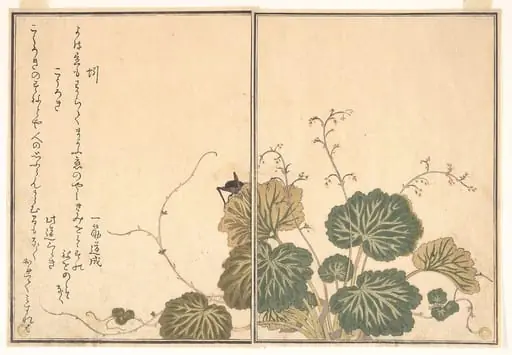 『画本虫撰』「蚓」「こうろき」|Earthworm (Mimizu); Cricket (Kōrogi), from the Picture Book of Crawling Creatures (Ehon mushi erami)
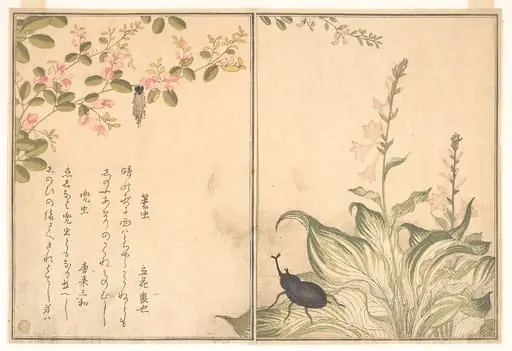 『画本虫撰』「蓑虫」「兜虫」|Bagworm (Minomushi); Horned Scarab Beetle (Kabutomushi), from the Picture Book of Crawling Creatures (Ehon mushi erami)
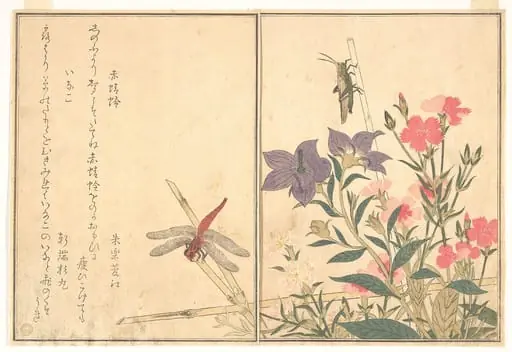 『画本虫撰』「赤蜻蛉」「いなこ」|Red Dragonfly (Akatonbo); Locust (Inago), from the Picture Book of Crawling Creatures (Ehon mushi erami)
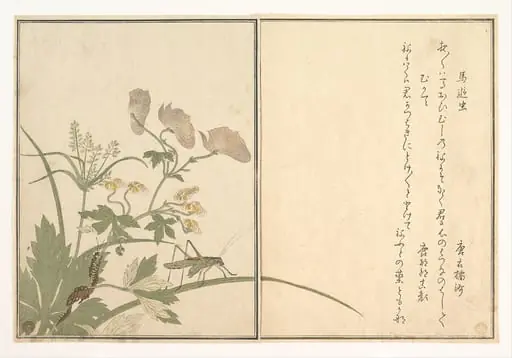 『画本虫撰』 「馬追虫」「むかて」|Katydid (Umaoi-mushi); Centipede, (Mukade), from the Picture Book of Crawling Creatures (Ehon mushi erami)
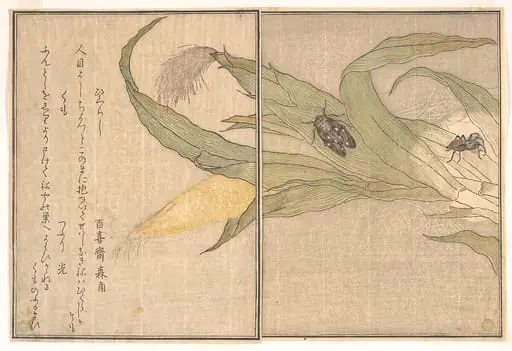 『画本虫撰』 「ひくらし」「くも」|Evening Cicada, Higurashi; Spider, Kumo, from the Picture Book of Crawling Creatures (Ehon mushi erami)
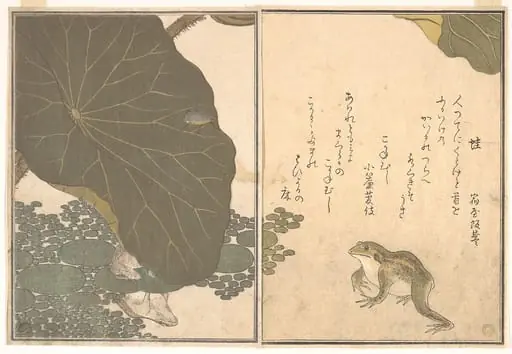 『画本虫撰』「蛙」「こかねむし」|Frog (Kaeru); Gold Beetle (Kogane mushi), from the Picture Book of Crawling Creatures (Ehon mushi erami)
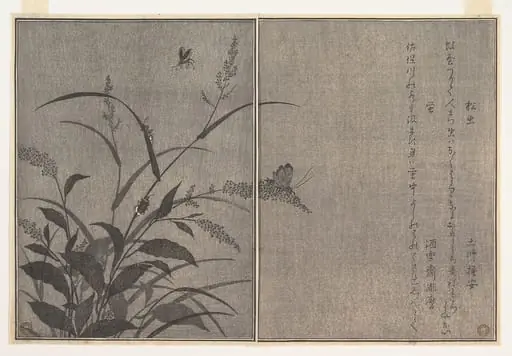 『画本虫撰』 「松虫」「虫蛍」|Tree cricket (Matsumushi); Firefly (Hotaru), from the Picture Book of Crawling Creatures (Ehon mushi erami)
 『画本虫撰』 「蜂」「毛虫」|Paper Wasp (Hachi); Hairy Caterpillar (Kemushi), from the Picture Book of Crawling Creatures (Ehon mushi erami)