Artwork
『画本虫撰』 「蝶」「蜻蛉」|Butterfly (Chō); Dragonfly (Kagerō or Tonbo), from the Picture Book of Crawling Creatures (Ehon mushi erami)
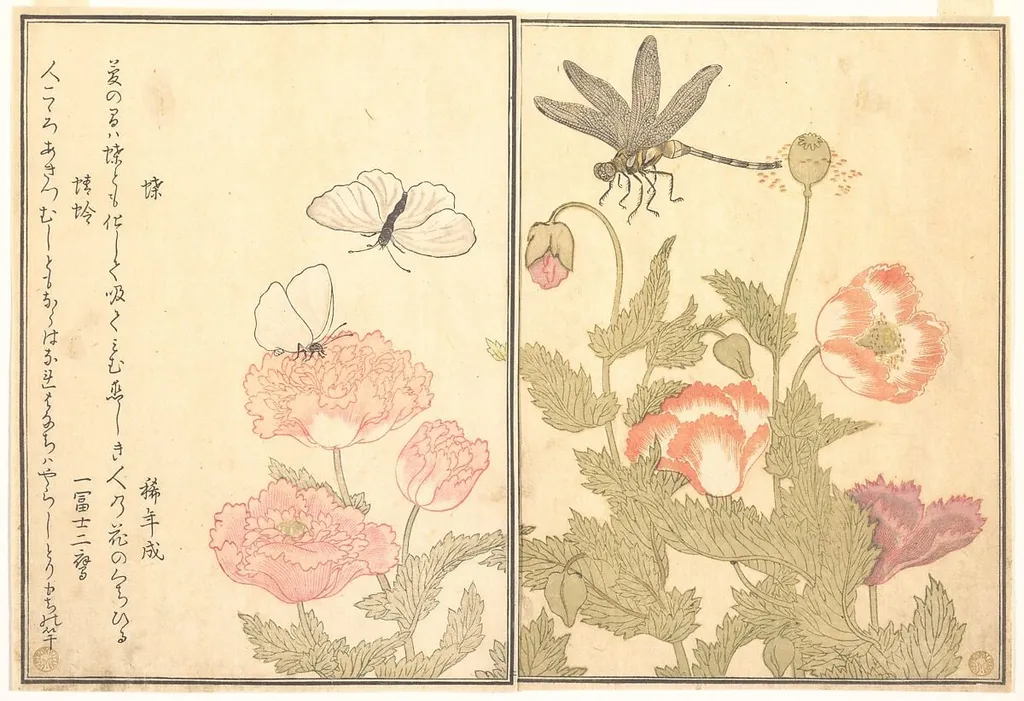
『画本虫撰』 「蝶」「蜻蛉」|Butterfly (Chō); Dragonfly (Kagerō or Tonbo), from the Picture Book of Crawling Creatures (Ehon mushi erami) is an ink print by the Romanticist artist Kitagawa Utamaro. It dates from 1788 and is held in the collection of the Metropolitan Museum of Art.
About this work
Overview
This woodblock illustration, produced in 1788 by the Edo‑period artist Kitagawa Utamaro, appears on a page of the natural‑history volume *Ehon mushi erami* (Picture Book of Crawling Creatures). The print, now in the collection of the Metropolitan Museum of Art, depicts two separate insect studies rendered in ink and color on paper.
Subject & Meaning
The left panel presents two butterflies perched on pink poppy blossoms, their wings spread against a backdrop of green foliage. The right panel focuses on a dragonfly alighting on a slender stem bearing buds that have not yet opened. Both scenes emphasize the fleeting beauty of insects in relation to flowering plants, a theme common in Japanese natural‑illustration.
Technique & Style
Utamaro employs fine, delicate line work to delineate the insects’ wings and the petals of the flowers. Subtle cross‑hatching creates tonal variation, especially on the dragonfly’s translucent wings, while soft washes of pink, green, and brown convey depth without heavy shading. The composition balances meticulous detail with a restrained palette.
History & Provenance
The image was originally printed as part of a multi‑page book that catalogued insects for an educated audience in late‑eighteenth‑century Japan. After its publication, individual pages entered the market as collectible prints. The particular sheet now owned by the Metropolitan Museum was acquired through the museum’s Asian art acquisitions program in the late twentieth century.
Context
During the Kansei era, interest in natural subjects grew among urban consumers, prompting publishers to produce illustrated encyclopedias. Utamaro, best known for his portraits of courtesans, applied his skill in rendering delicate textures to scientific illustration, bridging artistic and scholarly traditions.
Artist & collection


 Untitled
 Untitled
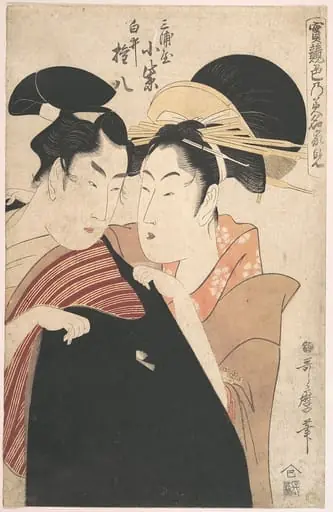 実競色乃美名家見 三浦屋小紫 白井権八|The Lovers Miura-ya Komurasaki and Shirai Gonpachi.
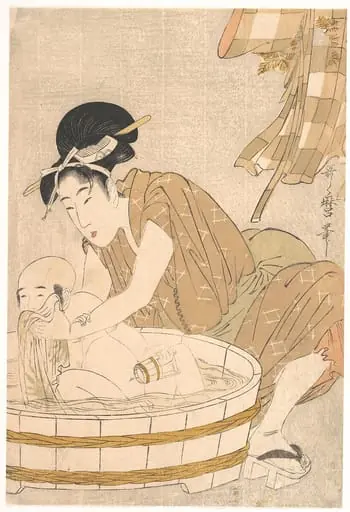 行水|Bathtime (Gyōzui)
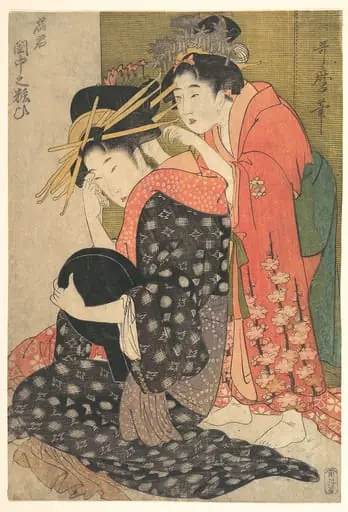 名君 閨中の粧ひ|The Oiran Yoso-oi Seated at Her Toilet
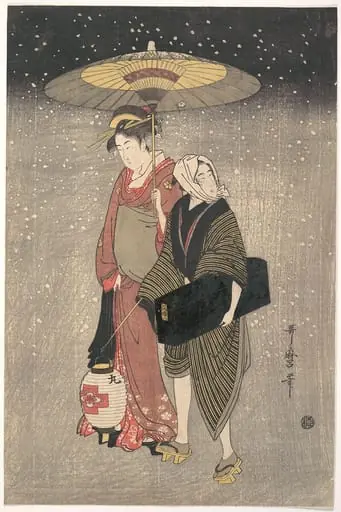 Untitled
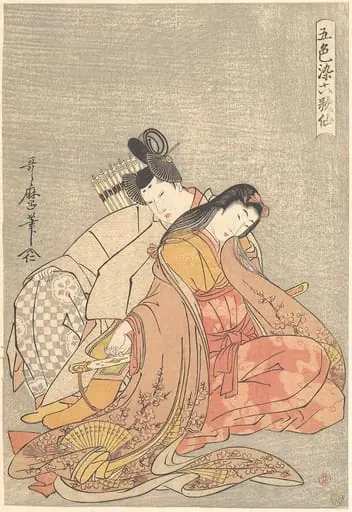 『五色染六歌仙』 在原業平と小野小町|“The Poet Ariwara no Narihira (825–880) and Ono no Komachi,” from the series Five Colors of Love for the Six Poetic Immortals (Goshiki-zome rokkasen)
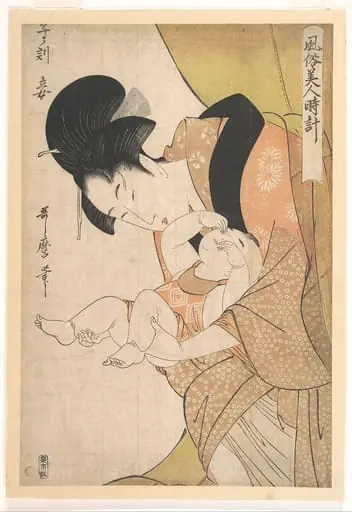 風俗美人時計 子ノ刻 妾|Midnight: Mother and Sleepy Child
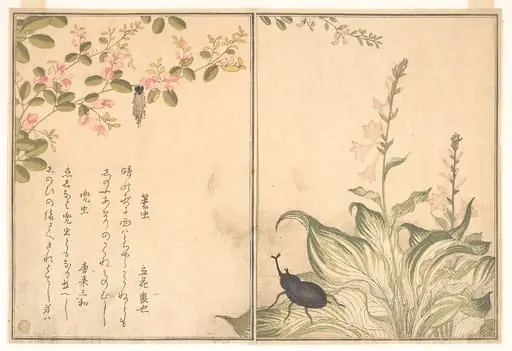 『画本虫撰』「蓑虫」「兜虫」|Bagworm (Minomushi); Horned Scarab Beetle (Kabutomushi), from the Picture Book of Crawling Creatures (Ehon mushi erami)
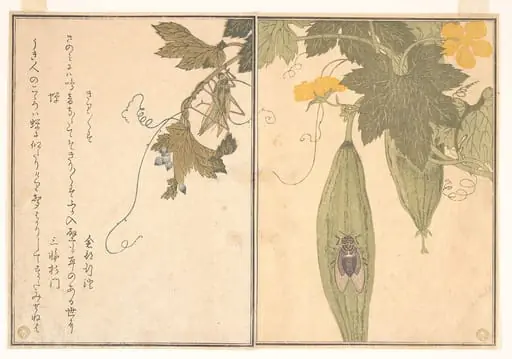 『画本虫撰』「きりきりす」「蝉」|Grasshopper (Kirigirisu); Cicada (Semi), from the Picture Book of Crawling Creatures (Ehon mushi erami)
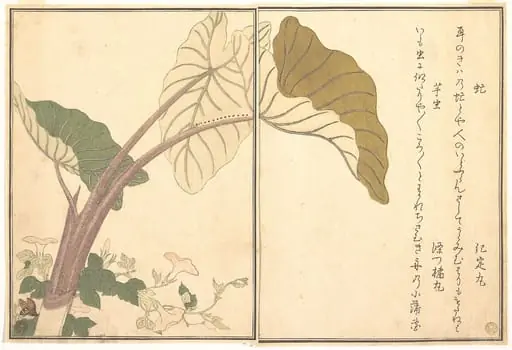 『画本虫撰』 「虻」「芋虫」|Horsefly (abu); Green Caterpillar, imomushi, from the Picture Book of Crawling Creatures (Ehon mushi erami)
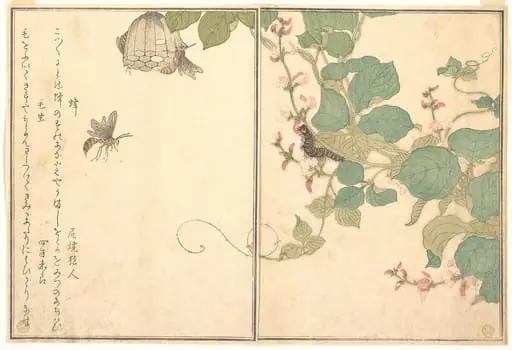 『画本虫撰』 「蜂」「毛虫」|Paper Wasp (Hachi); Hairy Caterpillar (Kemushi), from the Picture Book of Crawling Creatures (Ehon mushi erami)
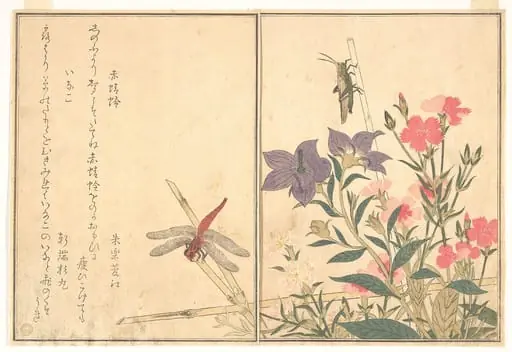 『画本虫撰』「赤蜻蛉」「いなこ」|Red Dragonfly (Akatonbo); Locust (Inago), from the Picture Book of Crawling Creatures (Ehon mushi erami)
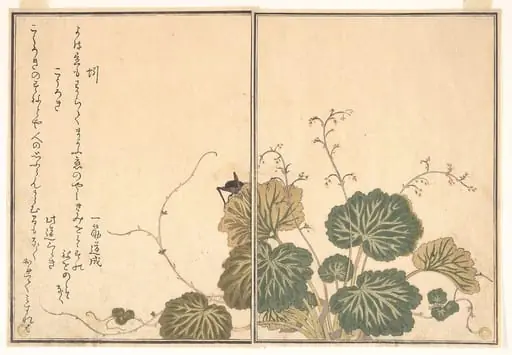 『画本虫撰』「蚓」「こうろき」|Earthworm (Mimizu); Cricket (Kōrogi), from the Picture Book of Crawling Creatures (Ehon mushi erami)
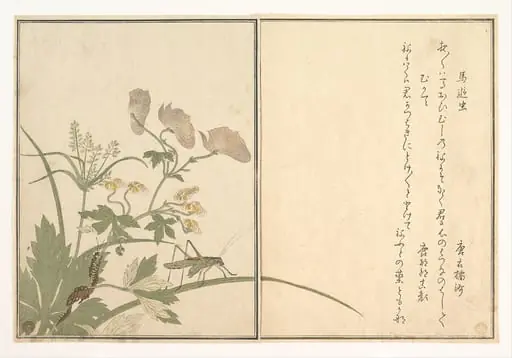 『画本虫撰』 「馬追虫」「むかて」|Katydid (Umaoi-mushi); Centipede, (Mukade), from the Picture Book of Crawling Creatures (Ehon mushi erami)
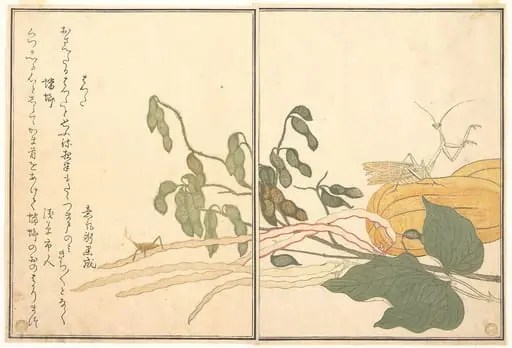 画本虫撰 バッタと蟷螂|Cone-headed Grasshopper or Locust, (batta); Praying Mantis (Tōrō or Kamakiri), from the Picture Book of Crawling Creatures (Ehon mushi erami)
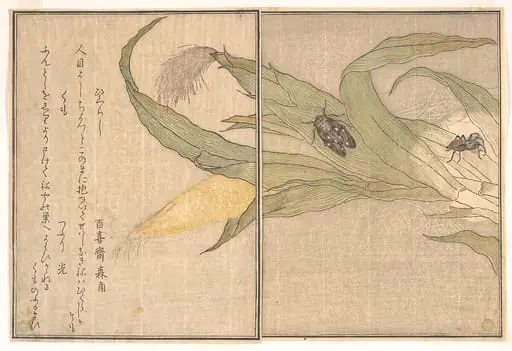 『画本虫撰』 「ひくらし」「くも」|Evening Cicada, Higurashi; Spider, Kumo, from the Picture Book of Crawling Creatures (Ehon mushi erami)
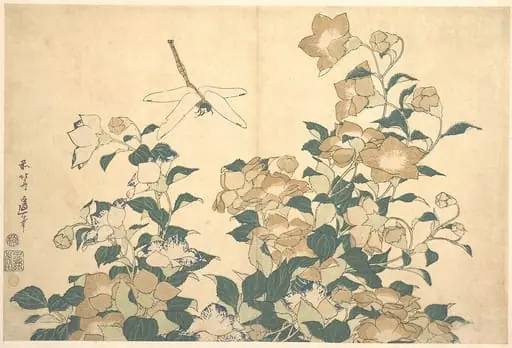 葛飾北斎画 桔梗に蜻蛉|Dragonfly and Bellflower
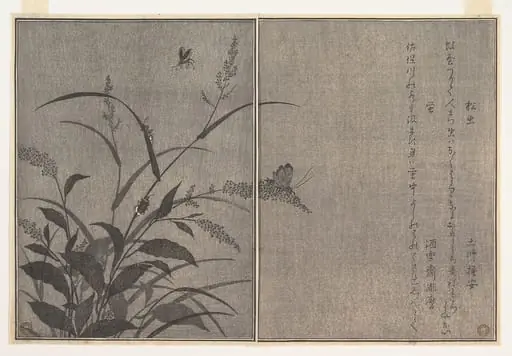 『画本虫撰』 「松虫」「虫蛍」|Tree cricket (Matsumushi); Firefly (Hotaru), from the Picture Book of Crawling Creatures (Ehon mushi erami)