Artwork
Catching Fireflies Beneath a Willow Tree (left)
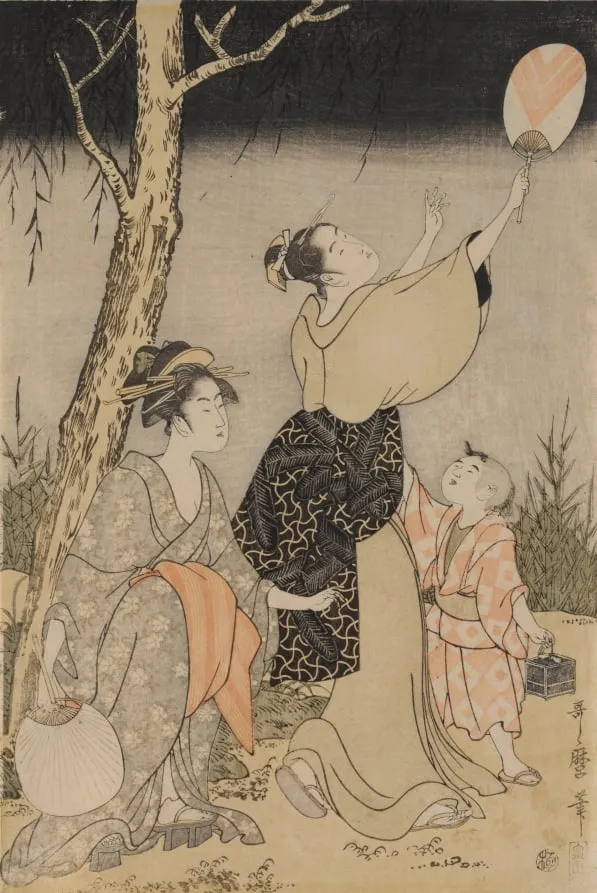
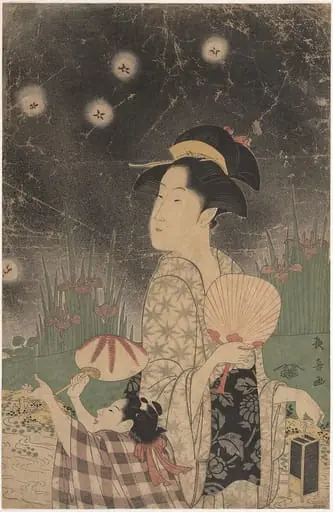
Catching Fireflies Beneath a Willow Tree (left) is a print by the Romanticist artist Kitagawa Utamaro. It dates from 1796 and is held in the collection of the Cleveland Museum of Art.
About this work
One boy splashes in the stream, another watches, and the woman waves her fan to trap a glowing bug.
You see a moonlit scene: kids and a young woman chasing fireflies near a willow tree. One boy splashes in the stream, another watches, and the woman waves her fan to trap a glowing bug.
Utamaro loved showing small, everyday moments like this. The fireflies aren’t just light—they’re tiny sparks of life in the dark. The carved cage in the girl’s hand is so detailed you can almost feel the wood. This kind of print was cheap to buy back then, like a postcard today.
If you like this, look up *Japan, Edo period (1615–1868)*.
Overview
The print, titled “Catching Fireflies Beneath a Willow Tree (left),” depicts a moonlit night where a young woman, two boys, and a girl are engaged in the pursuit of fireflies near a willow tree. One boy wades in a stream, another watches from the bank, while the woman fans the air to coax the insects into a wooden cage held by the girl.
Subject & Meaning
The scene captures a fleeting, everyday pastime of children and a woman gathering fireflies, an activity that evokes the transient beauty of light in darkness. The illuminated insects serve as symbols of fleeting life and the joy of simple, communal play in a natural setting.
Technique & Style
Executed as a woodblock print, the work employs delicate line work and subtle color washes to render the night sky, water surface, and the texture of the willow’s leaves. The carved wooden cage is rendered with fine detail, emphasizing the craftsmanship of the printmaking process.
History & Provenance
Produced during Japan’s Edo period (1615–1868), the print reflects the era’s popular interest in genre scenes that portrayed ordinary moments. Such prints were widely distributed and affordable, serving as visual souvenirs comparable to modern postcards.
Artist & collection


 Untitled
 Untitled
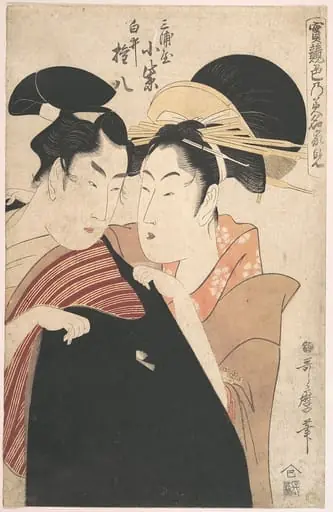 実競色乃美名家見 三浦屋小紫 白井権八|The Lovers Miura-ya Komurasaki and Shirai Gonpachi.
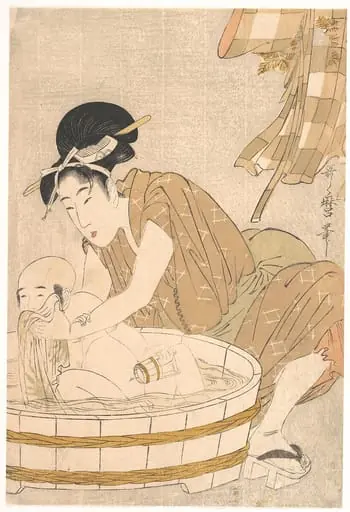 行水|Bathtime (Gyōzui)
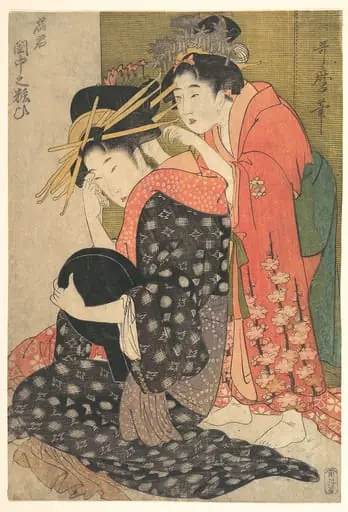 名君 閨中の粧ひ|The Oiran Yoso-oi Seated at Her Toilet
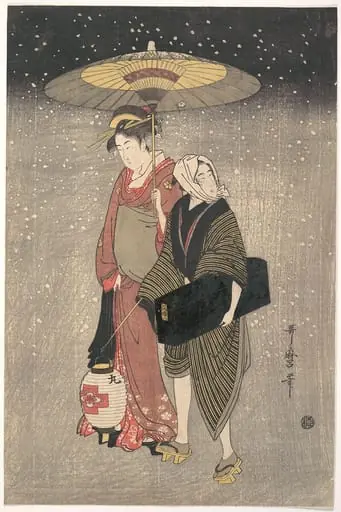 Untitled
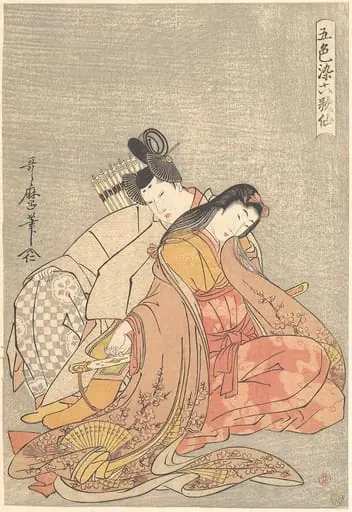 『五色染六歌仙』 在原業平と小野小町|“The Poet Ariwara no Narihira (825–880) and Ono no Komachi,” from the series Five Colors of Love for the Six Poetic Immortals (Goshiki-zome rokkasen)
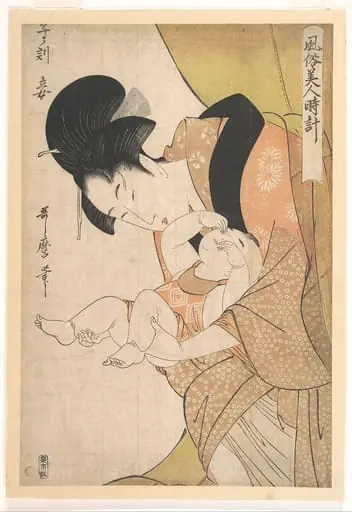 風俗美人時計 子ノ刻 妾|Midnight: Mother and Sleepy Child
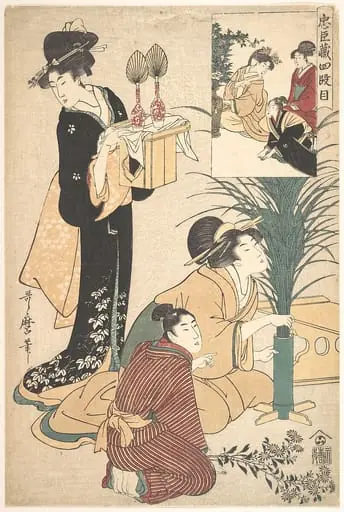 忠臣蔵四段目|A Woman and a Man Arranging Flowers for the Tsukimi (Moon Festival)
 Untitled
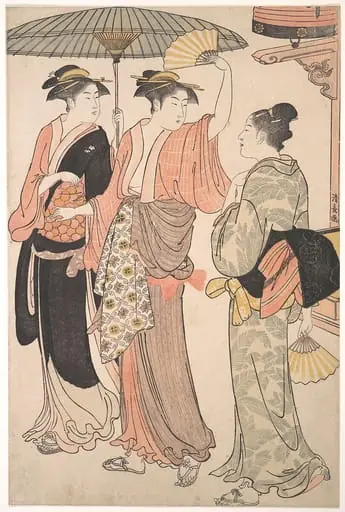 「美南見十二候」 五月 |The Fifth Month, from the series Twelve Months in the Southern Pleasure District (Minami jūni kō)
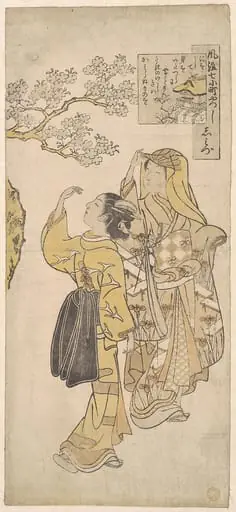 風流七小町 しみず|Shimizu Temple
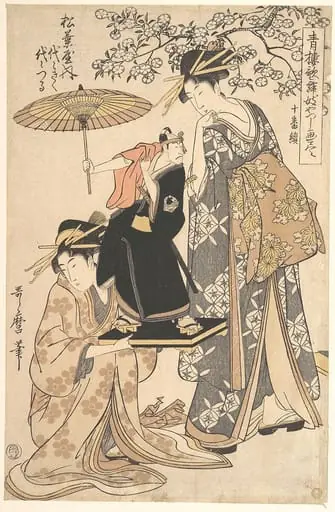 青楼歌舞妓やつし画尽 十番続|The Oiran Yoyogiku of Matsubaya Standing under a Cherry Tree
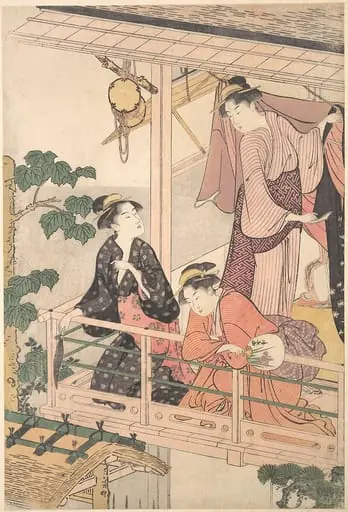 二階座敷に三人の女|Three Women on a Balcony
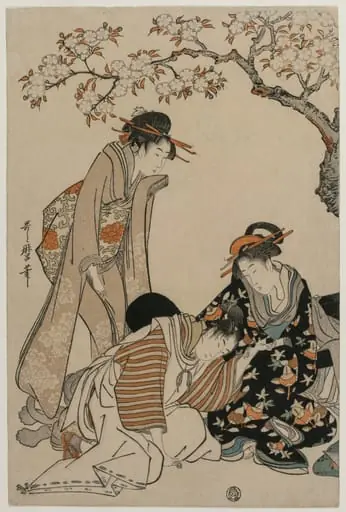 Parody of an Imperial Carriage Scene