Artwork
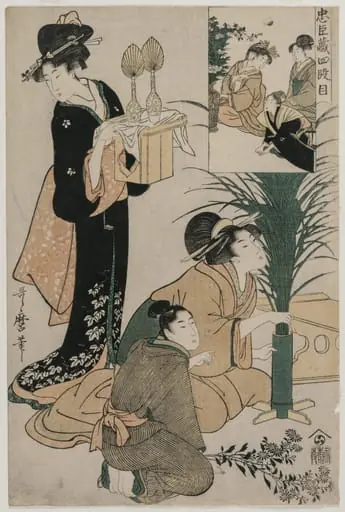
忠臣蔵四段目|A Woman and a Man Arranging Flowers for the Tsukimi (Moon Festival)
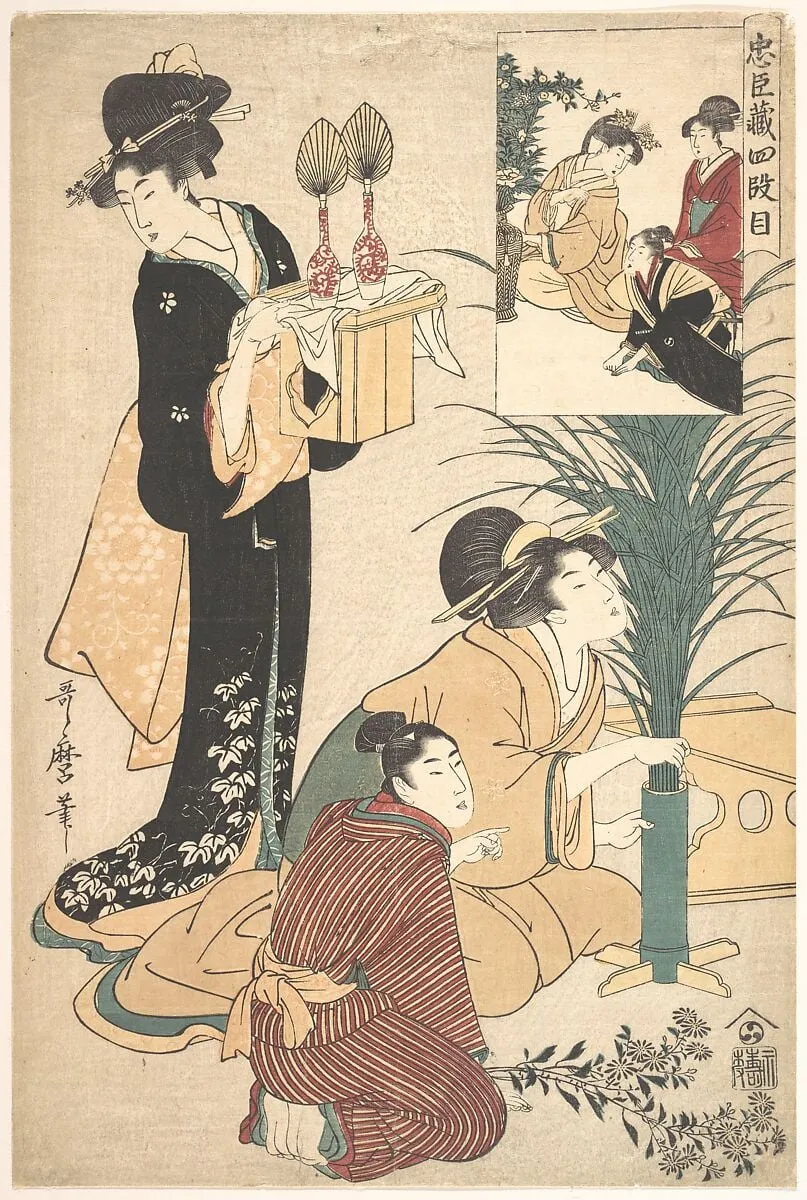
忠臣蔵四段目|A Woman and a Man Arranging Flowers for the Tsukimi (Moon Festival) is an ink print by the Romanticist artist Kitagawa Utamaro. It dates from 1802 and is held in the collection of the Metropolitan Museum of Art.
About this work
Overview
Created in 1802, this woodblock print by Kitagawa Utamaro depicts a domestic scene associated with the Tsukimi, or moon‑watching festival. Executed in ink and color on paper, the work is part of the Metropolitan Museum of Art’s collection and exemplifies Utamaro’s focus on everyday moments.
Subject & Meaning
The central figures are a woman in a black kimono patterned with white blossoms and a man in a red kimono, both engaged in arranging flowers for the festival. Their quiet collaboration conveys a sense of shared ritual and the understated elegance of seasonal observances in Edo‑period households.
Technique & Style
Utamaro employs the ukiyo‑e woodblock method, using muted pigments of red, black, and beige to render the figures and background. Fine line work defines the garments, while subtle shading creates depth, characteristic of the artist’s refined approach to genre subjects.
History & Provenance
The print was produced during the peak of Utamaro’s career and later entered the collection of the Metropolitan Museum of Art, where it remains on display as an example of early nineteenth‑century Japanese printmaking.
Context
Tsukimi, a traditional moon‑viewing celebration, was a popular motif in Edo‑period visual culture. Utamaro’s choice to portray a modest, interior preparation scene reflects the broader trend of depicting intimate, everyday activities rather than grand historical narratives.
Artist & collection


 Untitled
 Untitled
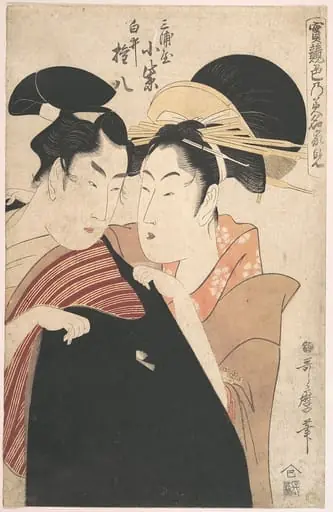 実競色乃美名家見 三浦屋小紫 白井権八|The Lovers Miura-ya Komurasaki and Shirai Gonpachi.
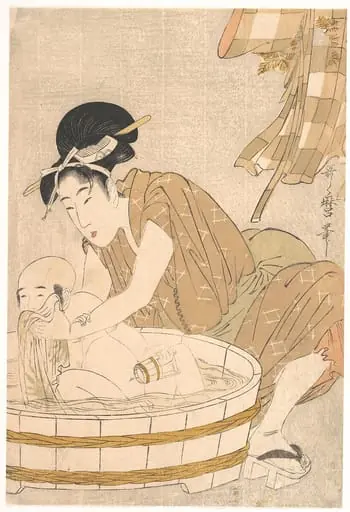 行水|Bathtime (Gyōzui)
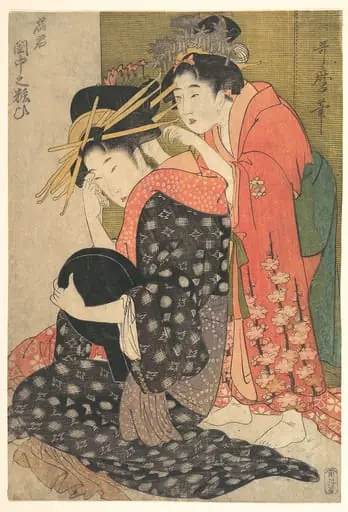 名君 閨中の粧ひ|The Oiran Yoso-oi Seated at Her Toilet
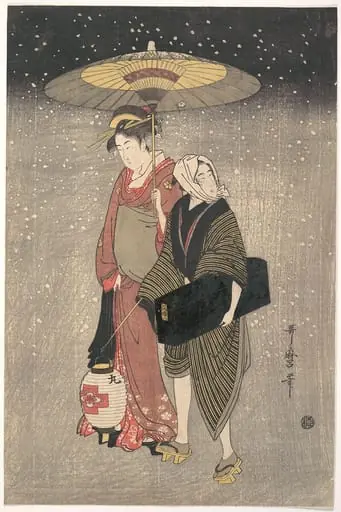 Untitled
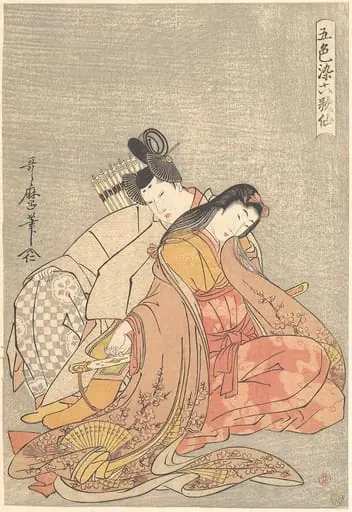 『五色染六歌仙』 在原業平と小野小町|“The Poet Ariwara no Narihira (825–880) and Ono no Komachi,” from the series Five Colors of Love for the Six Poetic Immortals (Goshiki-zome rokkasen)
 風俗美人時計 子ノ刻 妾|Midnight: Mother and Sleepy Child
 Chushingura: Act IV of The Storehouse of Loyalty
 細田栄之画 正月準備|Preparing New Year Decorations
 Untitled
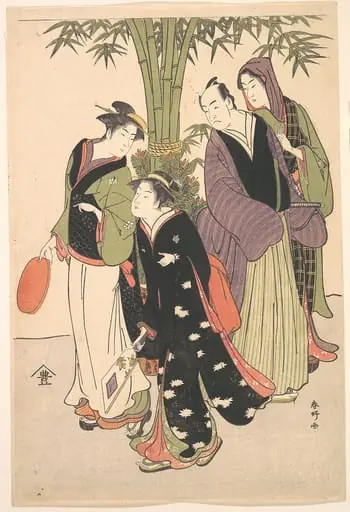 勝川春好画 三代目瀬川菊之丞・二代目市川門之助|Kabuki Actors Segawa Kikunojō III and Ichikawa Monnosuke II and Two Courtesans Celebrating the New Year
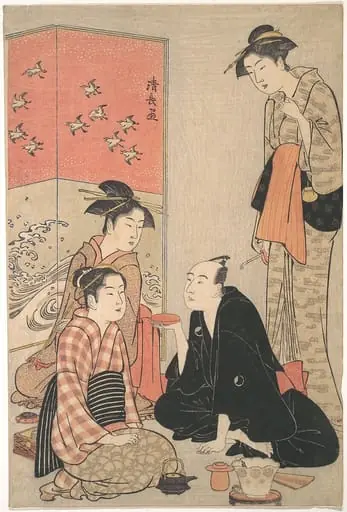 三代目沢村宗十郎と遊女|The Kabuki Actor Sawamura Sōjūrō III and Courtesans
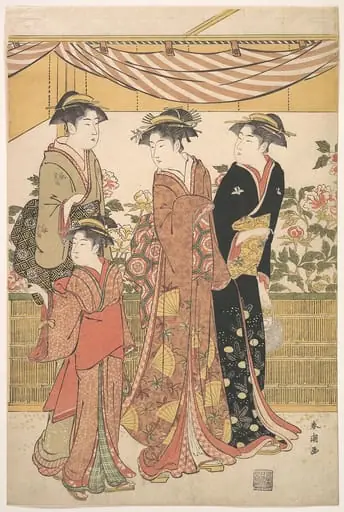 Untitled
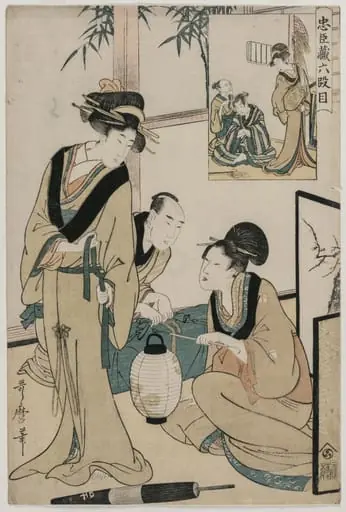 Chushingura: Act VI of The Storehouse of Loyalty
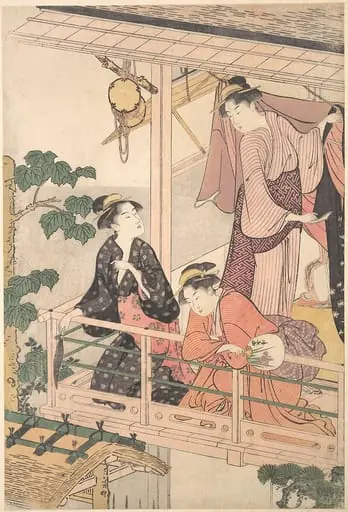 二階座敷に三人の女|Three Women on a Balcony
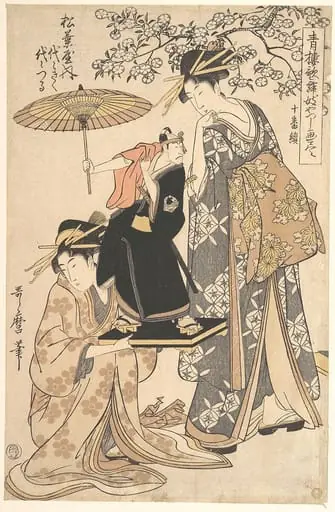 青楼歌舞妓やつし画尽 十番続|The Oiran Yoyogiku of Matsubaya Standing under a Cherry Tree
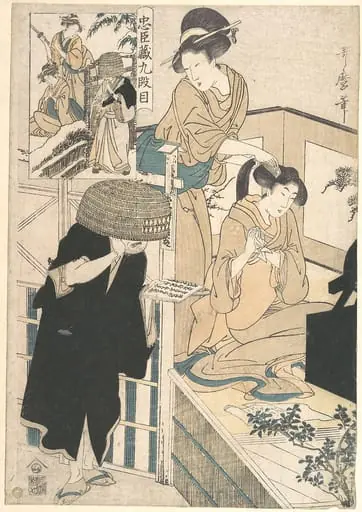 忠臣蔵九段目|A Woman at Her Toilet Seated before a Mirror, Having Her Hair combed by a Kameyui (Woman Hairdresser)
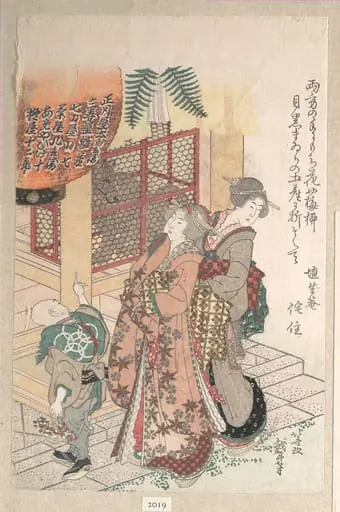 初詣|Young Women Visiting a Shinto Shrine