Artwork
Untitled
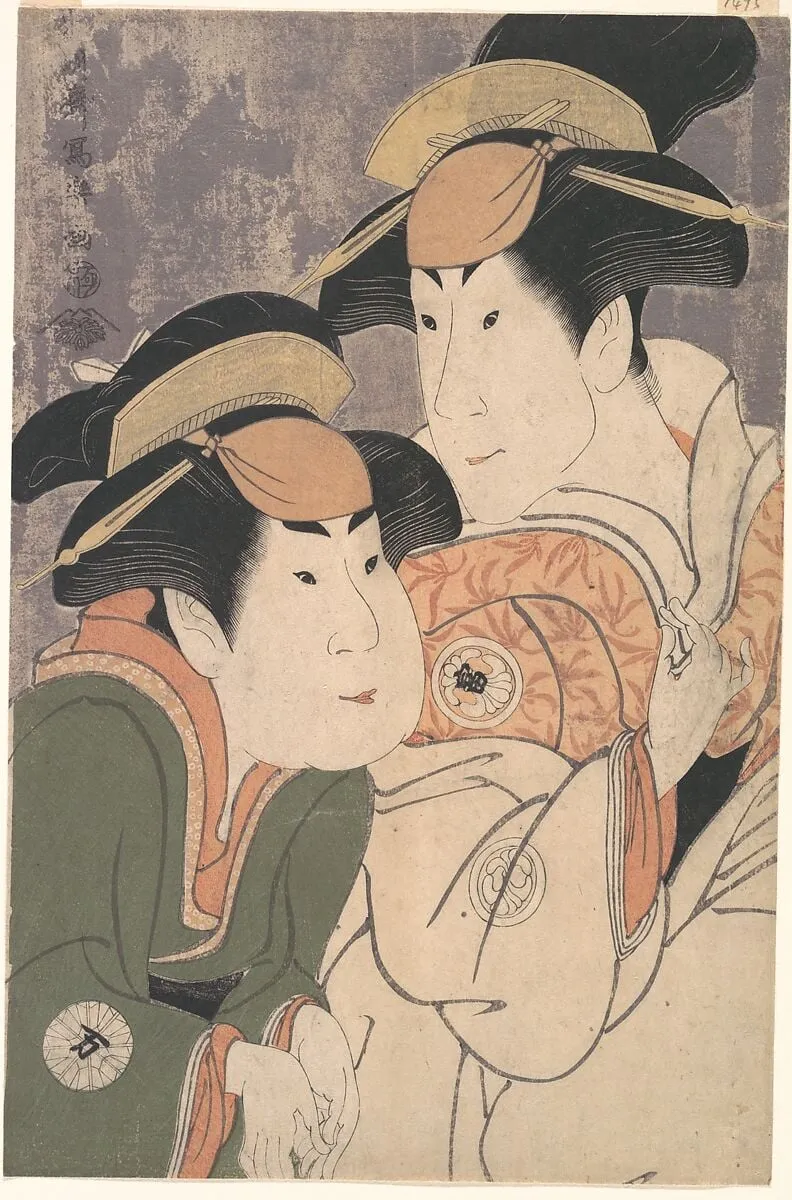
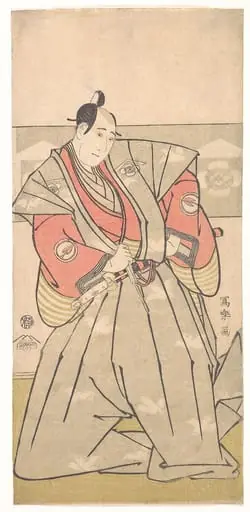
Untitled is an ink print by the Romanticist artist Tōshū. It dates from 1794 and is held in the collection of the Metropolitan Museum of Art.
About this work
A woman in a dark robe kneels on the floor, holding a tray. Her face is turned slightly, eyes down. The print is bold—black outlines, flat colors, no shadows.
Sharaku made these actor portraits for only ten months in 1794. No one knows why he stopped. The white mica background makes the ink glow like moonlight on skin.
Look up *actors* next—these prints were like movie posters for Kabuki stars.
Overview
Created in 1794, this woodblock print by Tōshūsai Sharaku presents a seated female figure in a dark robe, kneeling with a tray in her hands. The composition is defined by stark black outlines and flat areas of color, lacking any modeling or shading, which gives the image a graphic clarity.
Subject & Meaning
The figure is a domestic servant, her gaze lowered and head slightly turned, suggesting modesty or resignation. The inclusion of a tray emphasizes her role in service, while the subdued expression invites contemplation of the social status and daily life of women employed in Edo‑period households.
Technique & Style
Sharaku employed traditional ukiyo‑e woodblock methods, using ink and color pigments applied to paper. A distinctive element is the application of white mica powder to the background, which catches light and imparts a luminous, moon‑like sheen to the surrounding skin tones. The overall aesthetic relies on bold line work and unmodulated color fields.
History & Provenance
The print belongs to the brief period—approximately ten months—in 1794 when Sharaku produced a series of actor and figure portraits before disappearing from the market. The reasons for his sudden cessation remain unknown, and the work’s early ownership records are sparse, typical of many ukiyo‑e prints of the era.
Context
Although Sharaku is best known for his kabuki actor portraits, this piece expands his range to depict a non‑theatrical subject. In the late eighteenth‑century Edo art market, such prints functioned similarly to modern promotional material, circulating images of popular personalities and everyday figures among a growing urban audience.
Artist & collection


 Untitled
 Untitled
 Untitled
 Untitled
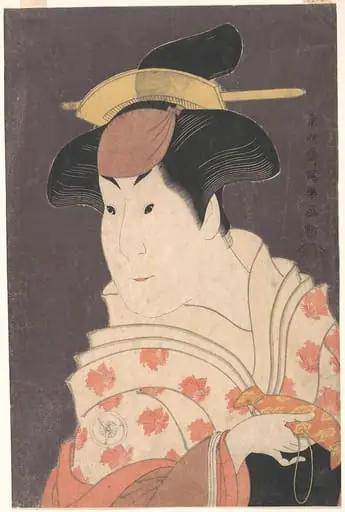 東洲斎写楽画 四代岩井半四郎の重の井 『恋女房染分手綱』|Iwai Hanshirō IV as Shigenoi in the Play "Koinyōbō Somewake Tazuna"
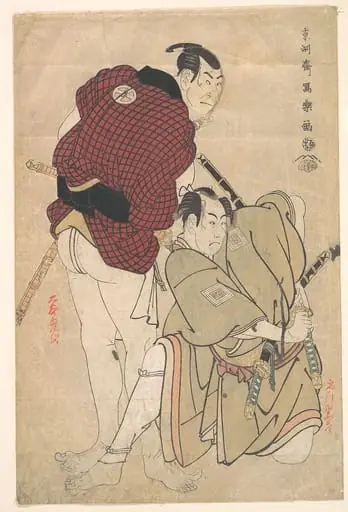
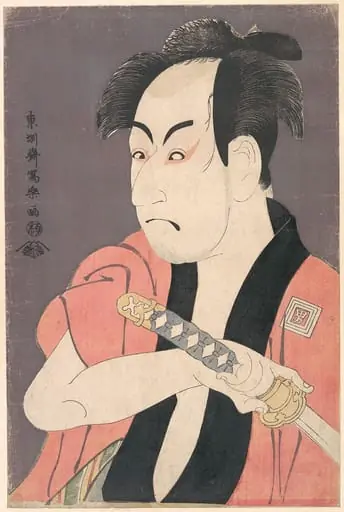 東洲斎写楽画 初代市川男女蔵の奴一平 『恋女房染分手綱』|Ichikawa Omezō I in the Role of Yakko Ippei from the Play "Koinyōbō somewake tazuna"
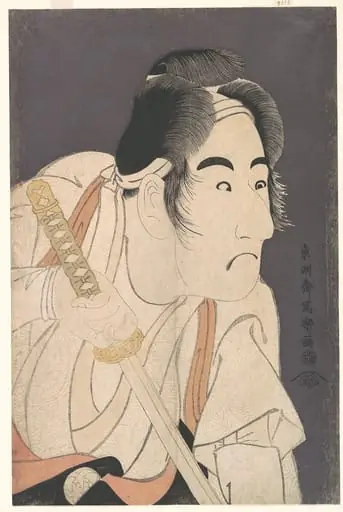 東洲斎写楽画 二世坂東三津五郎の石井源蔵 『花菖蒲文禄曽我』|Bandō Mitsugorō II as Ishii Genzō in the Play "Hana-ayame Bunroku Soga"
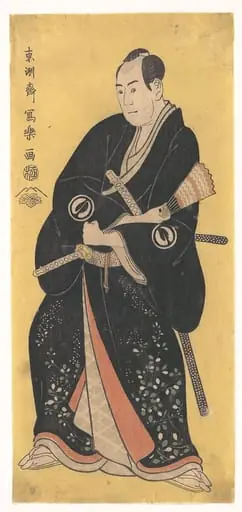 Untitled
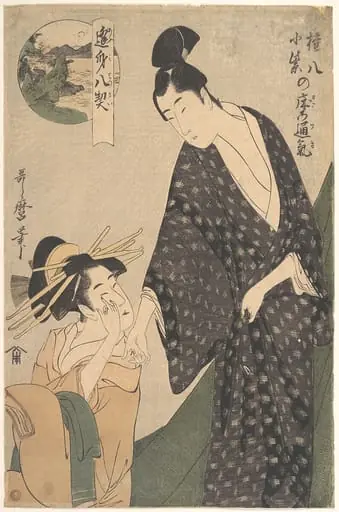 逢身八契 権八小紫の床の通気|Gonpachi ni Komurasaki no Toko no Tsuki
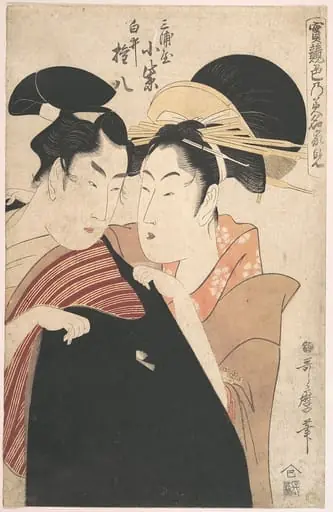 実競色乃美名家見 三浦屋小紫 白井権八|The Lovers Miura-ya Komurasaki and Shirai Gonpachi.
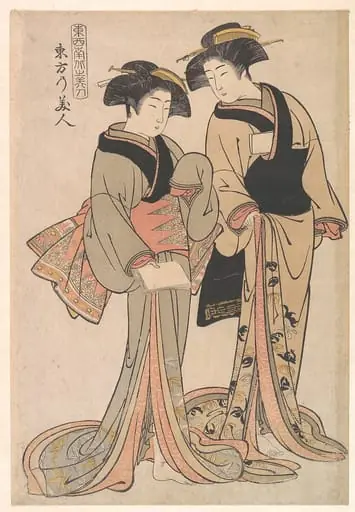 Untitled
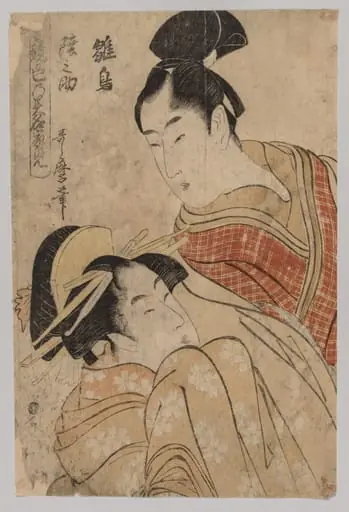 Making Love
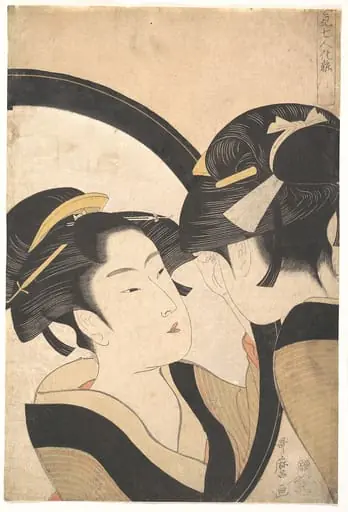 姿見七人化粧|Naniwa Okita Admiring Herself in a Mirror
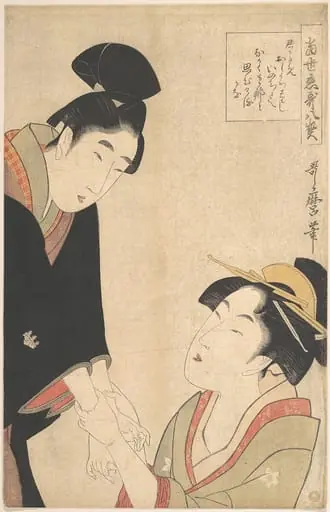 当世恋歌八契 お七と吉三郎|The Lovers Oshichi and Kichisaburo
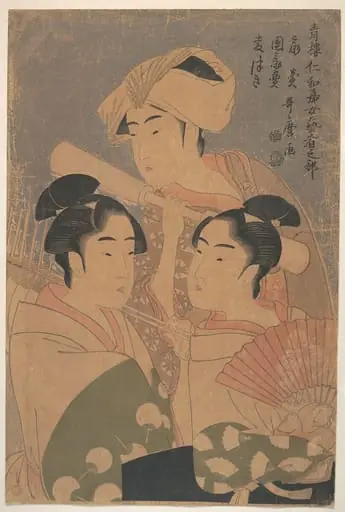 青楼仁和嘉女芸者之部 扇売 団扇売 麦つき|The Niwaka Performers
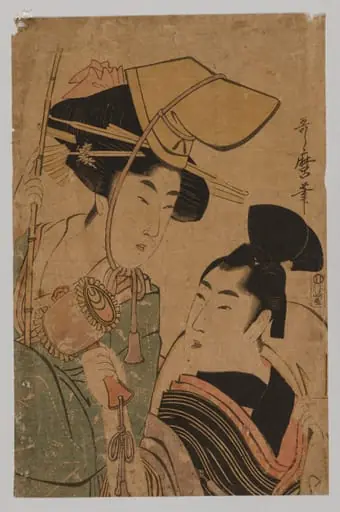 Woman Representing Good Fortune
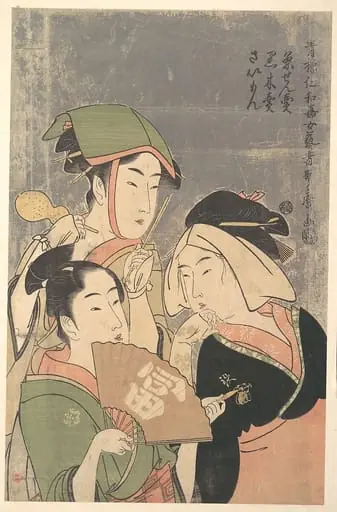 喜多川歌麿画 「青楼仁和嘉女芸者 茶せん売 黒木売 さいもん」|Three Niwaka Performers, Chasenuri, Kurokiri, and Saimon (Tea-whisk Seller, Firewood Seller, Shrine Festival Perfomer), from the “Geisha of the Yoshiwara Niwaka Festival” (Seiro Niwaka Onna Geisha)
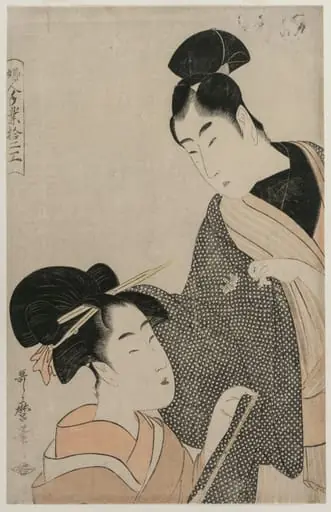 Woman Measuring a Man's Gown (from the series Twelve Occupations of Women)
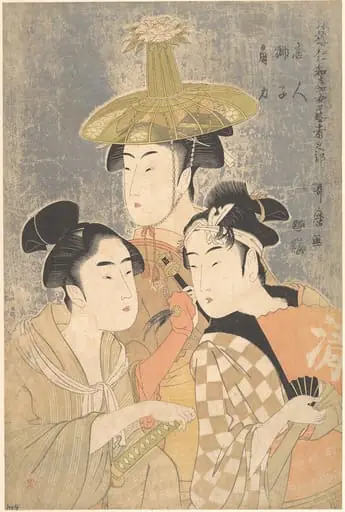 青楼仁和嘉女芸者之部 唐人 獅子 角力|Seiro Niwaka Onna Geisha no Bu Tojin Shishi Sumo
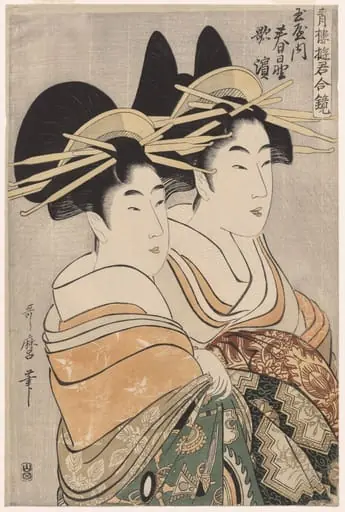 The Courtesans Kasugano and Utahama of Tamaya, from Courtesans of the Pleasure Quarters in Double Mirrors