Artwork
Women Hanging Laundry to Dry on a Balcony
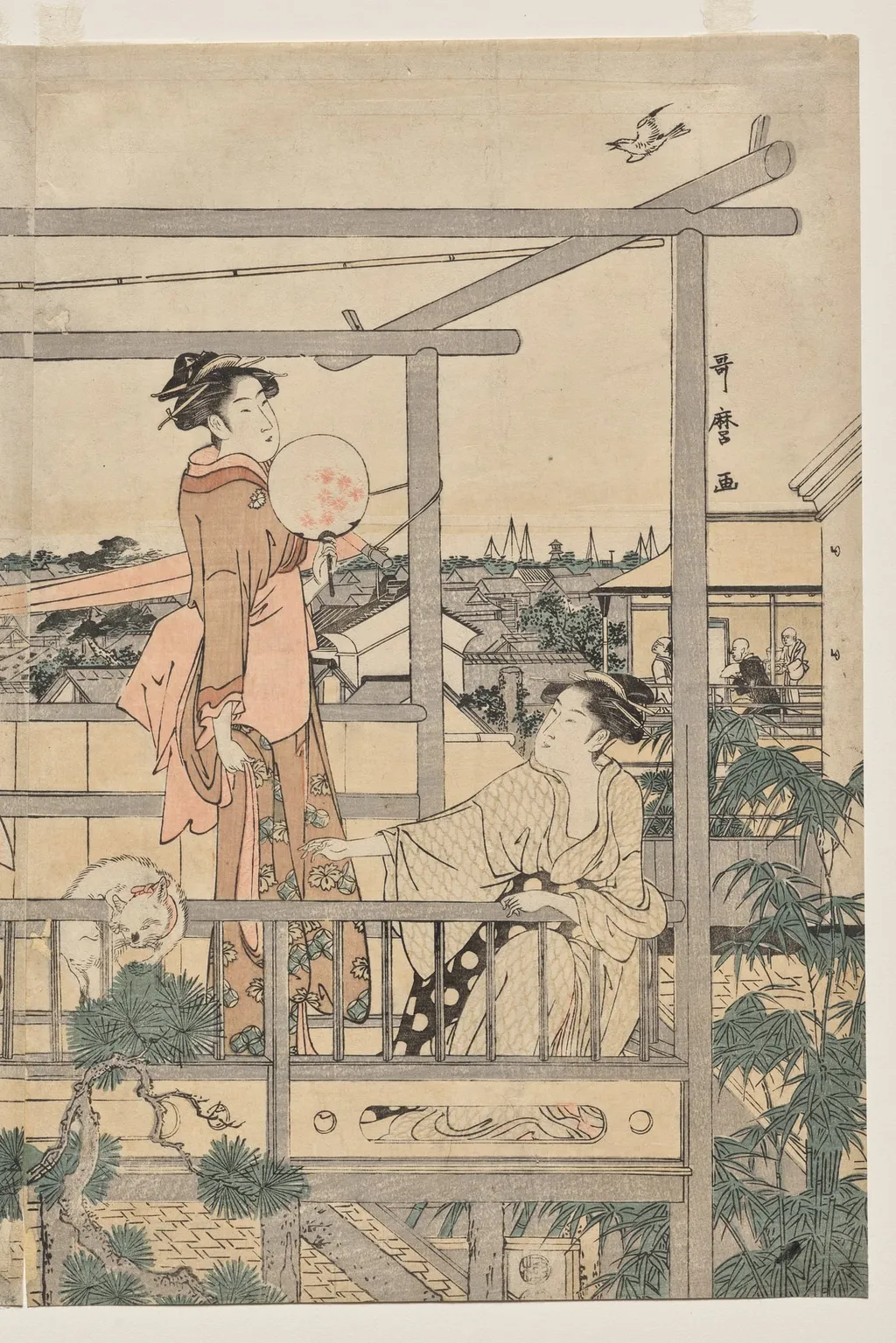
Women Hanging Laundry to Dry on a Balcony is a print by the Romanticist artist Kitagawa Utamaro. It dates from 1794 and is held in the collection of the Cleveland Museum of Art.
About this work
Overview
Created around 1794 by the Japanese ukiyo‑e artist Kitagawa Utamaro, this woodblock print depicts a quiet domestic scene on a balcony. It is part of the Cleveland Museum of Art’s collection and measures the delicate balance between everyday activity and a tranquil outdoor setting.
Subject & Meaning
The surrounding foliage, distant buildings, and a soaring bird suggest a harmonious relationship between interior life and the natural world.
The composition shows two women engaged in the routine task of hanging laundry. The figure on the left, dressed in a red kimono, holds a circular object that may be a fan, while the woman on the right, in a white kimono patterned with black dots, sits on the balcony railing. The surrounding foliage, distant buildings, and a soaring bird suggest a harmonious relationship between interior life and the natural world.
Technique & Style
Executed as a multicolored woodblock print, the work employs Utamaro’s characteristic fine line work and subtle colour modulation. The delicate rendering of textiles and foliage demonstrates the artist’s skill in capturing texture, while the flat planes of colour reflect the conventions of late‑eighteenth‑century ukiyo‑e.
History & Provenance
The print was produced in the late Edo period, a time when ukiyo‑e prints were widely circulated among urban audiences. It entered the Cleveland Museum of Art’s holdings through acquisition in the twentieth century, joining a broader collection of Japanese prints that document everyday life in historical Japan.
Context
Utamaro is renowned for his portrayals of women, known as bijin-ga, which often blend elegance with ordinary moments. This piece aligns with that tradition, offering a glimpse into domestic chores while emphasizing the aesthetic appeal of the scene, a hallmark of Edo‑period visual culture.
Artist & collection


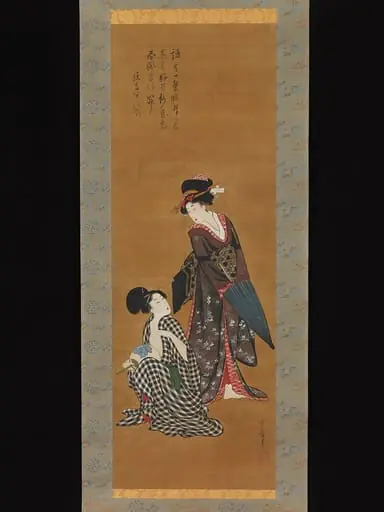 Untitled
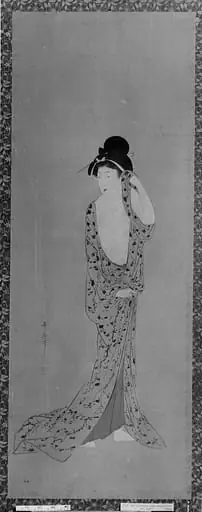 Untitled
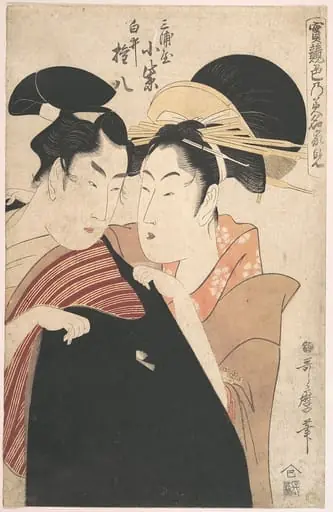 実競色乃美名家見 三浦屋小紫 白井権八|The Lovers Miura-ya Komurasaki and Shirai Gonpachi.
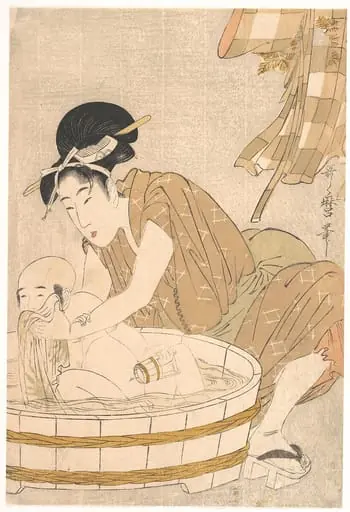 行水|Bathtime (Gyōzui)
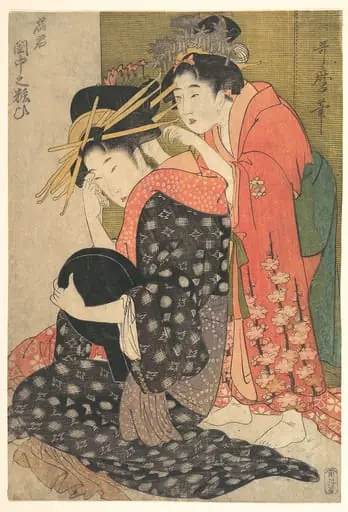 名君 閨中の粧ひ|The Oiran Yoso-oi Seated at Her Toilet
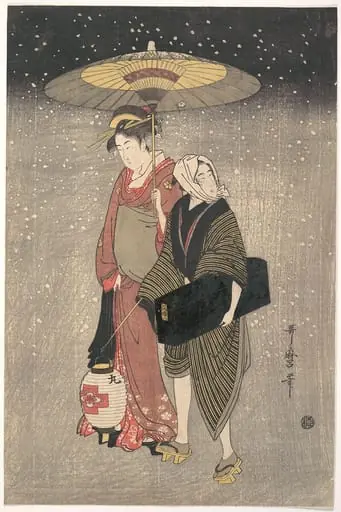 Untitled
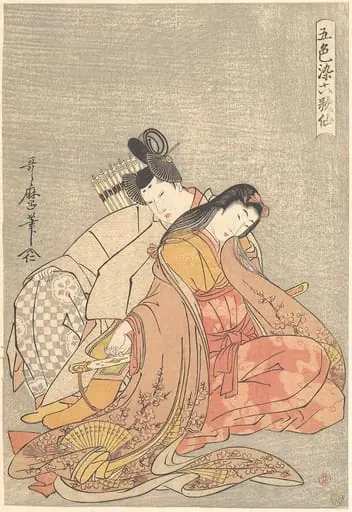 『五色染六歌仙』 在原業平と小野小町|“The Poet Ariwara no Narihira (825–880) and Ono no Komachi,” from the series Five Colors of Love for the Six Poetic Immortals (Goshiki-zome rokkasen)
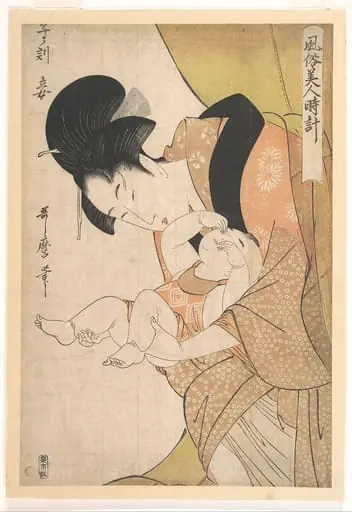 風俗美人時計 子ノ刻 妾|Midnight: Mother and Sleepy Child
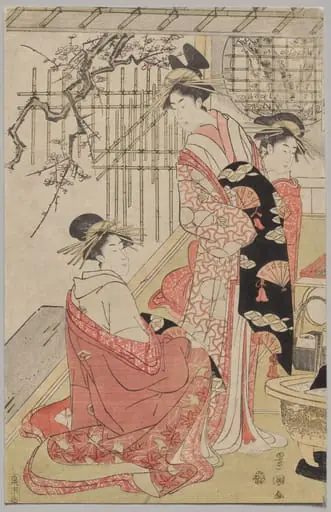 Courtesans of the Ōgiya on a Spring Outing
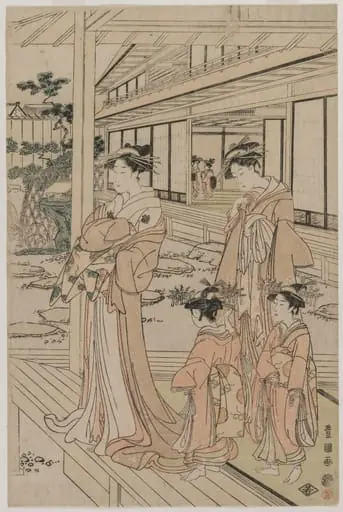 Courtesan Standing on a Veranda
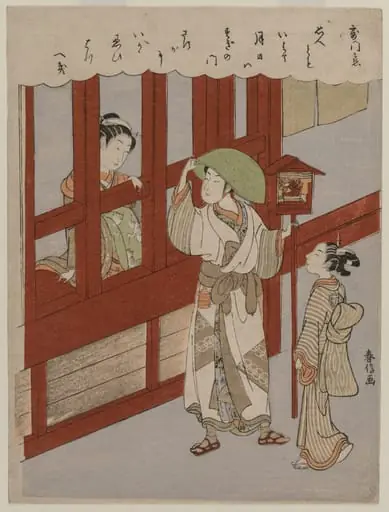 Love at the Brothel Gate
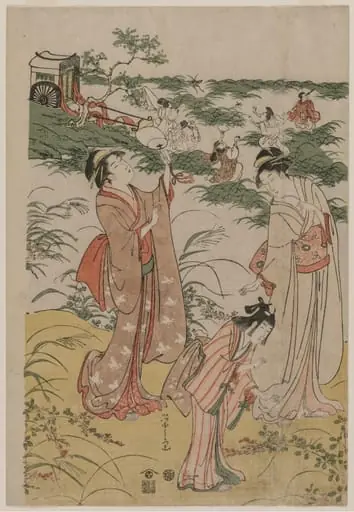 Women Chasing Crickets on an Autumn Moor
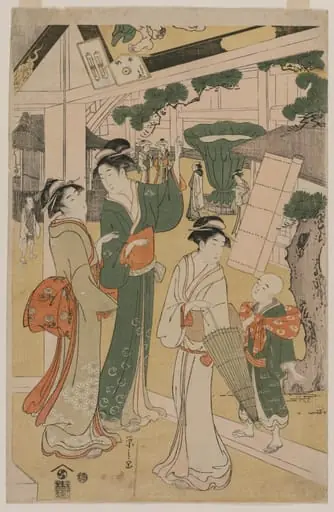 Print from Women Resting in the Votive Picture Hall at Asakusa
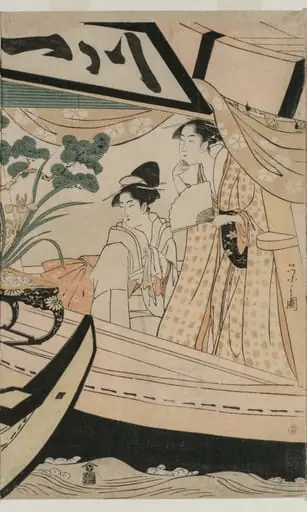 Party on the Pleasure Boat Kawaichimaru
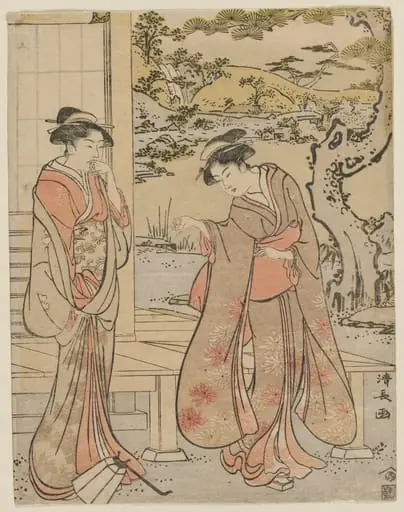 Woman Dropping a Lantern by a Porch
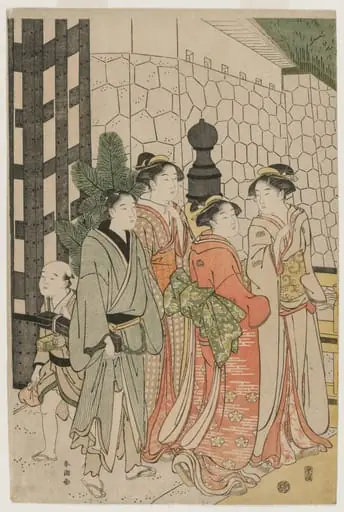 Young Man and Women on Tokiwa Bridge
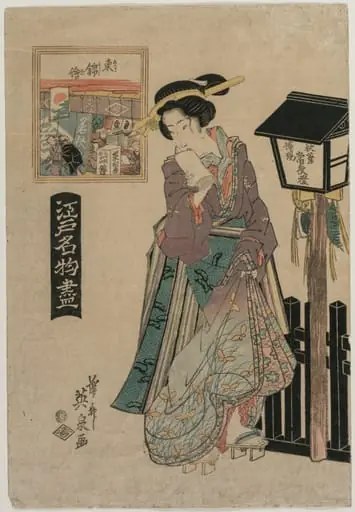 Pictures of Eastern Brocade (from the series Famous Products of Edo)