Artwork
当世風俗通 女房風|Mother and Child
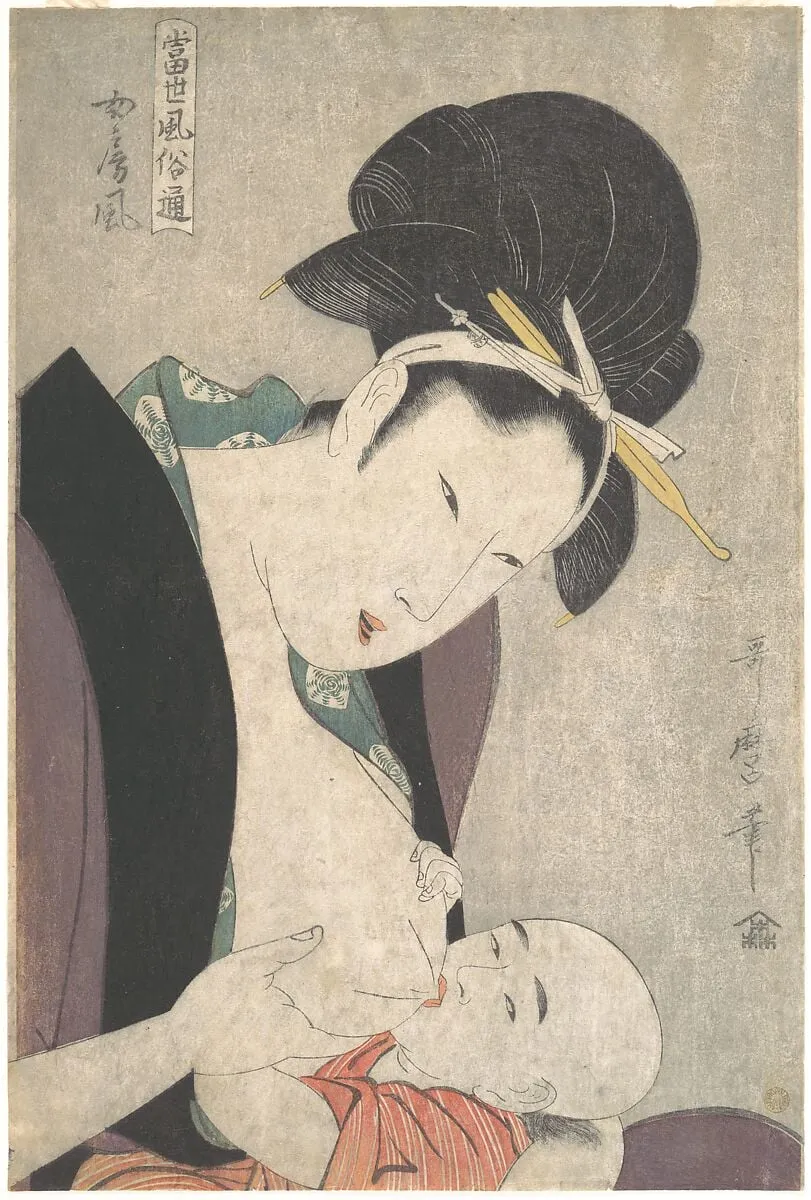
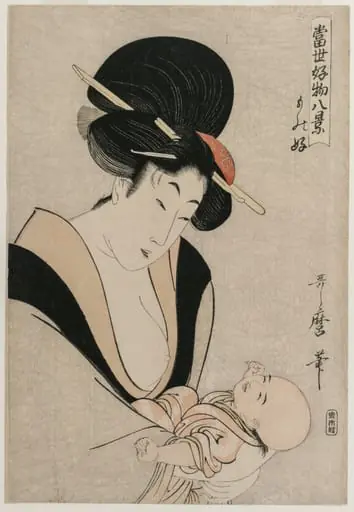
当世風俗通 女房風|Mother and Child is an ink print by the Romanticist artist Kitagawa Utamaro. It dates from 1790 and is held in the collection of the Metropolitan Museum of Art.
About this work
Overview
Kitagawa Utamaro’s woodblock print, titled “Mother and Child,” dates from around 1790. Executed with ink and color on paper, the image presents a domestic scene in which a woman in a pink robe holds an infant on her lap, the child’s tiny hands reaching outward.
Subject & Meaning
The composition captures an intimate moment between mother and child, emphasizing the tenderness of maternal care. The baby’s relaxed posture and the mother’s gentle hold convey a sense of everyday affection rather than formal or mythological symbolism.
Technique & Style
Utamaro employs fine, flowing lines to delineate the folds of the robe and the roundness of the infant’s cheeks. The subtle coloration and delicate brushwork reflect the ukiyo‑e tradition’s focus on nuanced expression within a relatively simple, flat pictorial space.
History & Provenance
Printed as a commercial product for the urban populace of Edo, the work was intended for affordable acquisition and casual display. Its production as a woodblock print meant it could be reproduced in modest editions, reaching a broad audience beyond elite patrons.
Context
The image belongs to a series of genre prints that documented contemporary life, illustrating domestic scenes alongside more public subjects such as courtesans and actors. By portraying a private family moment, Utamaro expands the range of subjects considered suitable for ukiyo‑e.
Legacy
“Mother and Child” exemplifies Utamaro’s skill in rendering emotional nuance, influencing later Japanese artists who explored everyday themes. The print continues to be cited as an early example of intimate domestic representation within the ukiyo‑e canon.
Artist & collection


 Untitled
 Untitled
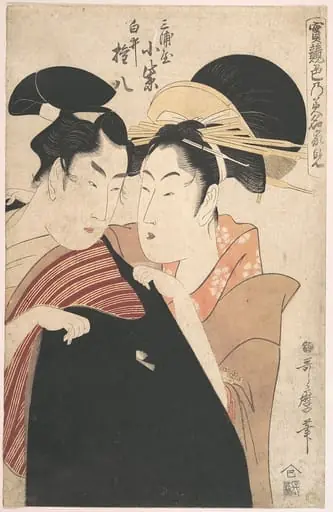 実競色乃美名家見 三浦屋小紫 白井権八|The Lovers Miura-ya Komurasaki and Shirai Gonpachi.
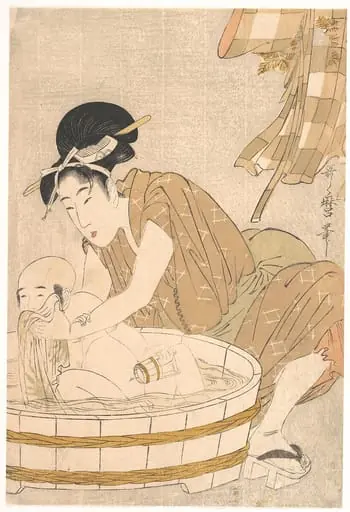 行水|Bathtime (Gyōzui)
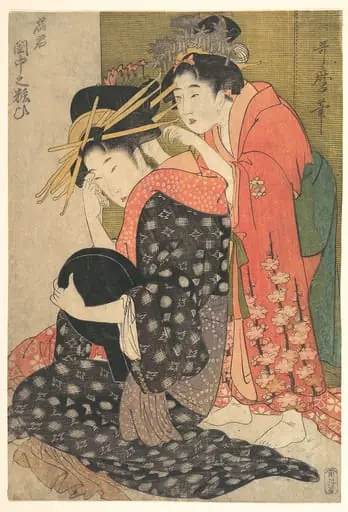 名君 閨中の粧ひ|The Oiran Yoso-oi Seated at Her Toilet
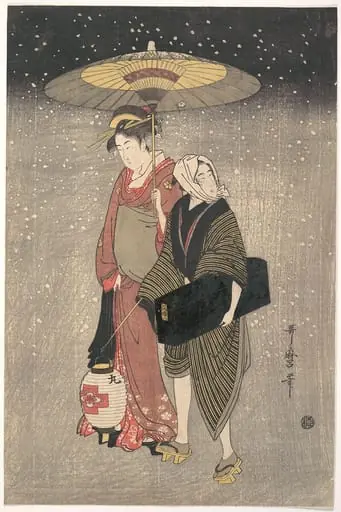 Untitled
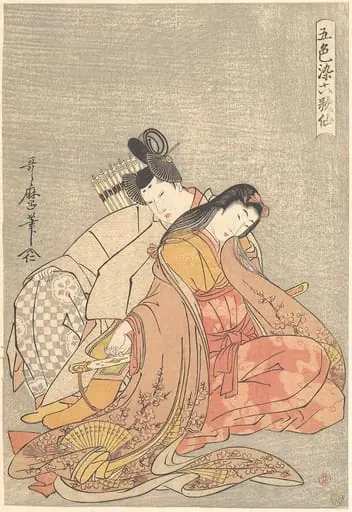 『五色染六歌仙』 在原業平と小野小町|“The Poet Ariwara no Narihira (825–880) and Ono no Komachi,” from the series Five Colors of Love for the Six Poetic Immortals (Goshiki-zome rokkasen)
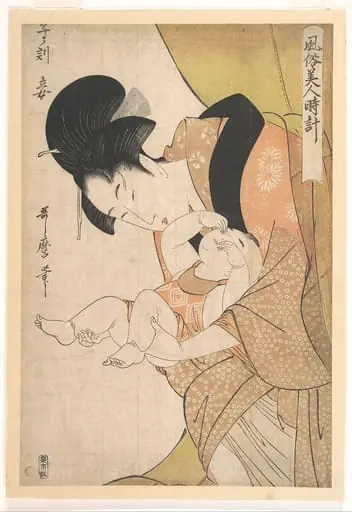 風俗美人時計 子ノ刻 妾|Midnight: Mother and Sleepy Child
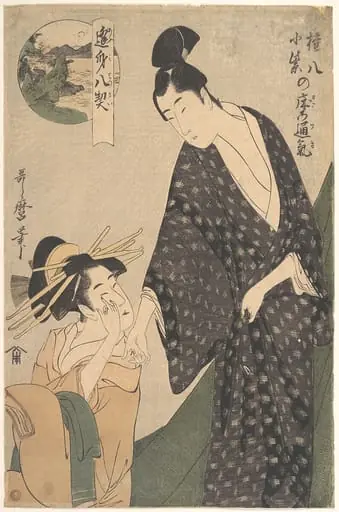 逢身八契 権八小紫の床の通気|Gonpachi ni Komurasaki no Toko no Tsuki
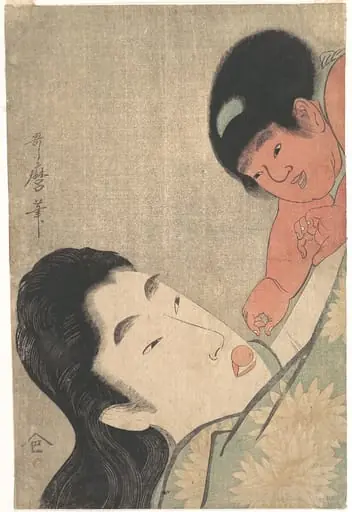 山姥と金太郎|Yamauba and Kintarō Playing with a Cherry
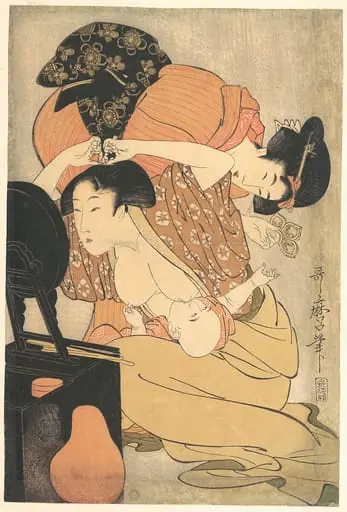 Untitled
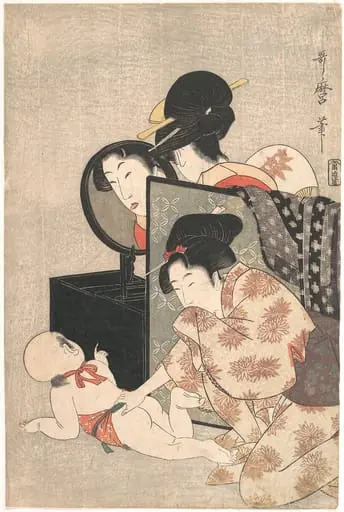 Untitled
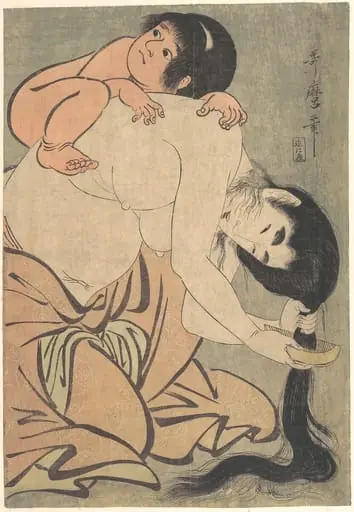 喜多川歌麿画 山姥と金太郎 |Yamauba Combing Her Hair with Kintarō
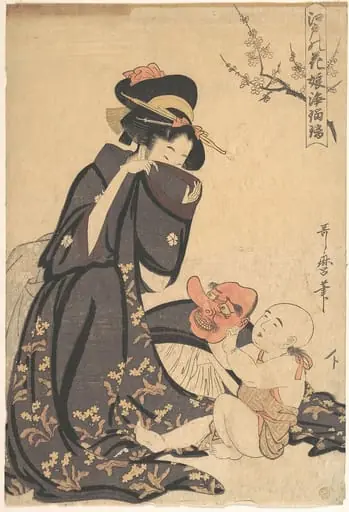 江戸の花 娘浄瑠璃|A Woman Playing with a Young Boy
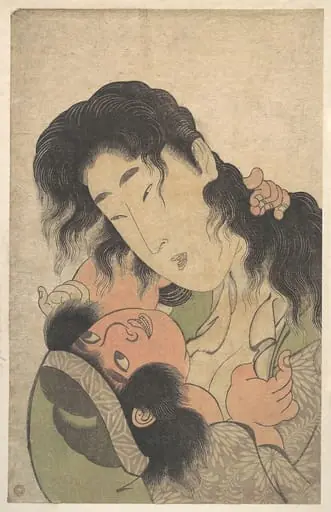 喜多川歌麿画 山姥と金太郎|Yamauba Playing with Kintarō
 Fond of Things from the series Eight Views of Favorite Things of Today's World