Artwork
四季の花|Poetry, from the illustrated book Flowers of the Four Seasons
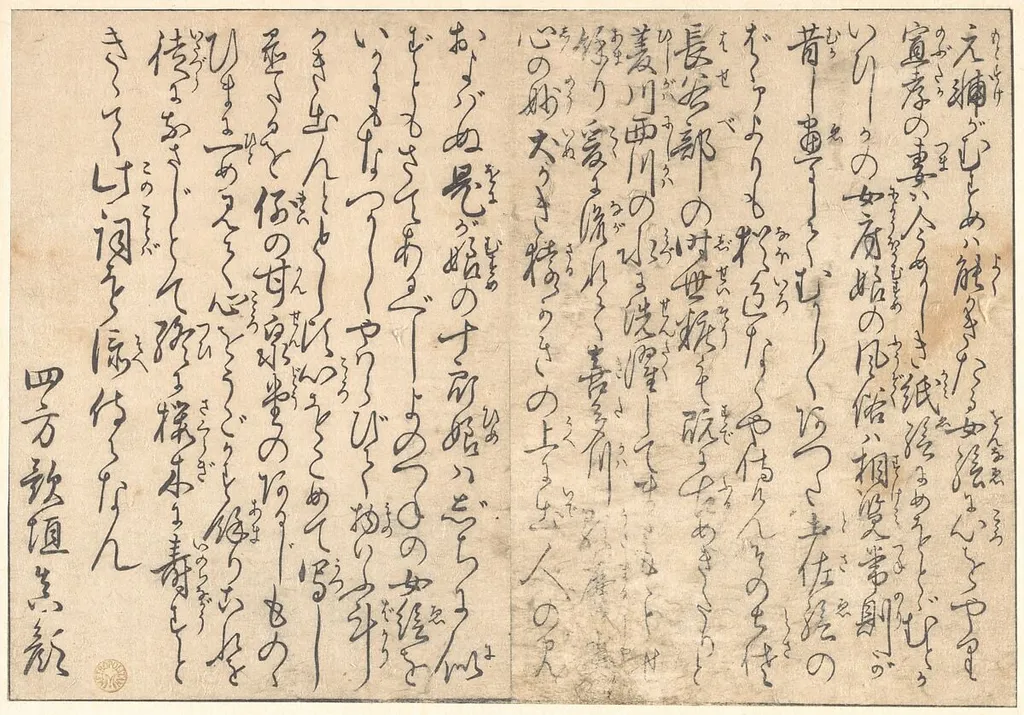
四季の花|Poetry, from the illustrated book Flowers of the Four Seasons is an ink print by the Romanticist artist Kitagawa Utamaro. It dates from 1801 and is held in the collection of the Metropolitan Museum of Art.
About this work
Overview
This woodblock print, dated 1801, is part of an illustrated book titled Flowers of the Four Seasons, produced by Kitagawa Utamaro.
This woodblock print, dated 1801, is part of an illustrated book titled Flowers of the Four Seasons, produced by Kitagawa Utamaro. It presents a page of Japanese calligraphy rather than an image, with text arranged in two vertical columns. The work is executed in ink and subtle color on paper, reflecting the refined aesthetic of early 19th-century ukiyo-e publishing. It is currently held in the collection of The Metropolitan Museum of Art.
Subject & Meaning
The text is poetic verse associated with seasonal flowers, though the specific lines are not illustrated pictorially. The calligraphy itself functions as the primary artistic expression, evoking the rhythm and transience of nature through the movement of brushstrokes. Each character contributes to a lyrical whole, aligning with the literary tradition of linking poetry with the changing seasons in Japanese culture.
Technique & Style
The script is rendered in fluid, varied brushwork, with strokes differing in thickness and size to create visual rhythm. Ink is applied with restraint, allowing the natural texture of the paper to remain visible. The absence of heavy outlines or solid fills gives the page a light, airy quality. This approach emphasizes the elegance of handwritten Japanese characters over pictorial representation, typical of literary ukiyo-e publications.
History & Provenance
Created in 1801 during the late Edo period, the print was part of a commercially published illustrated book, a common format for poetry and seasonal themes among urban audiences. Utamaro, already renowned for his bijin-ga, extended his practice into literary illustration. The work entered The Metropolitan Museum of Art’s collection through documented acquisitions, preserving its original format and condition.
Context
In early 19th-century Japan, illustrated poetry books were popular among the literate urban class. Calligraphy in such publications was not merely functional but an art form in its own right, often commissioned from skilled artists. Utamaro’s involvement reflects the blurring of boundaries between painting, printmaking, and literary illustration in ukiyo-e culture, where text and image coexisted as complementary expressions.
Legacy
This print exemplifies how ukiyo-e artists elevated textual presentation to an aesthetic experience. While Utamaro is better known for figural works, this piece highlights his versatility and the broader cultural value placed on calligraphic expression. It remains a quiet testament to the integration of poetry and print in Edo-period visual culture, influencing later appreciation of Japanese book arts.
Artist & collection


 Untitled
 Untitled
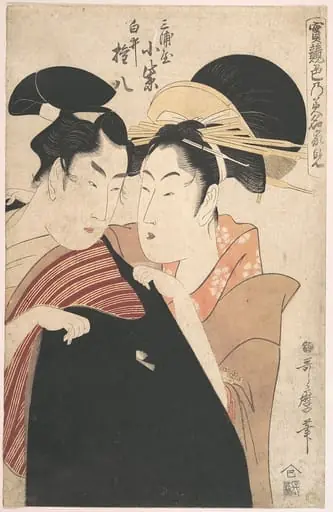 実競色乃美名家見 三浦屋小紫 白井権八|The Lovers Miura-ya Komurasaki and Shirai Gonpachi.
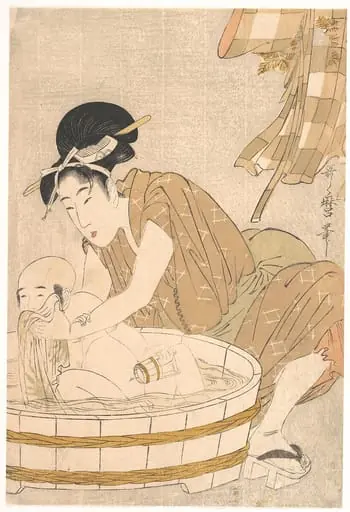 行水|Bathtime (Gyōzui)
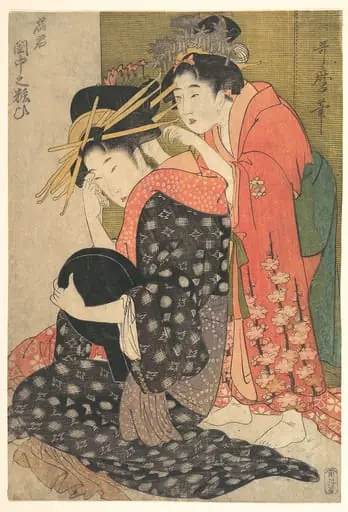 名君 閨中の粧ひ|The Oiran Yoso-oi Seated at Her Toilet
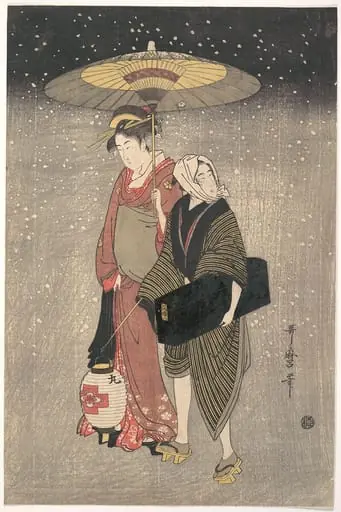 Untitled
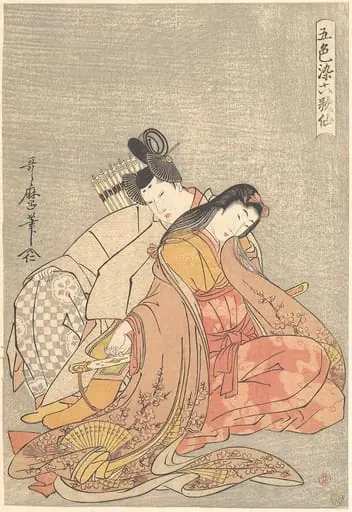 『五色染六歌仙』 在原業平と小野小町|“The Poet Ariwara no Narihira (825–880) and Ono no Komachi,” from the series Five Colors of Love for the Six Poetic Immortals (Goshiki-zome rokkasen)
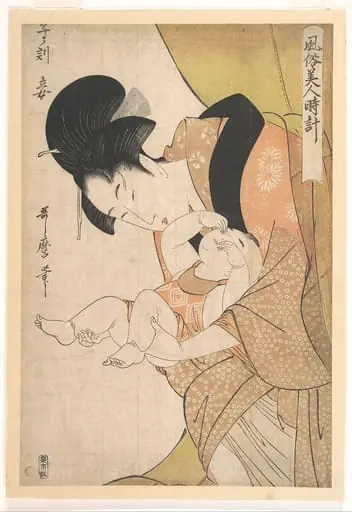 風俗美人時計 子ノ刻 妾|Midnight: Mother and Sleepy Child
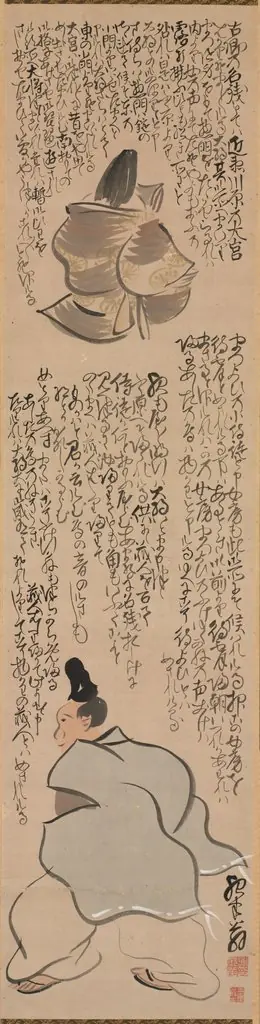 Figures with Calligraphy of a Passage from the "Heike Monogatari" ("The Tales of Heike")
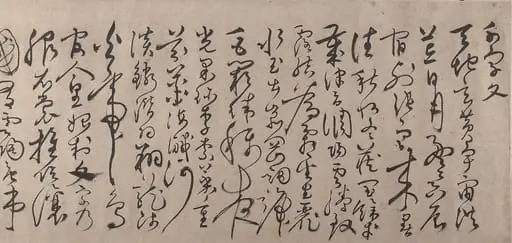 Untitled
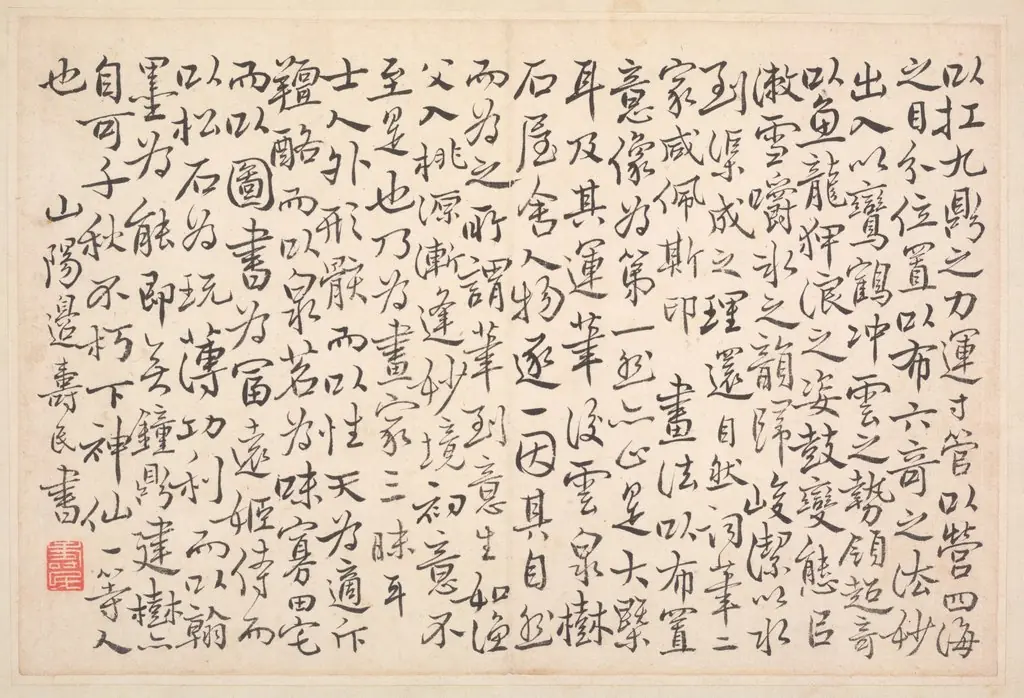 Album of Calligraphy and Paintings
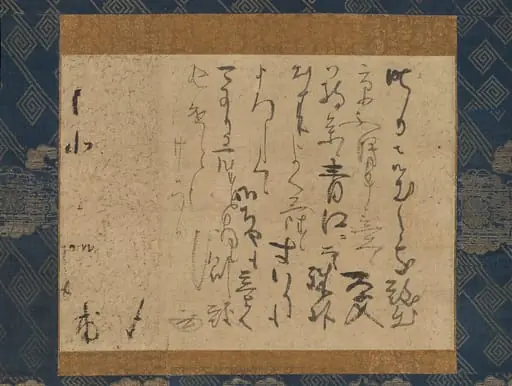 Untitled
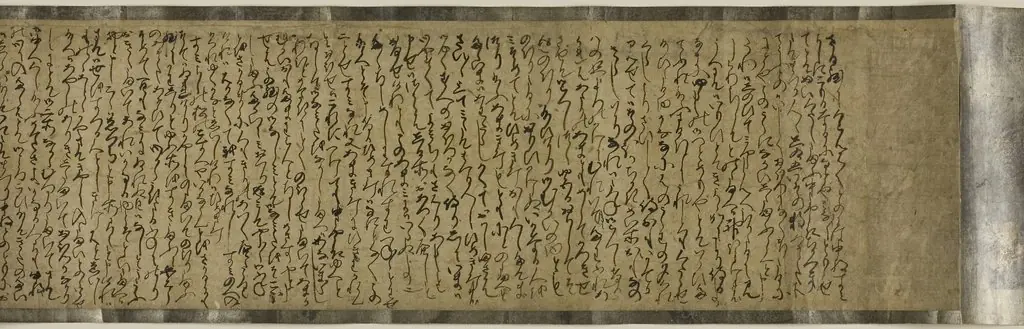 Sumiyoshi Monogatari
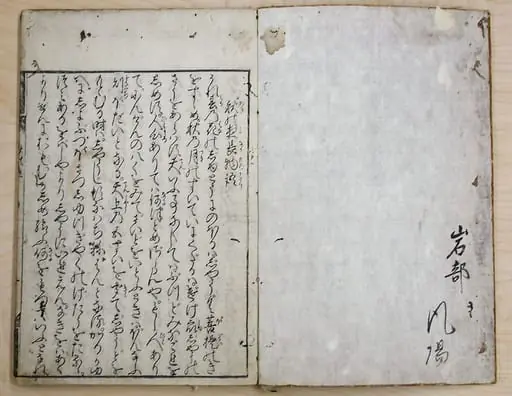 Untitled
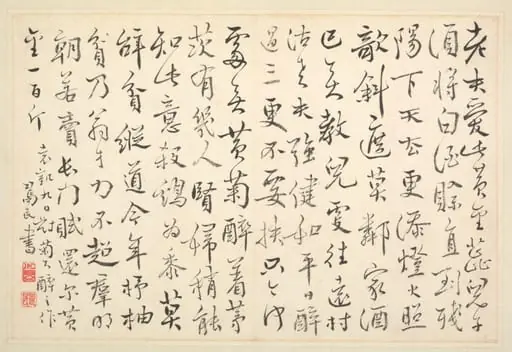 Album of Calligraphy and Paintings
 Atlas kwiatów i ptaków rysowanych z natury
 Album of Calligraphy and Paintings
 Album of Calligraphy and Paintings
 Traveling to Ugeumam, Buan
 Three poems from the “Collection of Poems Ancient and Modern” (Kokin wakashū), known as the “Imaki Fragment” (Imaki-gire)