Artwork
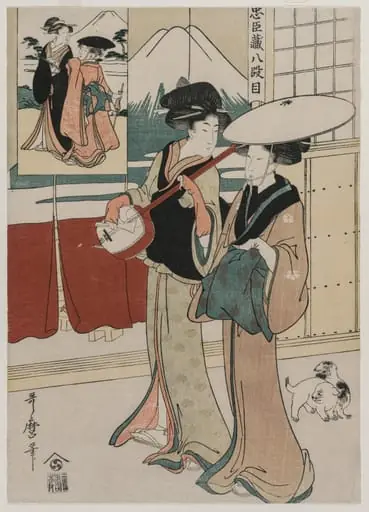
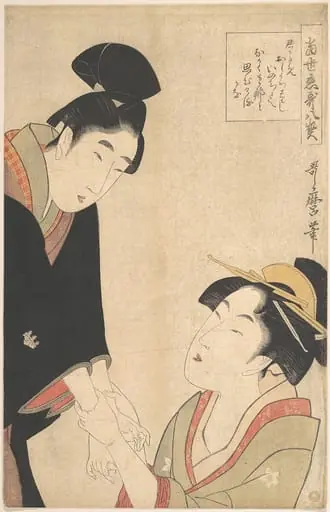
忠臣蔵八段目|Two Tori-oi, or Itinerant Women Musicians of the Eta Class
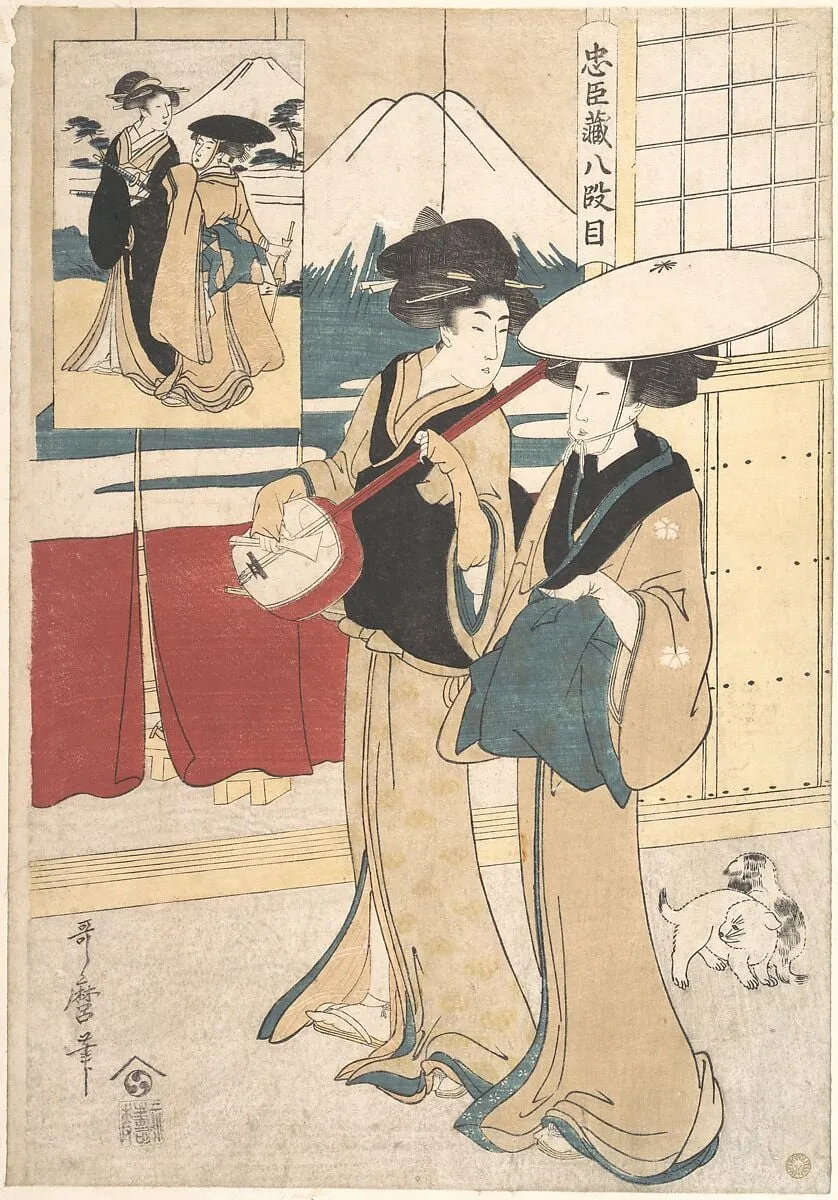
忠臣蔵八段目|Two Tori-oi, or Itinerant Women Musicians of the Eta Class is an ink print by the Romanticist artist Kitagawa Utamaro. It dates from 1780 and is held in the collection of the Metropolitan Museum of Art.
About this work
Overview
Rendered in ink and color on paper, the scene captures them walking outdoors, their modest attire and carried items suggesting a life of travel.
This woodblock print by Kitagawa Utamaro, dated around 1780, depicts two women from the eta class, itinerant musicians known as tori-oi. Rendered in ink and color on paper, the scene captures them walking outdoors, their modest attire and carried items suggesting a life of travel. The composition is restrained, with soft blues, blacks, and earth tones, emphasizing quiet movement over dramatic action. It belongs to the ukiyo-e tradition of depicting everyday life.
Subject & Meaning
The two figures are members of the eta, a marginalized social group in Edo-period Japan often assigned roles considered ritually impure. As tori-oi, they performed music while traveling, surviving on patronage and alms. Their presence in the print acknowledges their visibility in urban life despite social exclusion. Utamaro renders them with dignity, focusing on their posture and expression rather than stereotyping their status.
Technique & Style
Utamaro employs fine, clean lines and subtle color gradations typical of his early genre work. The figures are rendered with delicate facial features and naturalistic gestures, contrasting with the flat, minimal background. A red curtain behind them and distant mountains create layered depth without perspective. The palette is muted, relying on ink washes and restrained pigments to evoke atmosphere rather than spectacle.
History & Provenance
Created circa 1780, this print is part of a series illustrating scenes from the Chūshingura tale, though it diverges into genre imagery. It entered The Metropolitan Museum of Art’s collection through documented acquisitions in the 20th century. Its survival reflects the interest in ukiyo-e as both art and social document, though its specific publication history remains partially undocumented.
Context
During the late 18th century, Edo’s urban culture saw growing interest in the lives of lower-class performers. Artists like Utamaro began portraying eta and other marginalized figures with greater nuance, moving beyond caricature. This print aligns with a broader trend in ukiyo-e that documented the margins of society, offering a quiet counterpoint to the more glamorous depictions of courtesans and actors.
Legacy
The print contributes to the historical record of how Japan’s lower classes were visually represented in art. Unlike later romanticized portrayals, Utamaro’s depiction avoids sentimentality, presenting the women with observational clarity. It remains a reference for scholars studying social hierarchy and the role of gender and class in Edo-period visual culture.
Artist & collection


 Untitled
 Untitled
 実競色乃美名家見 三浦屋小紫 白井権八|The Lovers Miura-ya Komurasaki and Shirai Gonpachi.
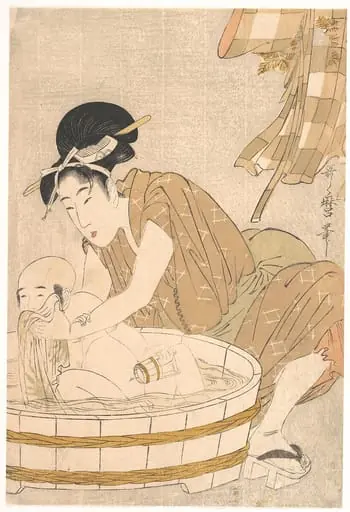 行水|Bathtime (Gyōzui)
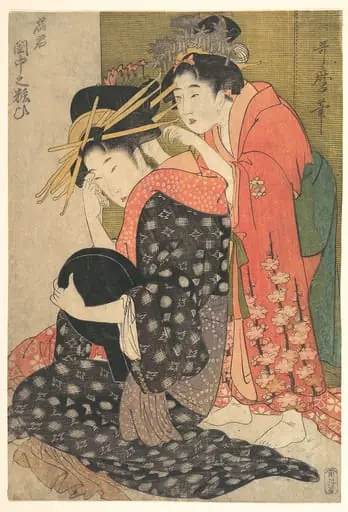 名君 閨中の粧ひ|The Oiran Yoso-oi Seated at Her Toilet
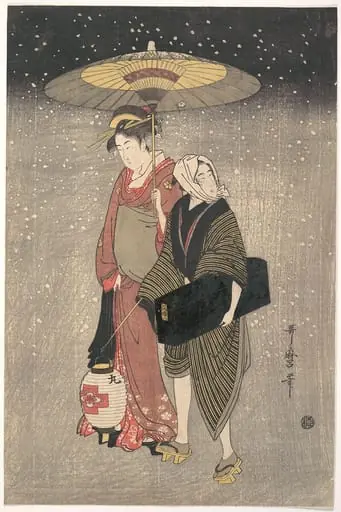 Untitled
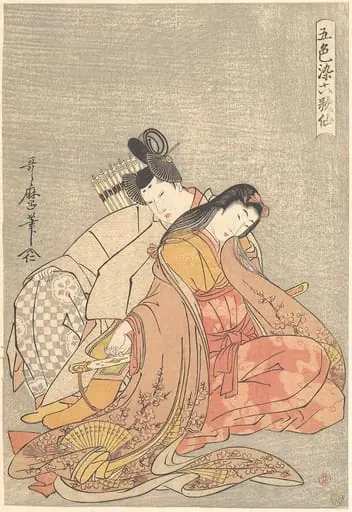 『五色染六歌仙』 在原業平と小野小町|“The Poet Ariwara no Narihira (825–880) and Ono no Komachi,” from the series Five Colors of Love for the Six Poetic Immortals (Goshiki-zome rokkasen)
 風俗美人時計 子ノ刻 妾|Midnight: Mother and Sleepy Child
 Chushingura: Act VIII of The Storehouse of Loyalty
 Three Women (from the series A Brief Collection of Japanese Beauties)
 Daibutsu no bansho|Vesper Bell of the Temple of Great Buddha
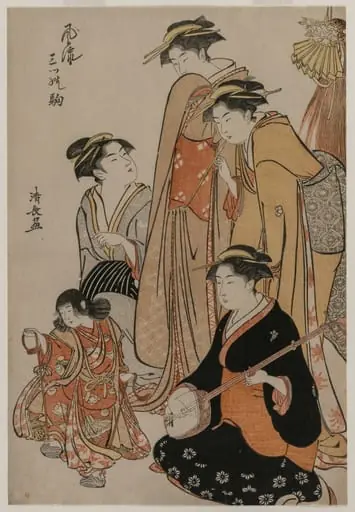 Women Watching a Girl Dance on Shells (From the series Fashionable Presentations of Three Horses)
 Untitled
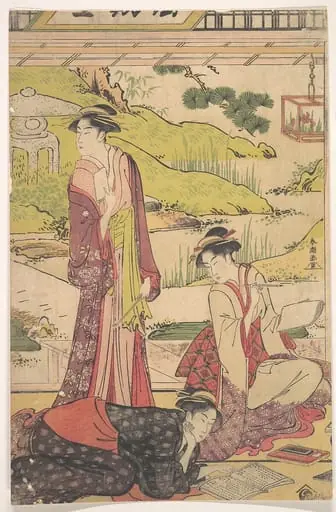 あやめ燈籠図|Three Women Enjoying Literary Pursuits
 Untitled
 Untitled
 Untitled
 Untitled
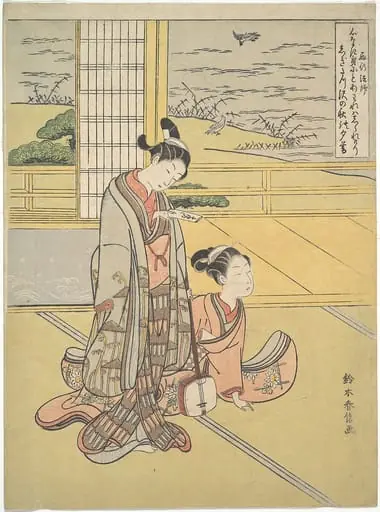 鈴木春信画 見立三夕 「西行法師」|A Young Man and Woman with a Shamisen; Monk Saigyō, from a series alluding to the Three Evening Poems (Sanseki waka)
 当世恋歌八契 お七と吉三郎|The Lovers Oshichi and Kichisaburo