Artwork
Untitled
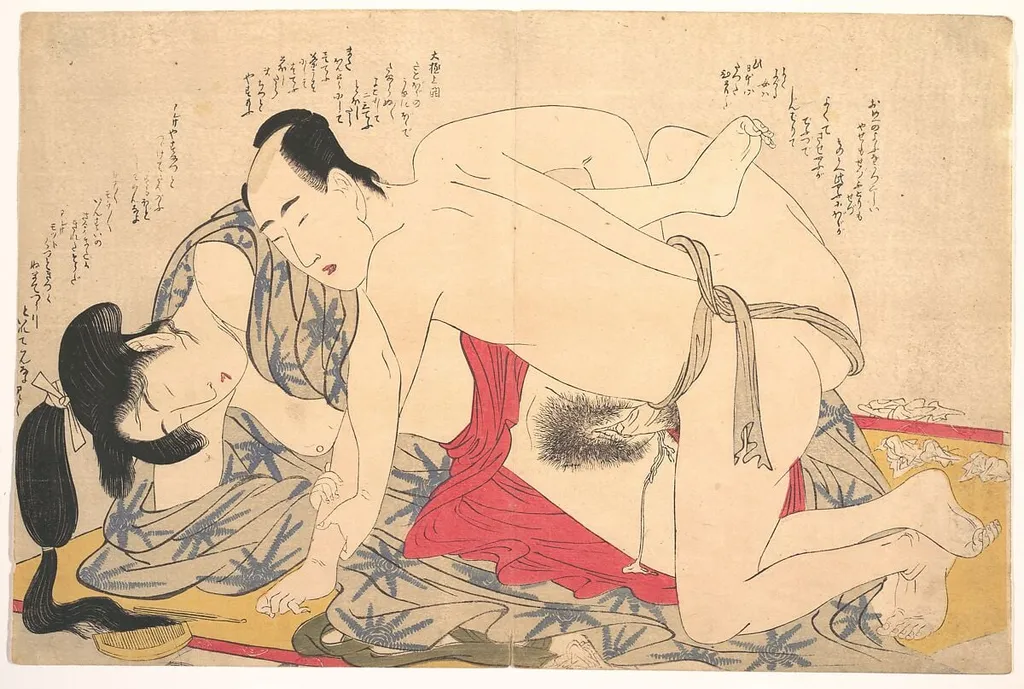
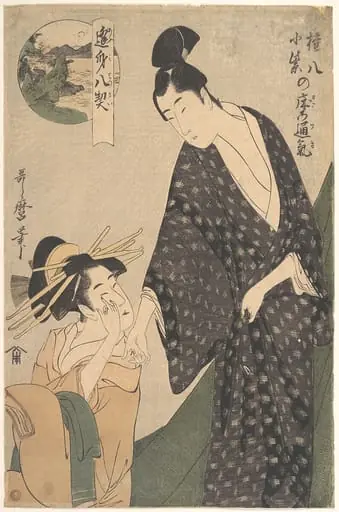
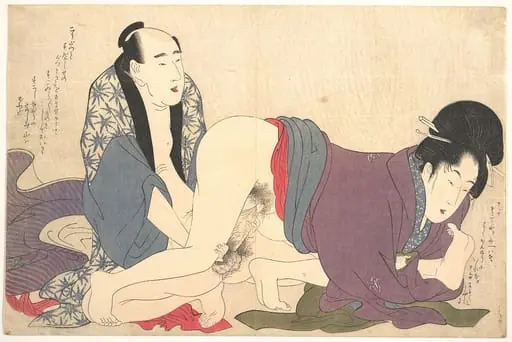
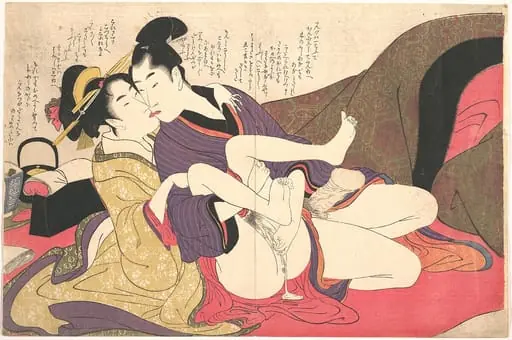
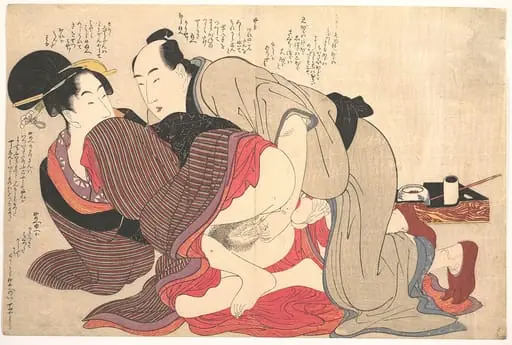
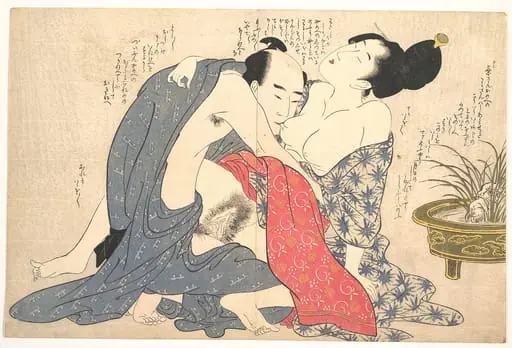
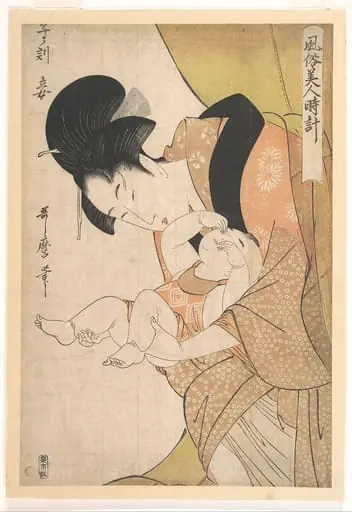
Untitled is an ink print by the Romanticist artist Kitagawa Utamaro. It dates from 1780 and is held in the collection of the Metropolitan Museum of Art.
About this work
Overview
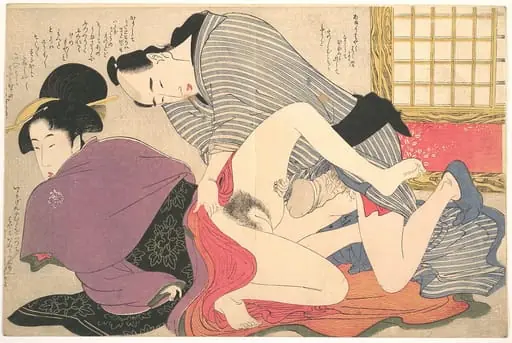
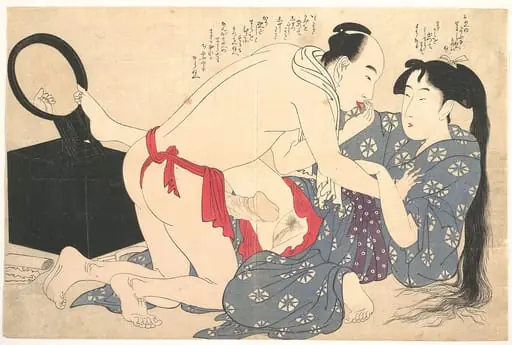
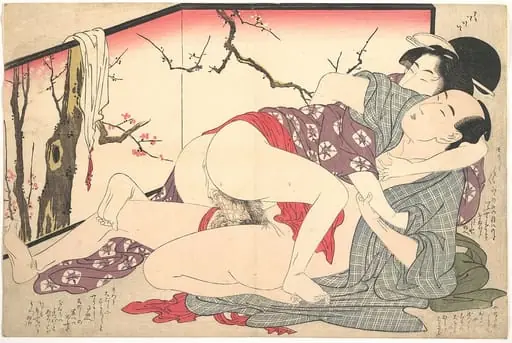
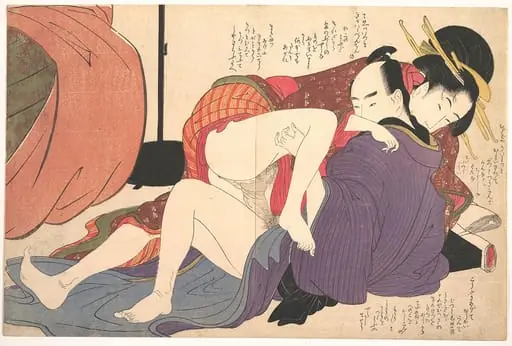
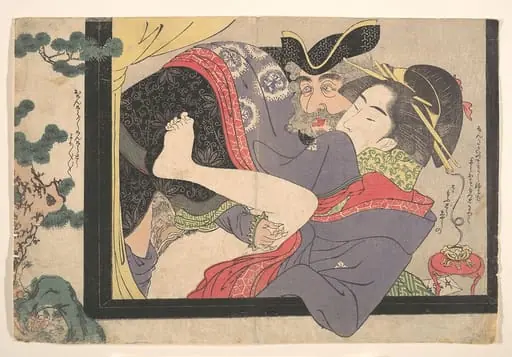
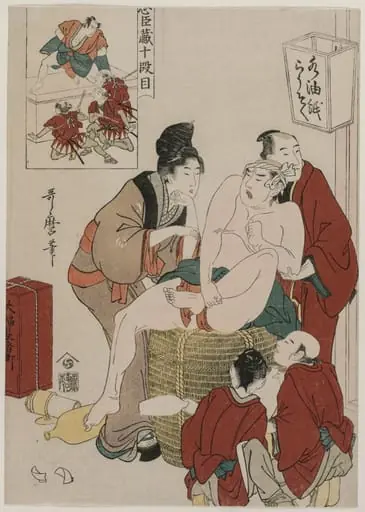
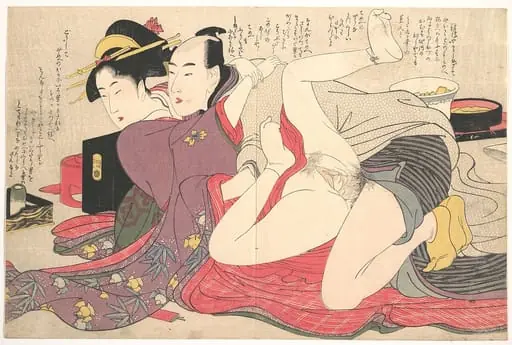
This woodblock print, dated around 1780, is one of many private commissions by Kitagawa Utamaro. Executed in ink and color on paper, it belongs to a genre of intimate imagery produced for personal collections rather than public or religious display. Its modest scale suggests it was handled and viewed closely, reflecting a culture of private contemplation rather than public spectacle.
Subject & Meaning
The print portrays a man and woman in a moment of closeness, their forms partially veiled by a light covering. There is no theatricality or overt sensuality; instead, the scene conveys quiet intimacy. The absence of narrative context or symbolic elements directs focus to the physical presence and quiet connection between the figures, aligning with Utamaro’s interest in subtle human interaction.
Technique & Style
Utamaro employed soft, flowing lines and a restrained palette of pinks, grays, and muted greens to evoke warmth and tactility. The printing technique emphasizes texture over detail, with gentle gradations suggesting skin and fabric. The composition is intimate and balanced, avoiding dramatic angles or exaggerated forms, reinforcing the quiet tone of the scene.
History & Provenance
Created during the late 18th century, this print was part of a broader production of shunga—erotic prints—made for private ownership among urban elites. Unlike religious or imperial art, these works circulated discreetly, often passed hand to hand. Their survival in private collections reflects their non-public status and the cultural tolerance for such imagery in certain social circles.
Context
In Edo-period Japan, woodblock prints served diverse functions, from news and entertainment to personal pleasure. Shunga, though sometimes censored, was widely produced and collected. Utamaro’s focus on psychological nuance and naturalistic poses distinguished his work within this genre, reflecting broader artistic trends that valued observation over idealization.
Legacy
Utamaro’s approach to the human form influenced later artists both in Japan and abroad, particularly through his emphasis on quiet realism. While shunga was often dismissed in later centuries, modern scholarship recognizes these works as significant records of social life and aesthetic values. His prints continue to be studied for their technical mastery and emotional restraint.
Artist & collection


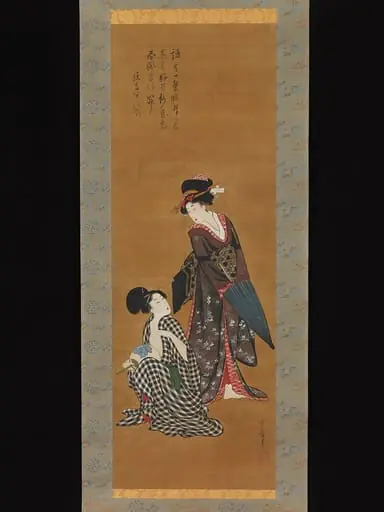 Untitled
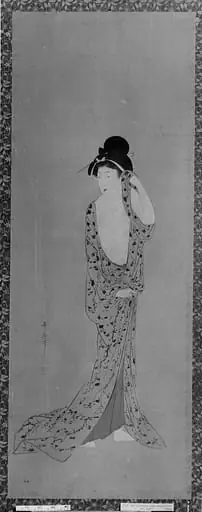 Untitled
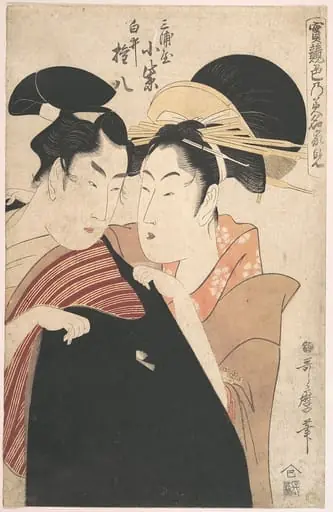 実競色乃美名家見 三浦屋小紫 白井権八|The Lovers Miura-ya Komurasaki and Shirai Gonpachi.
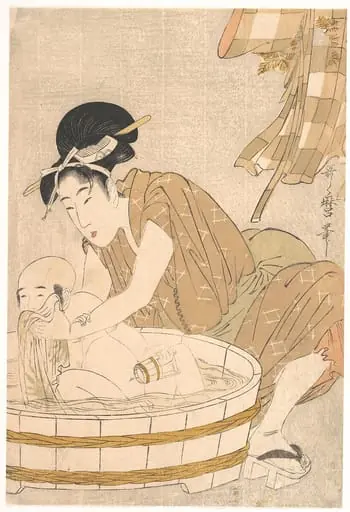 行水|Bathtime (Gyōzui)
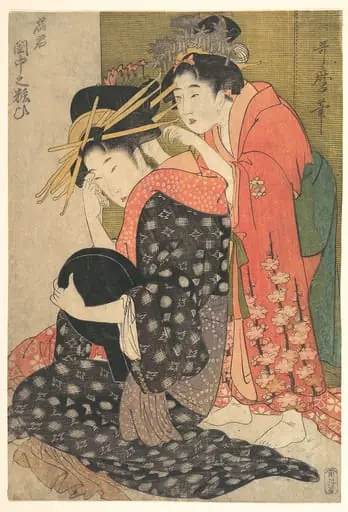 名君 閨中の粧ひ|The Oiran Yoso-oi Seated at Her Toilet
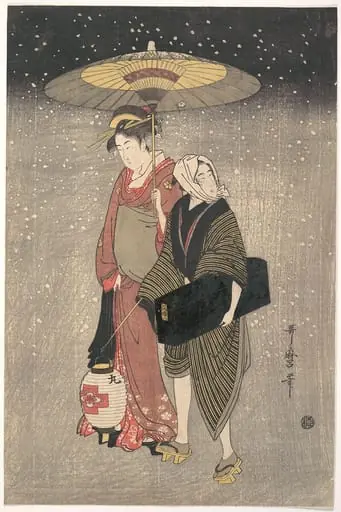 Untitled
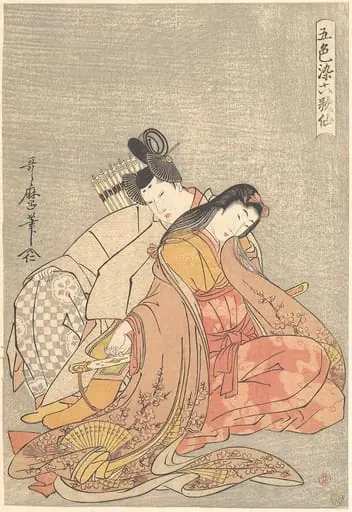 『五色染六歌仙』 在原業平と小野小町|“The Poet Ariwara no Narihira (825–880) and Ono no Komachi,” from the series Five Colors of Love for the Six Poetic Immortals (Goshiki-zome rokkasen)
 風俗美人時計 子ノ刻 妾|Midnight: Mother and Sleepy Child