Artwork
Untitled
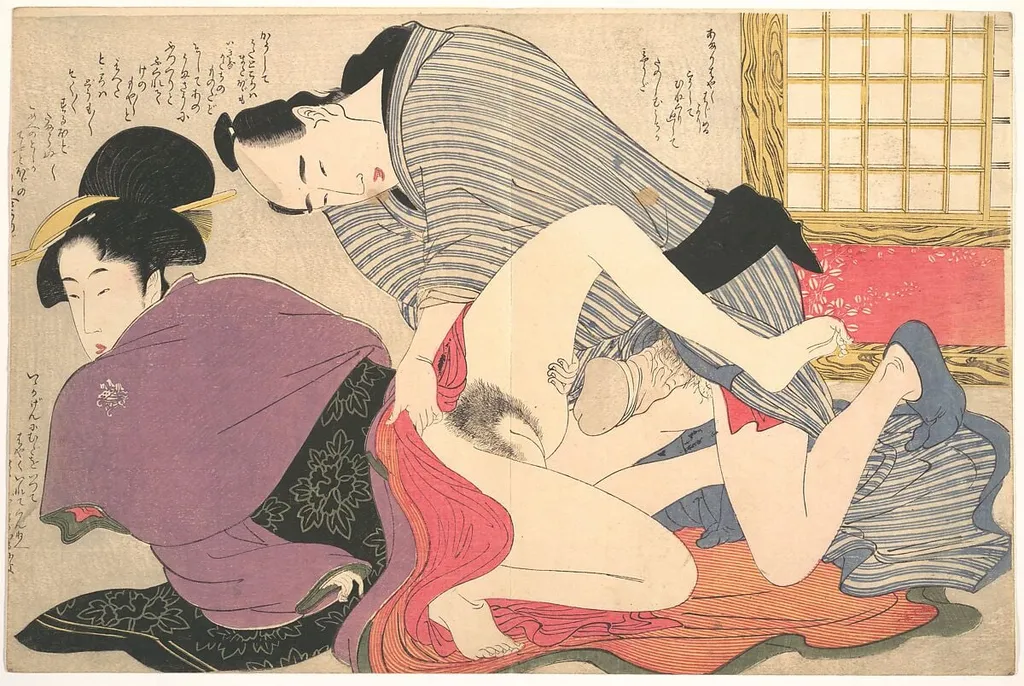
Untitled is an ink print by the Romanticist artist Kitagawa Utamaro. It dates from 1780 and is held in the collection of the Metropolitan Museum of Art.
About this work
Overview
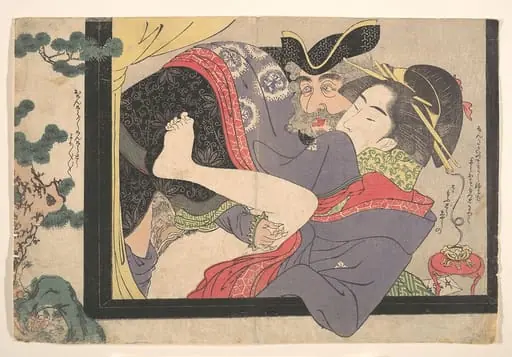
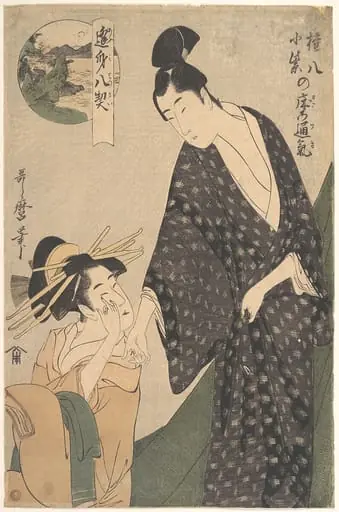
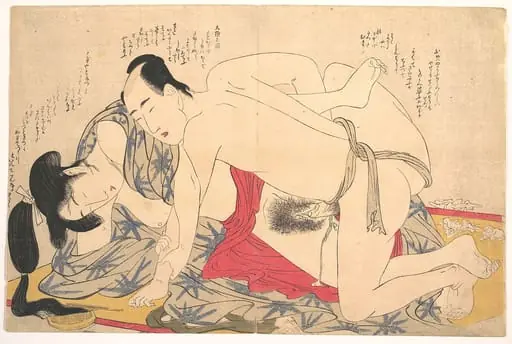
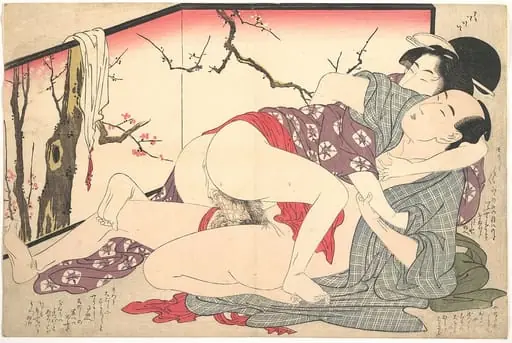
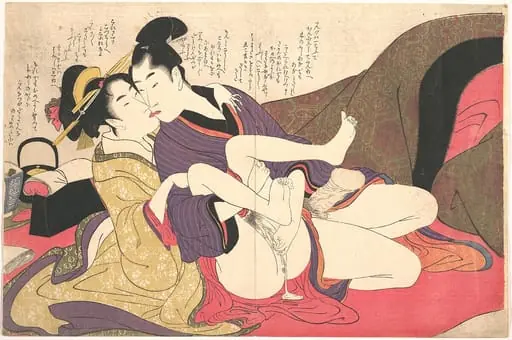
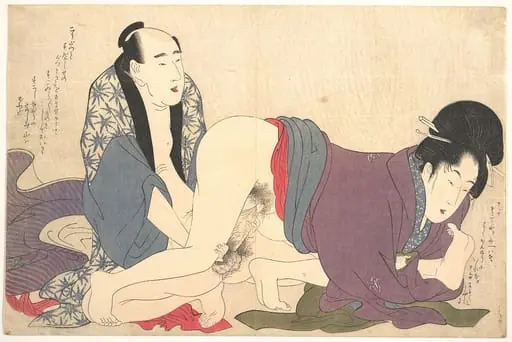
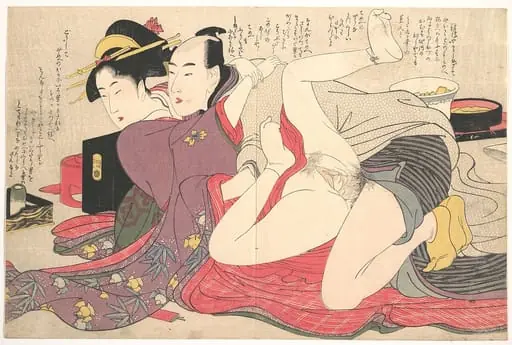
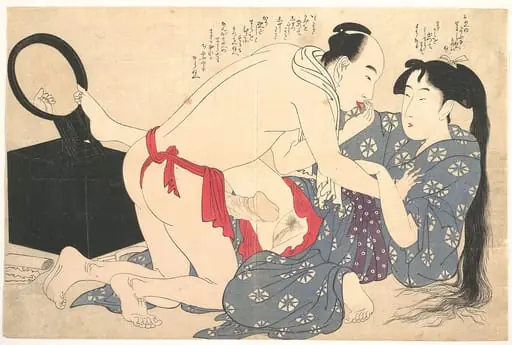
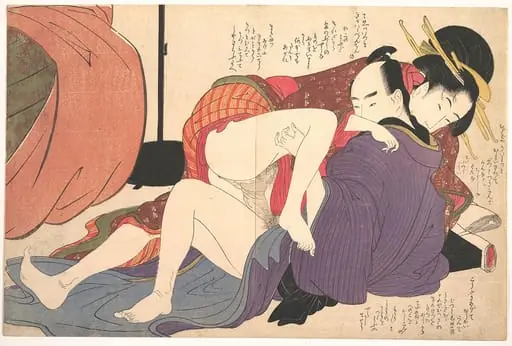
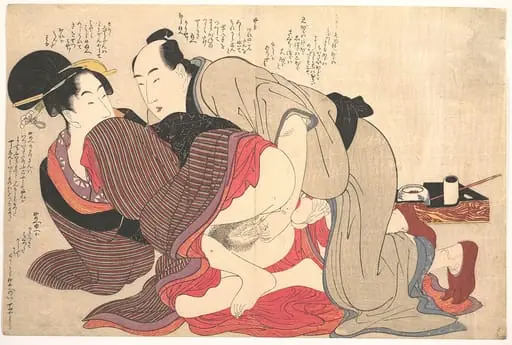
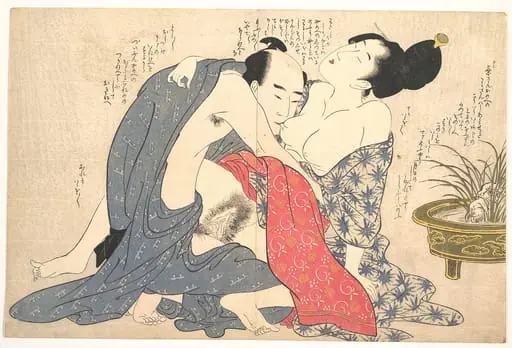
This woodblock print, dated around 1780, is attributed to Kitagawa Utamaro and belongs to the ukiyo-e tradition of Japanese printmaking. Executed in ink and color on paper, it presents an intimate scene without overt drama or narrative context. Unlike religious or ceremonial imagery, such works were produced for private consumption, reflecting the tastes of urban elites in Edo-period Japan.
Subject & Meaning
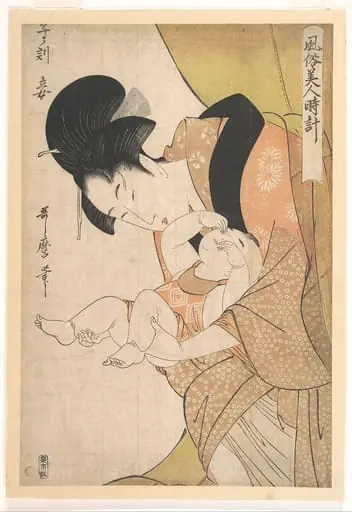
The print portrays two figures entwined beneath a translucent fabric, their forms rendered with quiet restraint. There is no indication of passion or exertion; instead, the figures appear composed, even drowsy. This understated portrayal suggests intimacy as a natural, unremarkable part of daily life, aligning with the genre’s focus on private moments rather than public spectacle.
Technique & Style
Utamaro employed fine, controlled carving to capture subtle textures—the weight of fabric, the curve of limbs, the softness of skin. Delicate color gradations and minimal line work create a hushed atmosphere. The composition avoids theatricality, favoring close cropping and muted tones to draw attention to bodily presence rather than setting or gesture.
History & Provenance
Produced for a private market, this print circulated among collectors and patrons of erotic art, not as public decoration but as personal objects. Its worn surface indicates repeated handling, suggesting it was cherished and frequently viewed. Such prints were often bound into albums, preserved as intimate records of aesthetic and sensual experience.
Context
In late 18th-century Edo, depictions of intimate life flourished within the ukiyo-e tradition, reflecting broader cultural openness to human desire. While temples and palaces commissioned grander themes, urban artists like Utamaro turned to domestic and sensual subjects, capturing the private world of courtesans, lovers, and everyday rituals with nuanced observation.
Legacy
Utamaro’s approach to erotic imagery influenced later generations of printmakers by normalizing tenderness over sensationalism. His focus on quiet, unposed moments helped redefine the boundaries of acceptable subject matter in Japanese art. These prints remain significant for their humanism and technical refinement, offering insight into the private lives of Edo’s urban population.
Artist & collection


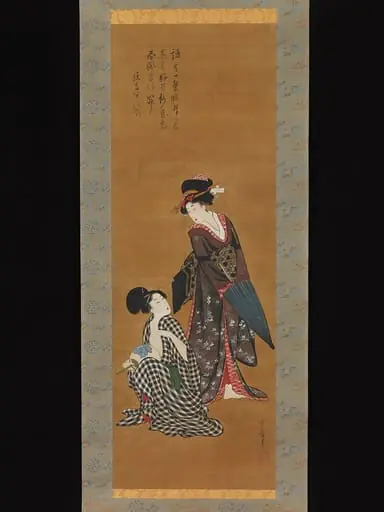 Untitled
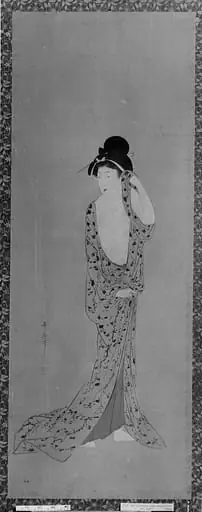 Untitled
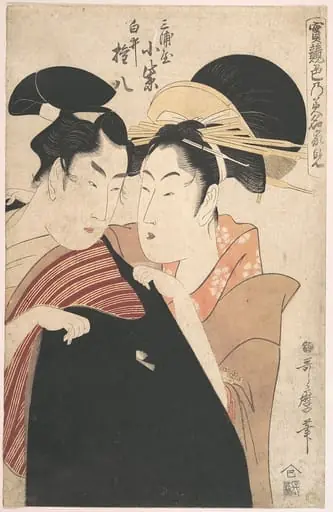 実競色乃美名家見 三浦屋小紫 白井権八|The Lovers Miura-ya Komurasaki and Shirai Gonpachi.
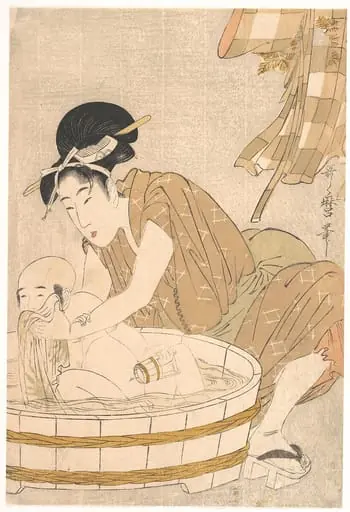 行水|Bathtime (Gyōzui)
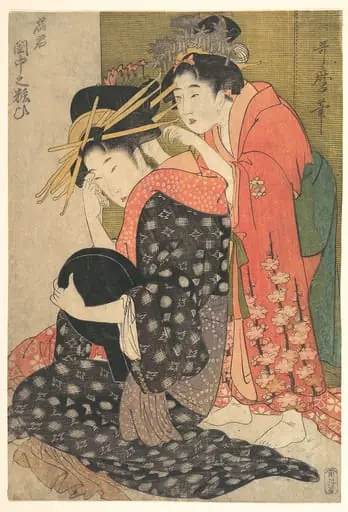 名君 閨中の粧ひ|The Oiran Yoso-oi Seated at Her Toilet
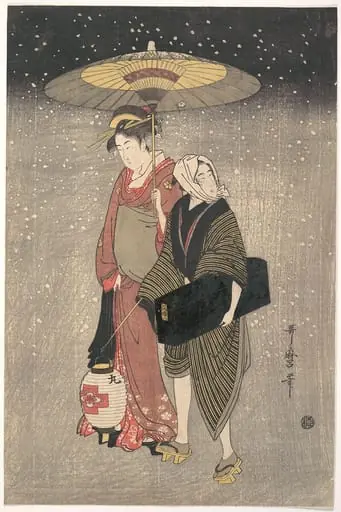 Untitled
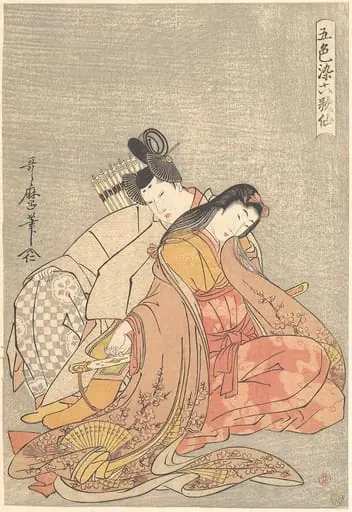 『五色染六歌仙』 在原業平と小野小町|“The Poet Ariwara no Narihira (825–880) and Ono no Komachi,” from the series Five Colors of Love for the Six Poetic Immortals (Goshiki-zome rokkasen)
 風俗美人時計 子ノ刻 妾|Midnight: Mother and Sleepy Child