Artwork
凱旋新橋ステーション御着之図|Illustration of the Arrival of the Emperor at Shinbashi Station Following a Victory (Gaisen Shinbashi stēshon gochaku no zu)
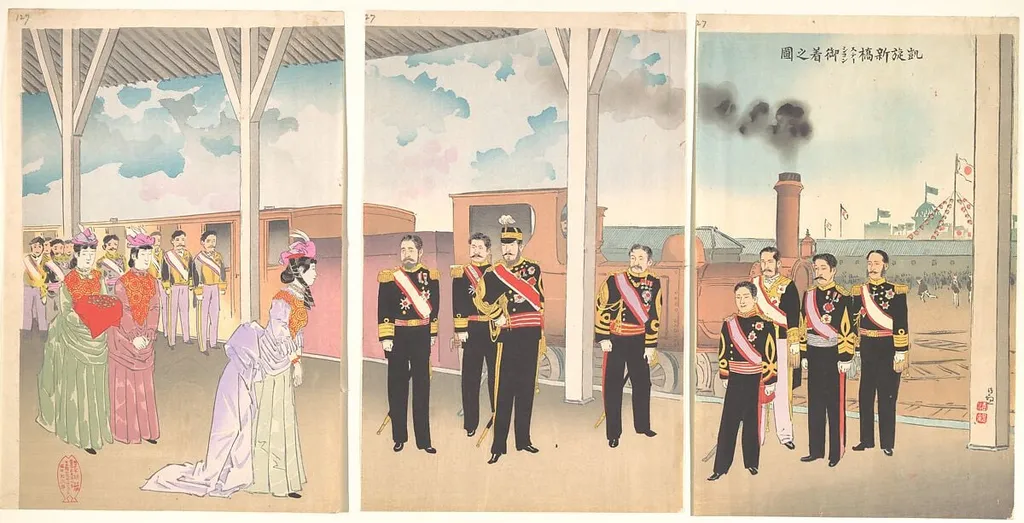
凱旋新橋ステーション御着之図|Illustration of the Arrival of the Emperor at Shinbashi Station Following a Victory (Gaisen Shinbashi stēshon gochaku no zu) is an ink print by the Impressionist artist Kobayashi Kiyochika. It dates from 1895 and is held in the collection of the Metropolitan Museum of Art.
About this work
Overview
Executed in ink and color on paper, the work combines traditional ukiyo-e techniques with modern subject matter.
Created in 1895 by Kobayashi Kiyochika, this triptych captures the arrival of Emperor Meiji at Shinbashi Station after Japan’s victory in the First Sino-Japanese War. Executed in ink and color on paper, the work combines traditional ukiyo-e techniques with modern subject matter. It reflects a moment of national pride during Japan’s rapid modernization, portraying ceremonial gatherings around a newly constructed railway hub that symbolized progress.
Subject & Meaning
The three panels depict distinct moments of the imperial procession: ceremonial bowing in traditional attire, military officers adorned with medals, and a crowd gathered near the station with flags and steam rising from a locomotive. The juxtaposition of court robes and Western-style uniforms signals a cultural transition. The scene is not merely celebratory but also a visual record of Japan’s shifting identity—blending imperial tradition with emerging modern institutions.
Technique & Style
Kiyochika employs bold brushwork and vivid, flat color fields typical of late ukiyo-e, yet his compositions show a Western-influenced sense of perspective and spatial depth. The dynamic arrangement of figures and architectural elements creates a sense of movement, as if capturing a fleeting moment. Smoke from the train and fluttering flags add texture and energy, distinguishing this work from static historical depictions and aligning it with contemporary photographic aesthetics.
History & Provenance
Produced shortly after Japan’s 1895 victory over China, the print was likely commissioned to commemorate national achievement and bolster public morale. It entered the collection of The Metropolitan Museum of Art in the 20th century, where it remains part of its Japanese print holdings. Its survival in good condition reflects its cultural significance and the growing international interest in Meiji-era visual culture during the early 1900s.
Context
The print emerges during a period when Japan was actively redefining its national image through infrastructure, military reform, and visual propaganda. Shinbashi Station, opened in 1872, was one of the country’s first railways and became a symbol of modernity. Kiyochika’s depiction aligns with broader efforts to merge imperial authority with technological advancement, using art to legitimize and celebrate Japan’s transformation into a global power.
Legacy
Kiyochika’s triptych stands as a key example of how traditional printmaking adapted to document modern life in Meiji Japan. It influenced later artists who sought to capture urban change and national identity through woodblock prints. Today, it remains a primary reference for understanding how visual culture mediated the tension between tradition and modernity during one of Japan’s most transformative eras.
Artist & collection

Artist
Kiyochika grew up in Tokyo when the city was turning from samurai streets into a modern capital.

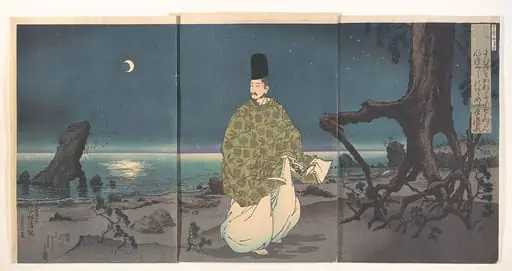
![野戦病院行幸之図|Illustration of the Empress Visiting a Field Hospital [in Hiroshima] (Yasen byōin gyōkō no zu), by Kobayashi Kiyochika](https://artifactworldgallery.com/img/kobayashi-kiyochika--illustration-of-the-empress-visiting-a-field-hospital-in-hir--34d3a02653578c64-w320.webp) 野戦病院行幸之図|Illustration of the Empress Visiting a Field Hospital [in Hiroshima] (Yasen byōin gyōkō no zu)
野戦病院行幸之図|Illustration of the Empress Visiting a Field Hospital [in Hiroshima] (Yasen byōin gyōkō no zu)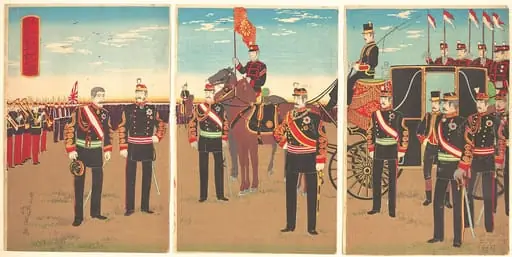 青上練兵場観兵式之図|Illustration of Emperor's Military Review of a Parade Ground at Aoyama (Aoyama renpeijō kanpeishiki no zu)
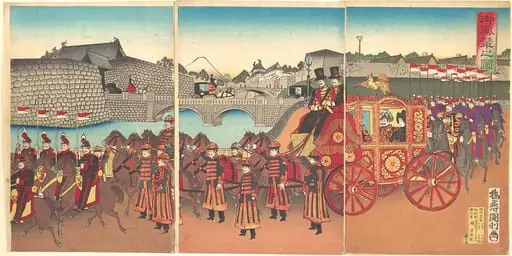 御鳳輦之図|Illustration of the Imperial Carriage (Gohōren no zu)
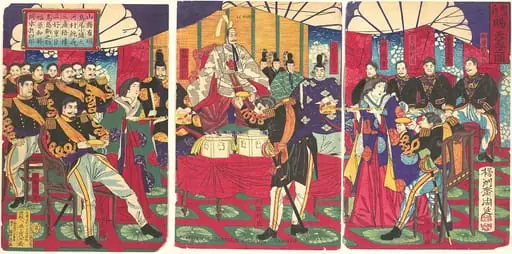 勲功之将天杯賜之図|Illustration of the Honored Commanders, Receiving the Emperor's Gift Cup (Kunkō no shō tenpai o tamau no zu)
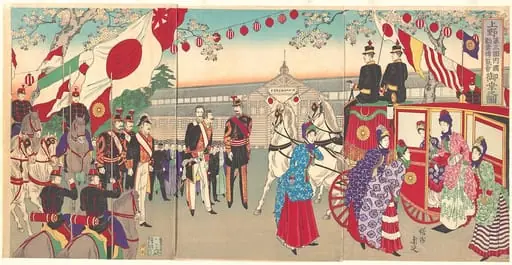 『上野第三回内国勧業 博覧会御幸之図』|Visit of the Empress to the Third National Industrial Promotional Exhibition at Ueno Park (Ueno dai sankai naikoku kangyō hakuran kai gyokō no zu)
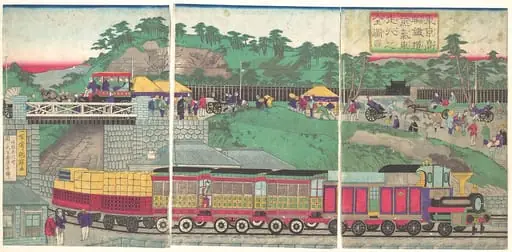 東京高輪鉄道蒸気車走行之図|Illustration of a Steam Locomotive Running on the Takanawa Railroad in Tokyo (Tōkyō takanawa tetsudō jōkisha sōkō no zu)
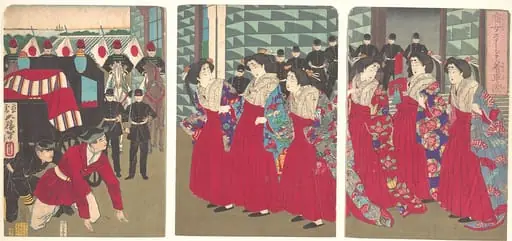 官女ステーション着車図|Illustration of Ladies-in-waiting boarding at a station (Kanjo sutēshon chakusha zu)
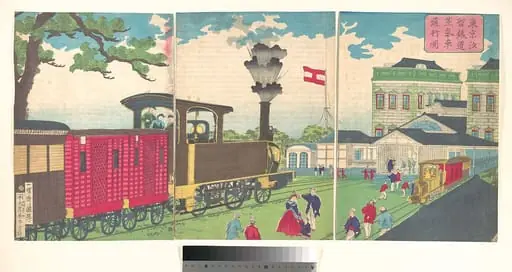 東京汐留鉄道蒸気車通行図|Illustration of a Steam Locomotive Passing Shiodome in Tokyo (Tōkyō Shiodome testudō jōkisha tsūkō zu)
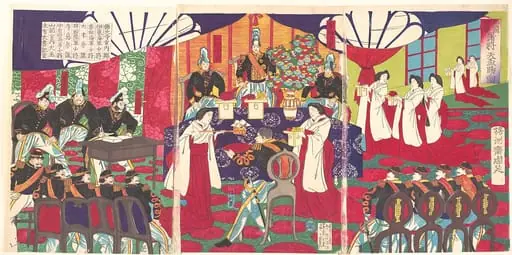 西国諸将鎮静天杯賜ル之図|Illustration of the Commanders who Pacified Western Japan, Receiving the Emperor's Gift Cups (Saigoku chinsei shoshō tenpai o tamawaru no zu)
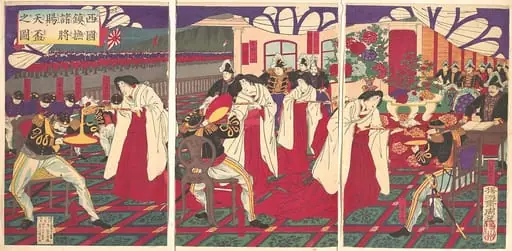 西国鎮静撫諸将天杯賜之図|Illustration of the Commanders who Pacified Western Japan, Receiving the Emperor's Gift Cups (Saigoku chinbu shoshō tenpai o tamau no zu)