Artwork
勲功之将天杯賜之図|Illustration of the Honored Commanders, Receiving the Emperor's Gift Cup (Kunkō no shō tenpai o tamau no zu)
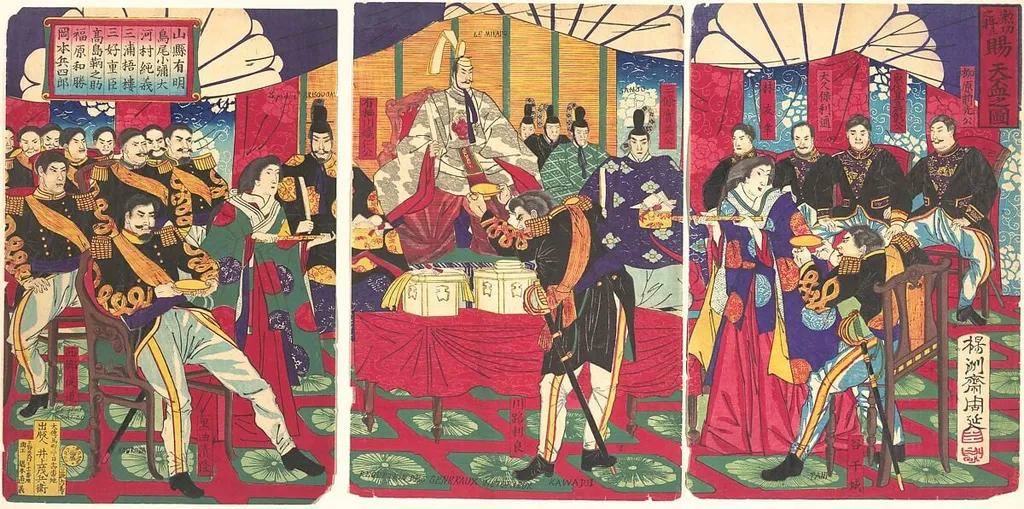
勲功之将天杯賜之図|Illustration of the Honored Commanders, Receiving the Emperor's Gift Cup (Kunkō no shō tenpai o tamau no zu) is an ink print by the Impressionist artist Yōshū (Hashimoto) Chikanobu. It dates from 1877 and is held in the collection of the Metropolitan Museum of Art.
About this work
Overview
Created in 1877 by the Japanese printmaker Yōshū Chikanobu, this work is a three‑panel woodblock print, each sheet printed on paper with ink and color. The piece, titled Illustration of the Honored Commanders, Receiving the Emperor’s Gift Cup, is part of the collection of the Metropolitan Museum of Art.
Subject & Meaning
The triptych depicts a ceremonial presentation in which distinguished military officers receive a ceremonial cup from the emperor. Central to the composition is a figure on a raised platform extending the cup to a recipient in black, while surrounding scenes show musicians, attendants, and onlookers participating in the celebration.
Technique & Style
Chikanobu employs bold, flat areas of color—predominantly reds, blues, and golds—outlined with thick black lines. The figures wear brightly patterned kimono and military uniforms, and the print combines Japanese characters with decorative lettering, creating a lively, easily readable narrative across the three panels.
History & Provenance
The print was produced during the Meiji period, a time when woodblock publishing flourished as a means of documenting contemporary events and ceremonies. It entered the Metropolitan Museum of Art’s collection through acquisition in the early 20th century, where it remains on view as an example of Meiji‑era print culture.
Context
Illustrations of imperial ceremonies were popular subjects for ukiyo‑e artists in the late 19th century, reflecting the new national identity and the emperor’s restored prominence. Chikanobu, known for his depictions of modern life and historical events, used this format to record the visual language of state ritual.
Artist & collection


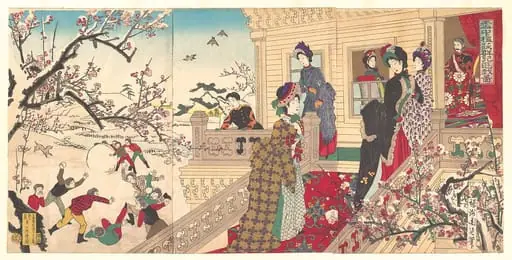 『雪中梅荘群児遊戯 図』|Children Playing in the Snow under Plum Trees in Bloom (Secchū baisō gunji yūgi zu)
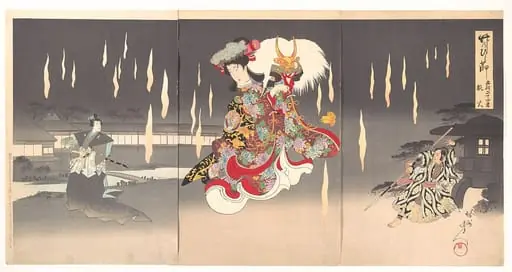 Untitled
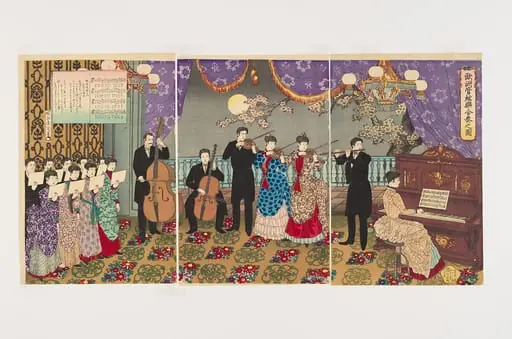 『欧州管絃楽合奏之図』|Concert of European Music (Ōshū kangengaku gassō no zu)
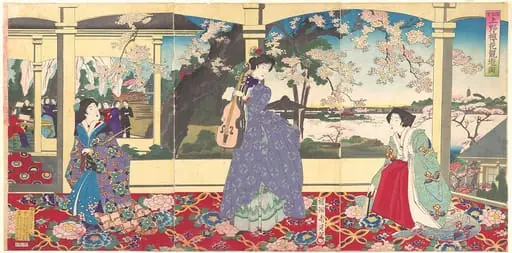 『踏舞会 上野桜花観 遊ノ図』|A Dance Party: Enjoying Cherry Blossom Viewing at Ueno (Tōbukai Ueno ōka yūran no zu)
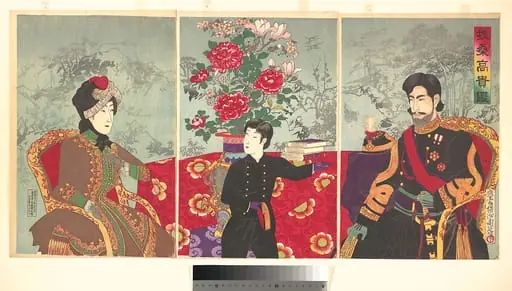 『扶桑高貴鑑』|A Mirror of Japan’s Nobility: The Emperor Meiji, His Wife, and Prince Haru (Fūsō kōki kagami)
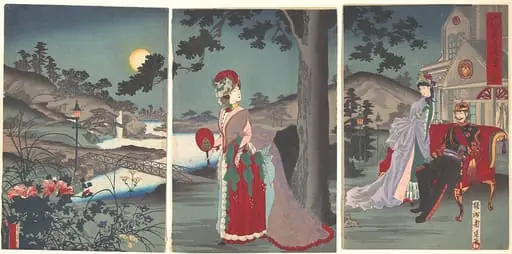 『高貴納涼ノ図』|Nobility in the Evening Cool (Koki nōryō no zu)
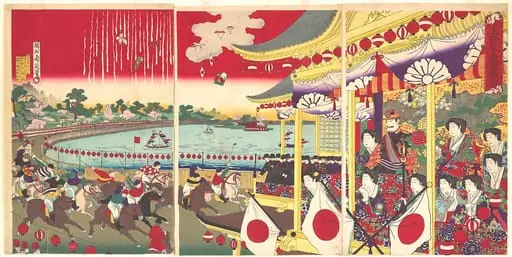 『上野不忍競馬図』|View of the Horse Track at Shinobazu in Ueno Park (Ueno shinobazu keiba zu)
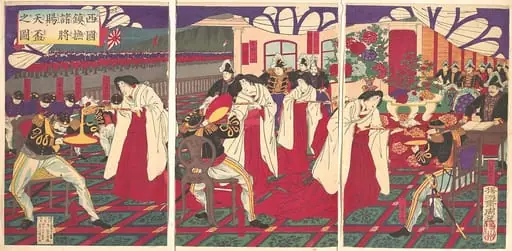 西国鎮静撫諸将天杯賜之図|Illustration of the Commanders who Pacified Western Japan, Receiving the Emperor's Gift Cups (Saigoku chinbu shoshō tenpai o tamau no zu)
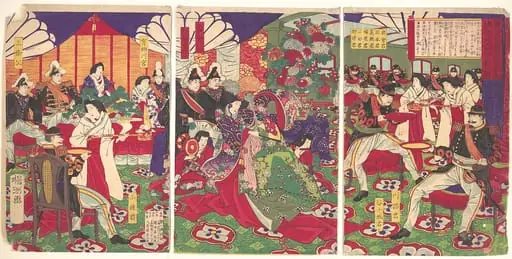 『鹿児島賊徒鎮静依諸将 天杯頂戴之図』|Leaders of the Pacification of the Kagoshima Rebels Celebrating with Cups of Wine from the Emperor (Kagoshima zokuto chinsei ni yotte shoshō tenhai chōdai no zu)
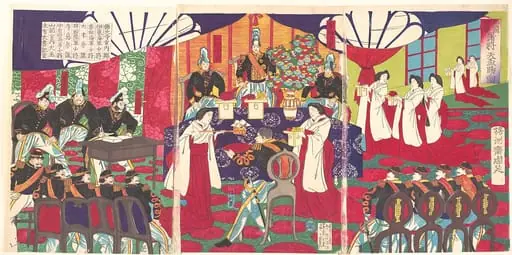 西国諸将鎮静天杯賜ル之図|Illustration of the Commanders who Pacified Western Japan, Receiving the Emperor's Gift Cups (Saigoku chinsei shoshō tenpai o tamawaru no zu)
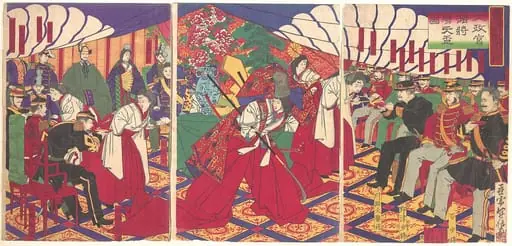 Taiseikan Shosho Shiten|Commanders Receiving the Emperor's Drinking Cups
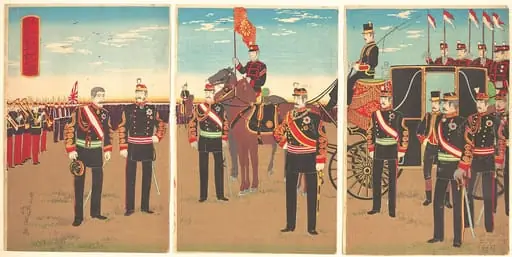 青上練兵場観兵式之図|Illustration of Emperor's Military Review of a Parade Ground at Aoyama (Aoyama renpeijō kanpeishiki no zu)
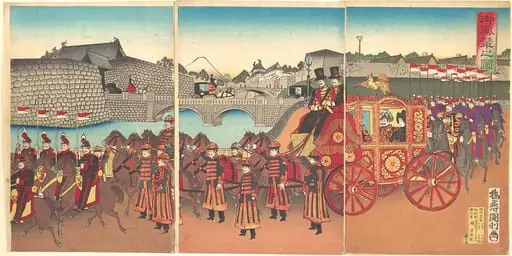 御鳳輦之図|Illustration of the Imperial Carriage (Gohōren no zu)
![参謀本部行啓之図|Illustration of the Empress Visiting the General Staff Headquarters [to present a tray of bandages] (Sanbō honbu gyōkei no zu), by Kobayashi Kiyochika](https://artifactworldgallery.com/img/kobayashi-kiyochika--illustration-of-the-empress-visiting-the-general-staff-headq--f80f7b0e9726abbf-w320.webp) 参謀本部行啓之図|Illustration of the Empress Visiting the General Staff Headquarters [to present a tray of bandages] (Sanbō honbu gyōkei no zu)
参謀本部行啓之図|Illustration of the Empress Visiting the General Staff Headquarters [to present a tray of bandages] (Sanbō honbu gyōkei no zu)![野戦病院行幸之図|Illustration of the Empress Visiting a Field Hospital [in Hiroshima] (Yasen byōin gyōkō no zu), by Kobayashi Kiyochika](https://artifactworldgallery.com/img/kobayashi-kiyochika--illustration-of-the-empress-visiting-a-field-hospital-in-hir--34d3a02653578c64-w320.webp) 野戦病院行幸之図|Illustration of the Empress Visiting a Field Hospital [in Hiroshima] (Yasen byōin gyōkō no zu)
野戦病院行幸之図|Illustration of the Empress Visiting a Field Hospital [in Hiroshima] (Yasen byōin gyōkō no zu)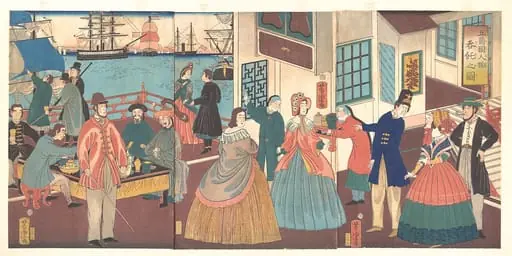 五箇国人物呑託之図|People of the Five Nations