Artwork
西国諸将鎮静天杯賜ル之図|Illustration of the Commanders who Pacified Western Japan, Receiving the Emperor's Gift Cups (Saigoku chinsei shoshō tenpai o tamawaru no zu)
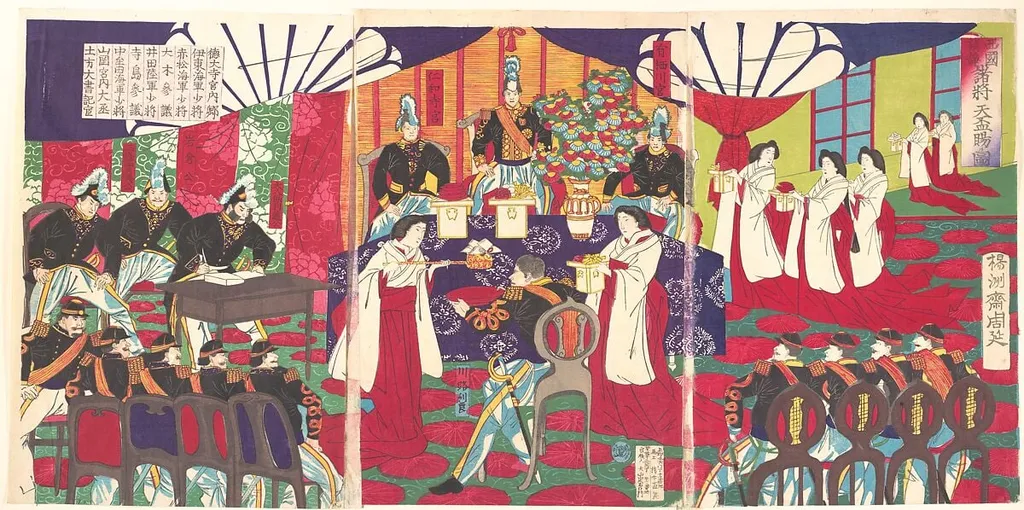
西国諸将鎮静天杯賜ル之図|Illustration of the Commanders who Pacified Western Japan, Receiving the Emperor's Gift Cups (Saigoku chinsei shoshō tenpai o tamawaru no zu) is an ink print by the Impressionist artist Yōshū (Hashimoto) Chikanobu. It dates from 1887 and is held in the collection of the Metropolitan Museum of Art.
About this work
Overview
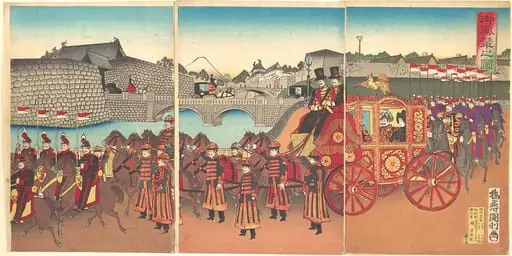
Created in 1887 by Yōshū Chikanobu, this triptych woodblock print depicts a ceremonial event honoring military leaders who brought stability to western Japan.
Created in 1887 by Yōshū Chikanobu, this triptych woodblock print depicts a ceremonial event honoring military leaders who brought stability to western Japan. Rendered in ink and color on paper, the composition is divided into three panels, each capturing a distinct moment of the ritual. The work is part of the collection at The Metropolitan Museum of Art and exemplifies Meiji-era ukiyo-e’s blend of traditional aesthetics with contemporary historical themes.
Subject & Meaning
The print illustrates a formal audience in which imperial representatives present ceremonial cups to generals who suppressed regional unrest. The scene honors loyalty and service to the emperor, reinforcing state narratives of unity during Japan’s rapid modernization. Each panel—preparation, bestowal, and procession—structures the event as a solemn, orderly ritual, emphasizing hierarchy and imperial authority over individual heroism.
Technique & Style
Chikanobu employs fine linework and layered pigments to render intricate textiles, architectural details, and expressive gestures. The triptych format allows for narrative progression across panels, while the use of perspective and spatial depth reflects Western influence. Patterns on robes and the arrangement of objects, such as stacked cups, are rendered with meticulous care, showcasing the artisanal precision typical of late 19th-century ukiyo-e.
History & Provenance
Commissioned during the Meiji period, the print was produced shortly after the Satsuma Rebellion, a time when the imperial government sought to legitimize its authority through visual culture. The work was likely distributed to elites or displayed in public spaces to promote national cohesion. It entered The Metropolitan Museum of Art’s collection in the 20th century, preserved as a key example of Meiji-era political imagery.
Context
This print emerged amid Japan’s efforts to redefine its identity through historical pageantry. While traditional ukiyo-e had focused on actors and courtesans, artists like Chikanobu turned to contemporary events and state-sponsored narratives. The ceremony depicted mirrors imperial rituals of the past, repurposed to align military service with the new centralized state, blending old forms with new political imperatives.
Legacy
Chikanobu’s triptych stands as a document of how visual art was used to consolidate state power during Japan’s transition to modernity. It reflects the broader trend of ukiyo-e artists adapting their craft to serve national narratives, moving beyond entertainment toward historical documentation. The work remains a reference for scholars studying the intersection of art, politics, and identity in late 19th-century Japan.
Artist & collection


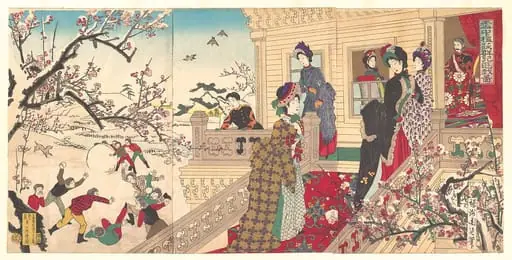 『雪中梅荘群児遊戯 図』|Children Playing in the Snow under Plum Trees in Bloom (Secchū baisō gunji yūgi zu)
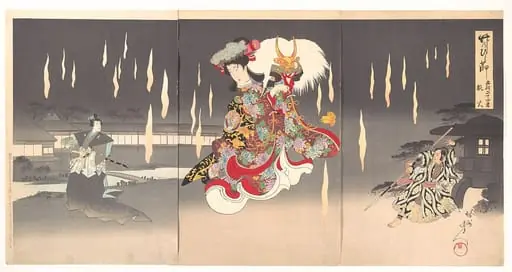 Untitled
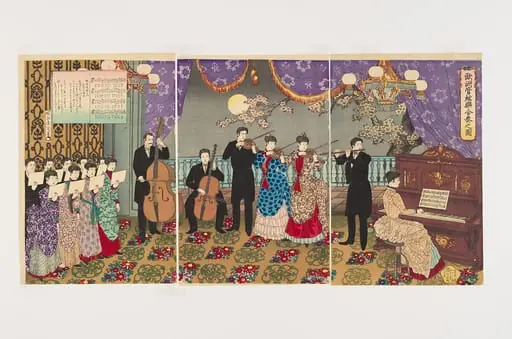 『欧州管絃楽合奏之図』|Concert of European Music (Ōshū kangengaku gassō no zu)
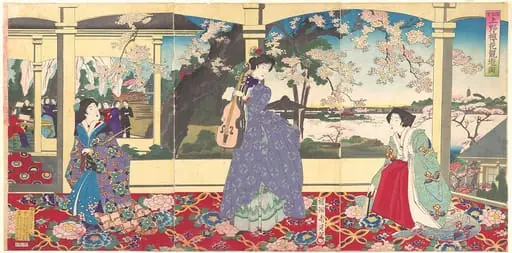 『踏舞会 上野桜花観 遊ノ図』|A Dance Party: Enjoying Cherry Blossom Viewing at Ueno (Tōbukai Ueno ōka yūran no zu)
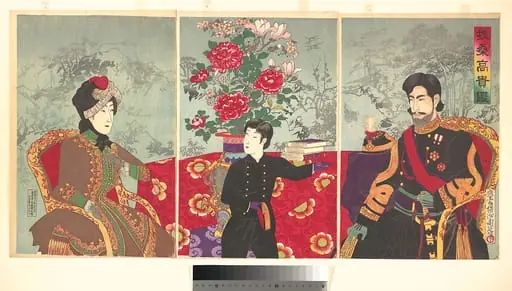 『扶桑高貴鑑』|A Mirror of Japan’s Nobility: The Emperor Meiji, His Wife, and Prince Haru (Fūsō kōki kagami)
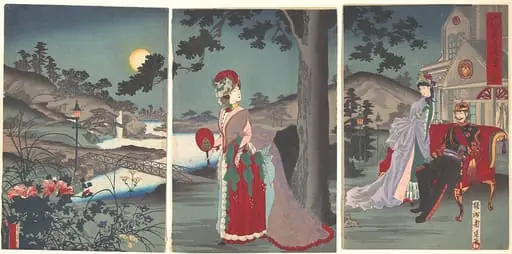 『高貴納涼ノ図』|Nobility in the Evening Cool (Koki nōryō no zu)
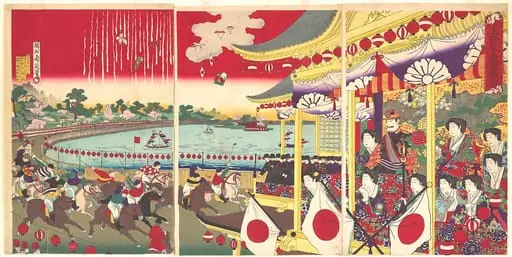 『上野不忍競馬図』|View of the Horse Track at Shinobazu in Ueno Park (Ueno shinobazu keiba zu)
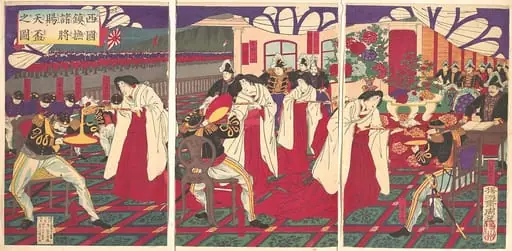 西国鎮静撫諸将天杯賜之図|Illustration of the Commanders who Pacified Western Japan, Receiving the Emperor's Gift Cups (Saigoku chinbu shoshō tenpai o tamau no zu)
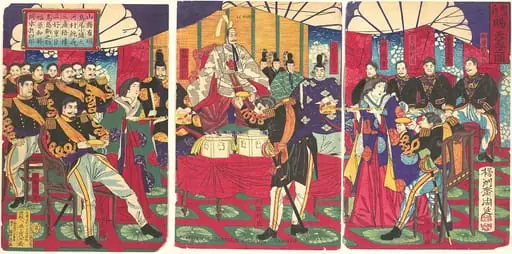 勲功之将天杯賜之図|Illustration of the Honored Commanders, Receiving the Emperor's Gift Cup (Kunkō no shō tenpai o tamau no zu)
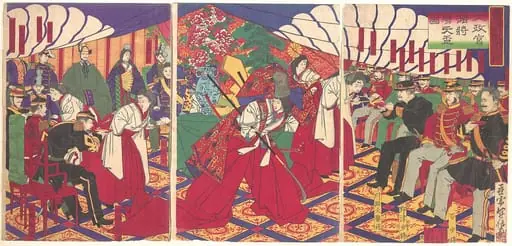 Taiseikan Shosho Shiten|Commanders Receiving the Emperor's Drinking Cups
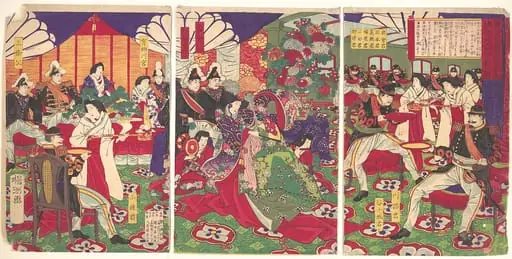 『鹿児島賊徒鎮静依諸将 天杯頂戴之図』|Leaders of the Pacification of the Kagoshima Rebels Celebrating with Cups of Wine from the Emperor (Kagoshima zokuto chinsei ni yotte shoshō tenhai chōdai no zu)
 御鳳輦之図|Illustration of the Imperial Carriage (Gohōren no zu)