Artwork
Women in a Tea House
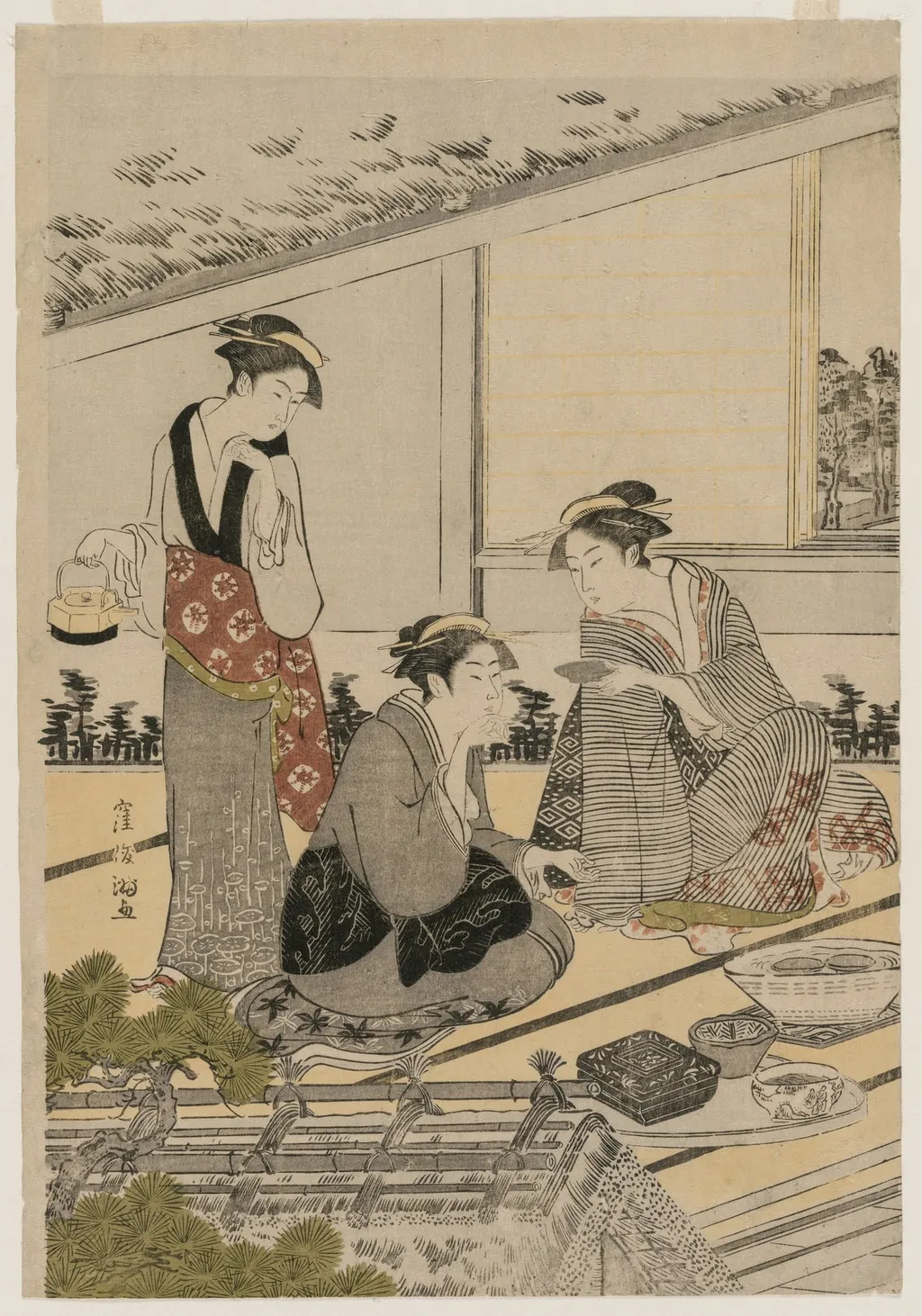
Women in a Tea House is a print by the Romanticist artist Kubo Shunman. It dates from 1784 and is held in the collection of the Cleveland Museum of Art.
About this work
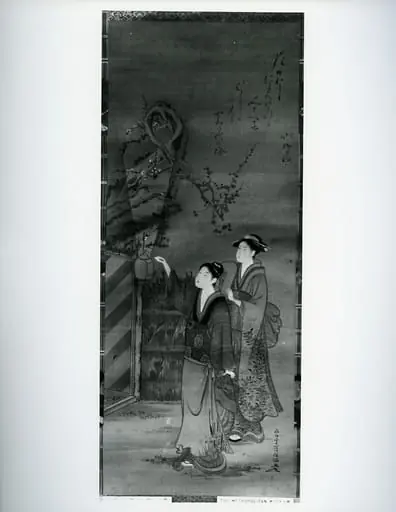
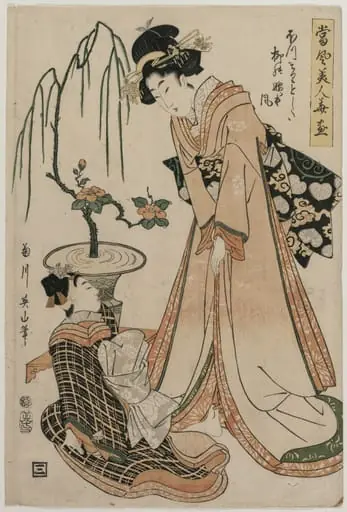
This print shows two women in a cozy tea house, one pouring tea while the other watches. Soft grays, greens, and purples fill the scene. They wear simple robes with delicate patterns.
Shunman often painted these quiet moments for city folks. The mood feels calm but not stiff. Printmakers in his time used woodblocks to share art fast.
Look up Kubo Shunman (Japanese, 1757–1820) to see more.
Overview
Rendered in muted tones of gray, pale green, and lavender, the scene reflects the refined yet unassuming atmosphere of urban leisure in late 18th-century Edo.
This woodblock print by Kubo Shunman captures a quiet interlude in a tea house, where two women engage in the simple act of tea service. Rendered in muted tones of gray, pale green, and lavender, the scene reflects the refined yet unassuming atmosphere of urban leisure in late 18th-century Edo. Shunman’s focus on intimate, everyday moments distinguishes his work from more theatrical depictions of the period.
Subject & Meaning
The two figures, likely courtesans or attendants, are shown in a private, contemplative setting, free from performative gestures. Their subdued interaction suggests a moment of respite, emphasizing inner calm over public display. Such scenes offered city dwellers a glimpse into the hidden rhythms of pleasure quarters, presenting beauty not as spectacle but as quiet presence.
Technique & Style
Shunman employed delicate woodblock printing techniques to achieve soft color gradations and fine linework. His palette avoids bold contrasts, favoring tonal harmonies that enhance the scene’s serenity. The robes are patterned with subtle detail, suggesting texture without ornamentation. His background in painting and lacquerwork informed his precision in surface treatment and spatial composition.
History & Provenance
Created during the late Edo period, this print belongs to a genre of bijin-ga that documented the lives of women in urban entertainment districts. Shunman, active between 1770 and 1820, was part of a generation of artists who elevated printmaking beyond commercial reproduction into a medium for nuanced observation. His works circulated widely among literate urban classes.
Context
In Edo’s growing merchant culture, prints like this served as affordable art for the middle class, offering aesthetic pleasure and social commentary. While courtesans were often idealized, Shunman’s approach avoided exaggeration, instead portraying them as individuals in moments of stillness. This shift reflected broader changes in how urban society viewed privacy and personal dignity.
Legacy
Shunman’s integration of painting, poetry, and craft into his printmaking expanded the expressive potential of ukiyo-e. His quiet, introspective style influenced later artists who sought emotional depth over dramatic flair. Though less celebrated than contemporaries like Utamaro, his work remains a quiet testament to the dignity found in everyday ritual.
Artist & collection


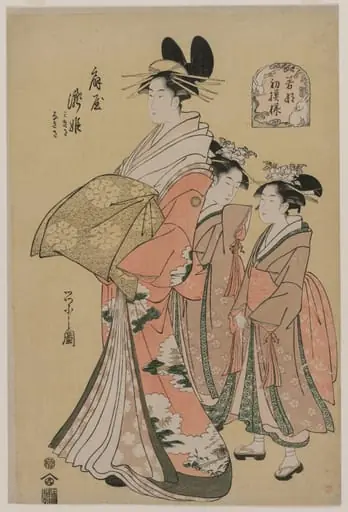 The Courtesan Takihime and Attendants (from the series New Patterns of Young Greens)
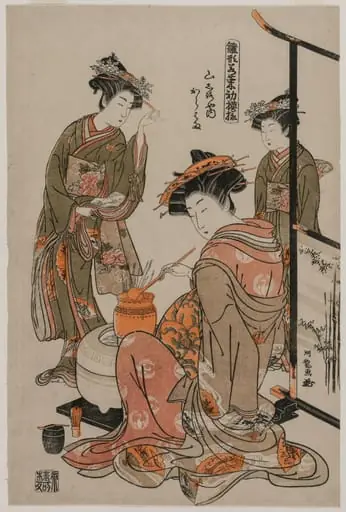 The Courtesan Karahama of Yamashiroya Performing the Tea Ceremony (from the series Models for Fahions: New Designs as Fresh as Young Leaves)
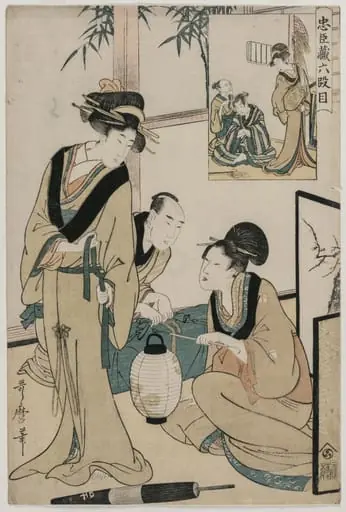 Chushingura: Act VI of The Storehouse of Loyalty
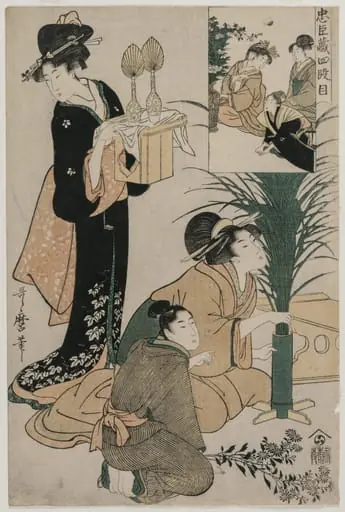 Chushingura: Act IV of The Storehouse of Loyalty
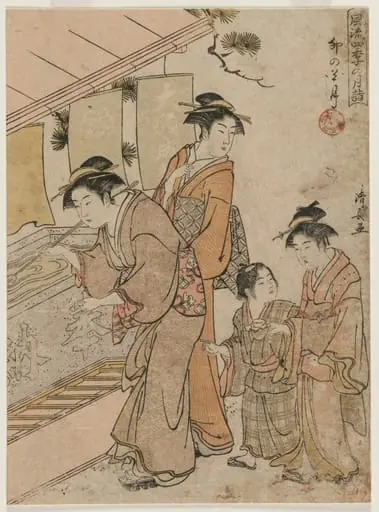 The Fourth Month (from the series Fashionable Monthly Visits to Temples in the Four Seasons)
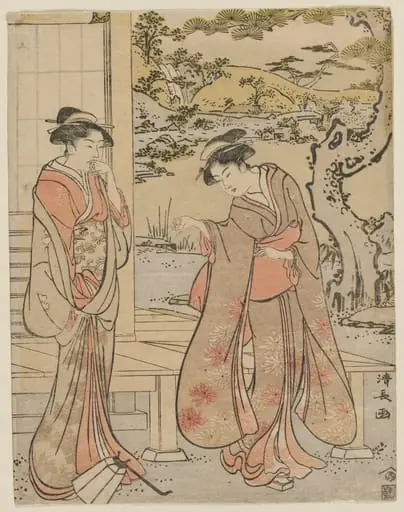 Woman Dropping a Lantern by a Porch
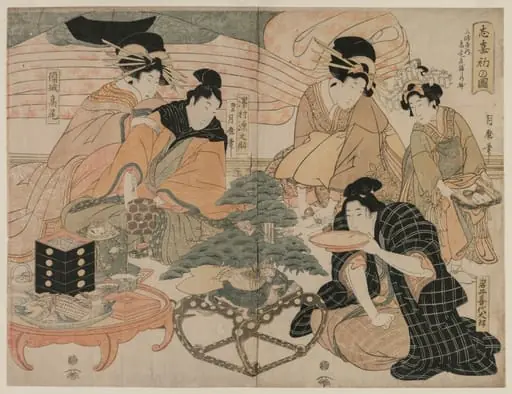 Picture of the First Visit to the Pleasure Quarters
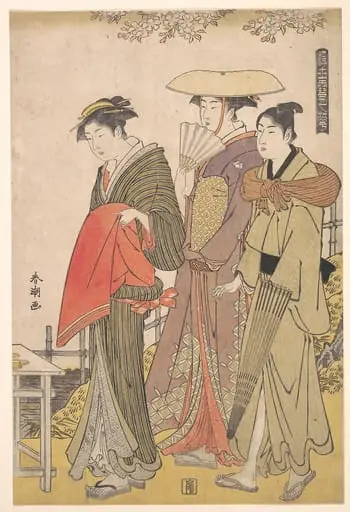 Ukiyoe Ga|The Beauty of the Floating World
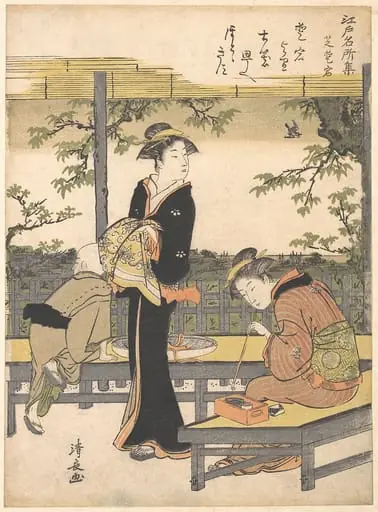 Shiba: Atago|Atago Hill at Shiba
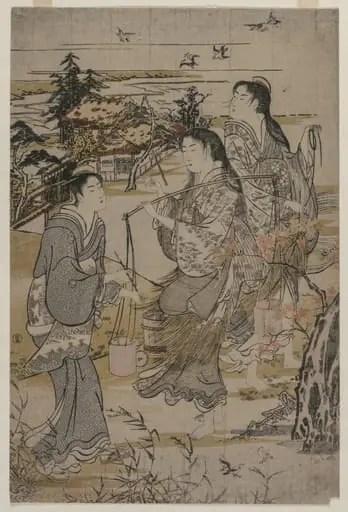 Women with Salt Pails; The Noda Tama River in Mutsu Province, from an untitled series of the Six Tama Rivers
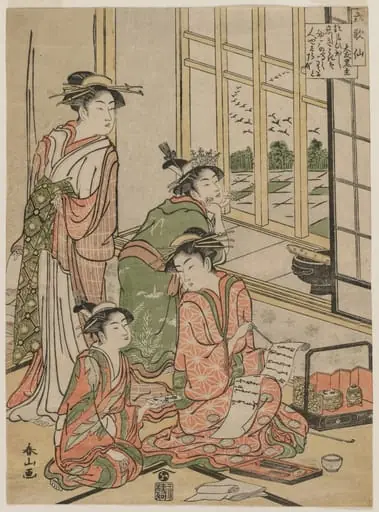 Courtesans at Leisure from the series The Six Immortal Poets
 A Lady-in-Waiting with Waist as Slender as a Willow from the series Flowers and Modern Beauties