Artwork
Study for One of Two Stained Glass Paintings Representing the Nativity
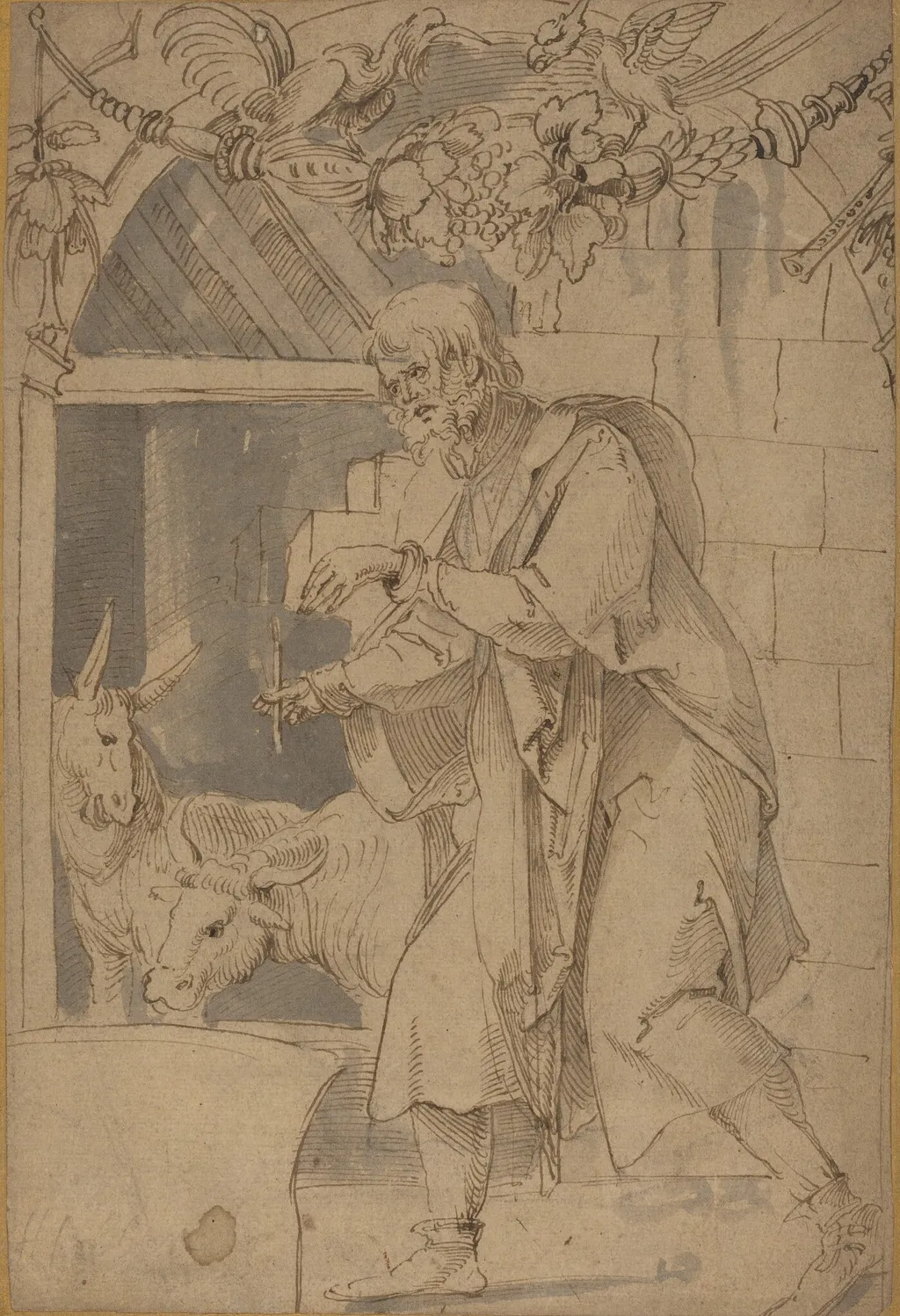
Study for One of Two Stained Glass Paintings Representing the Nativity is an ink drawing by the Renaissance artist Hans Süss von Kulmbach. It dates from 1510 and is held in the collection of the National Gallery of Art.
About this work
Overview
This 16th-century drawing by Hans Süss von Kulmbach, dated circa 1510, serves as a preparatory study for a stained glass panel depicting the Nativity. Executed in pen, brown ink, and wash over black chalk, it outlines the composition and key elements for the final glasswork.
Subject & Meaning
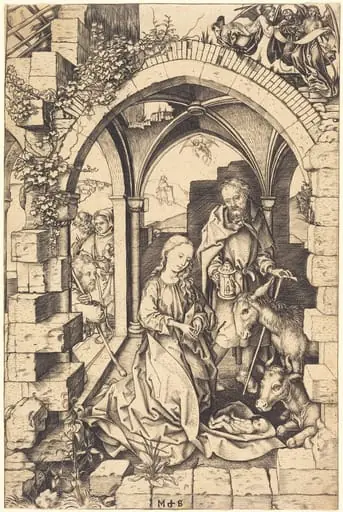
The drawing represents the Nativity scene, featuring a central bearded figure (likely Joseph) holding an object, set against a backdrop of a shadowed stable with an ox and a donkey. Above, angels play instruments and hold banners, emphasizing the divine and celebratory aspects of the scene.
Technique & Style
The work employs dark, expressive lines and strategic washes to achieve depth, characteristic of a design intended for translation into stained glass. The focus on silhouettes and forms over intricate details reflects the medium's requirements and the artist's approach to preliminary designs.
History & Provenance
Created around 1510, this drawing is attributed to Hans Süss von Kulmbach, a notable figure in the German Renaissance. Specific provenance details are not provided in the available information.
Context
As a study for stained glass, the piece reflects the artistic and religious practices of early 16th-century Germany, where such works were integral to church decoration and narrative.
Legacy
While the direct legacy of this specific study is not detailed, it contributes to the broader understanding of Hans Süss von Kulmbach's design process and the evolution of Nativity representations in Renaissance art.
Artist & collection