Artwork
Saint Luke
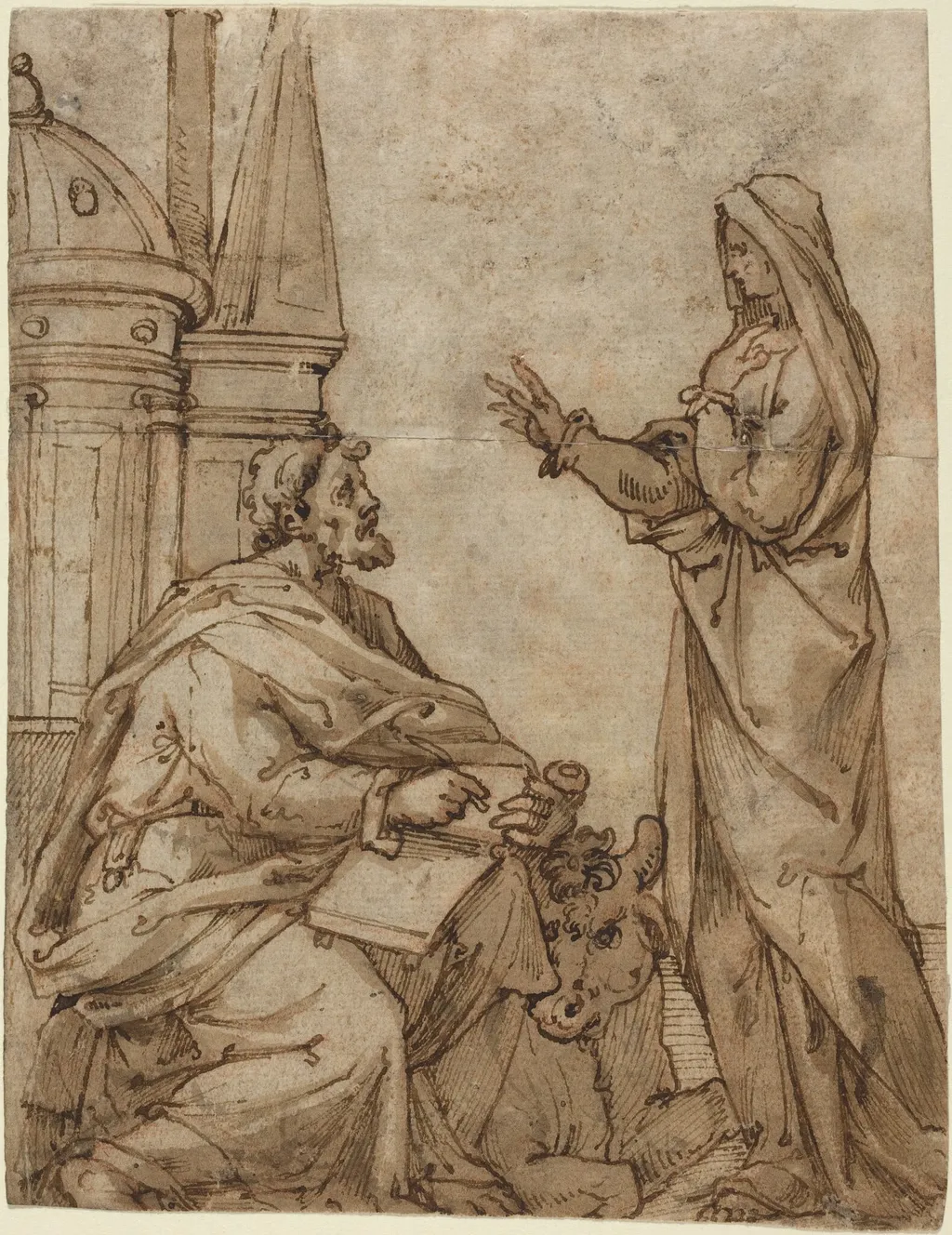
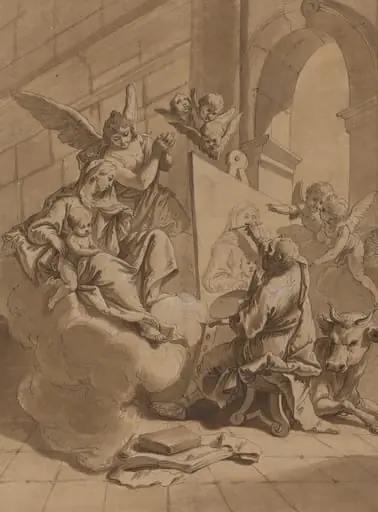
Saint Luke is an ink drawing by the Renaissance artist Netherlandish 16th Century. It dates from 1501 and is held in the collection of the National Gallery of Art.
About this work
Overview
This ink and wash drawing on laid paper depicts Saint Luke, the evangelist and patron of artists, seated in quiet contemplation.
This ink and wash drawing on laid paper depicts Saint Luke, the evangelist and patron of artists, seated in quiet contemplation. Executed in the late 1500s during the Northern Renaissance, it combines precise penwork with subtle brown washes to model form. The use of red chalk underdrawing suggests a deliberate, layered approach to composition, emphasizing the figure’s presence through restrained yet expressive line and tone.
Subject & Meaning
Saint Luke is shown as a scholar-saint, engaged in the act of writing his gospel. The faint halo behind his head signals sanctity without overt grandeur, aligning with the Northern Renaissance’s preference for intimate spirituality. His book and quill underscore his role as author of the Gospel and the traditional patron of painters, reinforcing the drawing’s connection to artistic identity and devotional practice.
Technique & Style
The artist employs fine pen lines and cross-hatching to define the volumetric folds of Luke’s robe, creating a tactile sense of fabric. Brown washes gently modulate light and shadow, particularly along the sleeve, where gradations suggest ambient illumination. The underlying red chalk guides the composition, allowing for subtle adjustments before ink was applied, reflecting a methodical, almost sculptural approach to drawing.
History & Provenance
The drawing originates from the late Northern Renaissance, likely produced in the Low Countries or southern Germany, regions known for their refined graphic traditions. While its exact provenance before modern collections is undocumented, its materials and technique align with workshop practices of the period, where preparatory drawings for larger works or devotional studies were commonly made.
Context
In the 16th century, drawings like this served both as studies for altarpieces and as independent devotional objects. Artists increasingly valued drawing as a medium of intellectual and spiritual expression. Saint Luke, as the patron of painters, was a frequent subject, symbolizing the sanctity of artistic labor and the fusion of craft with divine inspiration.
Legacy
This drawing exemplifies the Northern Renaissance’s emphasis on meticulous observation and quiet reverence. Its technical precision influenced later generations of draftsmen who sought to convey spiritual presence through subtle tonal variation and anatomical accuracy. Though not widely published, it remains a representative example of how religious figures were rendered with human intimacy in early modern graphic art.
Artist & collection

Artist
This artist carved scenes with fine lines, mostly religious and mythological ones.

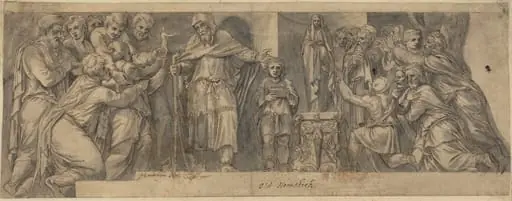
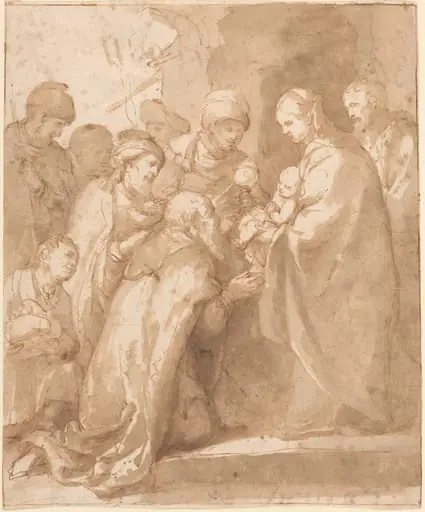 The Adoration of the Magi
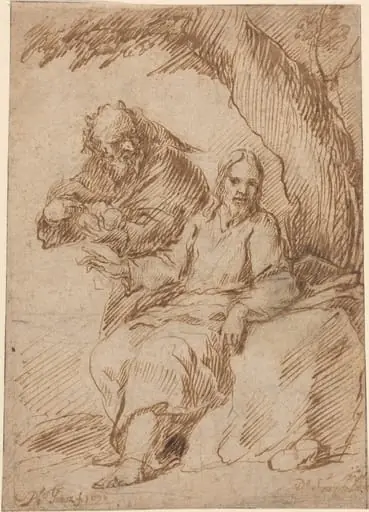 The Temptation of Christ in the Desert
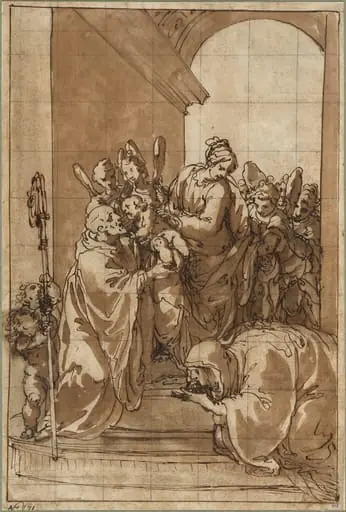 Madonna and Child with Angels, Saint Benedict, and Saint Scholastica
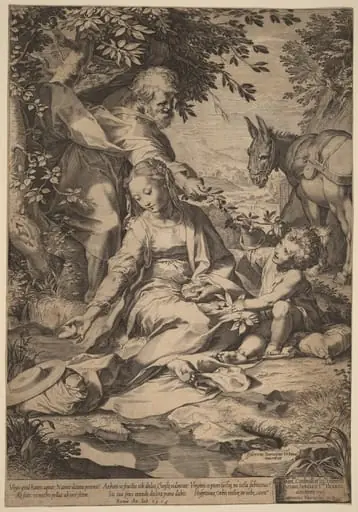 The Rest on the Return from Egypt
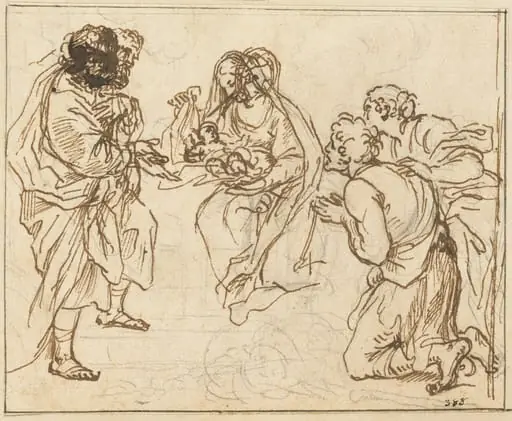 The Adoration of the Shepherds
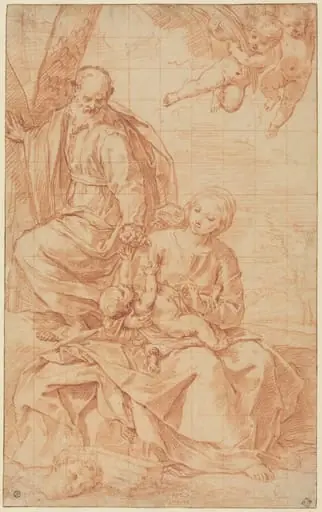 The Rest on the Flight into Egypt, or The Miracle of the Palm Tree
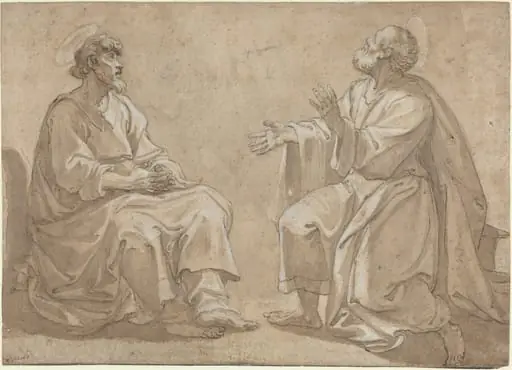 Two Seated Saints
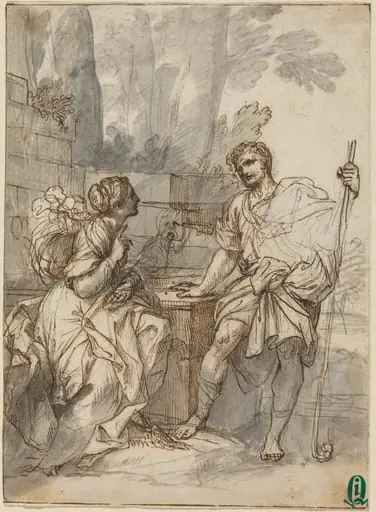 Pastoral Scene
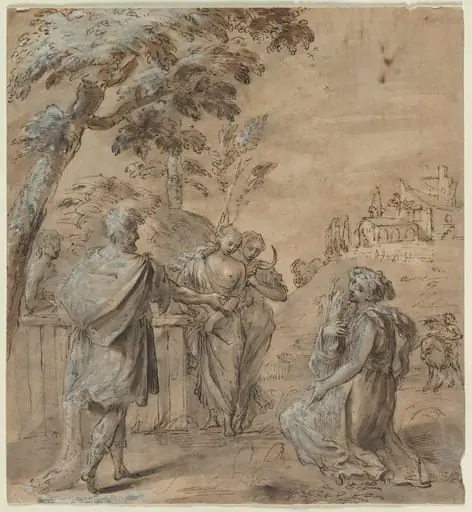 Ruth and Boaz (recto)
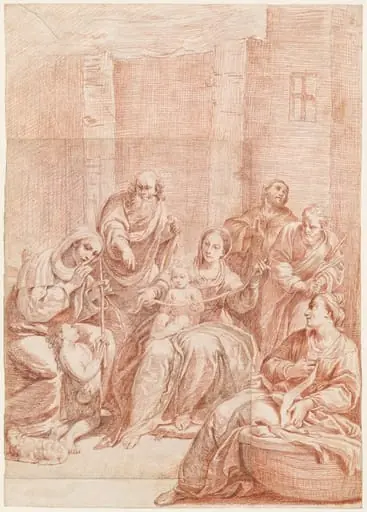 The Holy Family
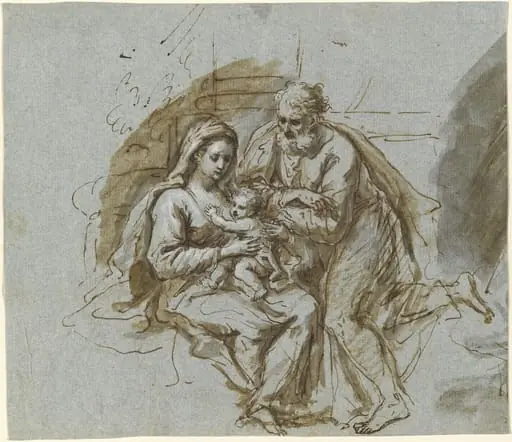 The Holy Family
 Saint Luke Painting the Virgin