Artwork
Apollo on Parnasus
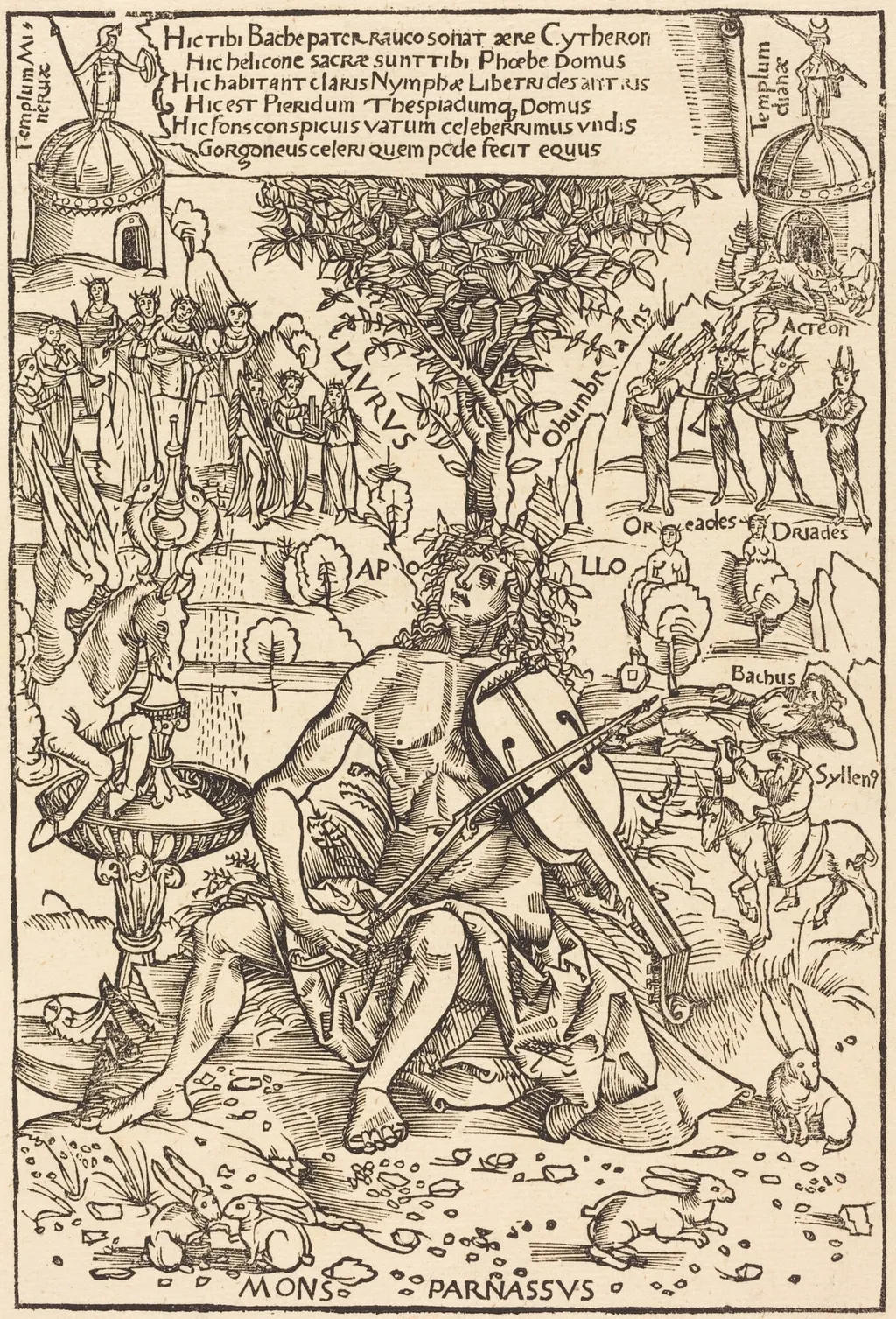
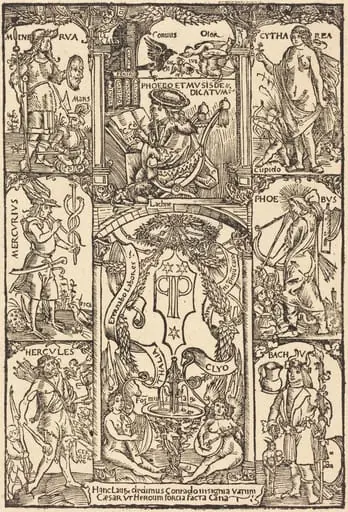
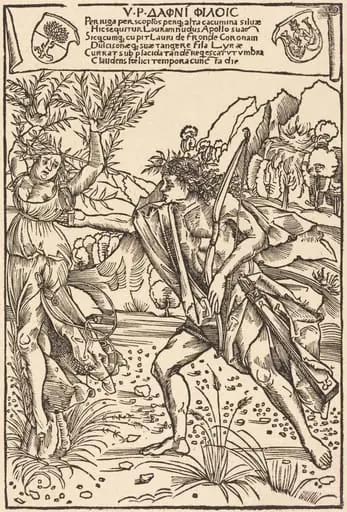
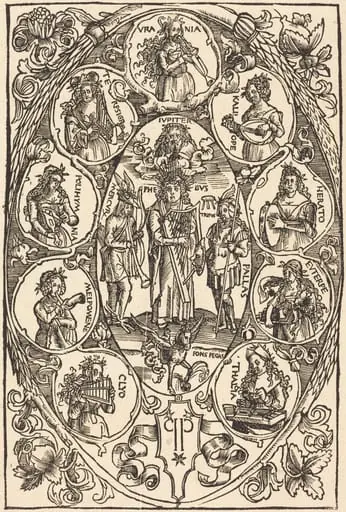
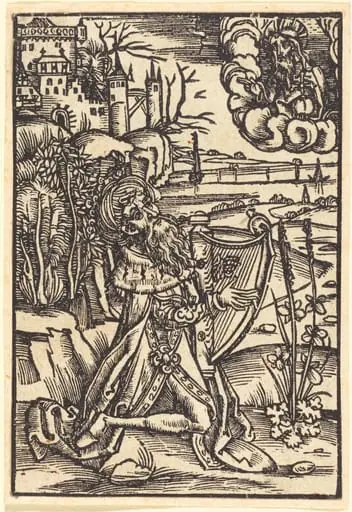
Apollo on Parnasus is an ink print by the Renaissance artist Hans Süss von Kulmbach. It dates from 1502 and is held in the collection of the National Gallery of Art.
About this work
Overview
Hans Süss von Kulmbach’s woodcut titled “Apollo on Parnasus,” executed in 1502, depicts the Greek god Apollo seated upon a rocky outcrop. The print presents a tranquil tableau in which the deity holds a lyre, surrounded by onlookers and a few animals, set against a gently rolling landscape of trees and hills.
Subject & Meaning
The composition centers on Apollo, the patron of music, poetry, and prophecy, emphasizing his role as a musician. Figures positioned to the left appear to listen attentively, suggesting a communal appreciation of his art, while the presence of animals on the right adds a pastoral element that reinforces the harmony between nature and the divine.
Technique & Style
Created as a woodcut, the image relies on carved lines and contrasts of black and white to convey form and depth. Süss von Kulmbach employs fine incising for the lyre and facial details, while broader cuts define the landscape, reflecting the early‑Renaissance interest in clear narrative illustration within the limits of print media.
History & Provenance
The work originates from the early 16th‑century German print workshop of Hans Süss von Kulmbach, a noted practitioner of the Northern Renaissance. Produced in 1502, the print circulated among collectors of mythological subjects, though specific ownership records prior to modern museum acquisition remain sparse.
Context
During the turn of the 16th century, Northern artists increasingly engaged with classical themes, integrating them into the prevailing Gothic visual language. This woodcut exemplifies that synthesis, pairing a classical deity with a compositional style familiar to contemporary German audiences.
Artist & collection