Artwork
Battle of Naked Men and Peasants
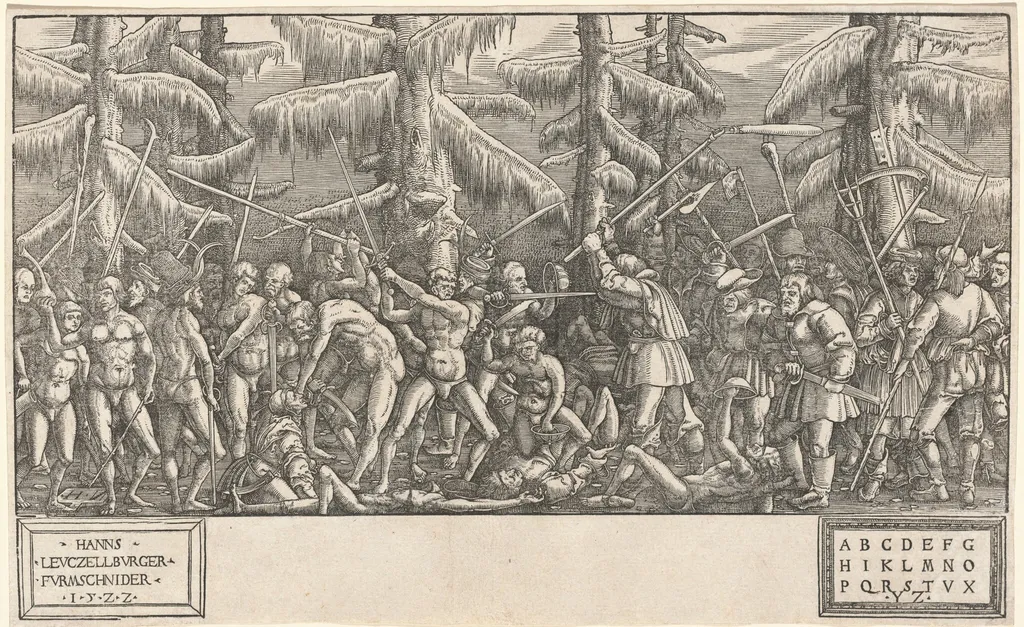
Battle of Naked Men and Peasants is an ink print by the Renaissance artist Hans Lützelburger. It dates from 1522 and is held in the collection of the National Gallery of Art.
About this work
Overview
Battle of Naked Men and Peasants is a 1522 woodcut on laid paper, executed by Hans Lützelburger, a renowned German blockcutter active in Augsburg. The work depicts a tumultuous combat scene between two contrasting groups.
Subject & Meaning
The print illustrates a chaotic battle in a forest setting, pitting armored, weapon-wielding figures against mostly naked opponents armed with primitive clubs and sticks. The contrast between the groups and the intense, cluttered composition may allude to social or moral themes, though the specific context or message remains unclear without further historical framing.
Technique & Style
Characterized by sharp lines and deep shadows, the woodcut showcases Lützelburger's mastery of the medium. The technique imparts a carved appearance to the image, with the armored figures visually dominant due to their taller depiction, contrasting with the more desperate posture of the naked group.
History & Provenance
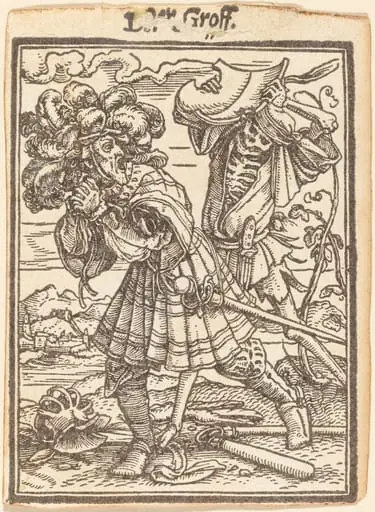
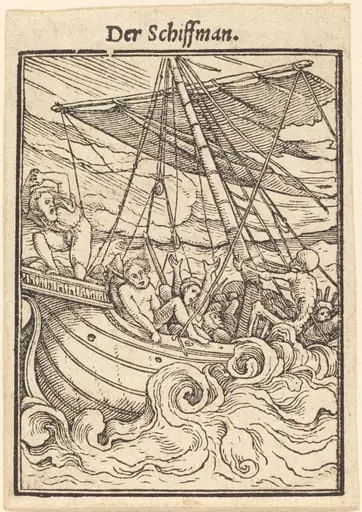
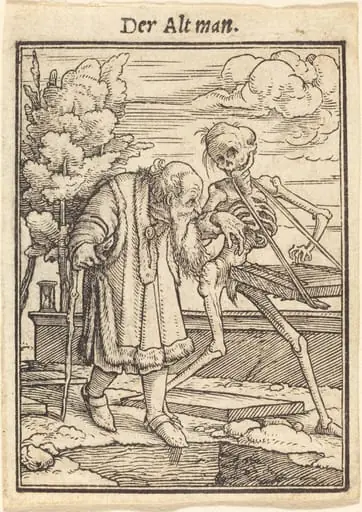
Created in 1522, the work is attributed to Lützelburger's period in Augsburg, likely designed by another artist since Lützelburger is noted for his block-cutting skill rather than design. Notably, Lützelburger is also recognized for his incomplete contribution to Hans Holbein the Younger's *Dance of Death* series.
Artist & collection

Artist
Hans Lützelburger (died June 1526), also known as Hans Franck, was a German blockcutter ("formschneider") for woodcuts, regarded as one of the finest of his day.

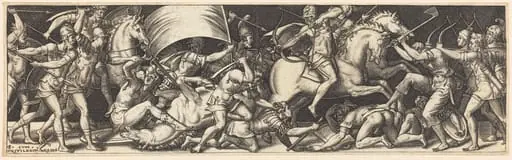 Battle of Horsemen and Foot Soldiers
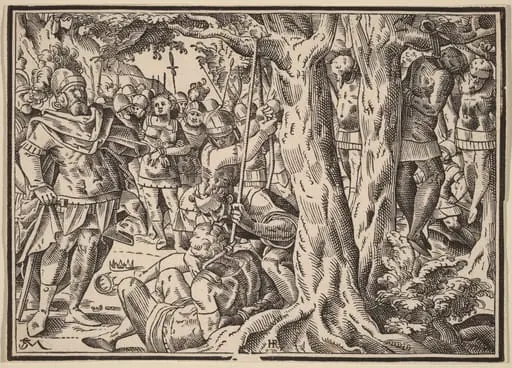 Christ Tells His Disciples of the Last Judgment
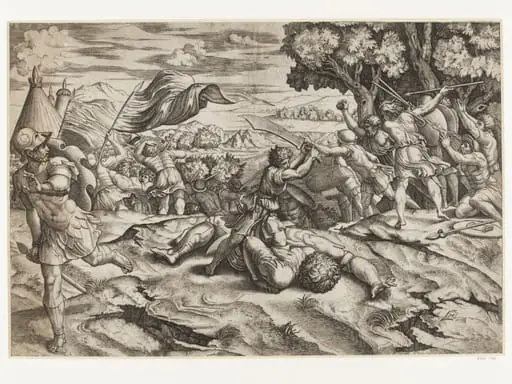 David cutting off the head of Goliath
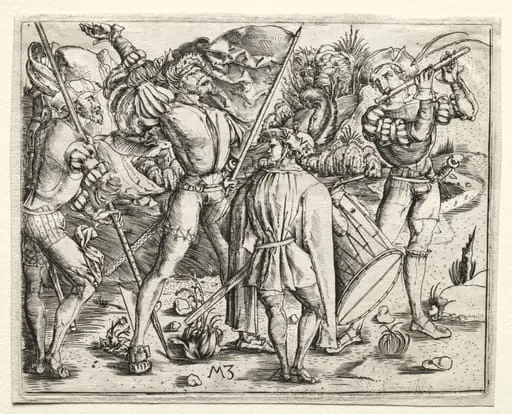 Four Soldiers and Military Band
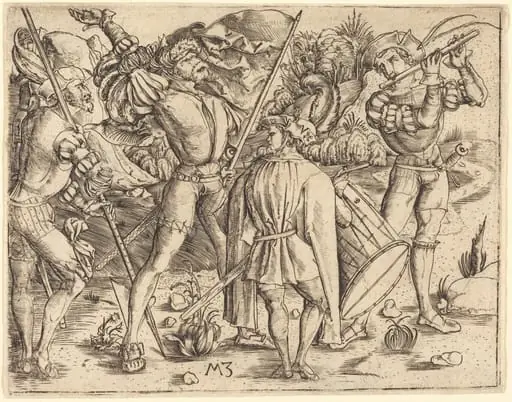 Four Soldiers
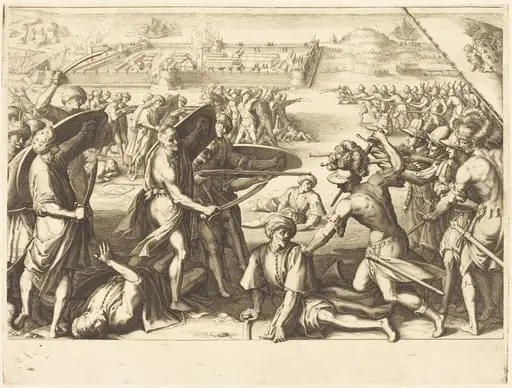 Assault on the Outer Forts of Bone
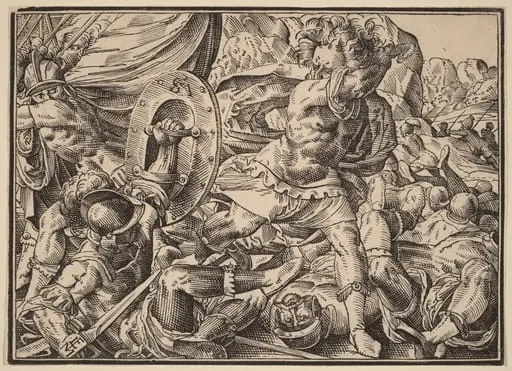 Christ Tells His Disciples of the Last Judgment
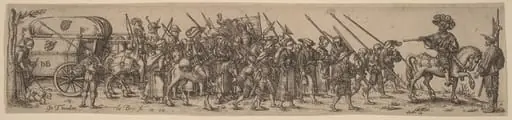 The Baggage Train with the Sergeant-Major
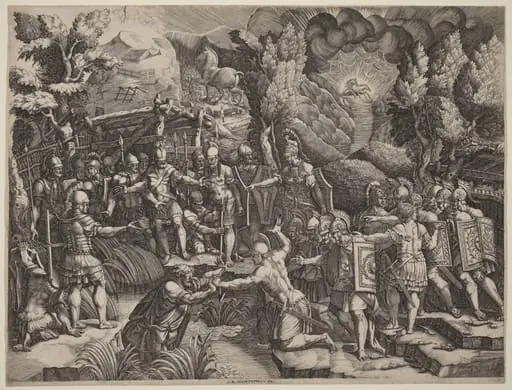 Sinon Deceiving the Trojans
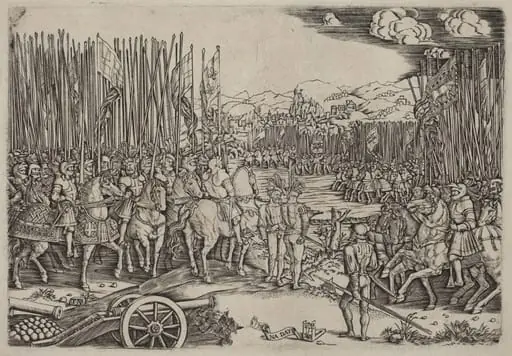 The Two Armies at the Battle of Ravenna