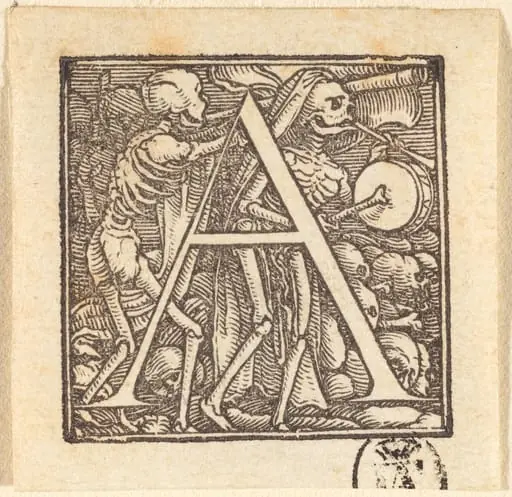
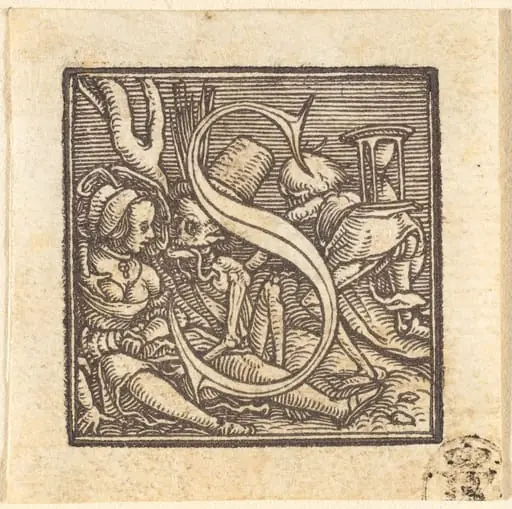
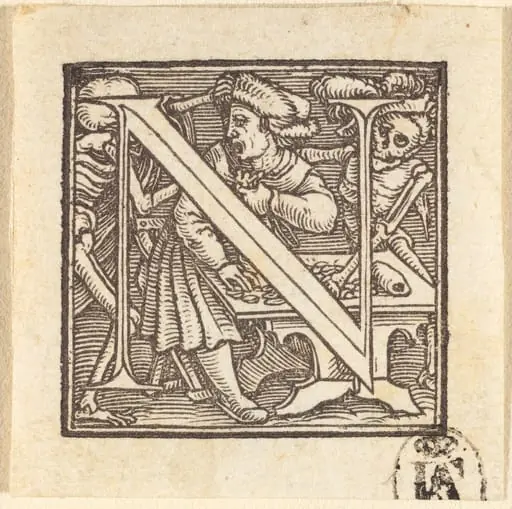
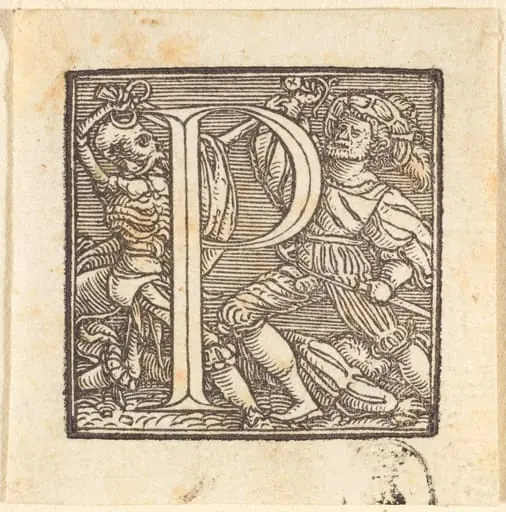
Artwork
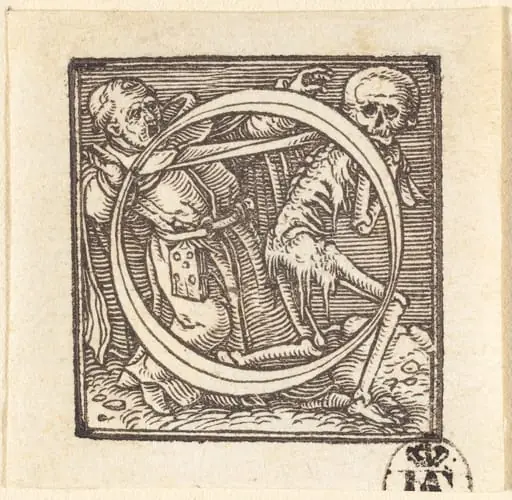
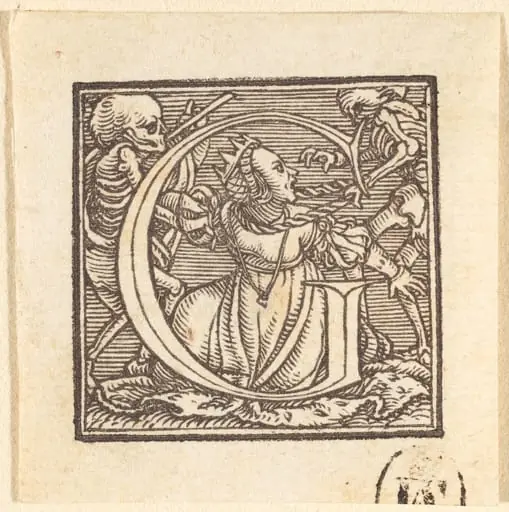
Letter C
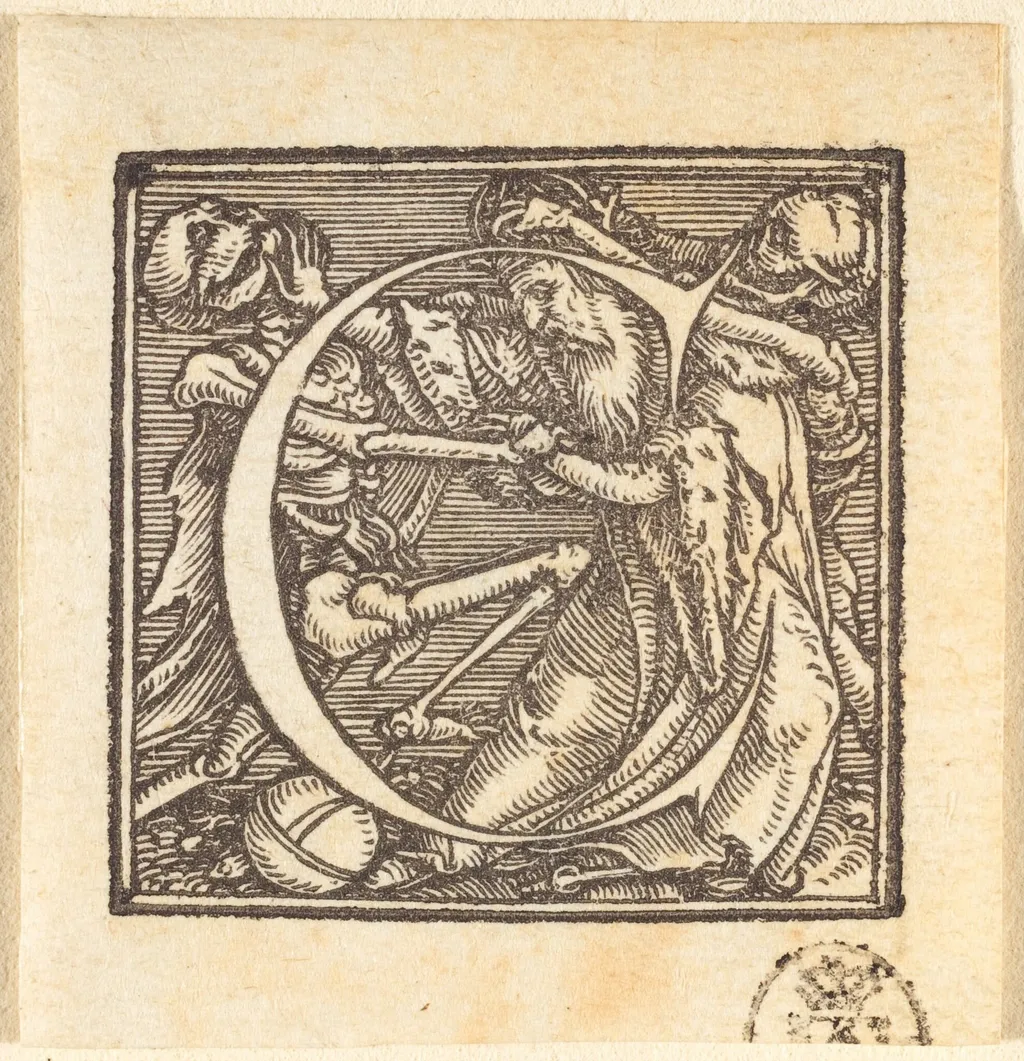
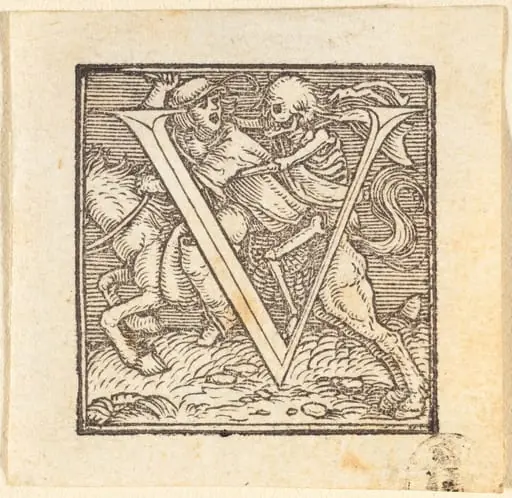
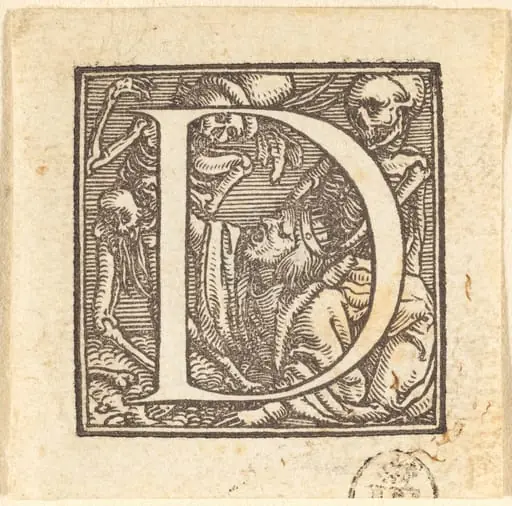
Letter C is an ink print by the Renaissance artist Hans Lützelburger. It dates from 1523 and is held in the collection of the National Gallery of Art.
About this work
Overview
Letter C is a black‑and‑white woodcut created circa 1523 by Hans Lützelburger, a German blockcutter who worked in Augsburg from the early 1510s. The print presents a dense arrangement of figures within a large circular space, flanked by two smaller figures outside the circle who gaze inward. The background texture resembles a rough stone wall, giving the composition a tactile quality.
Subject & Meaning
The central motif consists of interlaced human forms, some clasping hands or objects, suggesting a communal or ritualistic gathering. The title’s reference to a letter may indicate an allegorical or symbolic intent, a practice common in early sixteenth‑century print culture where letters often signified abstract ideas rather than literal subjects.
Technique & Style
Executed as a woodcut, the image relies on crisp, linear carving and simplified geometric shapes to convey complex interaction within a limited visual field. Lützelburger’s skill in rendering fine detail through incised lines allows the crowded scene to remain legible despite the medium’s inherent constraints.
History & Provenance
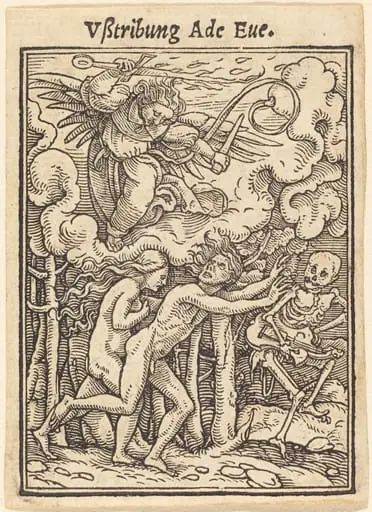
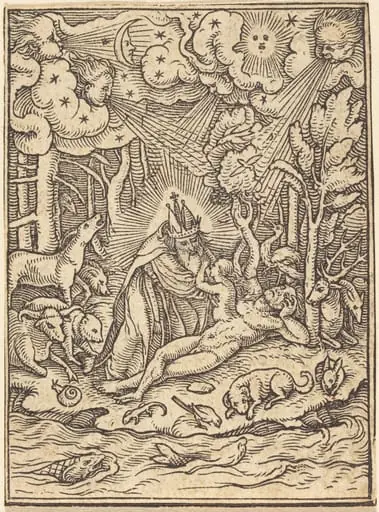
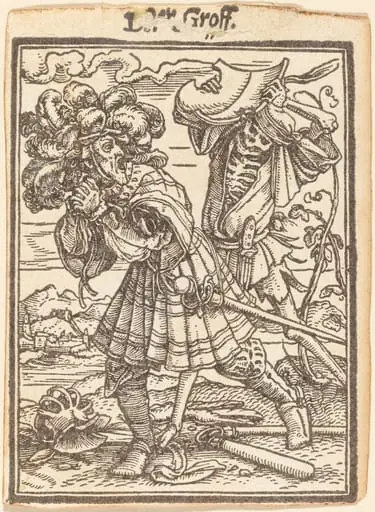
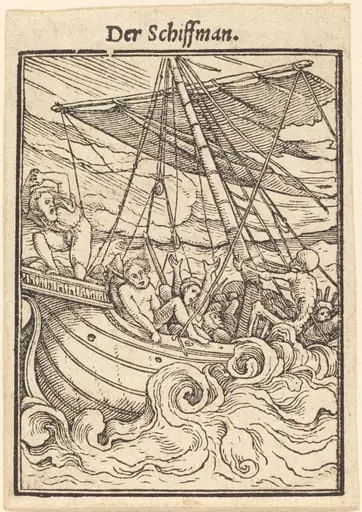
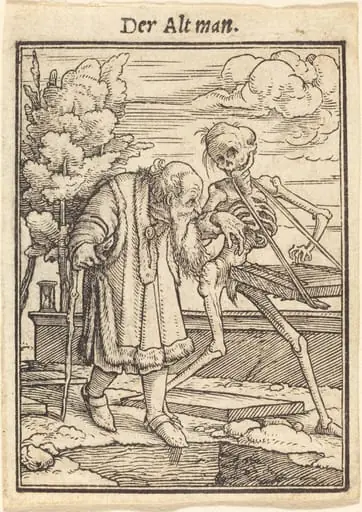
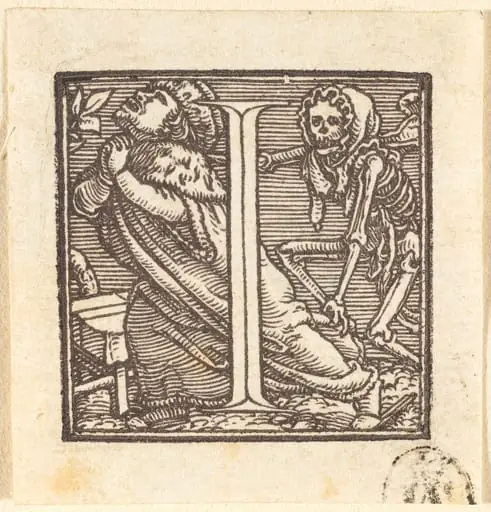
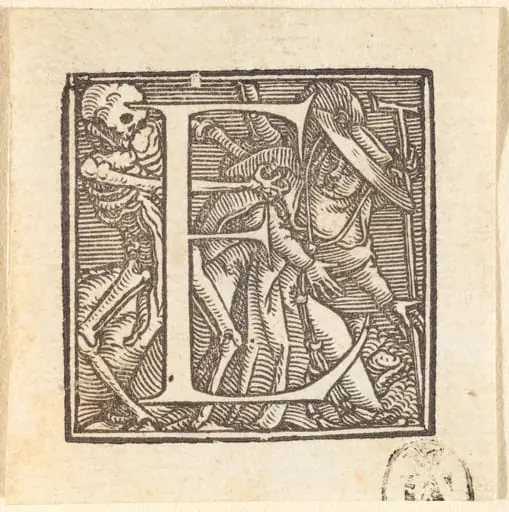
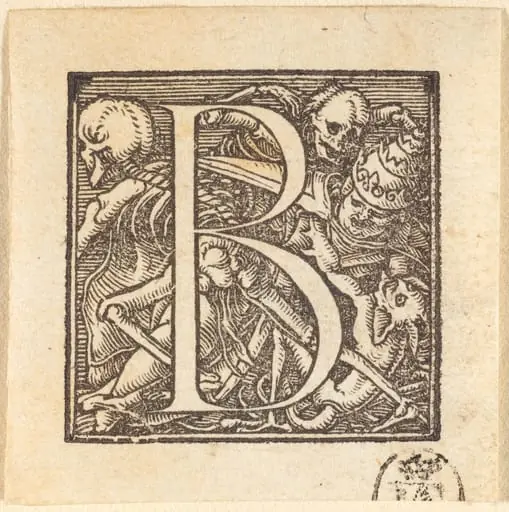
Hans Lützelburger was primarily a cutter rather than a designer, collaborating with artists such as Hans Holbein the Younger. He is most renowned for cutting the woodblocks of Holbein’s Dance of Death series, a project he left incomplete at his death in 1526. Letter C reflects his mature period of craftsmanship before his untimely demise.
Context
The print emerges from the vibrant print‑making environment of early sixteenth‑century Augsburg, a hub for the production of religious and moral imagery. Woodcuts like Letter C were widely circulated, serving both decorative and didactic purposes within a largely illiterate audience.
Artist & collection

Artist
Hans Lützelburger (died June 1526), also known as Hans Franck, was a German blockcutter ("formschneider") for woodcuts, regarded as one of the finest of his day.