Artwork
Letter P
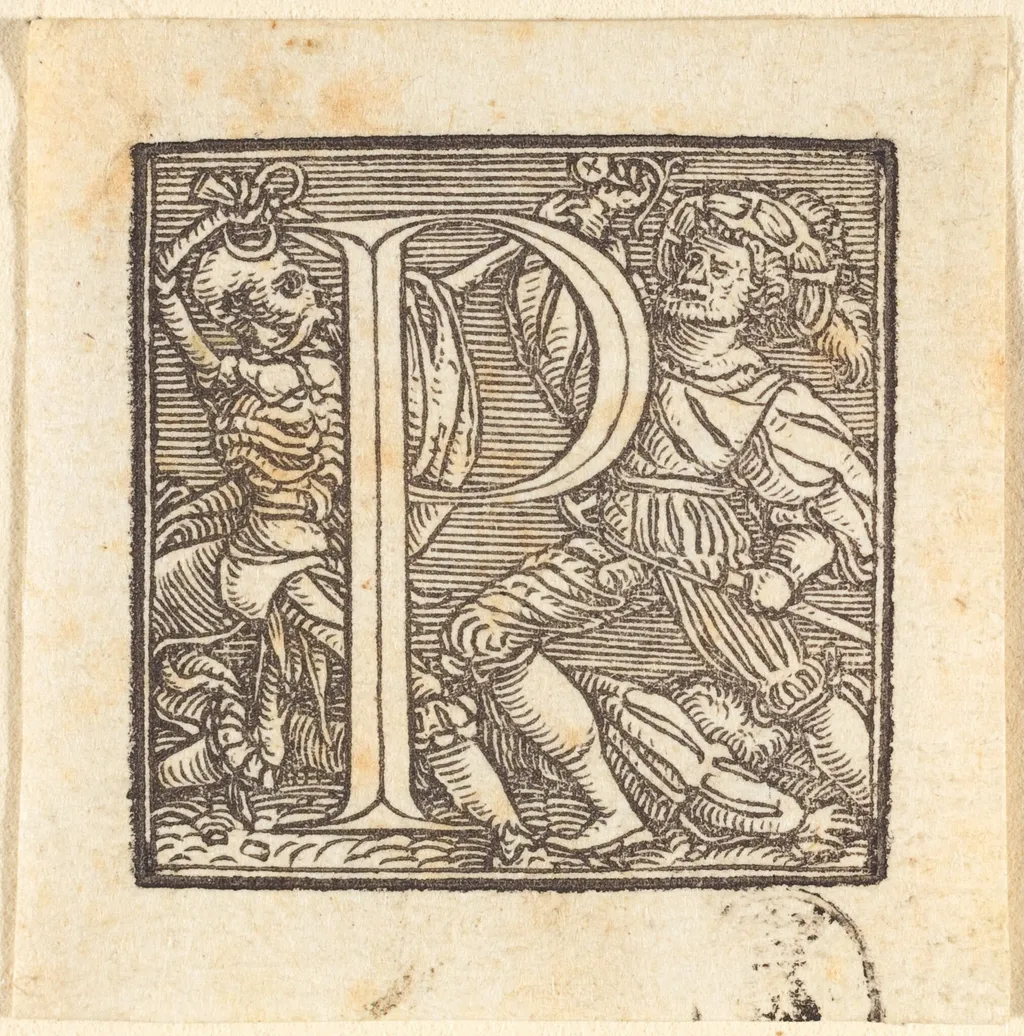
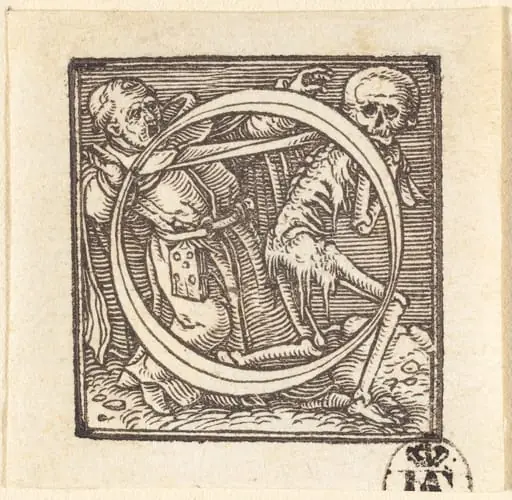
Letter P is an ink print by the Renaissance artist Hans Lützelburger. It dates from 1523 and is held in the collection of the National Gallery of Art.
About this work
Overview
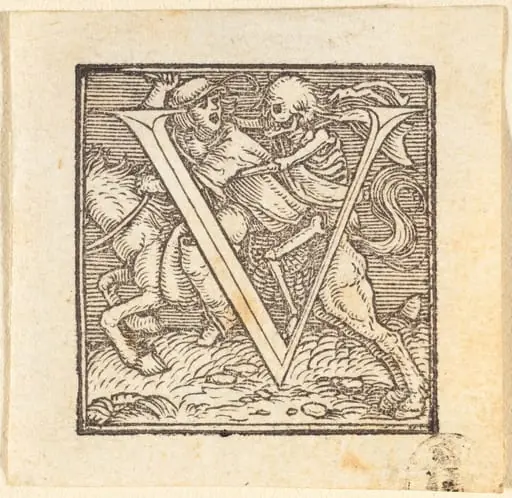
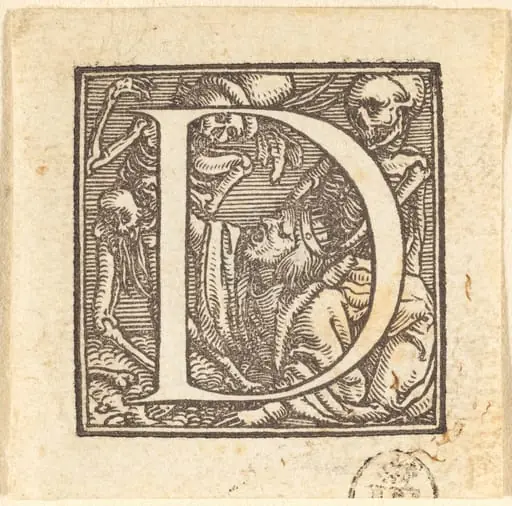
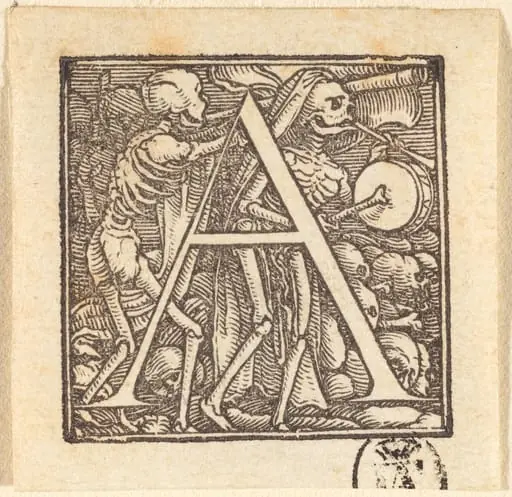
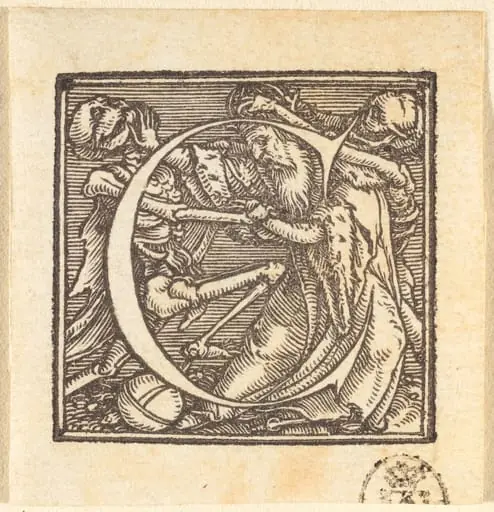
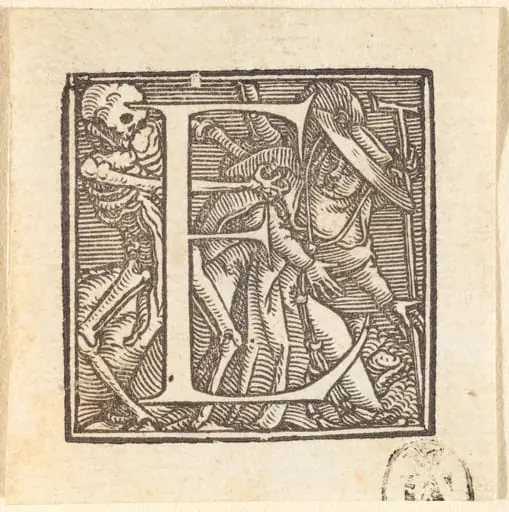
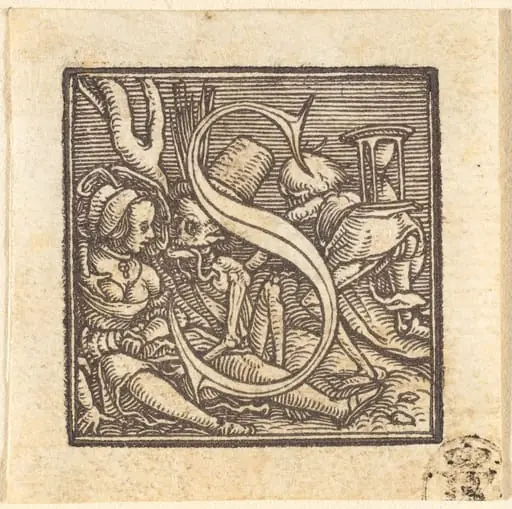
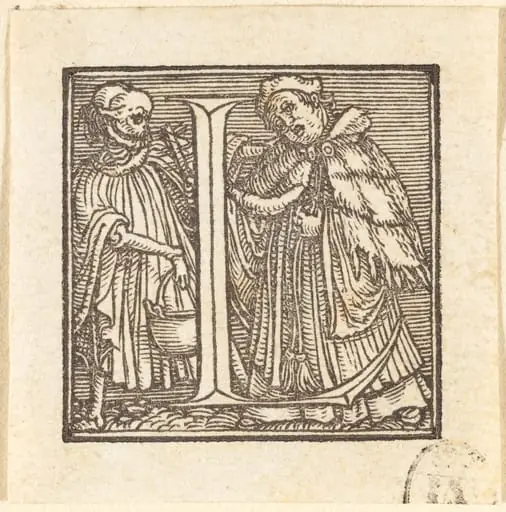
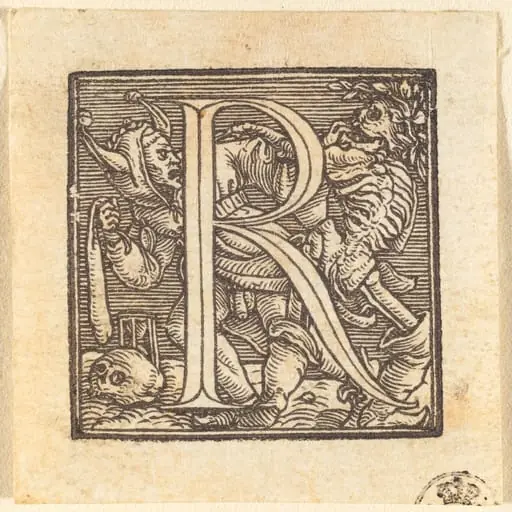
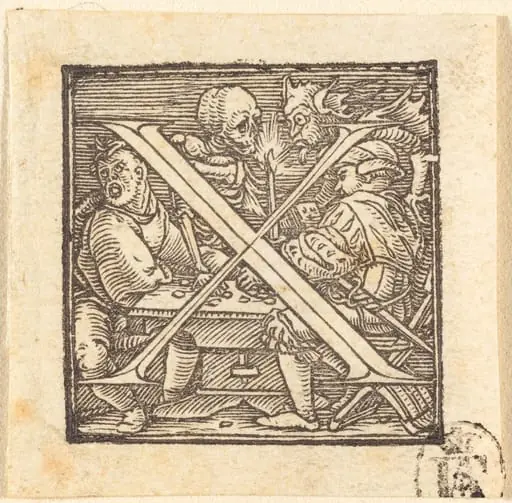
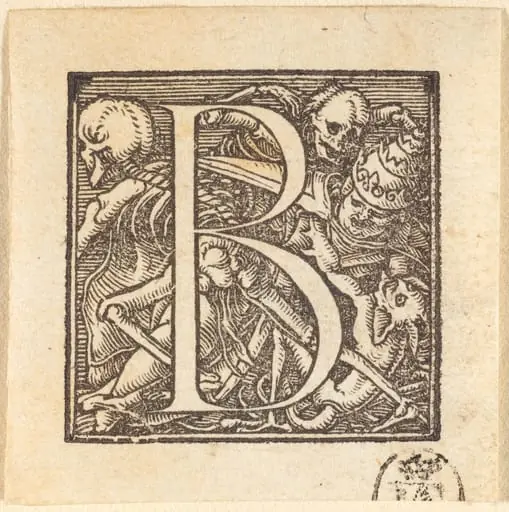
Around 1523 the German printmaker Hans Lützelburger, also known as Hans Franck, created a woodcut depicting the capital letter P. Executed as a single‑block print, the image consists of bold, black strokes that define the letter’s form, with occasional curls and thickened sections, set against an unadorned white background.
Technique & Style
The work exemplifies early‑16th‑century woodcut practice: Lützelburger incised the design into a wooden block, applied ink to the raised surfaces, and pressed paper onto it to transfer the image. The stark contrast between the dense black lines and the blank field highlights the cutter’s precise control of line weight and curvature.
Context
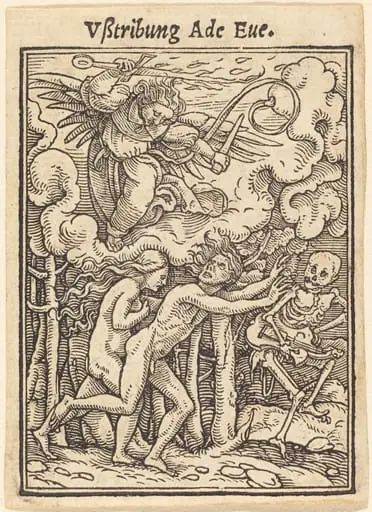
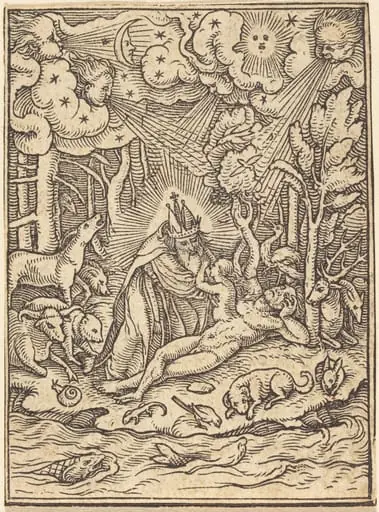
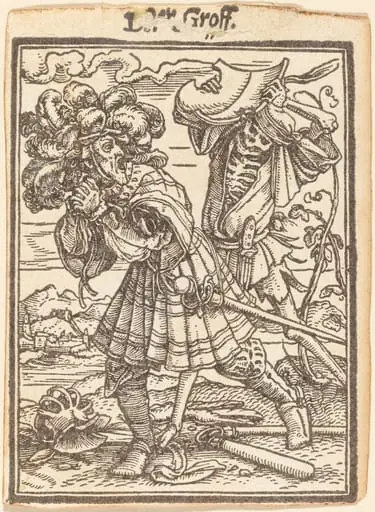
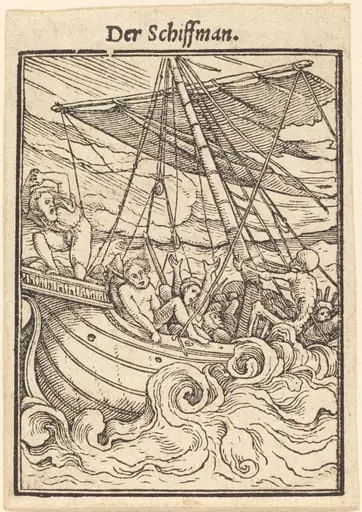
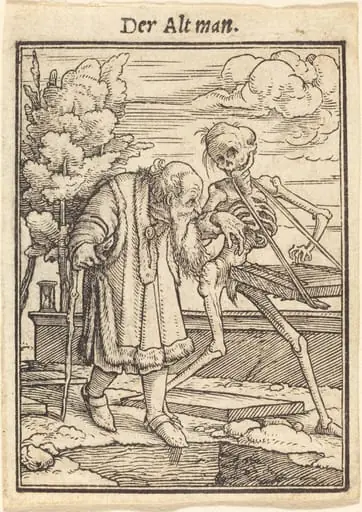
Lützelburger was a specialist blockcutter active in Augsburg from roughly 1516. He earned a reputation for meticulous execution, contributing his skill to notable projects such as the small‑scale Dance of Death series designed by Hans Holbein the Younger. His career was cut short by his death in 1526, leaving the Holbein commission unfinished.
Artist & collection

Artist
Hans Lützelburger (died June 1526), also known as Hans Franck, was a German blockcutter ("formschneider") for woodcuts, regarded as one of the finest of his day.