Artwork
Letter M
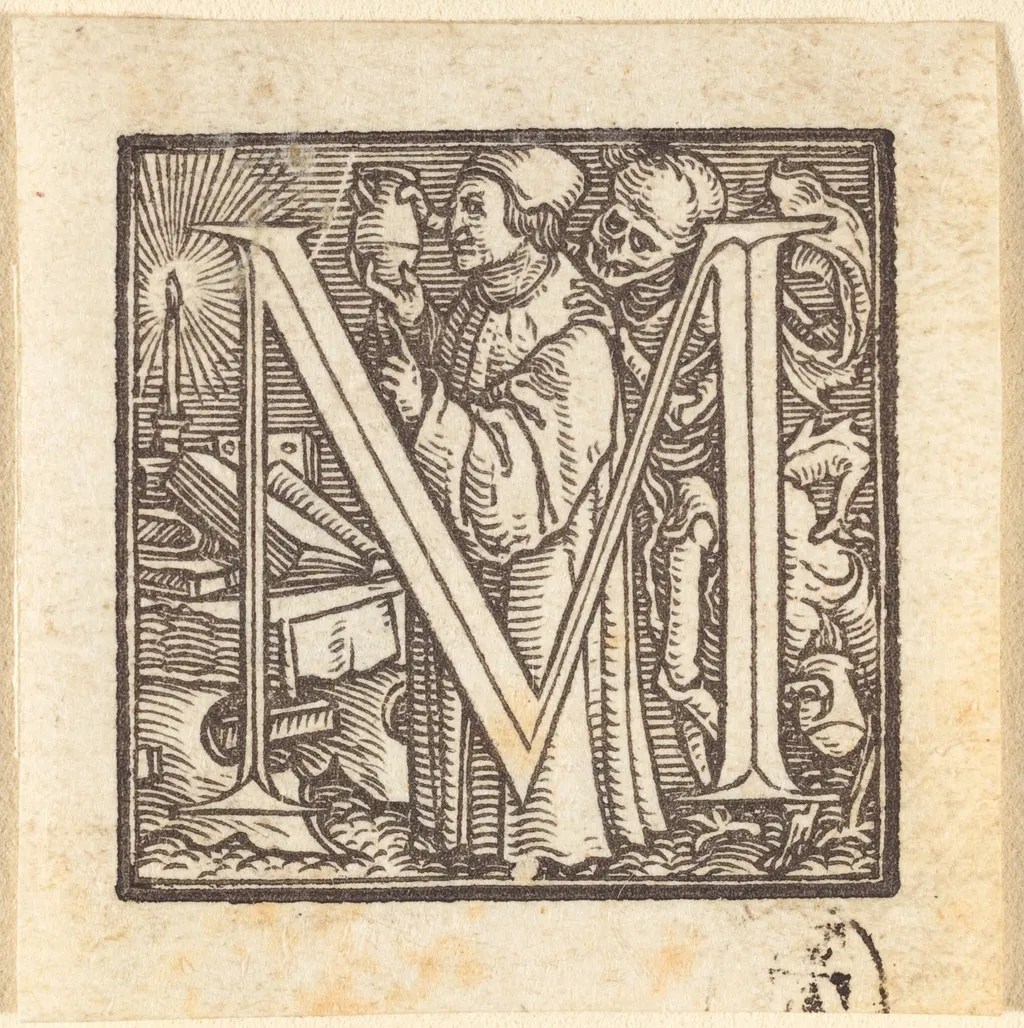
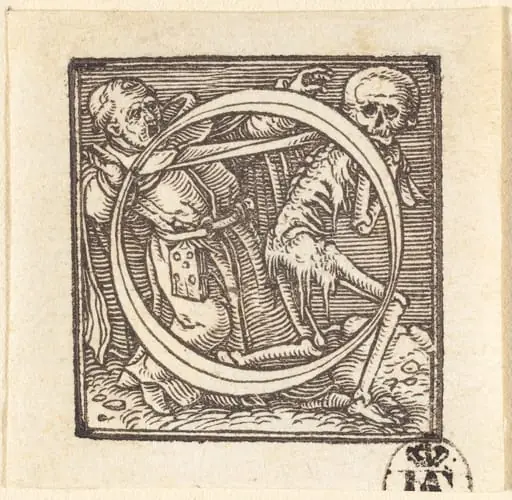
Letter M is an ink print by the Renaissance artist Hans Lützelburger. It dates from 1523 and is held in the collection of the National Gallery of Art.
About this work
Overview
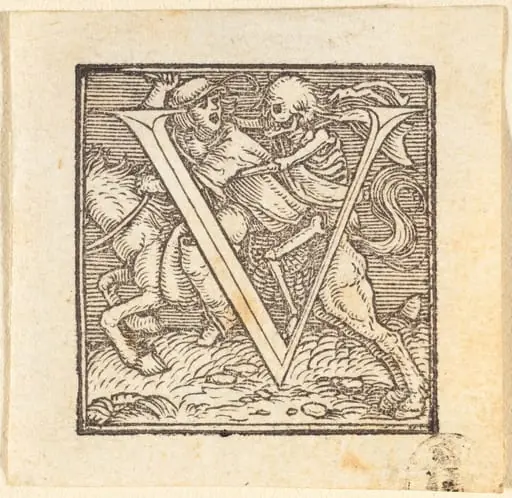
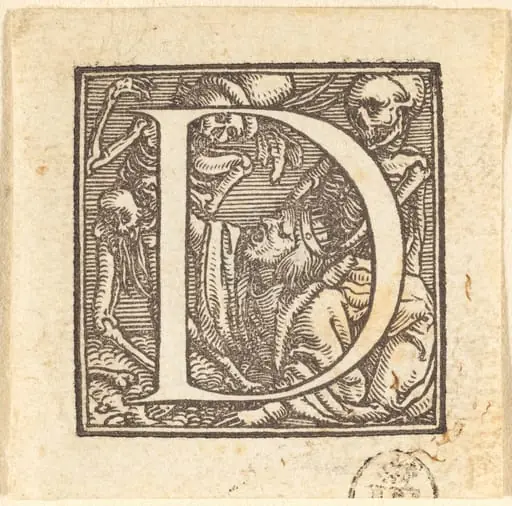
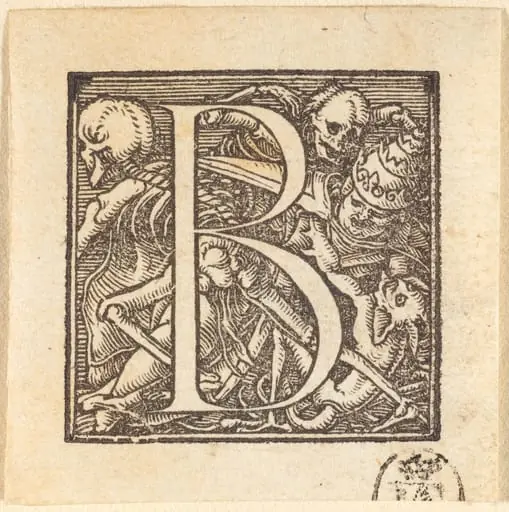
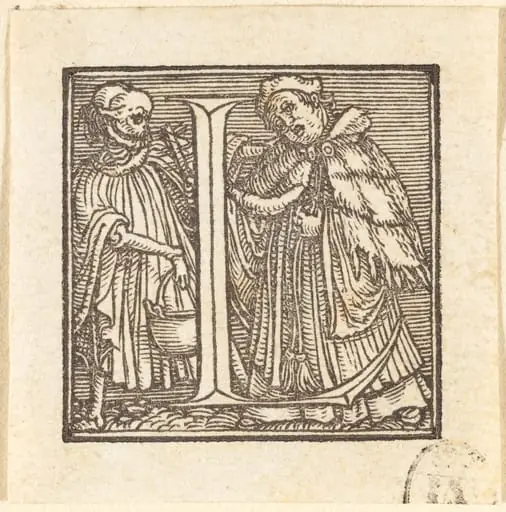
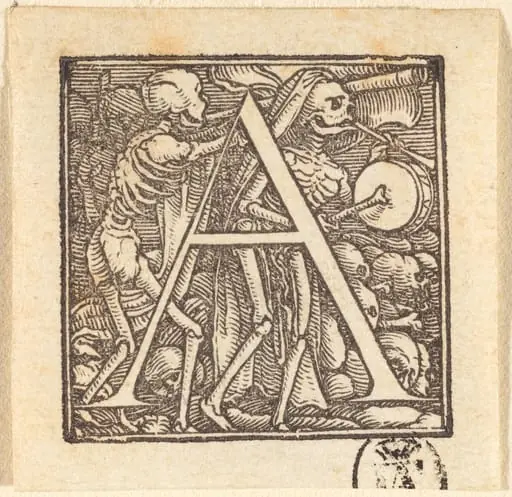
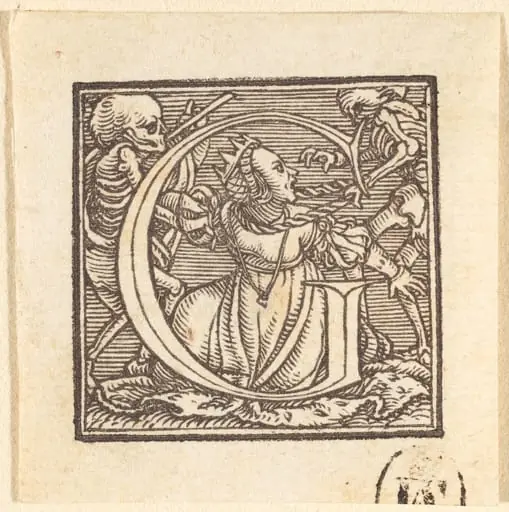
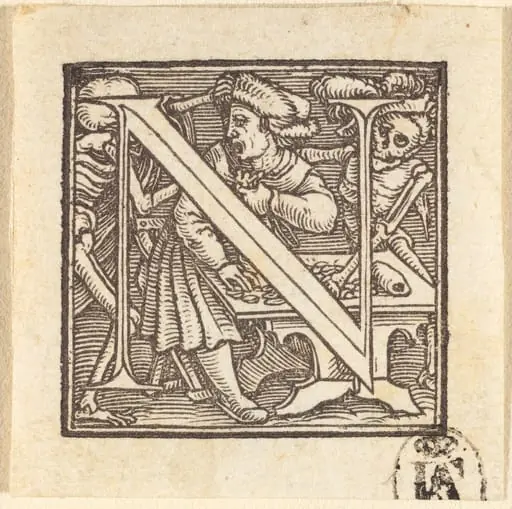
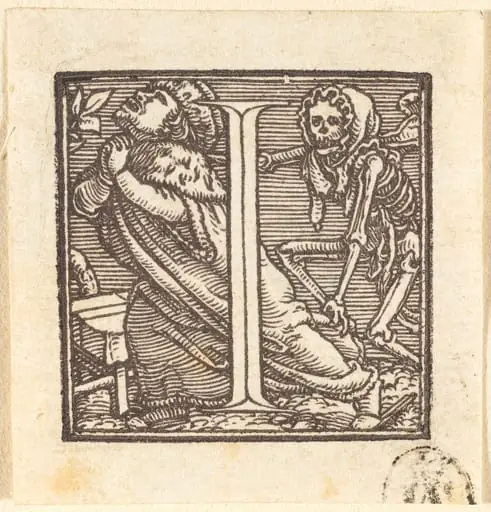
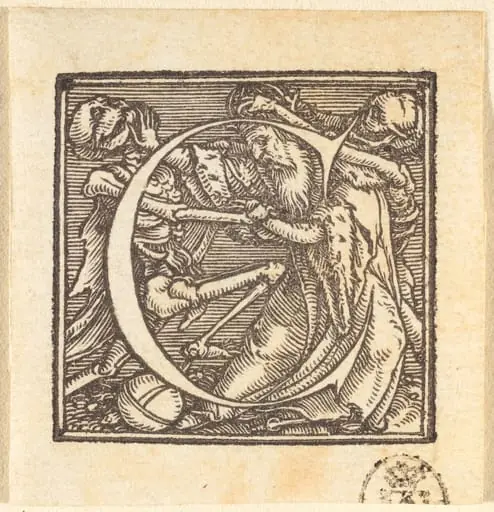
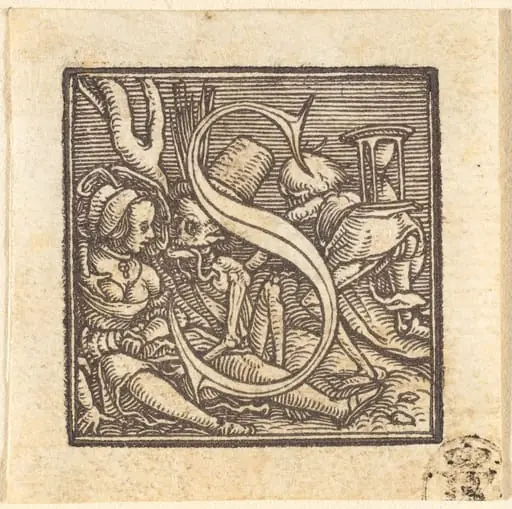
Created around 1523, the woodcut entitled *Letter M* presents a large, stylized letter filled with a procession of macabre figures. The composition combines a crowned, radiating top with interior scenes of skeletal beings and peripheral vignettes, forming a dense, symbolic tableau typical of early‑16th‑century German printmaking.
Subject & Meaning
The central motif features three skeletal figures arranged in a line, each bearing a staff and dressed in varied headgear—a hood, a hat, and a ghost‑like mask—suggesting a procession or allegorical warning. Flanking the letter, a seated figure on a stool and a winged creature add narrative fragments that reinforce the work’s morbid, didactic tone, common in contemporary *Danse Macabre* imagery.
Technique & Style
Executed by the Augsburg blockcutter Hans Lützelburger, the print demonstrates the precise, high‑relief carving for which he was renowned. The intricate line work and careful shading reveal a mastery of woodcut technique, allowing fine detail within the dense interior of the letter while maintaining bold outlines for the outer form.
History & Provenance
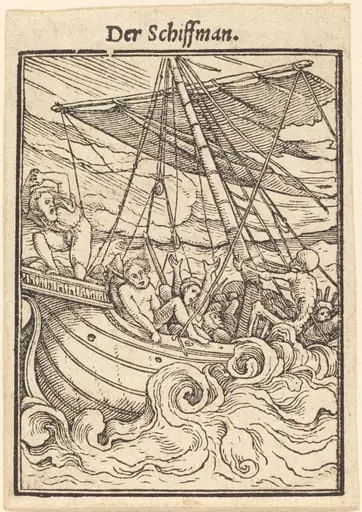
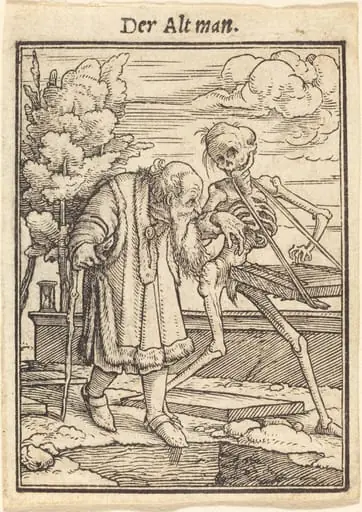
Lützelburger, active in Augsburg from about 1516, signed the reverse of his blocks, a practice that aids identification. He is best known for cutting 41 of the *Dance of Death* prints designed by Hans Holbein the Younger, a project left incomplete at his death in 1526. *Letter M* thus belongs to the latter part of his career, produced under the supervision of Jost de Negker.
Artist & collection

Artist
Hans Lützelburger (died June 1526), also known as Hans Franck, was a German blockcutter ("formschneider") for woodcuts, regarded as one of the finest of his day.