Artwork
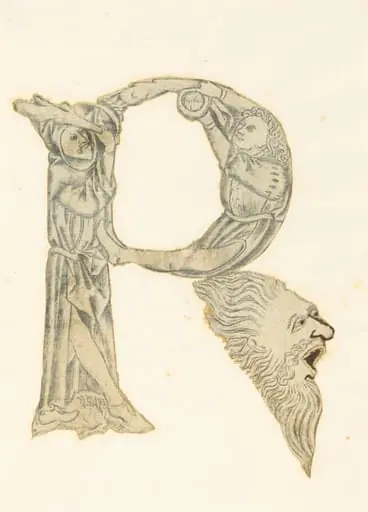
Letter R
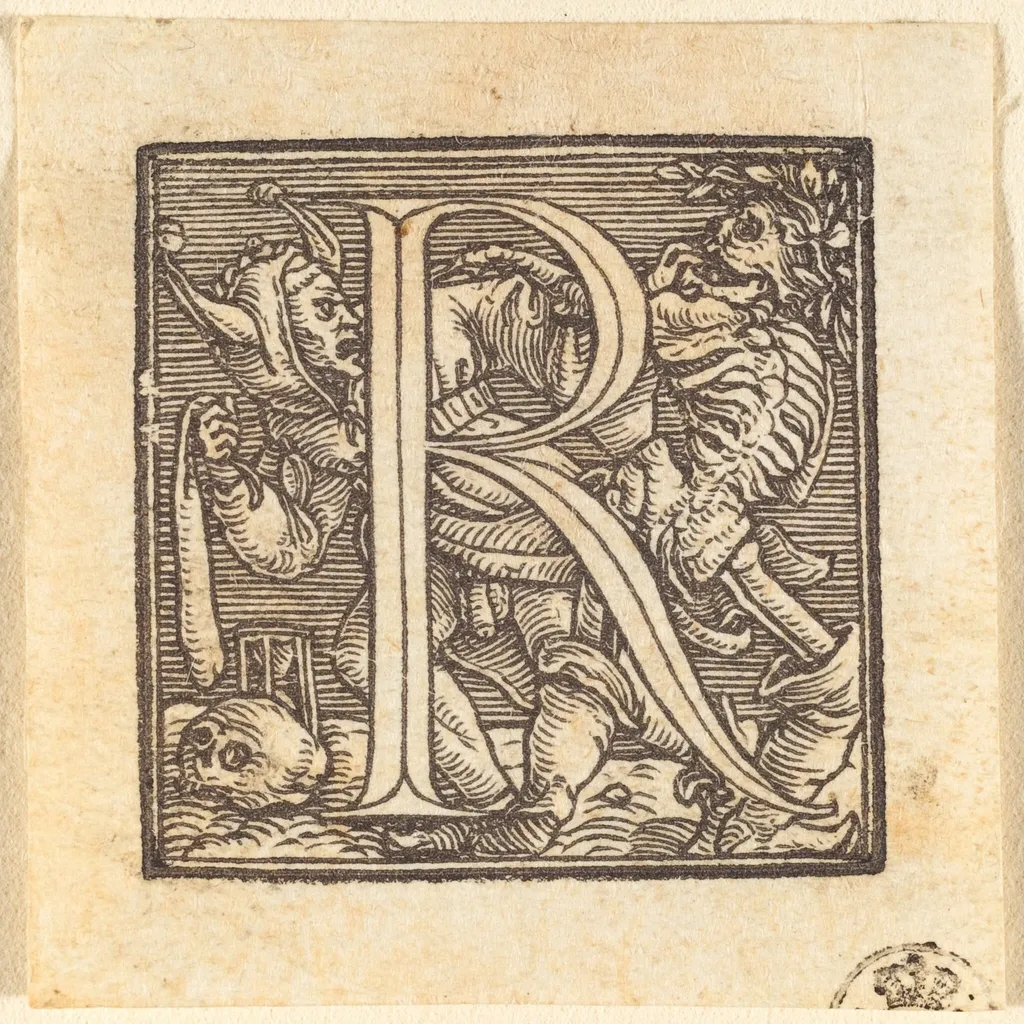
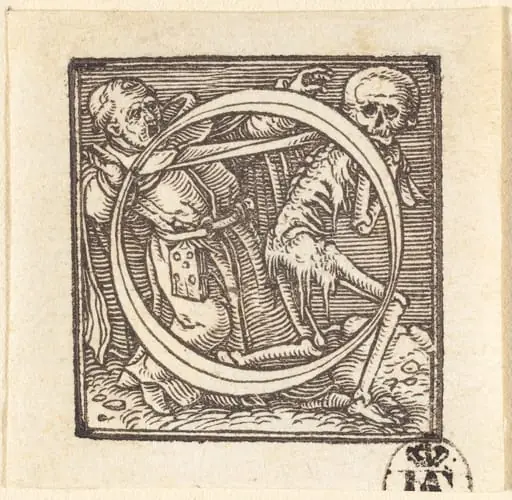
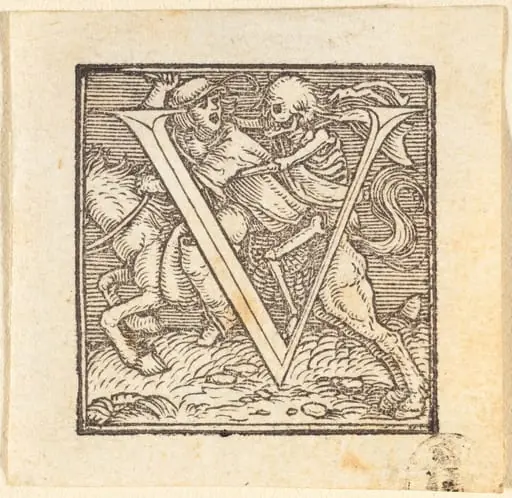
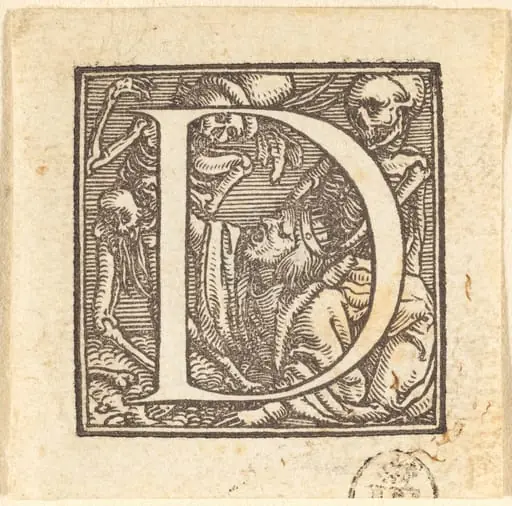
Letter R is an ink print by the Renaissance artist Hans Lützelburger. It dates from 1523 and is held in the collection of the National Gallery of Art.
About this work
Overview
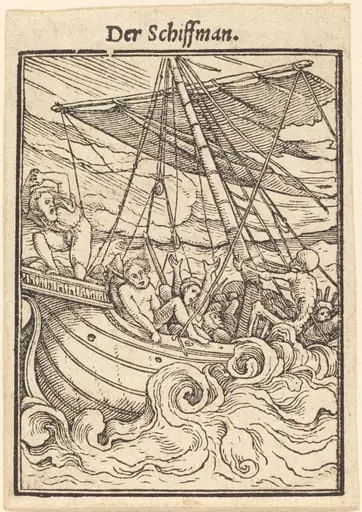
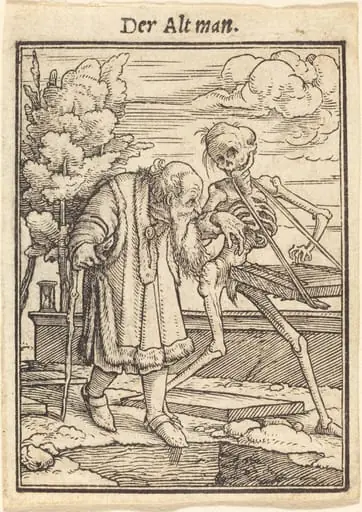
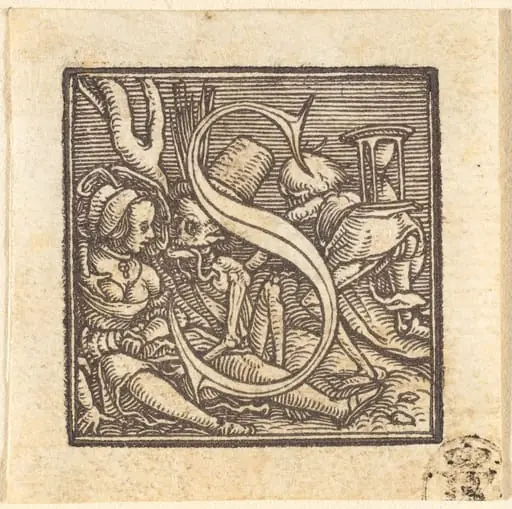
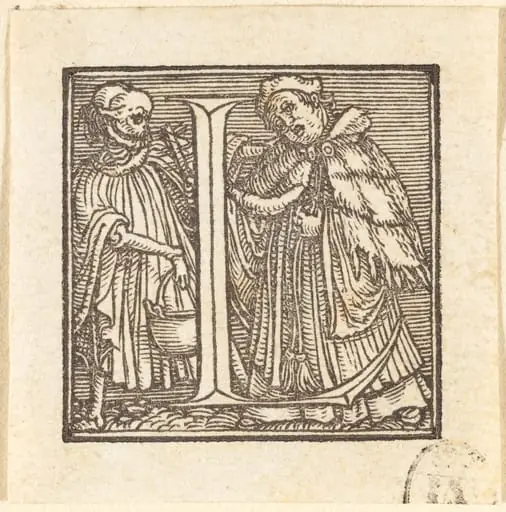
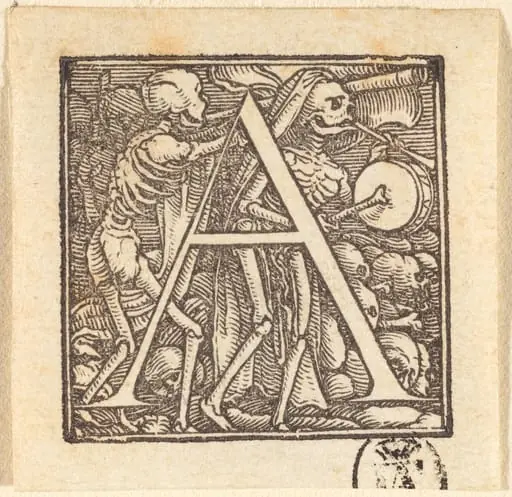
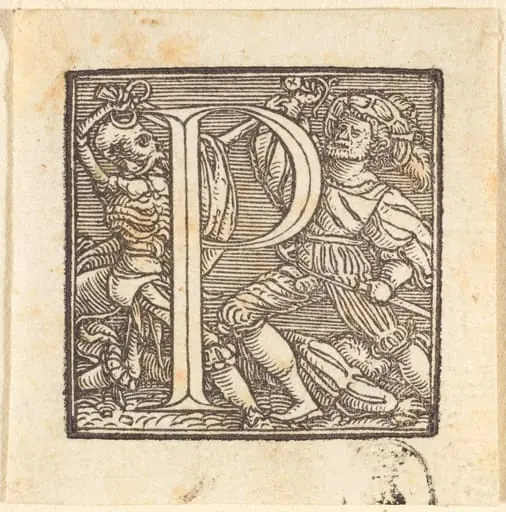
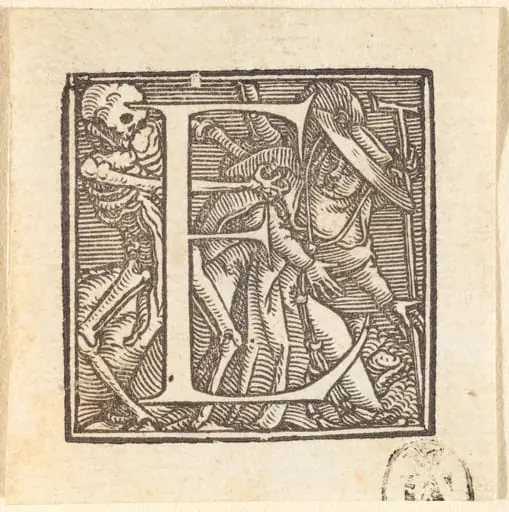
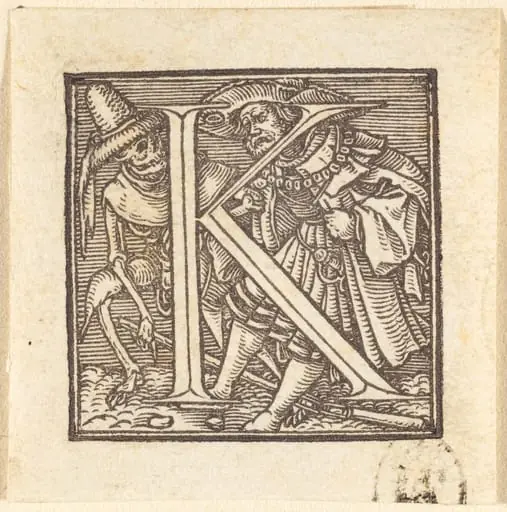
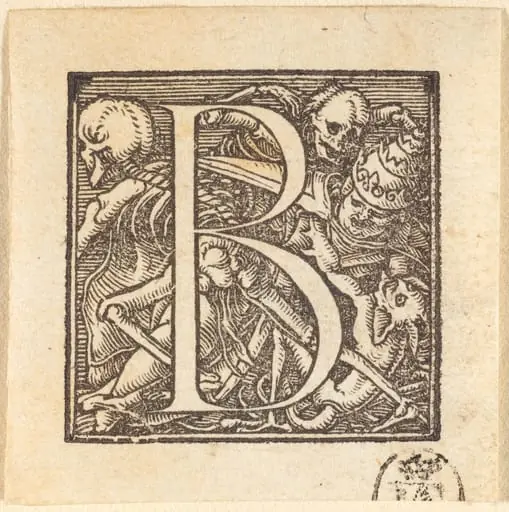
Created circa 1523, *Letter R* is a small woodcut block produced by the German cutter Hans Lützelburger. It forms part of the larger *Dance of Death* series that was designed by Hans Holbein the Younger, though Lützelburger’s role was limited to carving the matrix rather than conceiving the imagery.
Subject & Meaning
The image consists of a single capital “R” rendered in an elaborate Gothic typeface. The letter’s strokes are embellished with fine internal lines that suggest the grain of wood, while the negative spaces are filled with miniature botanical motifs such as leaves and flowers, turning a functional character into a decorative element.
Technique & Style
Lützelburger employed traditional woodcut methods, incising the design into a block of wood with a knife and gouge. The surviving piece displays clear tool marks, evidencing the hand‑cut nature of the work. The intricate line work and dense ornamentation reflect the high level of skill expected of a master blockcutter in early sixteenth‑century Augsburg.
History & Provenance
Active in Augsburg from about 1516, Lützelburger worked initially under the publisher Jost de Negker. He was later commissioned to cut the 41 blocks for Holbein’s *Dance of Death* series, a project that remained incomplete at Lützelburger’s death in 1526. The *Letter R* block survived as part of that series and is now held in museum collections.
Context
In the early 1500s, printers often used carved wood blocks as movable type for decorative initials and headings. The *Letter R* exemplifies this practice, serving both as a typographic element for early printing presses and as a work of art in its own right, bridging the worlds of book production and visual culture.
Artist & collection

Artist
Hans Lützelburger (died June 1526), also known as Hans Franck, was a German blockcutter ("formschneider") for woodcuts, regarded as one of the finest of his day.