Artwork
Letter X
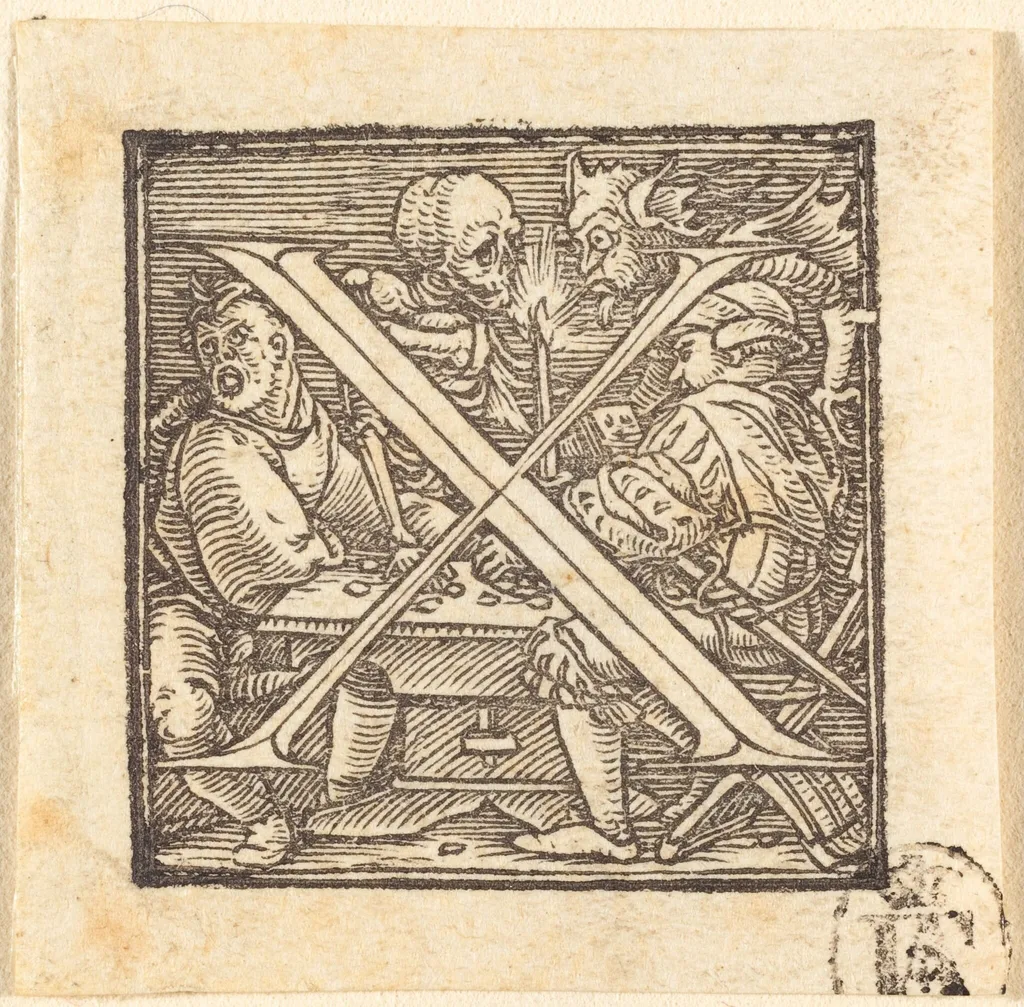
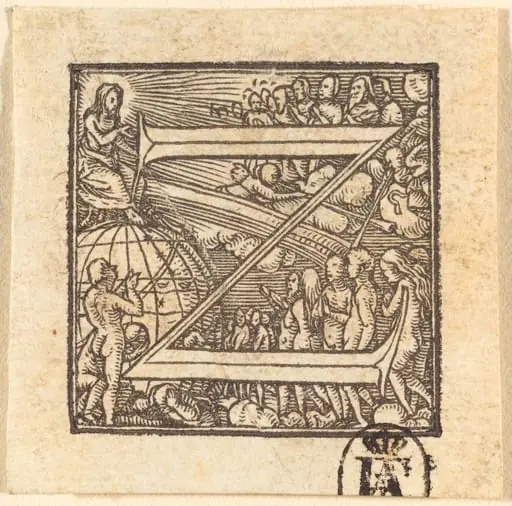
Letter X is an ink print by the Renaissance artist Hans Lützelburger. It dates from 1523 and is held in the collection of the National Gallery of Art.
About this work
Overview
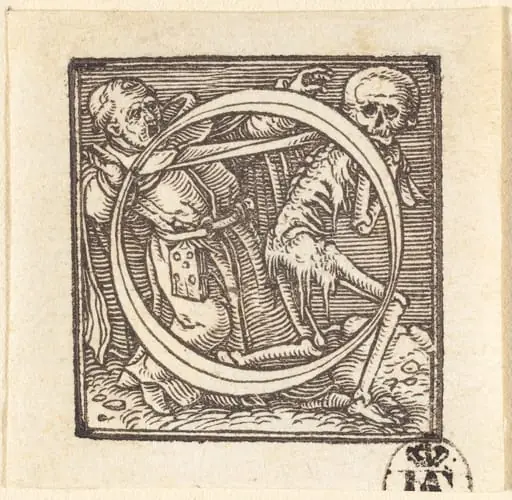
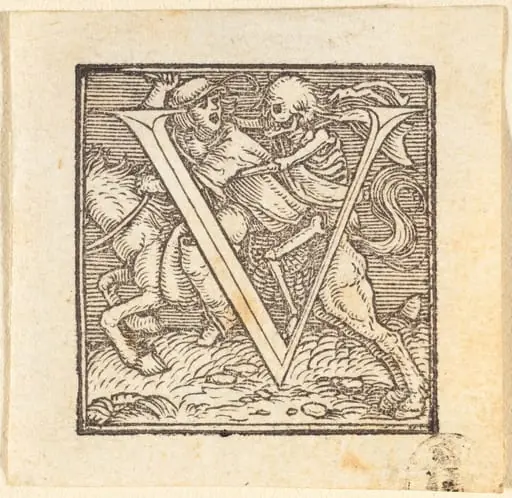
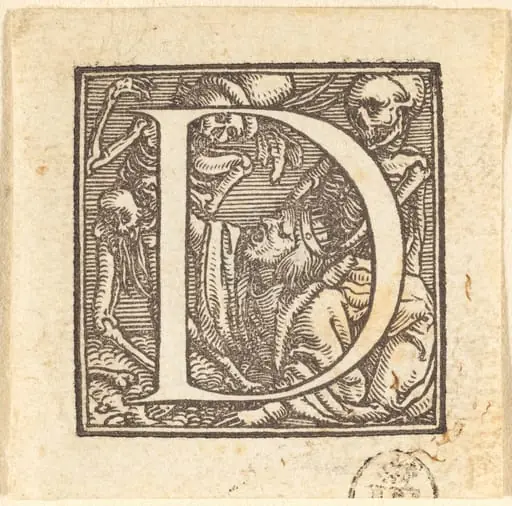
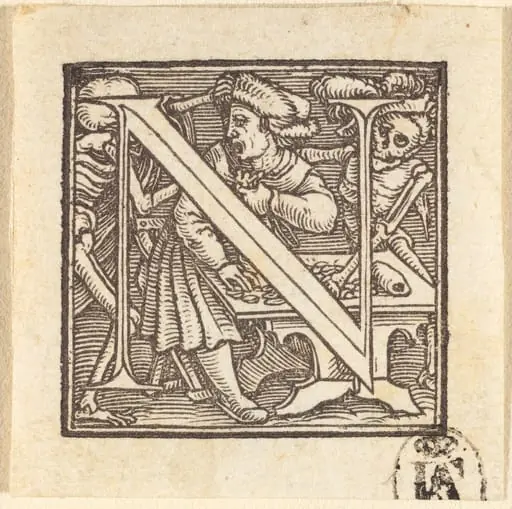
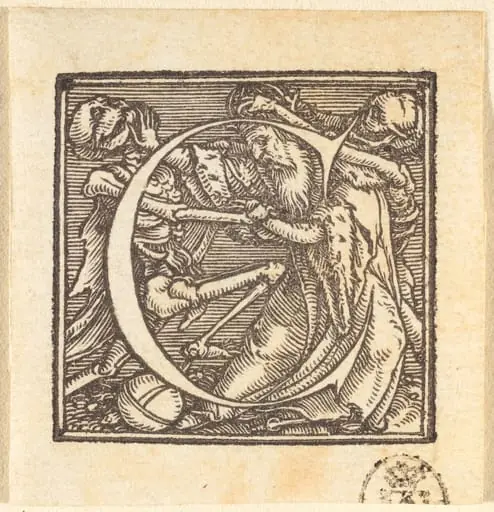
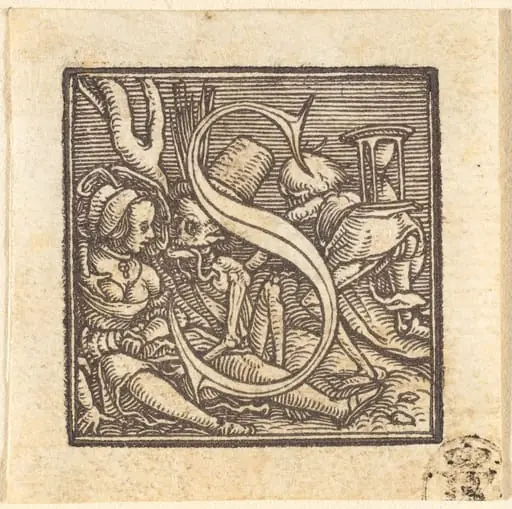
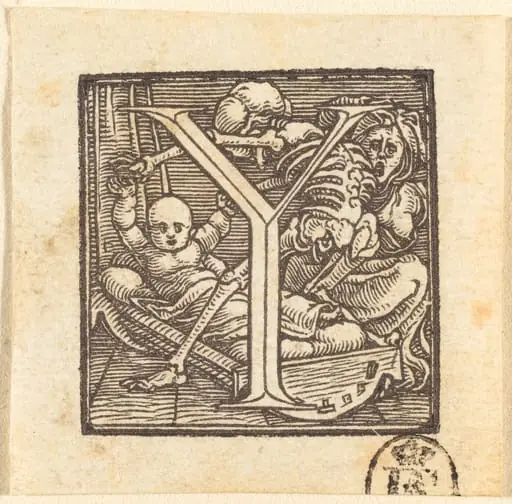
The print titled *Letter X* is a small woodcut executed around 1523 by Hans Lützelburger, a German blockcutter based in Augsburg. It depicts the alphabetic character X surrounded by a quartet of figures—two skeletal and two human—arranged in a vertical composition that juxtaposes the living with the dead.
Subject & Meaning
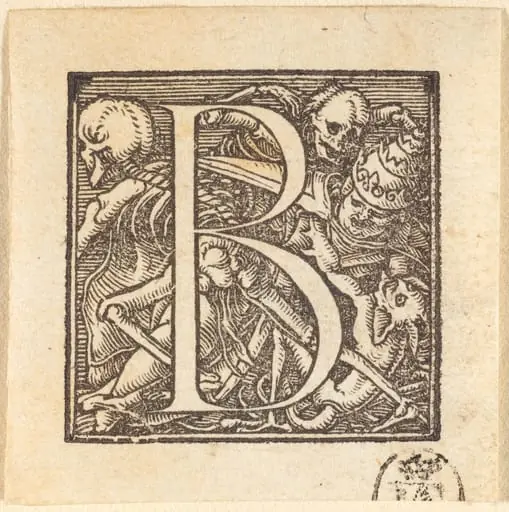
At the top of the image, two skeletons confront each other, one brandishing a staff and the other a sword, suggesting a martial or symbolic struggle. Below them, a seated and a standing man watch the macabre scene, creating a narrative tension between observation and participation that reflects the era’s preoccupation with mortality.
Technique & Style
Lützelburger’s reputation for precise, refined cutting is evident in the delicate line work and clear contrasts of the woodcut. The crisp delineation of the figures and the balanced arrangement of negative space demonstrate the high level of craftsmanship typical of early 16th‑century German printmaking.
History & Provenance
The print was produced under the direction of Jost de Negker, a prominent publisher and workshop manager in Augsburg. Lützelburger, who later contributed to Hans Holbein the Younger’s *Dance of Death* series, died in 1526, making *Letter X* one of his later independent works.
Context
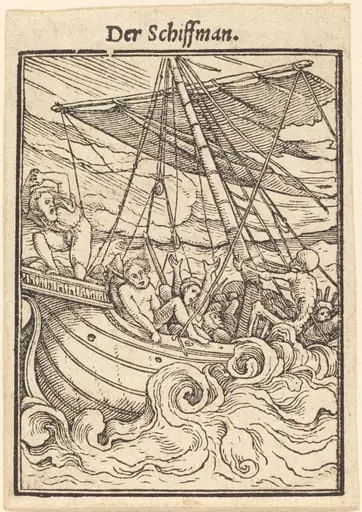
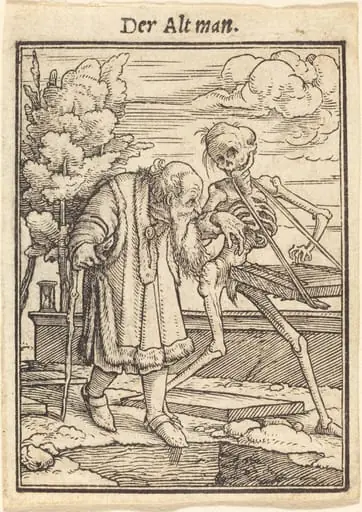
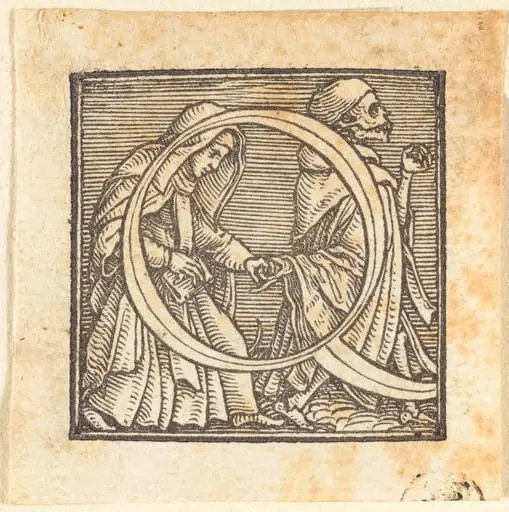
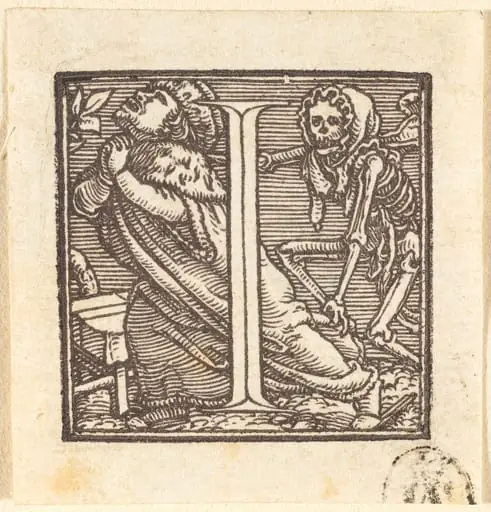
Created during the Renaissance, the image reflects contemporary concerns with death and the transience of life, themes common in the *Danse Macabre* tradition. The juxtaposition of alphabetic symbolism with skeletal combat aligns with the period’s use of allegory to convey moral and philosophical ideas.
Artist & collection

Artist
Hans Lützelburger (died June 1526), also known as Hans Franck, was a German blockcutter ("formschneider") for woodcuts, regarded as one of the finest of his day.