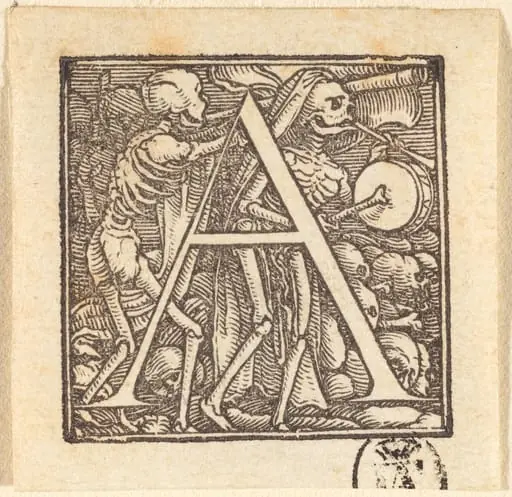
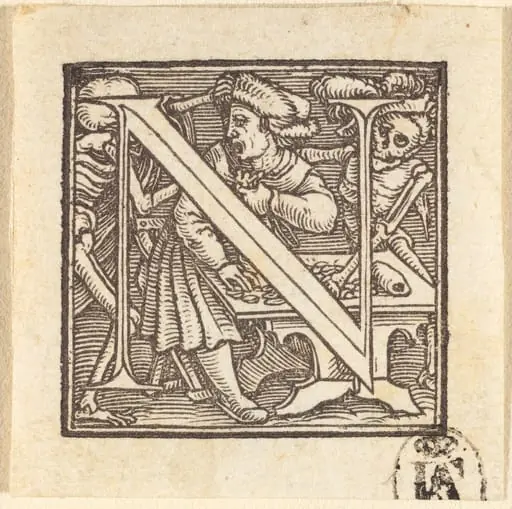
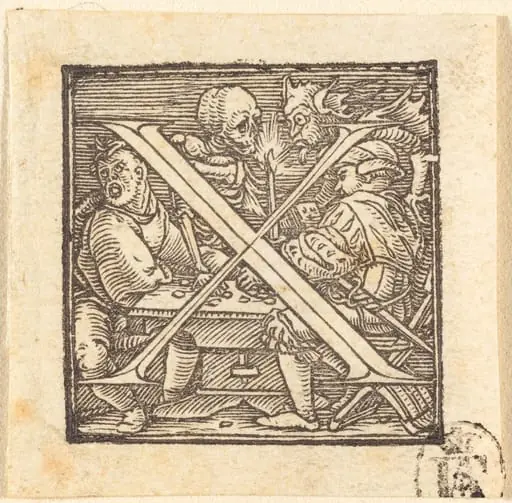
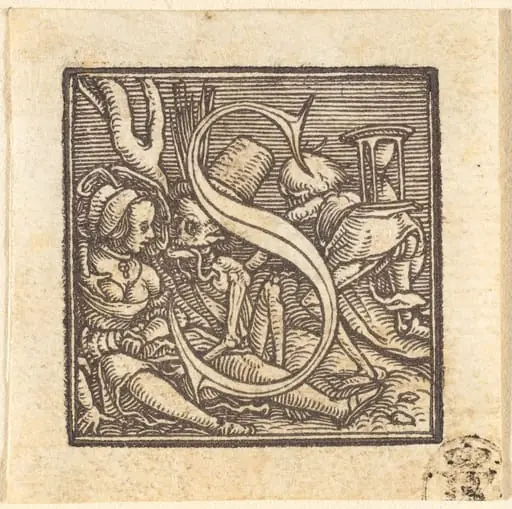
Artwork
Letter Y
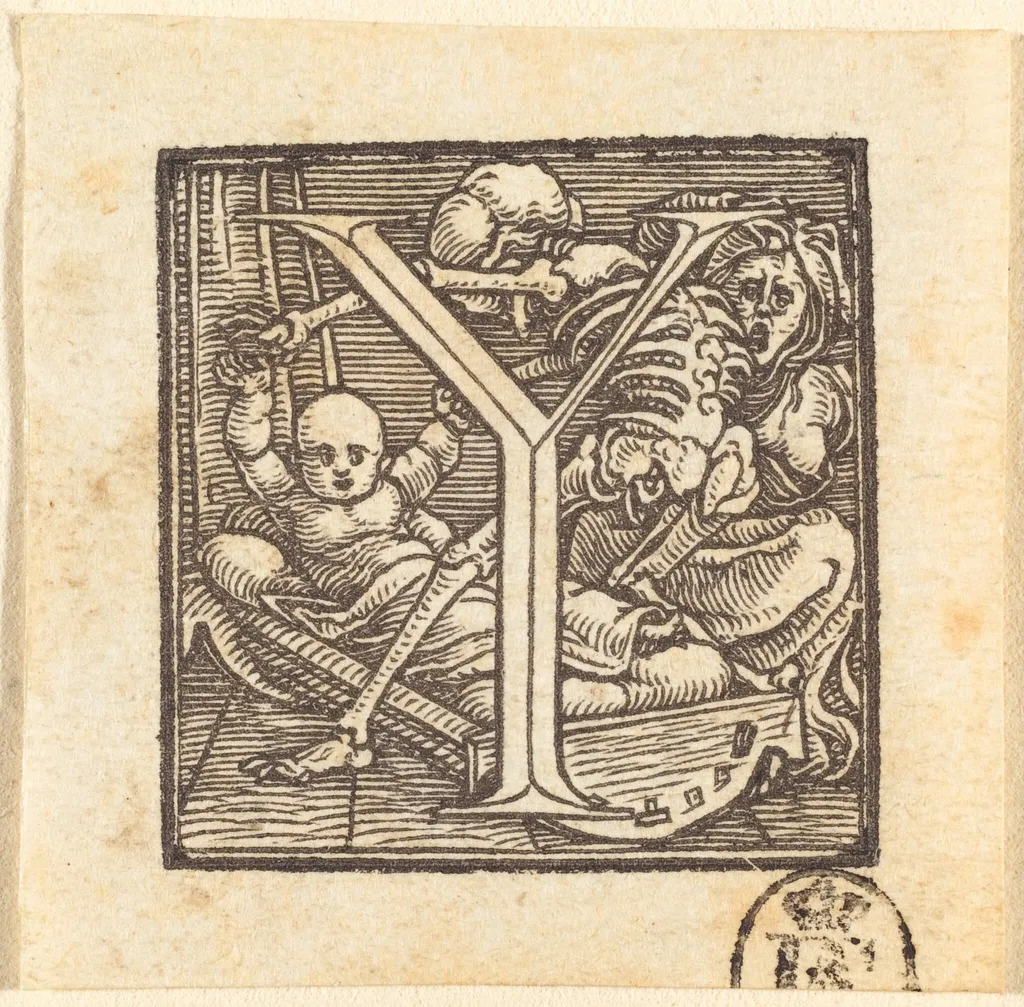
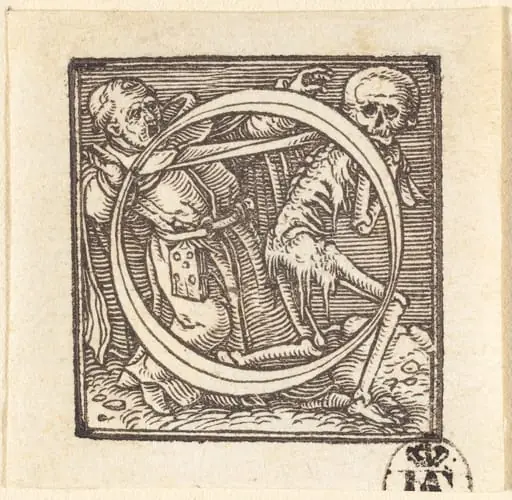
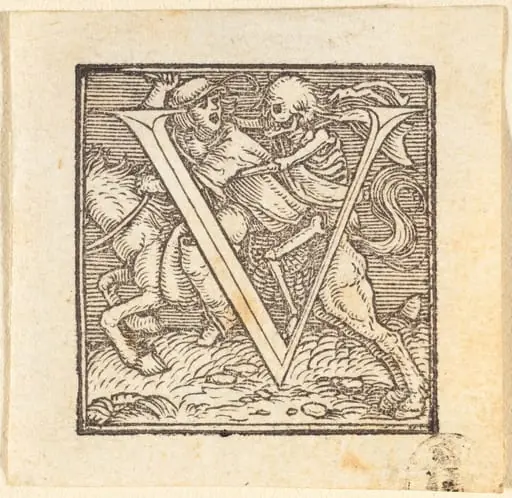
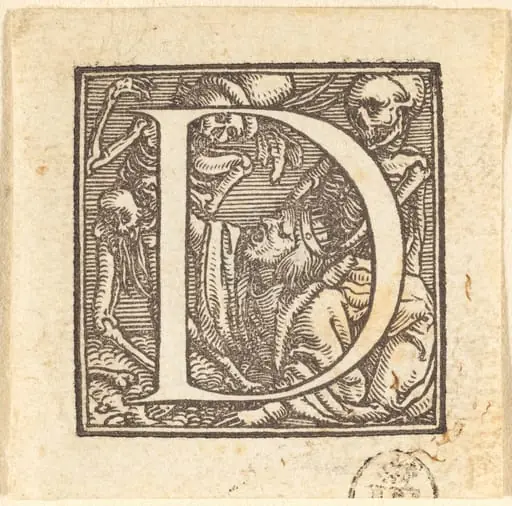
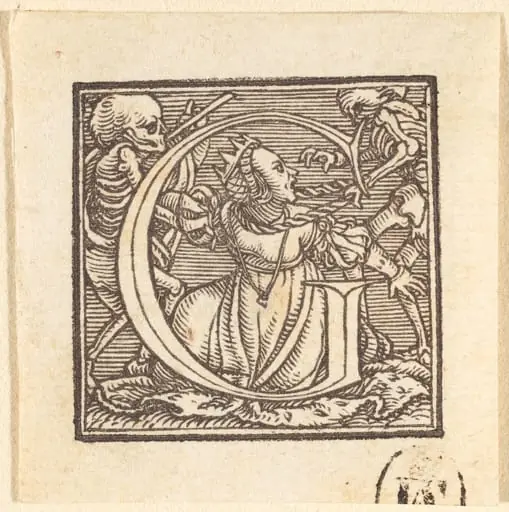
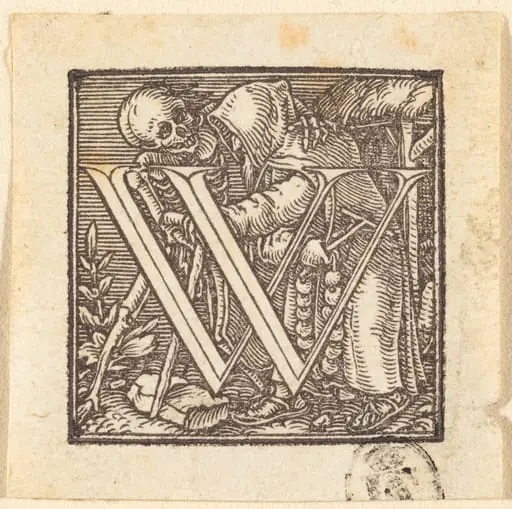
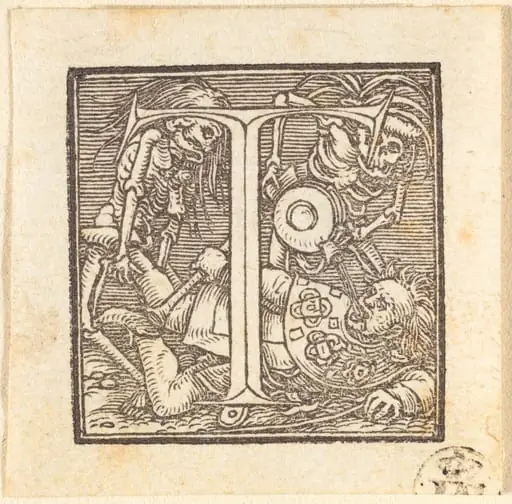
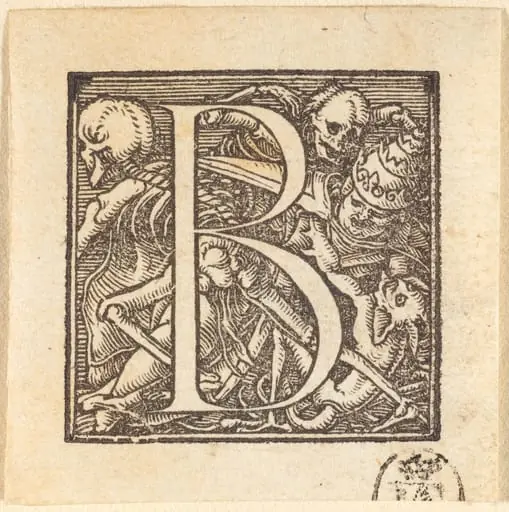
Letter Y is an ink print by the Renaissance artist Hans Lützelburger. It dates from 1523 and is held in the collection of the National Gallery of Art.
About this work
Overview
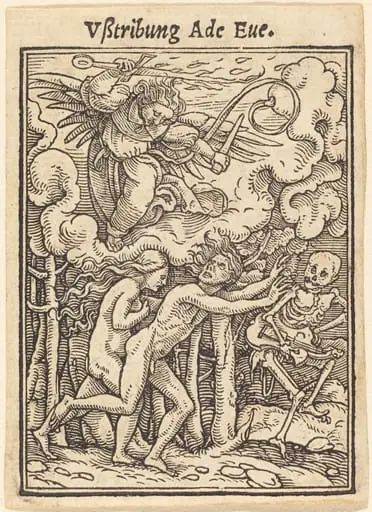
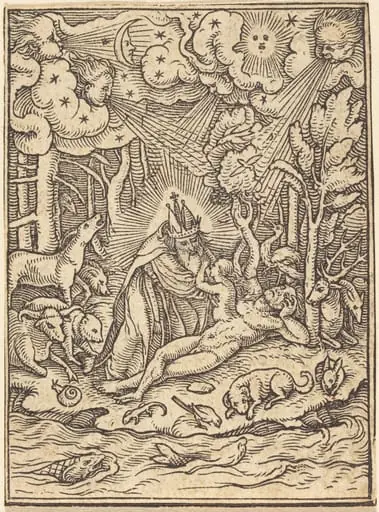
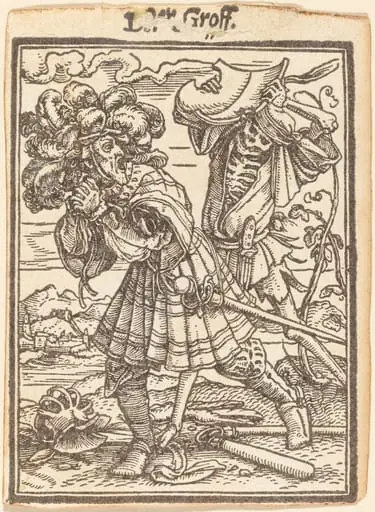
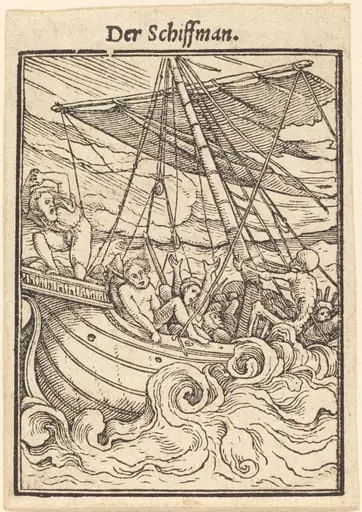
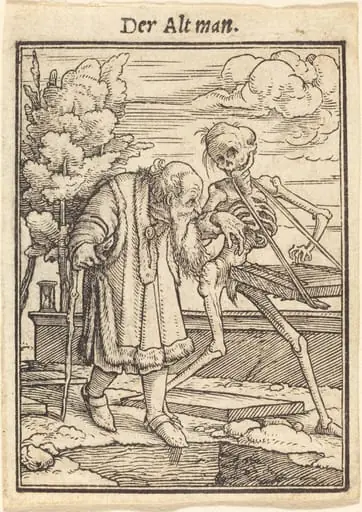
Created around 1523, this woodcut is part of a series of 41 blocks cut by Hans Lützelburger for Hans Holbein the Younger’s *Dance of Death*.
Created around 1523, this woodcut is part of a series of 41 blocks cut by Hans Lützelburger for Hans Holbein the Younger’s *Dance of Death*. Lützelburger, a skilled artisan based in Augsburg, executed the carving but did not design the imagery. His work was technical and precise, translating Holbein’s compositions into printable form. The series was left incomplete upon his death in 1526, preserving the original intent without later alterations.
Subject & Meaning
The letter Y serves as a structural frame for two contrasting scenes: a child seated alone with a stick, and a group approaching a cross on a distant hill. These images symbolize the stages of human life—youth and mortality—within the broader theme of the *Dance of Death*. The letter itself functions as an allegorical device, suggesting the path of existence and its inevitable end, common in early 16th-century moralizing imagery.
Technique & Style
Executed in black-and-white woodcut, the image relies on sharp, clean lines and high contrast to define form and space. Lützelburger’s carving demonstrates fine control over the woodblock, rendering architectural details and figures with clarity despite the medium’s limitations. The composition is tightly contained within the Y shape, using minimal background elements—trees, buildings—to suggest depth without distraction.
History & Provenance
The woodcut was produced in Augsburg between 1516 and 1526 under the workshop of Jost de Negker, where Lützelburger worked as a master blockcutter. He signed his blocks on the reverse, a rare practice that helped identify his contributions. After his death in 1526, the *Dance of Death* series was not completed, and the original blocks were later used for posthumous printings, preserving his craftsmanship in later editions.
Context
This print emerged during a period when the *Dance of Death* motif was widely circulated in Northern Europe, reflecting anxieties about mortality and divine judgment. Holbein’s designs, adapted by skilled carvers like Lützelburger, reached a broad audience through printed books. The use of letters as compositional frames was an innovative structural device, blending pedagogical intent with visual symbolism in early Reformation-era print culture.
Legacy
Lützelburger’s technical mastery elevated woodcut printing beyond mere illustration, setting a standard for precision in reproductive printmaking. Though he did not originate the imagery, his execution ensured the enduring clarity and impact of Holbein’s vision. The *Dance of Death* series, including this fragment, influenced later generations of printmakers and remains a key reference in the history of Northern Renaissance graphic arts.
Artist & collection

Artist
Hans Lützelburger (died June 1526), also known as Hans Franck, was a German blockcutter ("formschneider") for woodcuts, regarded as one of the finest of his day.