Artwork
Aurangzeb's Mosque on the Ganges river at Benares
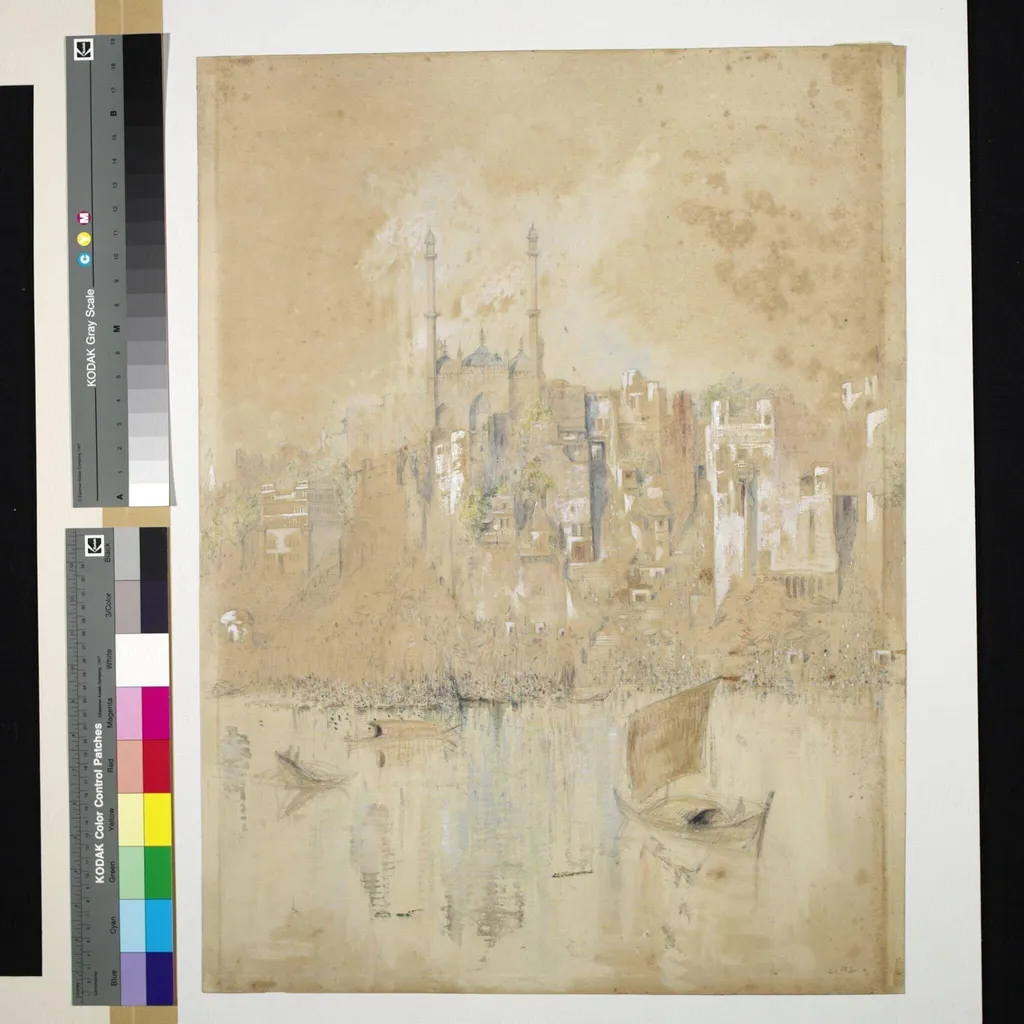
Aurangzeb's Mosque on the Ganges river at Benares is a paint painting by the Impressionist artist George Landseer. It dates from 1860 and is held in the collection of the Victoria and Albert Museum.
About this work
Overview
This sketch by George Landseer captures a riverside view in Benares along the Ganges, centered on a wide flight of steps leading down to the water.
This sketch by George Landseer captures a riverside view in Benares along the Ganges, centered on a wide flight of steps leading down to the water. The mosque commissioned by Emperor Aurangzeb rises in the distance, partially obscured by the haze of the landscape. Executed in loose, atmospheric brushwork, the piece belongs to a series of 31 studies Landseer made during his time in northern India, reflecting his interest in documenting local topography and daily life.
Subject & Meaning
The scene portrays the Ganges ghats as a functional and spiritual threshold between land and water, where ritual bathing occurs. Aurangzeb’s mosque, though present, is not the focal point; instead, it integrates into the broader urban fabric, suggesting coexistence rather than dominance. The quiet activity implied by the boat and steps underscores the river’s role as a constant in daily life, indifferent to political or religious symbolism.
Technique & Style
Landseer employed rapid, fluid brushstrokes to convey light and atmosphere rather than architectural precision. Muted tones of brown, gray, and pale blue dominate, with subtle greens suggesting vegetation along the bank. The hazy quality and blurred edges reflect a focus on transient effects—light, mist, and distance—rather than detailed rendering, aligning the work with observational sketching traditions common among 19th-century travelers.
History & Provenance
George Landseer, an English artist from a prominent artistic family, traveled to India in the late 1860s, producing numerous sketches during his stay. This work was made before his return to England in 1870. The sketch remains part of a cohesive group of studies, likely intended as personal records rather than finished exhibitions, preserving a visual diary of his journey through northern India’s riverine landscapes.
Context
Landseer’s approach reflects a broader trend among British artists and travelers in colonial India who sought to document landscapes with immediacy rather than idealization. His loose technique anticipates aspects of Impressionism, though rooted in topographical sketching. The absence of overt colonial narrative suggests a quiet, observational stance, contrasting with more propagandistic depictions of the era.
Legacy
Though not widely exhibited in his lifetime, Landseer’s Indian sketches contribute to a lesser-known body of 19th-century British travel art that prioritizes atmosphere over spectacle. These works offer a quiet counterpoint to grand imperial imagery, preserving a nuanced, fleeting view of Benares that emphasizes environmental and cultural texture over political assertion.
Artist & collection
Artist
George Landseer (1829–1878 London) was a British painter. He was the nephew of Sir Edwin Henry Landseer and his father Thomas Landseer was also an artist. He studied at the Royal Academy Schools in 1846 and exhibited at…

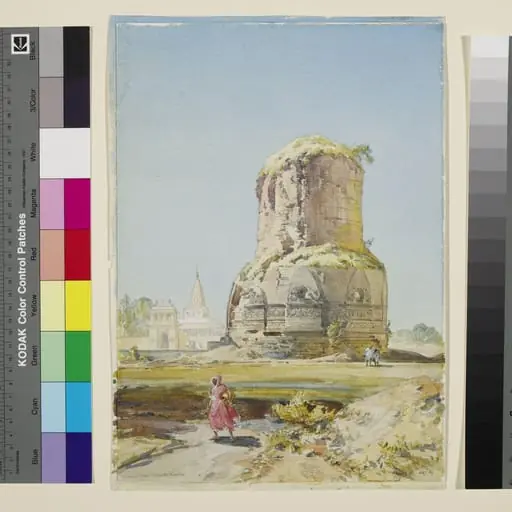 Buddhist stupa at Sarnath, Benaras
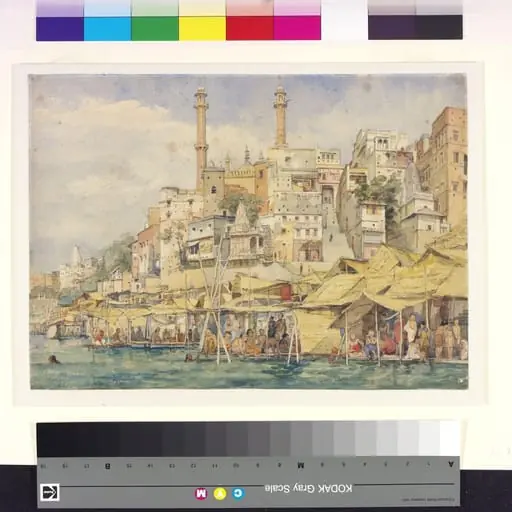 Benares (varanasi)
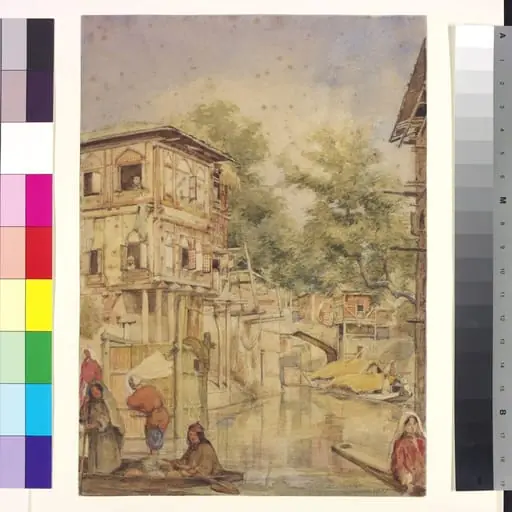 On the Mar Canal at Srinagar, Kashmir
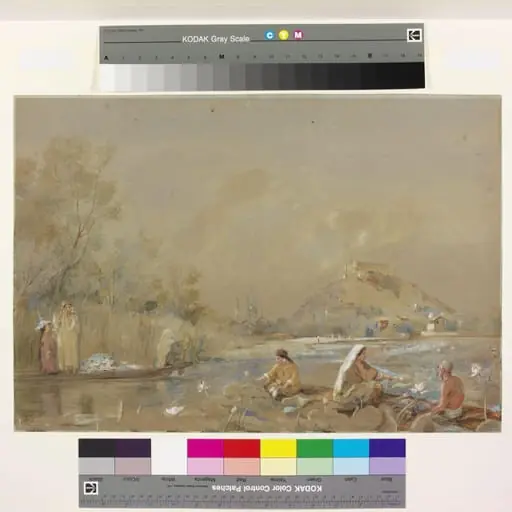 The fort of Hari Purbut from the lake
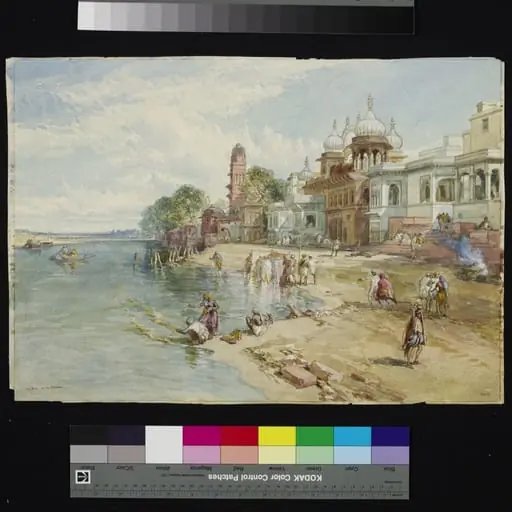 Ghats on the banks of the river Jumna, Mathura
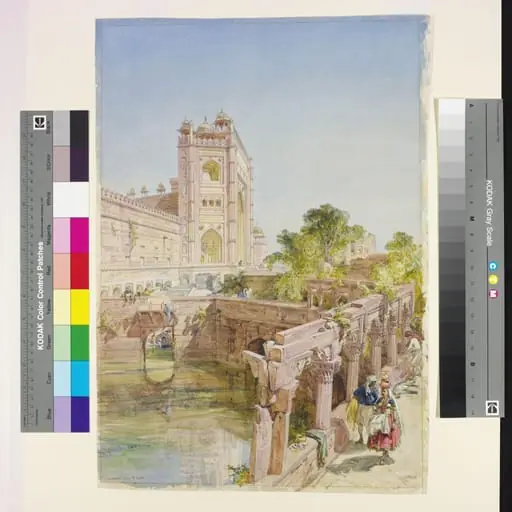 The Buland Darwaza, Fatehpur Sikri
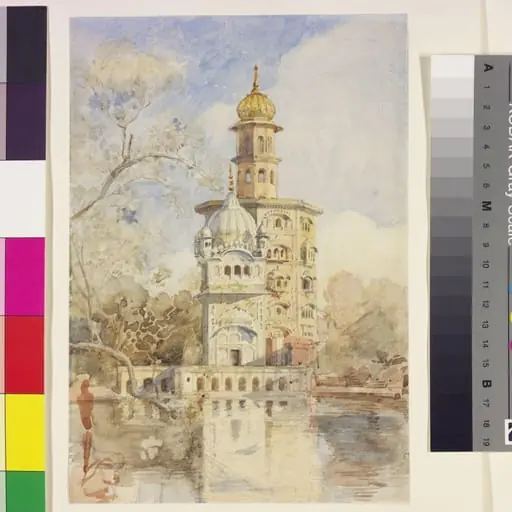 The Akalis Tower, Amritsar, Punjab
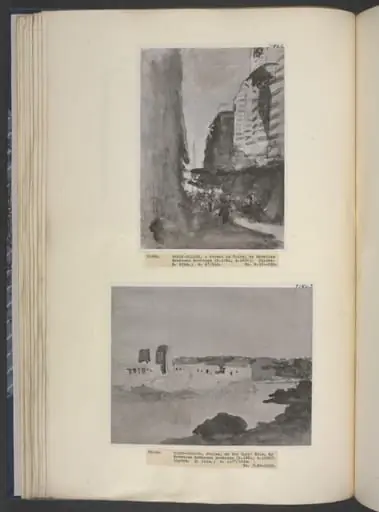 A Street in Cairo
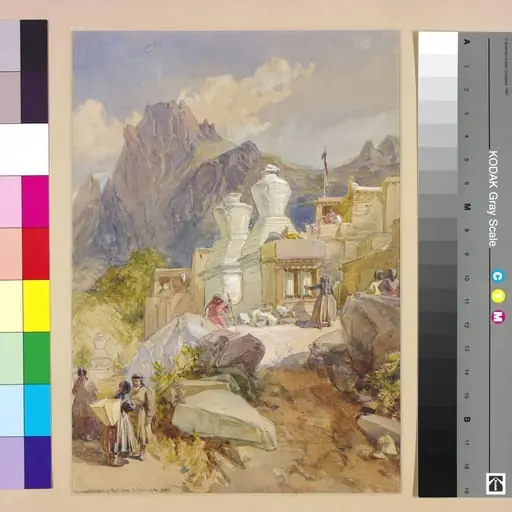 Praying cylinders in the village of Kulsi on the Indus
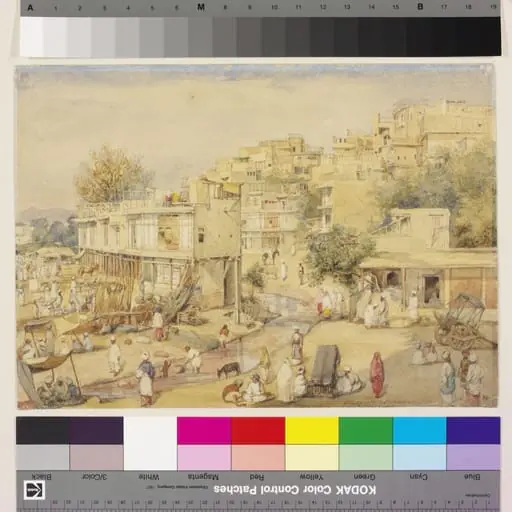 View of houses adjoining a stream, Peshawar
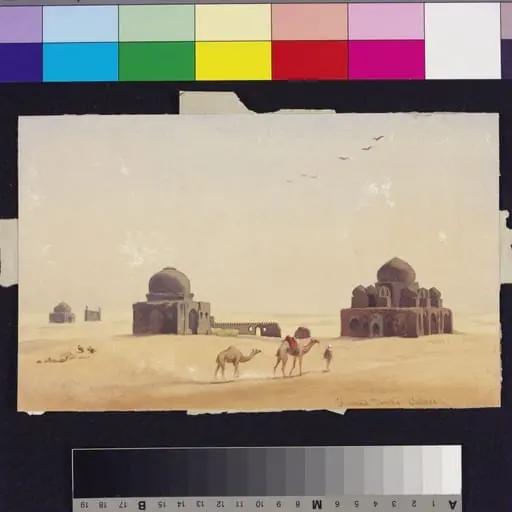 Ruined Tombs Calpee
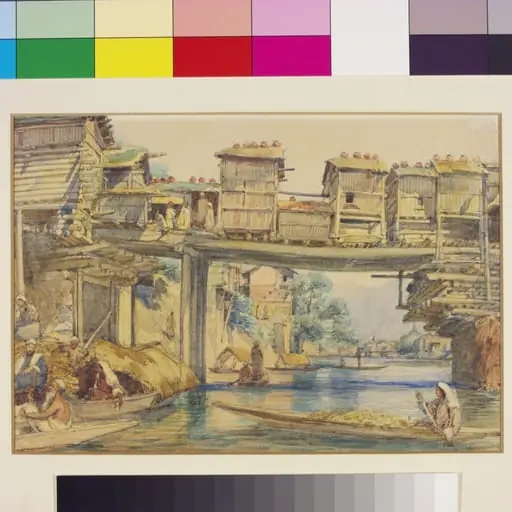 An arch of the second bridge at Srinagar, Kashmir