Artwork
The fort of Hari Purbut from the lake
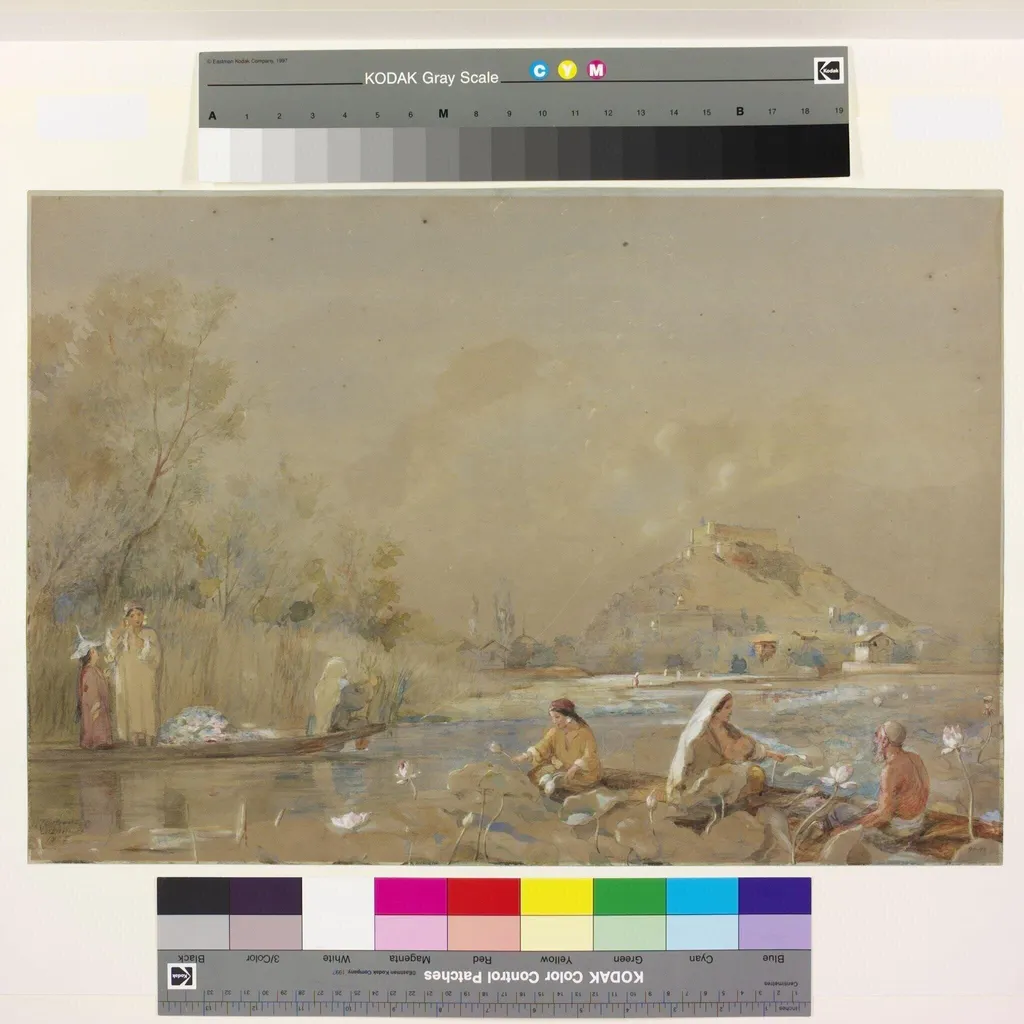
The fort of Hari Purbut from the lake is a paint painting by the Impressionist artist William Carpenter. It dates from 1855 and is held in the collection of the Victoria and Albert Museum. This watercolor painting captures a tranquil lakeside view of Hari Purbut Fort, observed from the water’s edge.
About this work
Overview
This watercolor painting captures a tranquil lakeside view of Hari Purbut Fort, observed from the water’s edge.
This watercolor painting captures a tranquil lakeside view of Hari Purbut Fort, observed from the water’s edge. Created by British artist William Carpenter during his time in India between 1850 and 1856, it reflects his direct engagement with local landscapes and daily routines. The scene is rendered with gentle tones and fluid brushwork, emphasizing atmosphere over precise detail. Acquired by a museum in 1888, it forms part of a larger collection of Carpenter’s Indian observations.
Subject & Meaning
The painting portrays ordinary life along the lake: two women stand at the shore, while three others in a small boat wash garments and gather water lilies. No grand narrative is implied; instead, the focus lies in quiet, unremarkable labor. The fort in the distance, perched on a rocky outcrop, serves as a silent witness rather than a focal point. The composition suggests a moment of routine, grounding the scene in the rhythms of daily existence rather than spectacle.
Technique & Style
Carpenter employed loose, fluid brushstrokes and a restrained palette of pale browns, greens, and blues to evoke the play of light on water and foliage. The technique avoids sharp definition, favoring soft transitions and atmospheric suggestion. This approach aligns with emerging 19th-century interests in capturing transient effects of nature, though it predates formal Impressionism. The sketchlike quality conveys immediacy, as if the scene were observed and recorded in real time.
History & Provenance
William Carpenter painted this work during his extended stay in India, where he immersed himself in local customs and dress. After his return to Britain, his Indian subjects gained recognition among collectors. The painting entered a museum’s collection in 1888 as part of a curated acquisition of his Indian watercolors, ensuring its preservation as a record of colonial-era visual documentation. Its provenance reflects institutional interest in ethnographic and topographical art of the period.
Context
Carpenter’s work emerged during a time when British artists and travelers increasingly documented Indian life, often blending documentary intent with aesthetic sensibility. His paintings contrasted with official colonial imagery by focusing on quiet, domestic moments rather than monumental architecture or military scenes. This piece reflects a broader trend among European artists in India to observe and record everyday life with empathy and attention to local detail.
Legacy
Though not widely known today, Carpenter’s Indian watercolors remain valuable for their unembellished portrayal of 19th-century rural life. This painting contributes to a body of work that offers an alternative to the grand narratives of empire, instead preserving intimate glimpses of labor, landscape, and leisure. Its quiet realism continues to inform scholarly understanding of cross-cultural visual exchange during the colonial era.
Artist & collection
Artist
William Carpenter (1818–1899) was an English watercolour artist. He travelled for six or seven years in the 1850s painting scenes of India, its people and its life. The Victoria and Albert Museum bought over 280 of his…

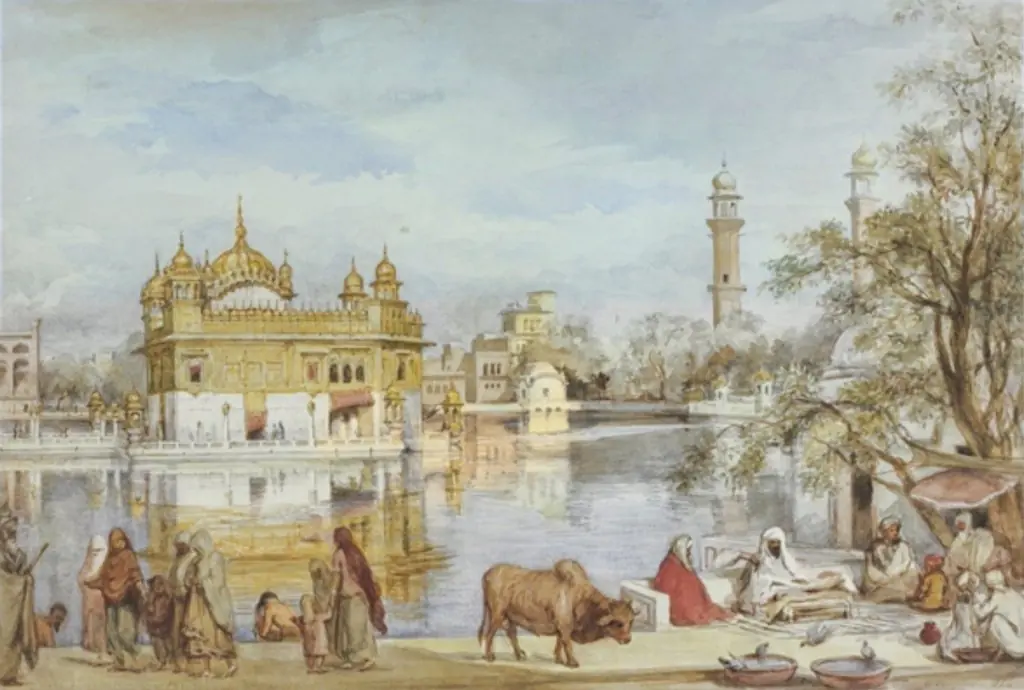 The Golden Temple, Amritsar
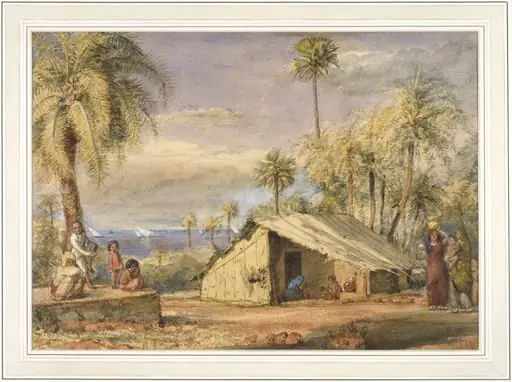 Toddywallah's hut in a grove of date palms near Breach Candy, Bombay
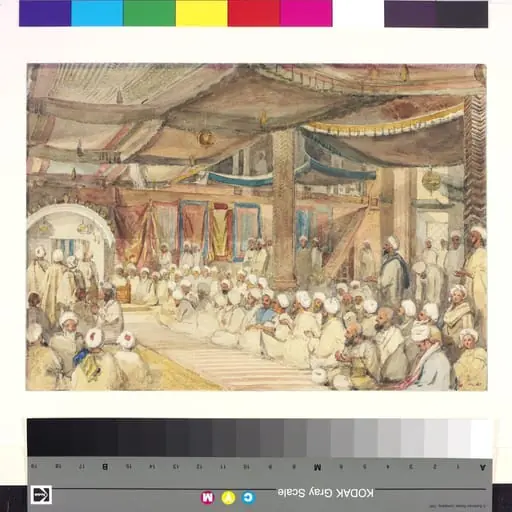 Interior of Shah Hamadan's Masjid during a religious ceremony
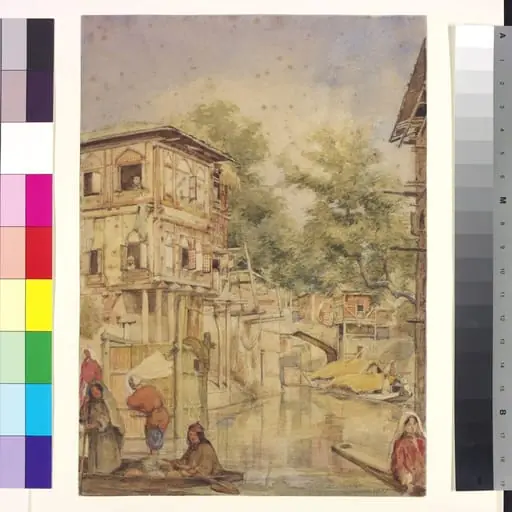 On the Mar Canal at Srinagar, Kashmir
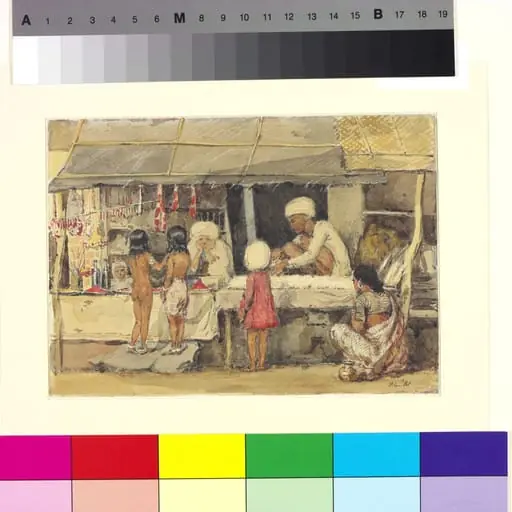 Shops for colours and flowers used at festivals, Sadr bazaar, Pune
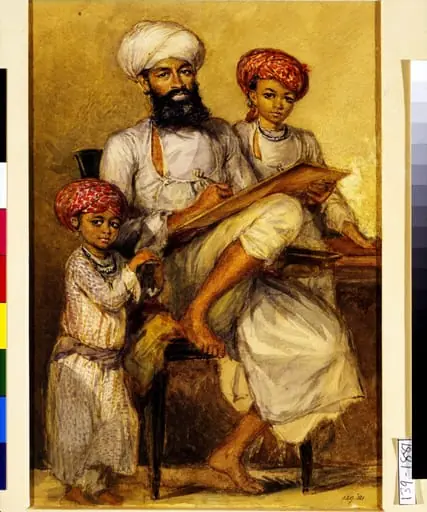 Portrait of Tara Chand, the court painter
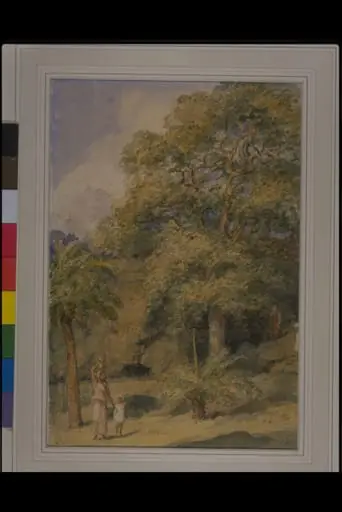 Study of a tamarind tree and date palms near Sir William Yardley's house at Breach Candy, Bombay
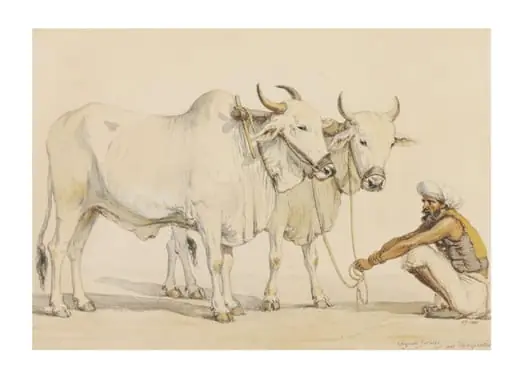 Two harnessed bullocks from Gujarat with their keeper
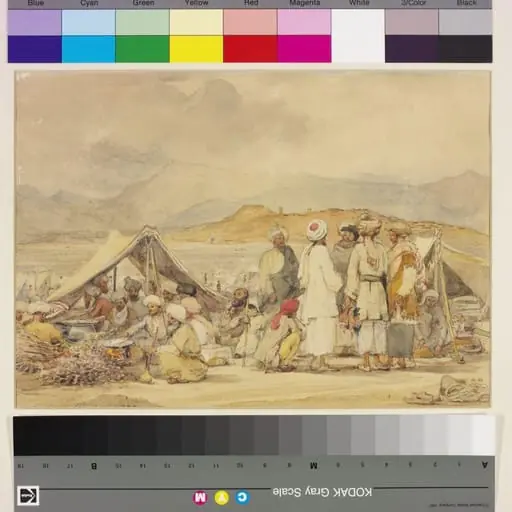 Camp bazaar near Kaie, Miranzai
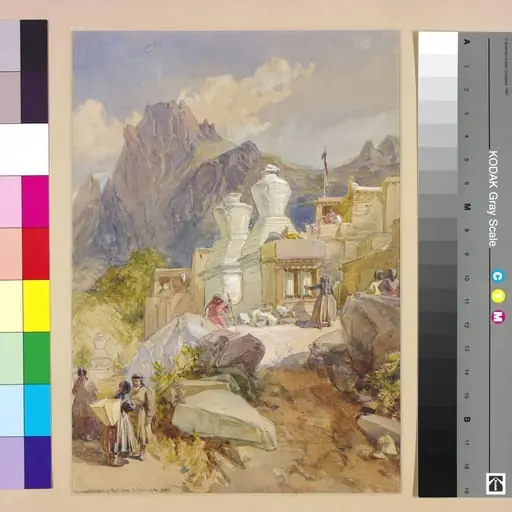 Praying cylinders in the village of Kulsi on the Indus
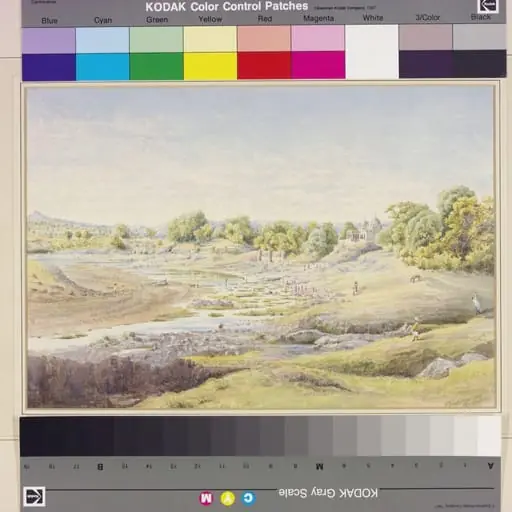 Chappara
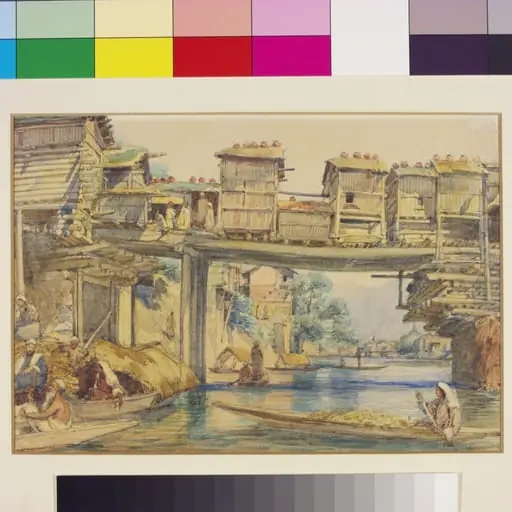 An arch of the second bridge at Srinagar, Kashmir
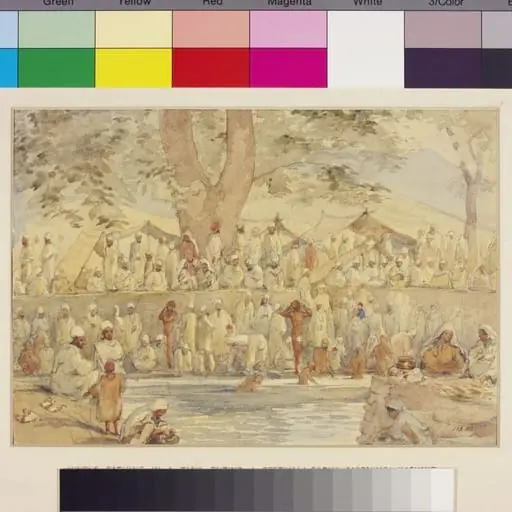 Hindus bathing in the early morning during a festival in Kashmir
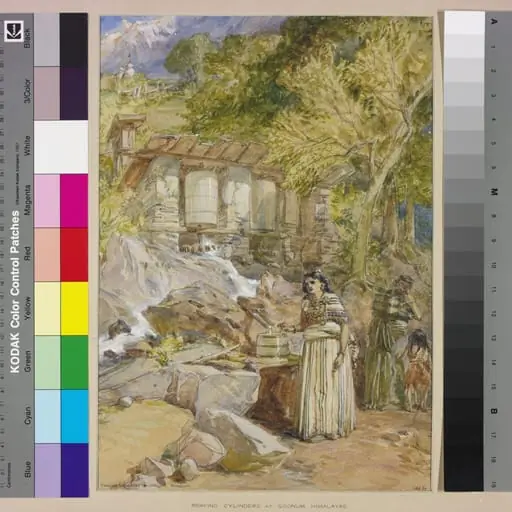 Praying cylinders at Soonum, Himalayas
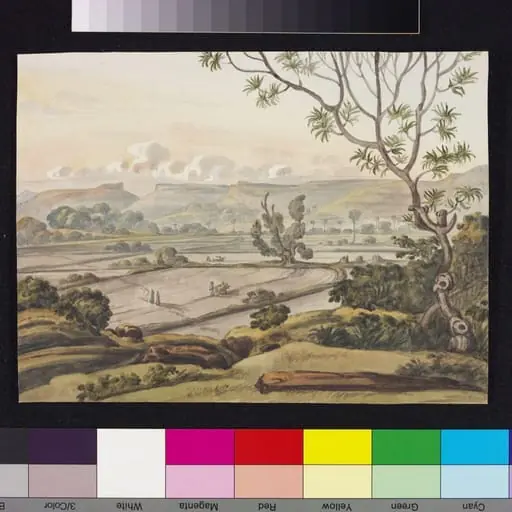 Chowke
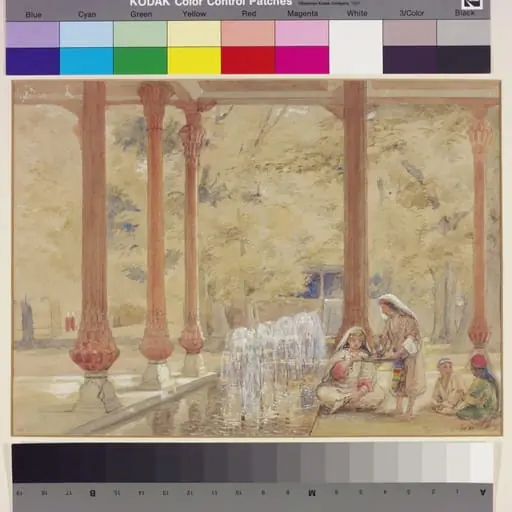 The Nishat Bagh
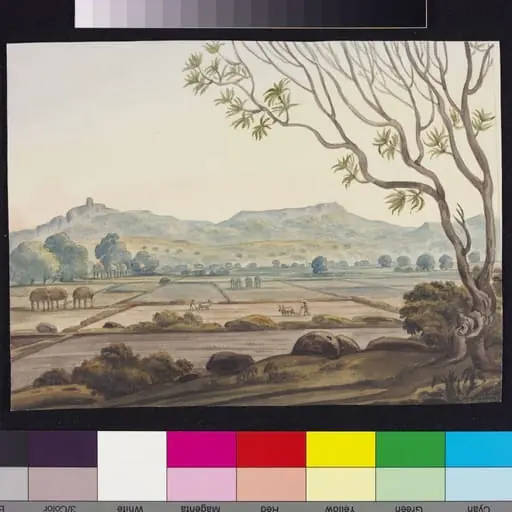 Untitled
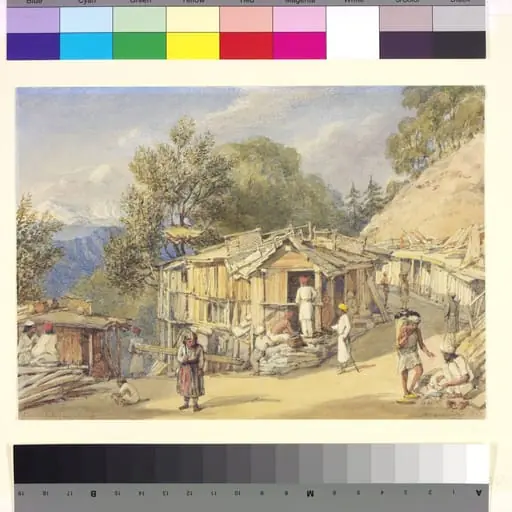 View of the wood bazaar, Simla
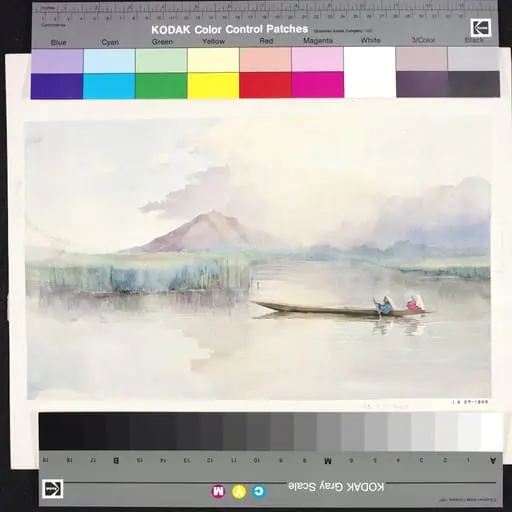 Dal lake, Kashmir