Artwork
The Buland Darwaza, Fatehpur Sikri
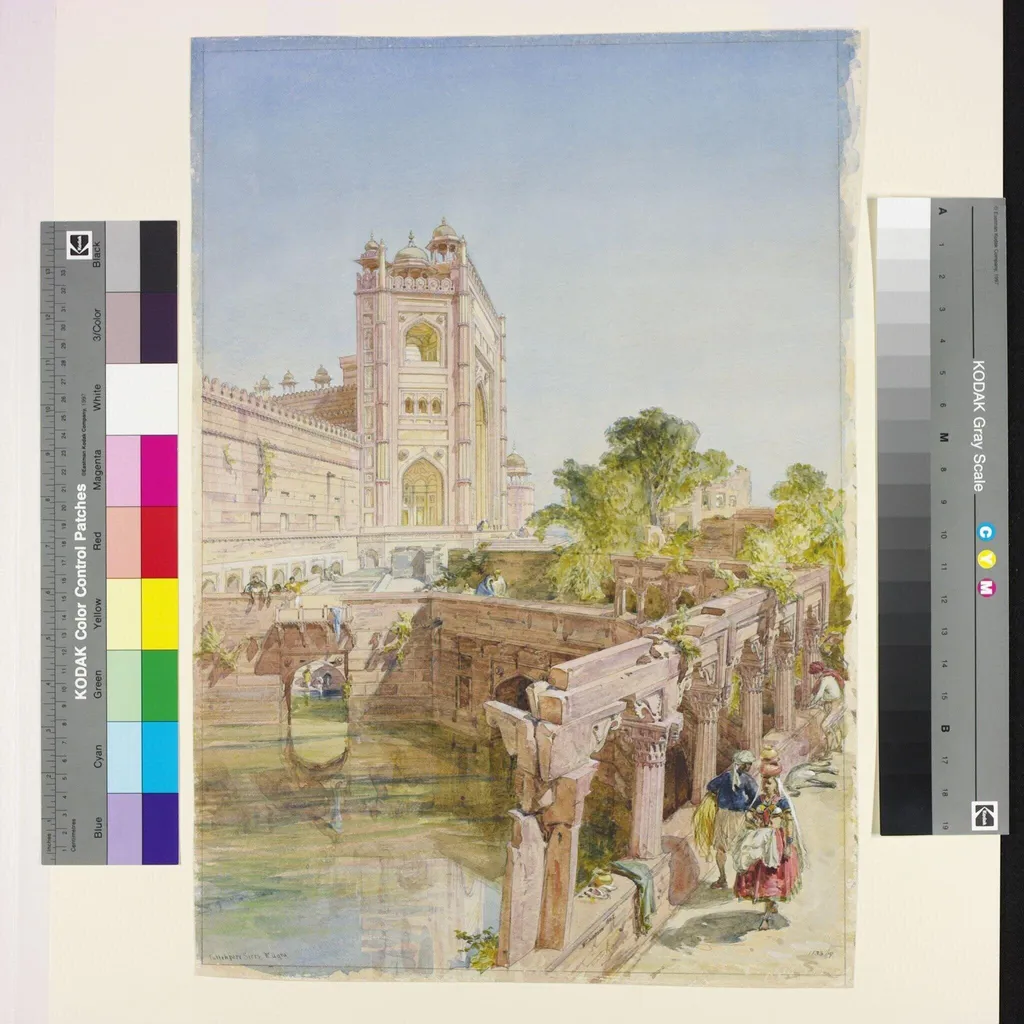
The Buland Darwaza, Fatehpur Sikri is a paint painting by the Impressionist artist William Simpson. It dates from 1865 and is held in the collection of the Victoria and Albert Museum.
About this work
He later turned those quick drawings into colorful watercolors back in London.
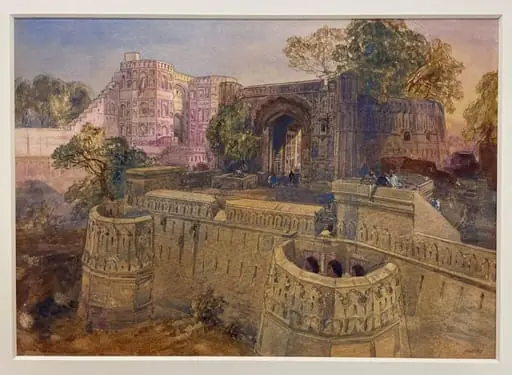
William Simpson painted The Buland Darwaza, Fatehpur Sikri in 1865. He made it after traveling India to sketch sites tied to the 1857 fighting. The painting shows the grand gateway of a mosque.
Simpson first sketched in pencil on the spot. He later turned those quick drawings into colorful watercolors back in London. His journal mentions his fond memories of India.
If you like this, check out more works by Simpson, William.
Overview
The Buland Darwaza, Fatehpur Sikri is a watercolor painting created by William Simpson in 1865. It depicts the grand entrance to the Jami Masjid mosque at Fatehpur Sikri, a significant Mughal architectural site.
Subject & Meaning
The painting shows the Buland Darwaza, a 52-meter-high gateway, from a lateral perspective, incorporating a water tank in the foreground. This unusual viewpoint was chosen to include the picturesque foreground element.
Technique & Style
Simpson's work is characterized by vivid colors and a romanticized interpretation of the Indian landscape. The painting was based on pencil sketches made on site, later developed into watercolors in London.
History & Provenance
Simpson traveled to India in 1859, commissioned by Day and Sons to document sites associated with the 1857 conflict. He returned to London in 1862 and completed the watercolors, including this painting, in the following years.
Artist & collection
Artist
William Simpson drew what he saw during the Crimean War in the 1850s, including sketches of battles and camps in Crimea and Constantinople.