Artwork
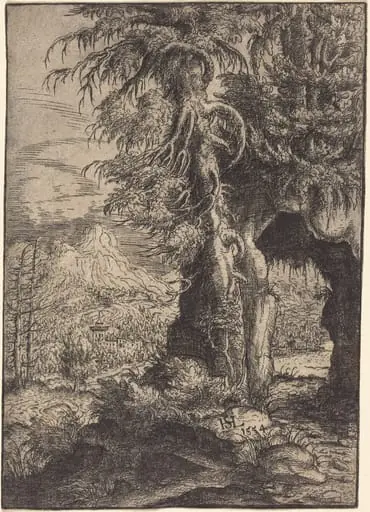
Landscape with a Willow
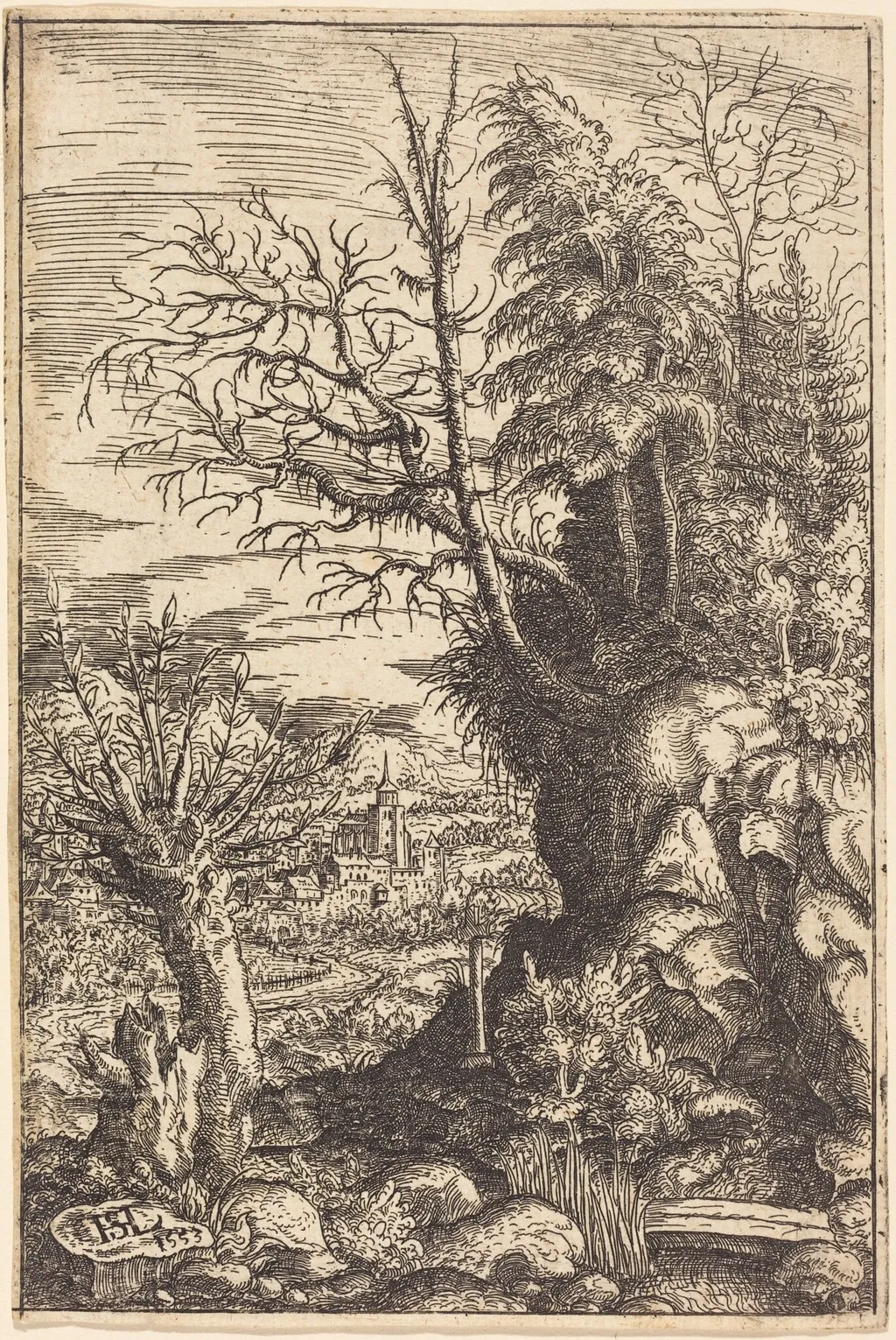
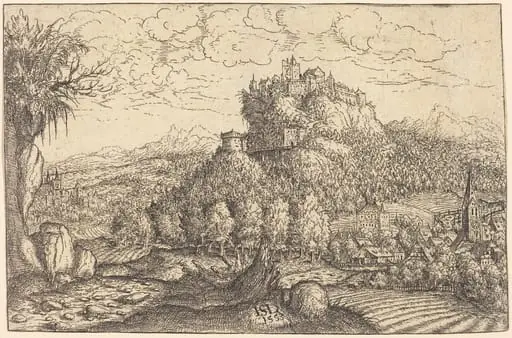
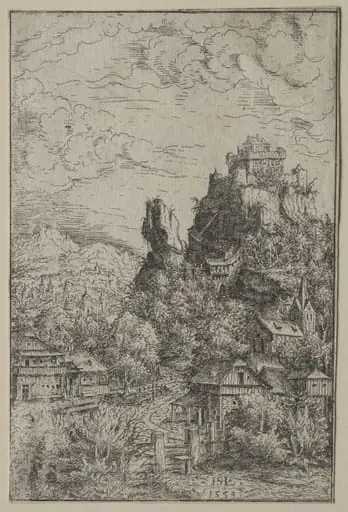
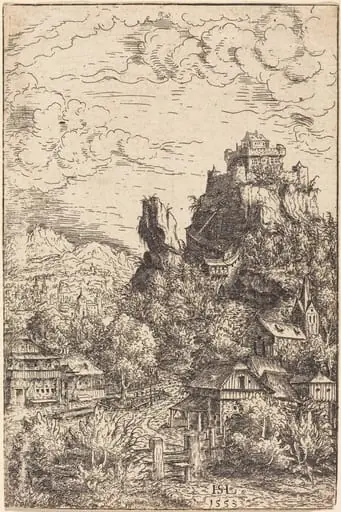
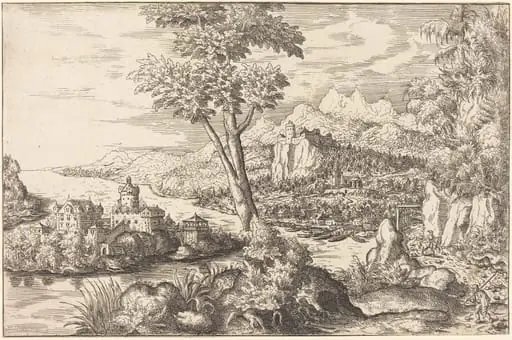
Landscape with a Willow is an ink print by the Renaissance artist Hanns Lautensack. It dates from 1553 and is held in the collection of the National Gallery of Art.
About this work
Overview
As a printmaker, he focused on natural forms and topographical detail, using the etching technique to render fine textures with precision.
Created in 1553 by Hanns Lautensack, *Landscape with a Willow* is a black-and-white etching that captures a quiet rural scene. Lautensack, trained in the artistic traditions of Nuremberg, produced this work before relocating to Vienna. As a printmaker, he focused on natural forms and topographical detail, using the etching technique to render fine textures with precision. The composition centers on a solitary willow, anchoring a broader view of valley and sky.
Subject & Meaning
The print depicts a solitary, gnarled willow tree dominating the foreground, its branches twisting against a muted sky. Below, a cluster of modest dwellings and winding paths suggests a quiet village nestled in rolling hills. The absence of human figures and the emphasis on natural forms convey a contemplative stillness. The willow, often associated with resilience or melancholy, may reflect a personal or symbolic meditation on nature’s endurance.
Technique & Style
Lautensack employed etching to achieve intricate detail, using acid to bite fine lines into a metal plate. The bark of the willow, the texture of foliage, and the contours of distant hills are rendered with sharp, deliberate strokes. The sky is minimized to a few horizontal lines, directing focus downward. This restrained use of tone and emphasis on linear precision aligns with Northern Renaissance printmaking conventions, valuing clarity over atmospheric effect.
History & Provenance
Hanns Lautensack, born in Bamberg in 1524 and active in Nuremberg, moved to Vienna around 1556, possibly under imperial patronage. *Landscape with a Willow* was made shortly before this relocation, during his most productive period as a printmaker. While specific early ownership records are sparse, the work survives in several institutional collections, reflecting its recognition among contemporaries and later collectors of Northern European prints.
Context
In mid-16th century Germany, landscape prints gained traction as independent subjects, moving beyond mere backgrounds for religious or narrative scenes. Lautensack’s work aligns with a growing interest in observed nature and topographical accuracy. His etchings contributed to a regional tradition that valued meticulous detail and quiet composition, distinct from the more dramatic landscapes emerging in Italy or the Netherlands at the time.
Legacy
Lautensack’s etchings, including *Landscape with a Willow*, influenced later generations of German printmakers through their technical discipline and restrained aesthetic. Though not widely known today, his works remain important examples of how landscape evolved as a subject in printmaking. The precision of his line work and sensitivity to natural form helped establish etching as a medium capable of conveying both observation and mood.
Artist & collection
Artist
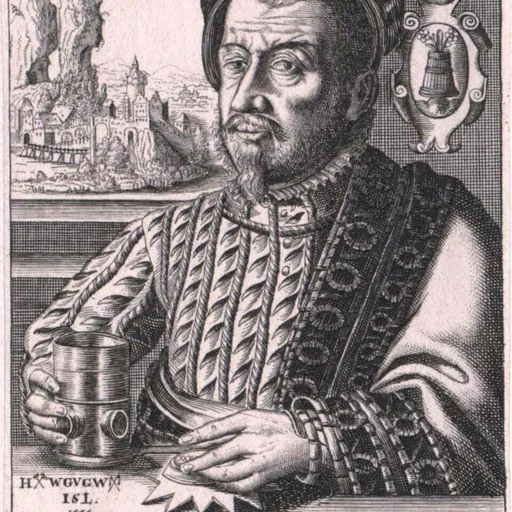
Hanns Lautensack (sometimes erroneously referred to as Hans Sebald Lautensack) (1524 – c.

![View of Nuremberg from the West [center section], by Hanns Lautensack](https://artifactworldgallery.com/img/hanns-lautensack--view-of-nuremberg-from-the-west-center-section--12422dca269411c0-w320.webp)