Artwork
Saint George Killing the Dragon
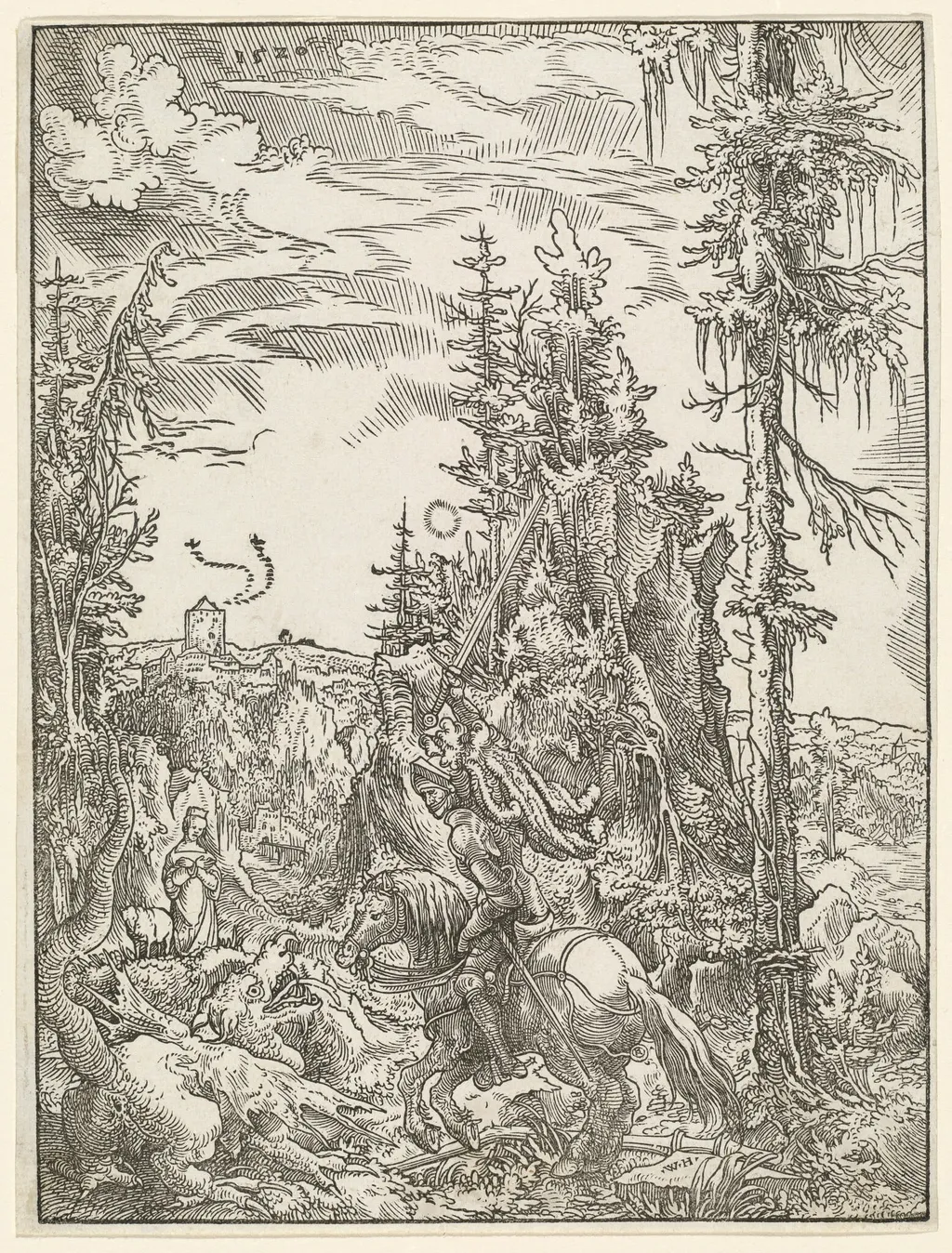
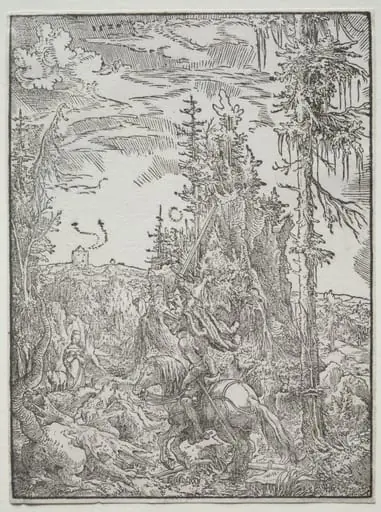
Saint George Killing the Dragon is an ink print by the Renaissance artist Wolf Huber. It dates from 1520 and is held in the collection of the National Gallery of Art.
About this work
Overview
Wolf Huber’s 1520 woodcut, Saint George Killing the Dragon, presents a dramatic encounter between the legendary saint and a fearsome beast. Executed on laid paper, the image relies entirely on line and tonal contrast to convey the tension of the battle and the surrounding landscape.
Subject & Meaning
The composition illustrates the classic hagiographic episode in which Saint George, mounted on a rearing horse, confronts a dragon that has ensnared a captive woman. The scene underscores themes of triumph over evil and divine protection, common motifs in early‑sixteenth‑century religious art.
Technique & Style
Huber employed the woodcut process, carving the design into a single block of wood and printing it in black ink. Through careful use of cross‑hatching and varying line density, he achieved a sense of depth, rendering the rocky hill, trees, and the twisting dragon without any color.
History & Provenance
A native of the Austrian‑German border region, Huber was active primarily in Passau, where he emerged as a leading figure of the Danube school. The print was produced during his mature period and reflects the workshop’s emphasis on detailed naturalism and narrative clarity.
Context
The work belongs to the religious genre prevalent in the early Reformation era, when visual depictions of saints served both devotional and didactic purposes. Huber’s choice of the Saint George legend aligns with contemporary interest in heroic martyrdom as a model of faith.
Legacy
Although less widely known than his painted commissions, this woodcut exemplifies Huber’s skill in translating complex scenes into the graphic language of print, influencing later German printmakers who sought to balance intricate detail with the stark economy of the woodcut medium.
Artist & collection
Artist
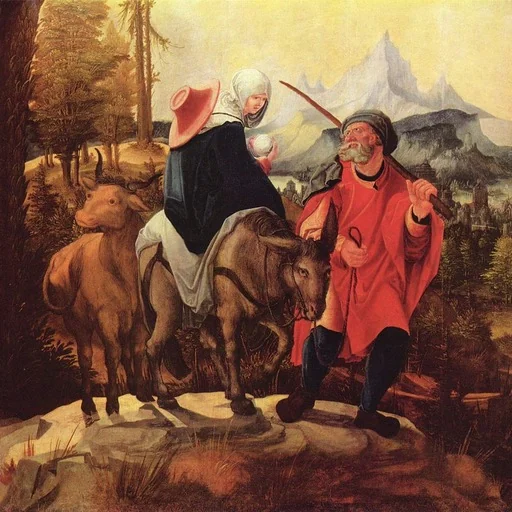
Wolf Huber (c. 1485 – 3 June 1553) was an Austrian- German painter, printmaker, and architect, who worked in Passau, Germany for most of his life as a leading member of the Danube school.

 St. George and the Dragon
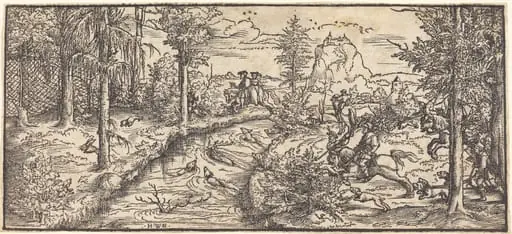 Stag Hunt in a Landscape
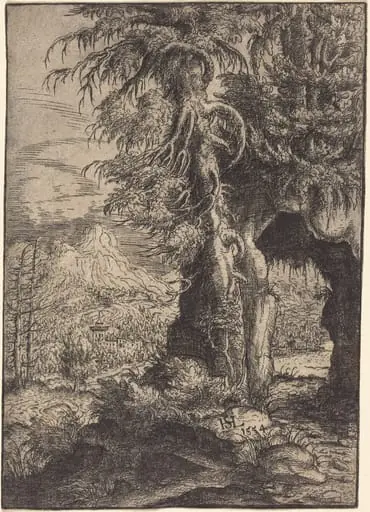 The Gate in the Rocks
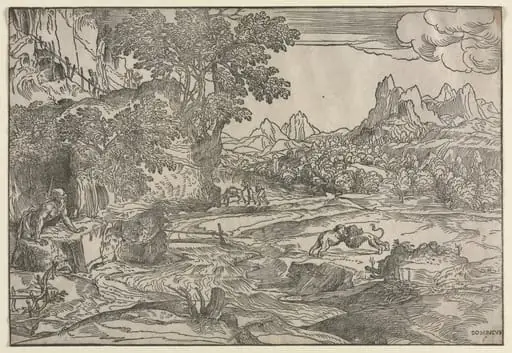 Landscape with Saint Jerome and Two Lions
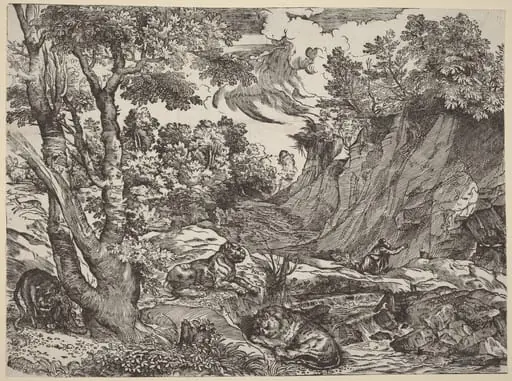 Saint Jerome in the Wilderness
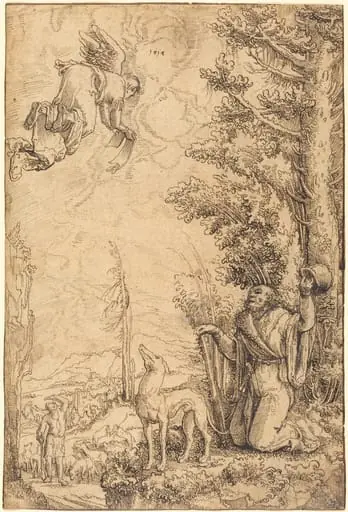 The Annunciation to Joachim
 View on a River with a Castle on an Island
 The Penitence of Saint Jerome
 Landscape with a Willow
 Abigail and David
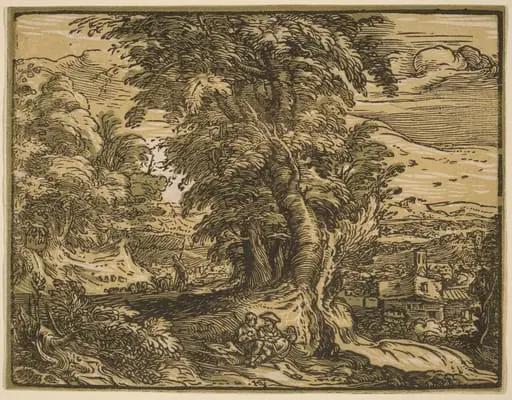 Landscape with a Shepherd Couple
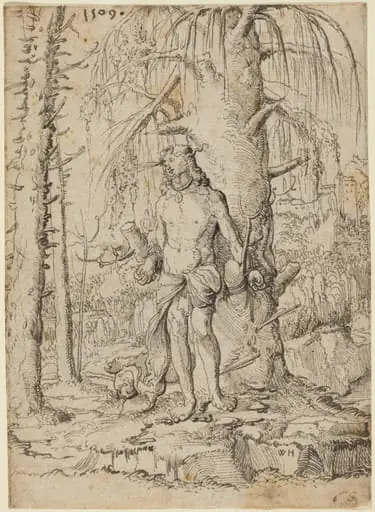 Saint Sebastian