Artwork
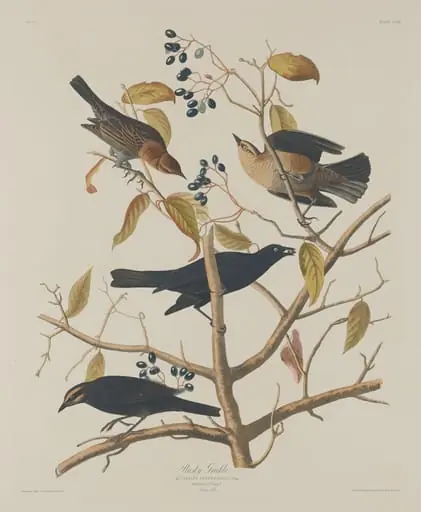
Red-winged Starling
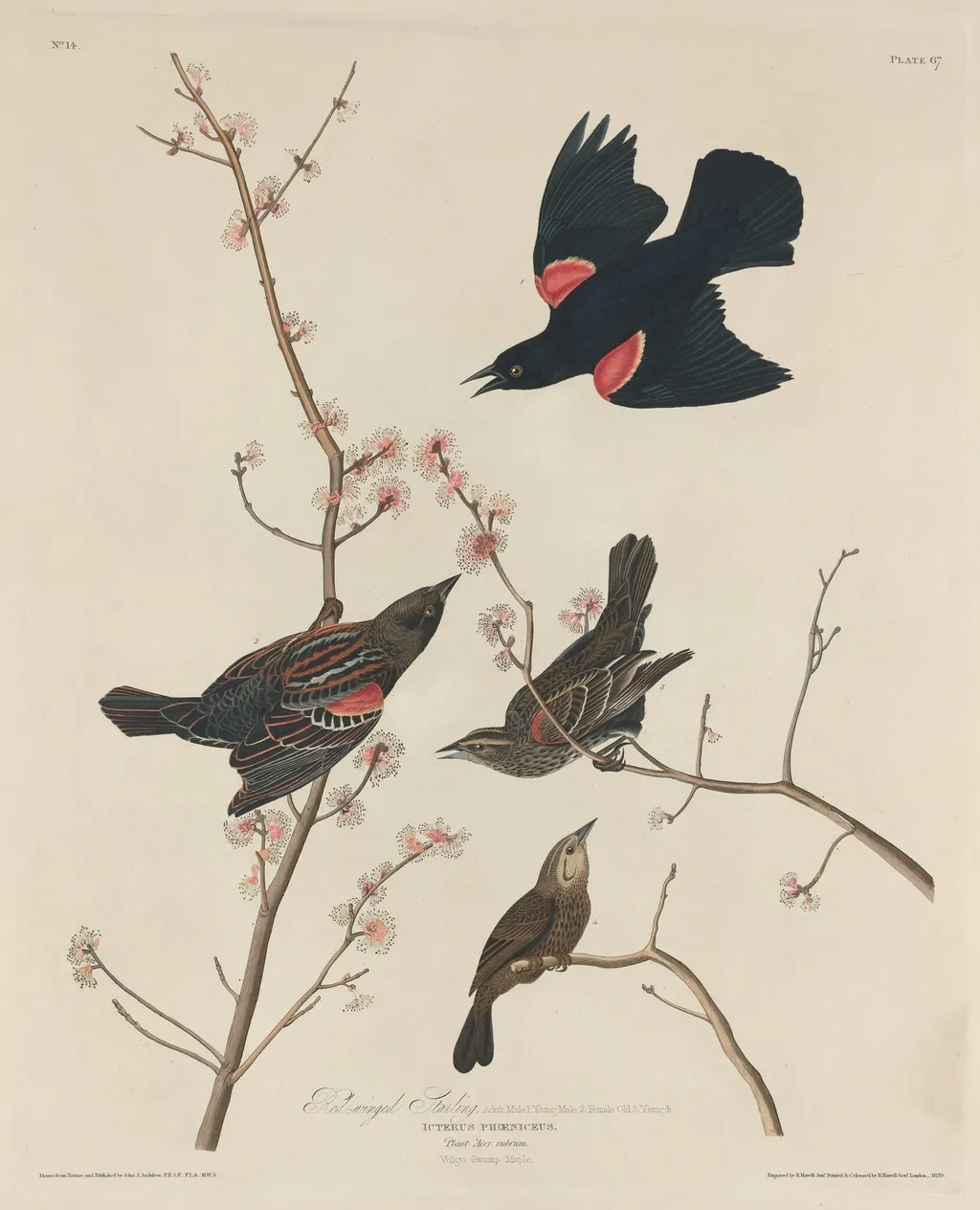
Red-winged Starling is an ink print by the Romanticist artist Robert Havell Jr.. It dates from 1829 and is held in the collection of the National Gallery of Art.
About this work
Overview
Havell, part of a family of English printmakers, employed traditional printmaking methods to achieve precise, lifelike representations of wildlife.
Created in 1829 by Robert Havell Jr., this print is a hand-colored engraving and aquatint on Whatman wove paper. It belongs to a series of natural history illustrations produced during the early 19th century, reflecting the period’s scientific interest in documenting avian species. Havell, part of a family of English printmakers, employed traditional printmaking methods to achieve precise, lifelike representations of wildlife.
Subject & Meaning
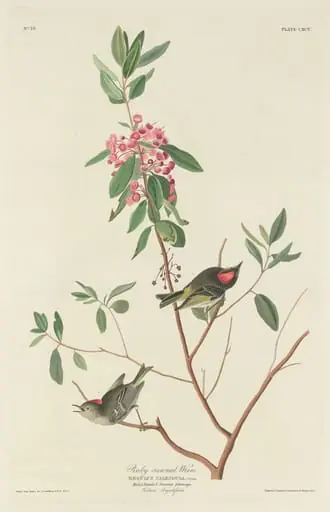
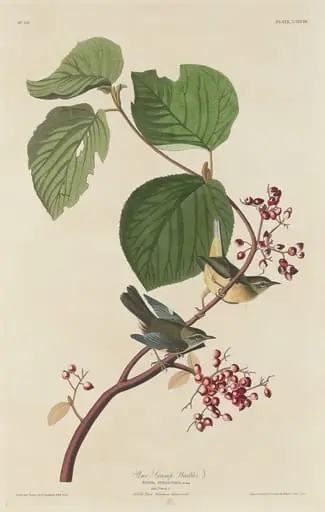
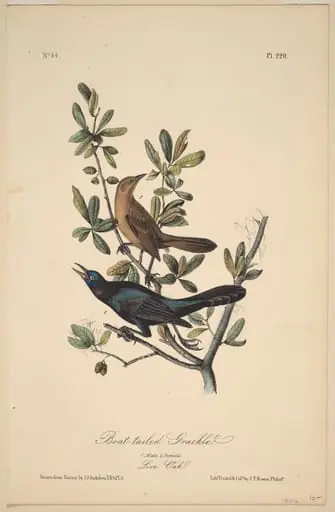
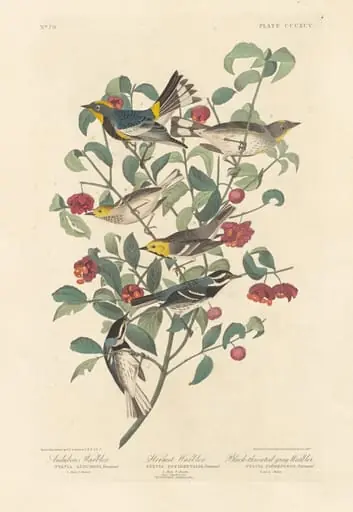
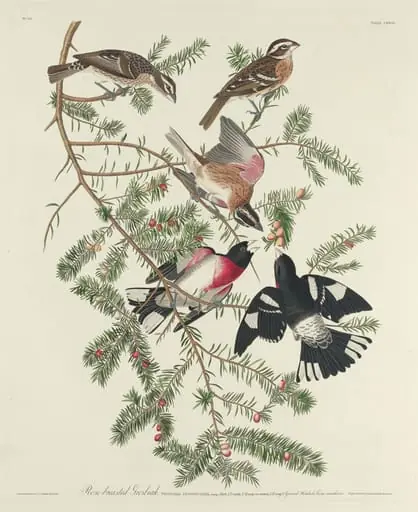
The image depicts four red-winged starlings, a species native to South Asia, shown in varied poses: perched on a branch and in flight. Their glossy black plumage contrasts with vivid red wing and tail patches. The inclusion of delicate pink blossoms suggests a natural habitat, reinforcing the illustration’s purpose as a scientific record rather than a decorative piece. The composition balances movement and stillness to convey the bird’s behavior in its environment.
Technique & Style
Havell used engraving and aquatint on copper plates to render fine textures, then applied watercolor by hand to achieve subtle gradations of tone. The delicate rendering of individual feathers and petals demonstrates meticulous craftsmanship. The light background enhances the birds’ dark plumage, while the soft yet controlled coloring avoids theatricality, prioritizing accuracy over ornamentation in line with naturalist conventions of the time.
History & Provenance
Robert Havell Jr. was a member of a well-established English printmaking family from Reading, Berkshire. He collaborated on major natural history publications, including works influenced by Indian fauna, likely through access to specimens and drawings brought to Britain during colonial expansion. This print was likely produced for a scientific audience, possibly as part of a larger ornithological volume, though its exact publication context remains undocumented.
Context
In the early 1800s, European naturalists increasingly sought to classify and illustrate global biodiversity. Artists like Havell operated at the intersection of science and art, translating field observations into detailed prints. The use of aquatint allowed for tonal depth previously difficult in engravings, making such images valuable for both study and dissemination among scholars and collectors across Britain and its colonies.
Legacy
Havell’s work contributed to the visual record of species during a formative period in ornithology. While later photographic methods replaced hand-colored prints, his technique preserved a level of observational detail that remains respected. These prints are now held in institutional collections as historical documents, valued for their technical precision and their role in the evolution of biological illustration.
Own this work as a print
Artist & collection

Artist
The Havell family of Reading, Berkshire, England, included a number of notable engravers, etchers and painters, as well as writers, publishers, educators, and musicians.