Artwork
Landscape with Horsemen and Bridge
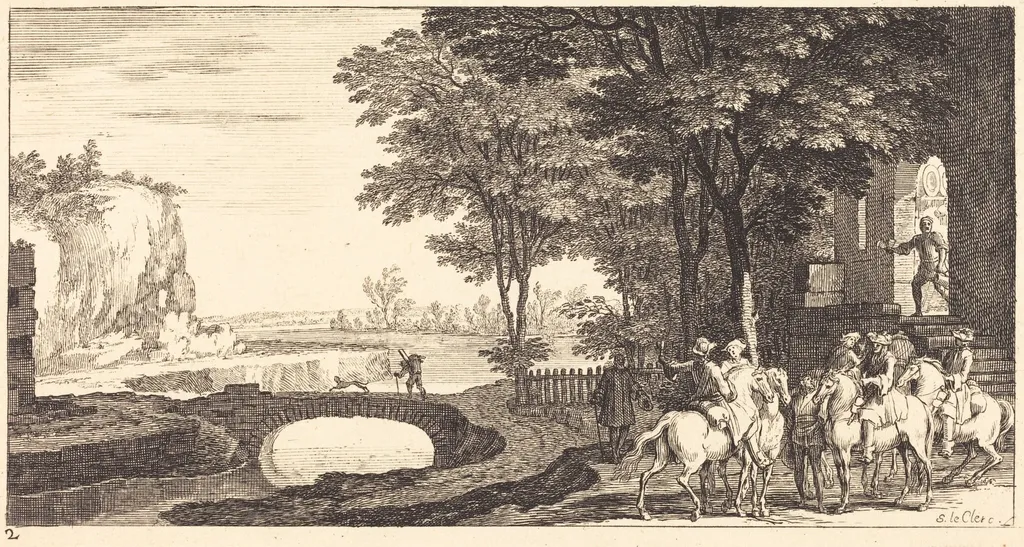
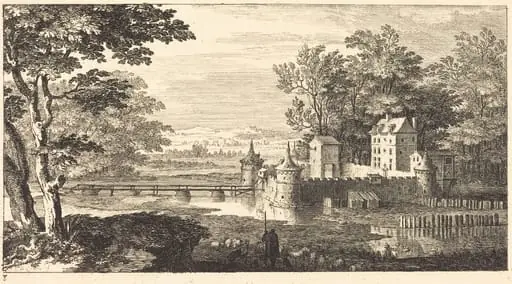
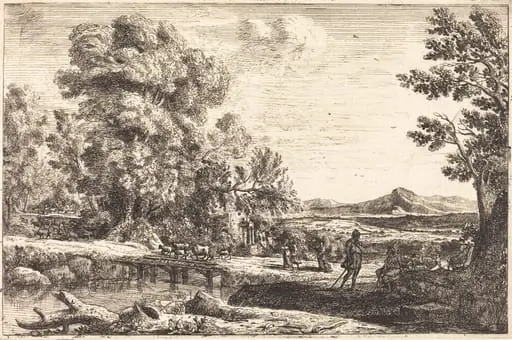
Landscape with Horsemen and Bridge is an ink print by the Baroque artist Sébastien Le Clerc I. It dates from 1673 and is held in the collection of the National Gallery of Art.
About this work
Overview
Created in 1673 by Sébastien Le Clerc I, this etching depicts a quiet rural scene centered on a narrow bridge crossing a river.
Created in 1673 by Sébastien Le Clerc I, this etching depicts a quiet rural scene centered on a narrow bridge crossing a river. A group of horsemen traverse the path, while a tall waterfall cascades into a still lake behind them. The composition includes a solitary figure on a pedestal, gesturing toward the fall, and others engaged in casual observation. Rendered entirely in monochrome, the work relies on delicate line work to suggest form and atmosphere.
Subject & Meaning
The scene presents a tranquil, almost contemplative moment in nature, with human figures integrated subtly into the landscape. The figure pointing toward the waterfall may signal reverence or instruction, suggesting a narrative of discovery or guidance. The absence of overt drama or narrative climax invites quiet reflection, aligning with 17th-century ideals of harmonious coexistence between people and the natural world.
Technique & Style
Le Clerc employed fine, controlled etching lines to model light and shadow, creating a sense of spatial depth without color. The texture of foliage, water, and stone is suggested through varying line density and direction, a hallmark of skilled printmaking of the period. The composition is carefully balanced, with the waterfall anchoring the background and the bridge guiding the viewer’s eye through the foreground.
History & Provenance
The print was made during Le Clerc’s early career in France, before his later prominence as a scientific illustrator. It reflects his training in topographical and architectural draftsmanship. Though not widely documented in early collections, it aligns with the growing market for landscape prints among educated patrons seeking refined, non-religious imagery in the late 17th century.
Context
In the 1670s, French printmakers increasingly turned to landscape as a subject independent of religious or mythological themes. Le Clerc’s work fits within this trend, influenced by Dutch and Italian precedents but adapted to French tastes for orderly, serene scenes. Etching allowed for wider dissemination of such images, making them accessible to collectors beyond the elite.
Legacy
This etching exemplifies Le Clerc’s early mastery of linear precision and compositional restraint. While not as famous as his later technical illustrations, it reveals the foundation of his artistic discipline. The work contributes to the broader recognition of printmaking as a legitimate medium for landscape expression in France during the reign of Louis XIV.
Artist & collection


 Landscape with Four Trees
 The Broken Bridge
 The Deer Hunt
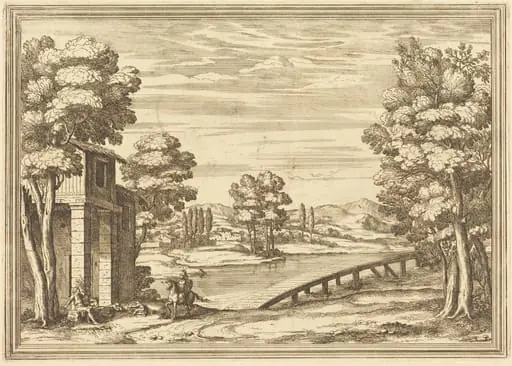 Il Greco in Troia: Plate 7
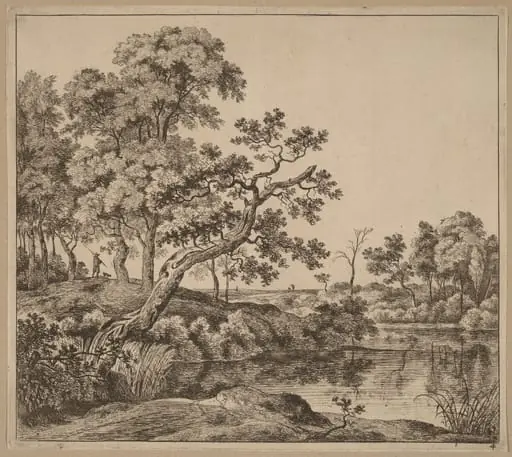 Landscape with a Bending Tree
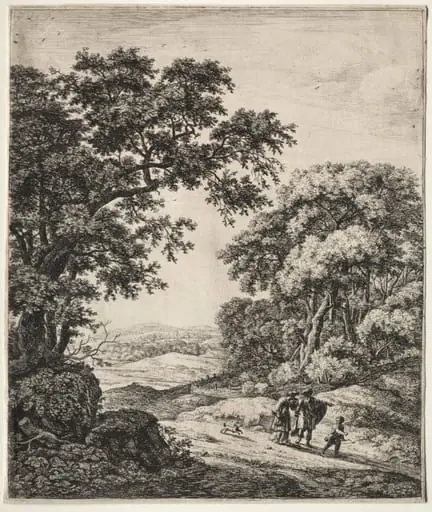 Six large upright landscapes with scenes from the Old Testament: Abraham Dismissing Hagar and Ishmael
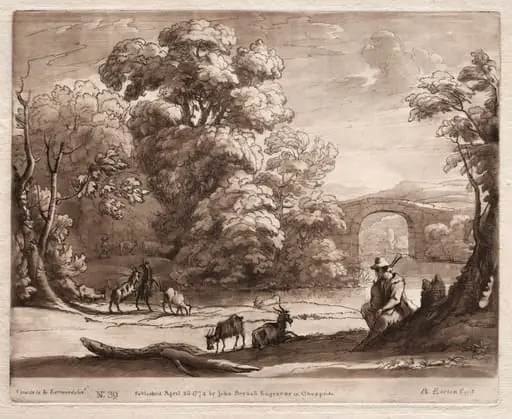 Liber Veritatis: No. 39, A Landscape with Herdsman Playing a Bagpipe and Goats Browsing
 Landscape with Duck Hunters
 The Four Trees
 Albury
 Landscape with Bridge
 Rebecca and Eliezer (Le pont de bois)